Taberville Prairie Conservation Area Access
Many hunters dream of discovering those less-traveled spots, the places that offer a different kind of challenge and a unique connection to Missouri's wild heritage. But finding accessible public land that isn't just timber or typical agricultural ground can be a real head-scratcher. It often feels like you're limited to the same few areas, year after year. This guide is here to unravel the secrets of Taberville Prairie Conservation Area, offering a deep dive into how you can access and hunt this incredible, sprawling prairie landscape. We’ll walk through what makes it special, how to physically get onto the ground, and the essential planning tools you’ll need to make your hunt a success.
Understanding Taberville Prairie CA's Unique Landscape
Missouri is often stereotyped as a state of rolling hills, thick Ozark timber, or expansive northern farmlands. And while those landscapes certainly define much of our hunting, Taberville Prairie Conservation Area stands apart as a rare gem, offering a glimpse into Missouri's tallgrass prairie past. It’s a vast, windswept expanse where the sky feels bigger, and the habitat supports a completely different set of hunting experiences than what many might be accustomed to. This unique environment demands a distinct approach, making it an exciting challenge for any hunter looking to expand their skills.
The Allure of a Missouri Prairie Hunt
For many, the draw of Taberville Prairie is its unique habitat, a vibrant ecosystem dominated by towering big bluestem, switchgrass, and other native prairie plants, interspersed with brushy draws and small pockets of timber. This isn't your typical deer woods or flooded timber; it's a dynamic landscape that changes with the seasons and the prevailing winds. The sheer scale and open nature can feel intimidating at first, but it quickly reveals itself as a place of immense beauty and diverse hunting opportunities. It’s a chance to truly immerse yourself in a different side of Missouri's natural heritage.
The primary draw for many is the quail hunting. Taberville is one of those special places where diligent habitat management has aimed to restore covey numbers, offering a chance to walk miles through prime bobwhite habitat, listening for that iconic whistle. But the prairie is far from a one-species wonder. Rabbits thrive in the dense, protective cover of the tall grasses and brush, providing excellent small game action. Deer also utilize the prairie extensively, often bedding deep within the tall cover during the day and emerging to feed along edges or in hidden clearings. Turkeys too can be found, strutting along the timbered fringes or roosting in the scattered trees, adding another dimension to the hunting possibilities.
Hunting here forces you to adapt. The long sightlines can reveal game from a distance, but they also mean you’re equally exposed. Success often comes down to mastering the subtle contours of the land, using the wind to your advantage, and being incredibly mindful of your movement and silhouette. It's an experience that sharpens your instincts and offers a profound appreciation for Missouri's ecological diversity, proving that rewarding hunts aren't just found in the timber.
Navigating the Open Prairies
Stepping onto Taberville Prairie, you immediately notice the difference from hunting heavily timbered areas. Here, the challenge isn't dense undergrowth obscuring your shot, but rather the vast, often subtle, undulations of the prairie itself. While there might not be towering oaks to hide behind, the tall grasses, brushy thickets, and gentle dips in the terrain provide natural camouflage and movement corridors for game. Understanding how to utilize these features for concealment and approach is a critical skill you'll hone here. You might find yourself crawling through waist-high switchgrass, or using a slight rise in the ground to break up your outline, much like a hunter in the mountains might use a rock outcropping.
The wind is an ever-present force on the prairie, often more consistent and impactful than in a sheltered timber block. It can be your best friend, carrying your scent away from a wary buck or turkey, or your worst enemy, alerting game to your presence from hundreds of yards away. Learning to read the wind and how it interacts with the rolling terrain is paramount. Thermals, which dictate air movement based on heating and cooling, still play a role, especially around the timbered draws and drainages, but the broader impact of sustained winds across the open expanse means a constant re-evaluation of your approach. This attention to natural elements elevates the hunting experience, making every step a calculated decision.
Because the interior of Taberville Prairie CA is largely a walk-in area, covering ground on foot is the name of the game. You'll want to be physically prepared for miles of walking through uneven terrain, often wading through thick, tall grasses that can conceal ditches or subtle changes in elevation. This makes good quality, supportive boots absolutely essential. Unlike some areas where you might rely on existing trails, navigating here often involves setting your own path, guided by maps and your understanding of game movement. It’s a physically demanding but incredibly rewarding experience that allows you to access areas that see less human pressure, increasing your chances of finding undisturbed game. Walking Missouri Quail Cover With a Dog takes on a whole new meaning when you're traversing these expansive landscapes.
Gaining Physical Access to Taberville Prairie CA
Successfully hunting Taberville Prairie Conservation Area hinges on knowing precisely how to get onto the property and how to navigate once you're there. Unlike private land where you might pull directly off a county road into a field, public areas like Taberville have specific entry rules and limitations designed to manage traffic, minimize impact, and ensure a fair experience for all users. It's not just about showing up; it's about strategic entry.
Primary Entrance Points and Parking
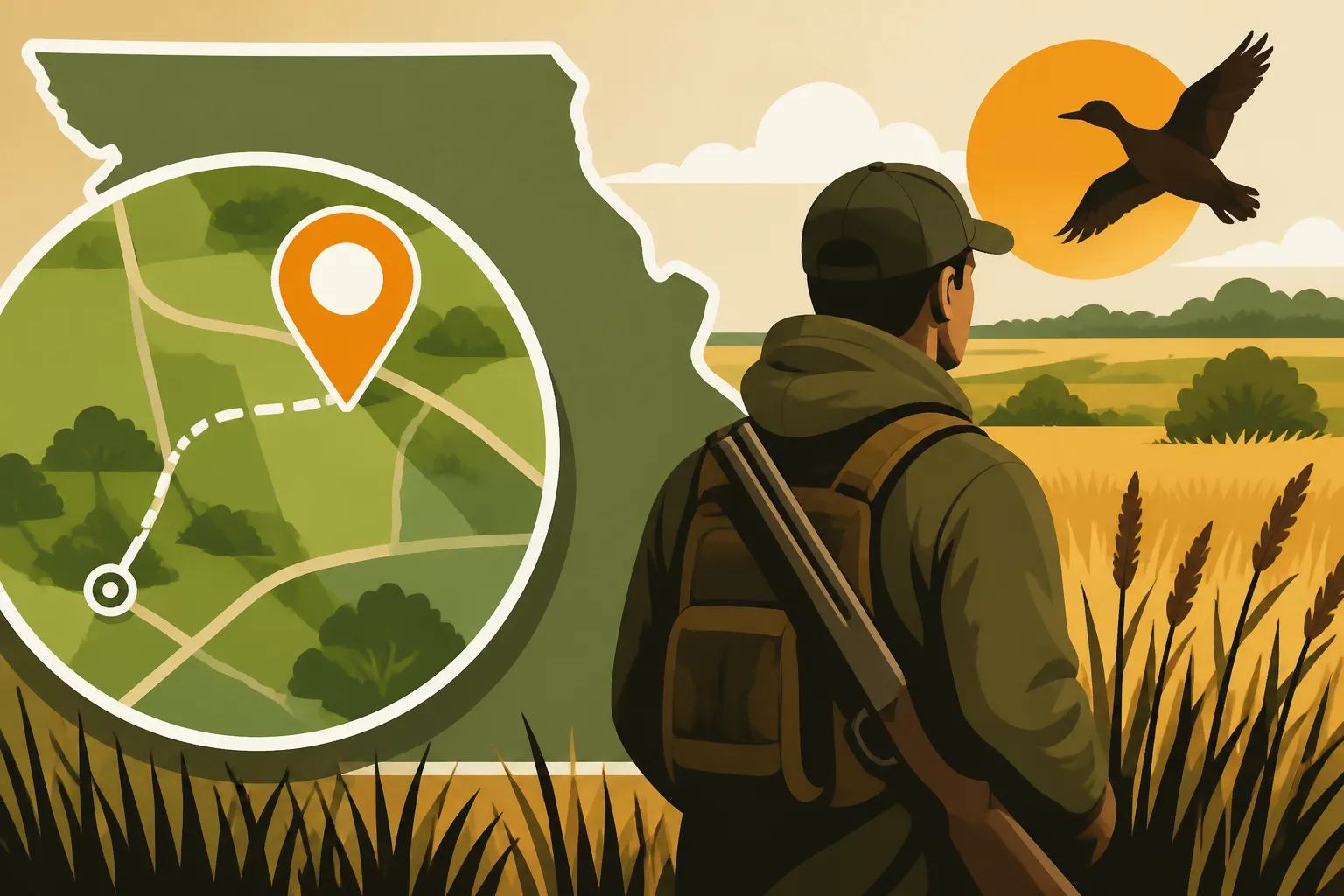
Like most Missouri Conservation Areas Explained, Taberville Prairie Conservation Area provides designated access points. You won't simply be able to drive off a public road and onto the hunting grounds wherever you please. Access is typically via gravel roads that lead to clearly marked parking areas along the perimeter of the conservation area. Before you even leave home, it's crucial to consult the official area map. These maps are often available through resources like The Missouri Conservation Atlas or directly from the Missouri Department of Conservation (MDC) website. They are invaluable for showing you exactly where these public access points and parking lots are located, helping you plan your approach.
These parking areas are almost always identified by official MDC signage, usually a large brown sign with the area's name. It's tempting, especially if you see a promising stretch of habitat, to consider parking along the shoulder of a county road. However, this is generally ill-advised. Parking outside of designated areas can lead to your vehicle being towed, or, worse, you could inadvertently trespass on adjacent private land. Always assume that property lines closely follow road edges unless explicitly stated otherwise by MDC signs. Look for gates as well; if they're marked "Walk-In Only," that's your cue that vehicular access ends there, and the rest of your journey will be on foot.
Consider a typical scenario: you might turn off a state route, like Highway B or Highway 52, onto a county gravel road. Follow that road until you see the brown MDC sign and a gravel lot large enough for several vehicles. From this point, your hunt truly begins. Remember, these areas are managed for conservation and recreation, and heavy motorized traffic deep into the prairie would defeat that purpose. Prepare to walk a significant distance from your vehicle to where you intend to hunt, so pack accordingly and ensure you're comfortable with the journey back with a potential harvest.
Interior Access and Foot Travel
Once you've parked your vehicle, Taberville Prairie transforms into a vast, walk-in hunting domain. This means that nearly all your movement within the hunting area will be on foot, requiring you to carry all your gear with you. While some larger conservation areas might have extensive trail systems, the prairie environment at Taberville means that marked trails may be less common, or might only be mowed fire lanes that don't always align with optimal hunting routes. You’ll often find yourself pushing through dense, knee-high to waist-high prairie grasses, making the physical exertion significantly higher than walking a well-worn path. This underscores the importance of pre-hunt physical conditioning and selecting appropriate, durable footwear.
The nature of foot travel on the prairie also impacts your navigation strategy. Without distinct landmarks like prominent rock formations or unique trees, getting disoriented can be a real concern, especially on overcast days or in the featureless expanse of tall grass. This is where a reliable GPS device or a robust smartphone mapping application becomes an absolutely essential piece of gear. You’ll want to mark your parking spot, potential game sightings, and any unique terrain features that can help you orient yourself. Furthermore, planning your route, especially for game retrieval, is critical. Dragging a deer through dense prairie grass for a mile can be an exhausting endeavor, so consider if a game cart might be feasible, depending on the terrain and your chosen path.
One of the significant advantages of these walk-in-only areas is the potential for reduced hunting pressure deeper within the property. While areas immediately adjacent to parking lots might see more activity, those hunters willing to put in the effort and walk a mile or two or more into the prairie often find themselves in truly secluded spots. This can be a huge benefit during popular seasons like Missouri's Eleven-Day November Firearms Deer Season, offering a more solitary and potentially more productive hunting experience away from the crowds. The extra effort often translates into a more rewarding hunt, allowing you to immerse yourself fully in the natural environment without constant interruptions.
Permits, Regulations, and Planning Your Hunt
Hunting anywhere in Missouri requires adherence to specific rules and regulations, and Taberville Prairie Conservation Area is no different. A successful and legal hunt starts long before you ever step foot on the prairie, with proper planning, securing the right permits, and understanding the specific rules that govern the area. Trying to figure these things out on the fly at the trailhead is a recipe for frustration, or worse, a violation.
Essential Permits and General CA Rules
Before you even load your gear into the truck, ensuring you have the correct permits is paramount. For hunting small game like quail and rabbits at Taberville, you'll need a valid Missouri Small Game Hunting Permit, which could be a Missouri Resident Small Game Permit Cost or the appropriate nonresident equivalent. If you're planning to pursue deer or turkey, you'll need the specific Missouri Deer Permits and How to Buy One or Missouri Spring Turkey Permits and Limits for those species. It's vital to check the current Missouri hunting regulations each year, as laws and permit requirements can shift, and what was valid last season might have changed. Don't rely on old information.
Beyond your species-specific permits, all Missouri Conservation Areas, including Taberville Prairie, operate under a set of general rules. These universal guidelines cover a range of activities and behaviors intended to protect the resource and ensure a safe, fair experience for all users. Common rules include restrictions on permanent tree stands (often only temporary, non-damaging stands are allowed), prohibitions against baiting (which is generally not allowed on public lands), and strict limitations on motorized vehicle use (typically only on designated public roads or parking areas). To avoid any surprises, always download and carefully Reading a Missouri Area Brochure specifically for Taberville Prairie. These brochures are invaluable as they often highlight any unique, area-specific regulations or special conditions that might apply to Taberville.
Understanding legal shooting hours is another fundamental piece of the puzzle. For most game species in Missouri, hunting is permitted from one-half hour before sunrise to one-half hour after sunset. Knowing these times precisely helps you plan your arrival and departure, ensuring you're always hunting within the legal window. The Missouri Department of Conservation's website is the single best resource for staying informed on all these specifics, offering up-to-date regulations that are easy to access. Neglecting these basic rules can lead to citations, fines, or even the loss of hunting privileges, which is a headache no one wants to deal with when they're simply trying to enjoy a day afield.
Leveraging Digital Tools for Taberville Access
In today's hunting landscape, digital mapping applications have become indispensable, especially when venturing into less familiar terrain like Taberville Prairie. Services like onX Hunt offer a wealth of information that goes far beyond a traditional paper map. With detailed satellite imagery, you can virtually scout the entire area from your couch, identifying subtle changes in vegetation, potential bedding thickets within the tallgrass, and natural travel corridors that might be difficult to spot on the ground. Crucially, these apps clearly delineate property lines, allowing you to see exactly where the conservation area ends and private land begins, which is vital for preventing accidental trespass and staying legal. You can mark waypoints for parking, potential hunting spots, and even game sightings, building a comprehensive digital scouting report.
Another powerful tool for advanced planning and in-the-field navigation is GoHunt. While often associated with Western big game, the principles of detailed mapping, terrain analysis, and waypoint management apply equally well to hunting in Missouri. GoHunt allows you to delve deeper into topographical features, even on a seemingly flat prairie, helping you understand how subtle rises and depressions might funnel game or provide concealment. The ability to download maps for offline use is a game-changer, as cell service can be spotty or nonexistent in many of Missouri's more remote hunting areas. This ensures you always have a reliable navigation system, regardless of connectivity.
These digital tools empower you to perform extensive "e-scouting" long before you ever set foot on the prairie. You can plan multiple entry and exit routes, identify strategic ambush points along brushy draws, or even predict where a covey of quail might flush based on habitat features. This level of pre-planning saves precious time and effort in the field, allowing you to maximize your actual hunting time. Whether you're targeting the Missouri Annual Deer Harvest or simply enjoying a walk for Northern Bobwhite Quail in Missouri, leveraging these technologies can significantly enhance your chances of a successful and enjoyable hunt at Taberville Prairie.
Respecting the Resource and Other Users
Hunting on public land is a cherished privilege that comes with a significant responsibility: to respect the natural resource and your fellow outdoor enthusiasts. Taberville Prairie is not just a hunting ground; it's a unique and vital ecosystem undergoing restoration, and it's up to every user to help preserve its beauty and integrity. This means adhering strictly to "leave no trace" principles. Pack out everything you pack in, including spent shotgun shells, food wrappers, and any other trash. Do not disturb historical sites, unique geological features, or damage vegetation unnecessarily. The goal is to leave the area in better condition than you found it, ensuring it remains pristine for future generations of hunters and wildlife watchers.
You are likely to encounter other individuals at Taberville Prairie, especially during popular seasons like Missouri Quail Season Dates or even the late deer portions like Hunting Missouri Deer After Christmas. These might include other hunters, bird watchers, hikers, photographers, or researchers. Always extend common courtesy and respect. If you observe another hunter, maintain a generous distance and avoid intruding on their hunt. A friendly wave or a quiet acknowledgment goes a long way in fostering positive interactions. Remember that the prairie is a shared space, and respectful behavior ensures that everyone can enjoy their chosen activity without conflict.
It's also important to remember that hunting is just one of many approved activities on Missouri Conservation Areas. Being a good steward of the land and a respectful ambassador for the hunting community helps reinforce the value of these public access opportunities. Your actions on Taberville Prairie reflect on all hunters, so always strive to represent our passion in the most positive light. By following regulations, being considerate of others, and practicing responsible outdoor ethics, we help ensure that places like Taberville Prairie remain available and vibrant for years to come.
Here's a comparison of hunting in timber versus hunting in an open prairie environment, highlighting the key differences you'll experience at Taberville:
| Feature | Typical Timber Hunting | Prairie Hunting (Taberville) |
|---|---|---|
| Visibility | Limited, short-range views, dense canopy, undergrowth. | Expansive, long sightlines, open fields, subtle undulations. |
| Hunter Cover | Trees, brush, dense undergrowth for concealment. | Tall grasses, brushy draws, terrain dips; less solid, more fluid cover. |
| Scent Dispersal | Variable, influenced by pockets, ridges, hollows; can swirl. | Often wide and consistent, wind plays a dominant, predictable role. |
| Game Movement | Follows trails, draws, ridge lines, specific cover; often linear. | Less defined trails, utilizes grass height, scattered brush, subtle elevation changes; often more random. |
| Noise Factor | Twigs, leaves, dry ground can be loud; soft earth quiet. | Rustling grass can mask sound, but open ground can transmit far; crunchy frozen grass loud. |
| Navigation | Easier to get disoriented in thick timber; relies on distinct landmarks. | Can be disorienting due to vastness/sameness; relies heavily on GPS, distant features. |
| Foot Travel | Can be steep, rocky, dense; varied terrain; often climbing. | Often long distances, uneven ground, wading through thick grass; physically demanding. |
| Game Retrieval | Challenging in thick brush, up/down hills, over obstacles. | Can be difficult through dense grass, but generally flatter ground; requires a clear path. |
| Gear Considerations | Treestands, scent control, binoculars for close range. | Spotting scopes, binos for long range, durable boots, detailed maps, wind gear. |
Disclaimer
This article is for general informational purposes only and does not constitute professional advice. Laws, prices and regulations vary by location and change over time. Consult a qualified professional for guidance on your specific situation.