Is a .243 Enough for Missouri Whitetails?
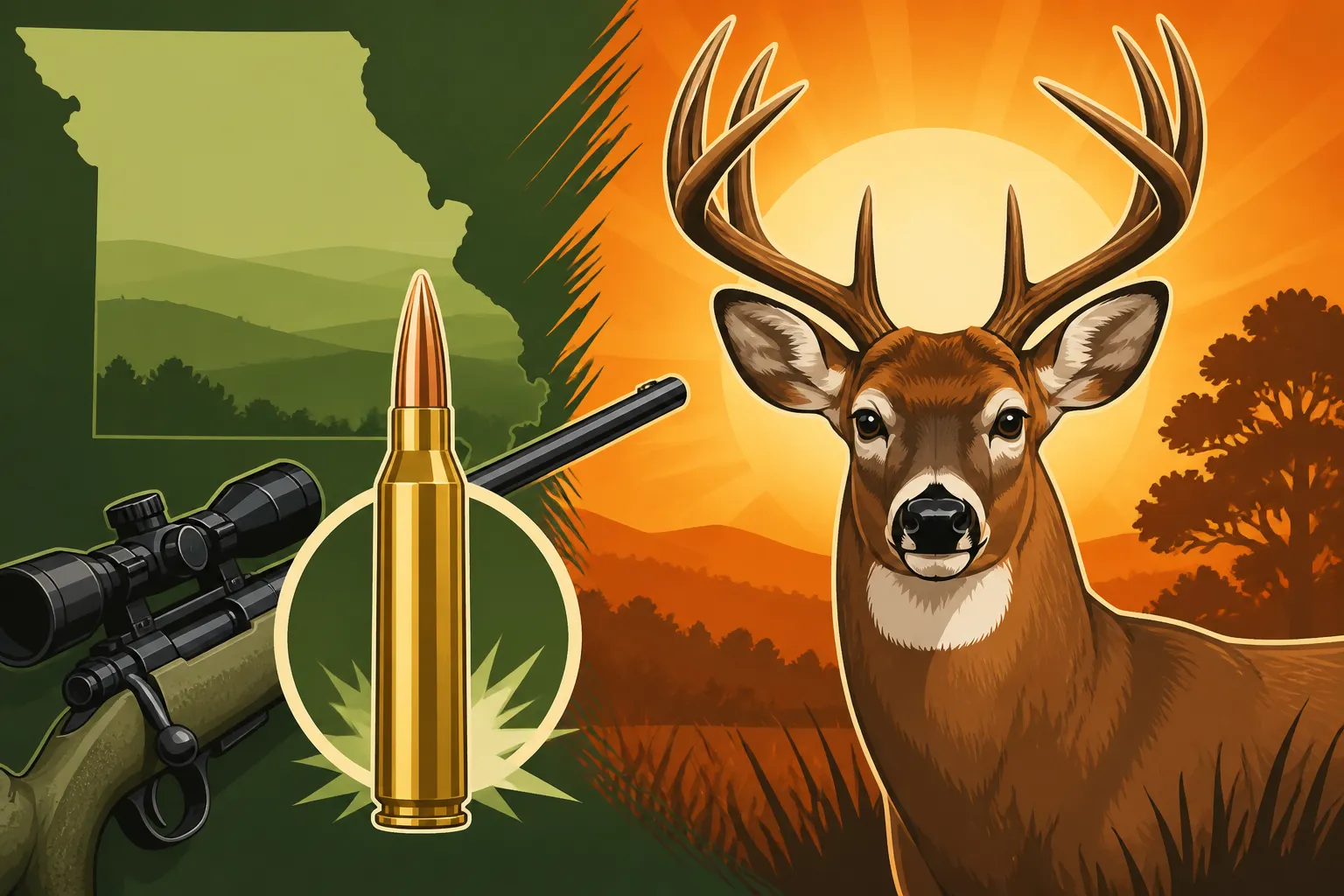
That age-old question, "Is my .243 enough for deer?" is one that echoes through hunting camps across Missouri, especially for those venturing out into our diverse landscapes, from the rolling hills of the Ozarks to the expansive crop fields of the northern part of the state. It's a completely valid concern, rooted in wanting to make an ethical, quick kill and feeling confident in your chosen rifle. This guide is here to cut through the noise and give you a realistic, in-depth look at whether your trusty .243 Winchester is truly up to the task of bringing down a Missouri whitetail.
Understanding the .243 Winchester Cartridge
Let's dive into what makes the .243 tick, because knowing your equipment is the first step toward confidence in the field. It’s a cartridge that has earned its place in many gun safes, often being a first rifle for young hunters or a go-to for those who appreciate its mild manners. But its popularity can sometimes lead to misconceptions about its capabilities.
Ballistics and Bullet Construction
The .243 Winchester typically fires bullets ranging from 80 to 100 grains for deer hunting. When you hear discussions about a cartridge's effectiveness, you'll often hear about muzzle velocity and energy. The .243 is a zippy little round, pushing those lighter bullets at impressive speeds, often exceeding 3,000 feet per second. This high velocity translates to a relatively flat trajectory, which is a real benefit when you might have to take a shot across a Missouri bean field or a long lane in the timber.
However, speed isn't the only factor; bullet construction is absolutely critical for deer. You see, varmint bullets, designed for explosive expansion on smaller animals, are often lighter and constructed differently than bullets meant for deer. A varmint bullet might fragment too quickly on a deer's hide and ribs, failing to penetrate deep enough to reach vital organs. For deer, you want a bullet specifically designed for controlled expansion and penetration. Look for terms like "bonded," "partitioned," or "interlocked" when choosing your ammunition. These bullets hold together better upon impact, driving deeper into the animal and creating a more effective wound channel, ensuring that the kinetic energy is deposited where it needs to be for a humane kill. Think of it this way: you want a bullet that expands but doesn't blow up on the surface; it needs to hold together to get to the vitals.
Recoil and Shooter Comfort
One of the biggest advantages of the .243 is its exceptionally low recoil. For anyone who's ever flinched anticipating the kick of a magnum rifle, you know how much that can impact accuracy. The .243 is a dream to shoot in comparison. This characteristic makes it an outstanding choice for new hunters, especially youth, who are just learning the ropes and building confidence. It’s also fantastic for smaller-framed shooters or anyone who is recoil-sensitive.
When you're comfortable behind the trigger, you're more likely to focus on proper sight alignment, breath control, and a smooth trigger pull – all the fundamentals that lead to a precise shot. And as we'll discuss later, shot placement is paramount with any caliber, but especially with one that carries less raw energy than a larger round. The reduced recoil allows for more practice sessions without fatigue or developing a flinch, meaning you can really dial in your accuracy and become intimately familiar with your rifle's performance. That comfort and confidence translate directly to better performance when a deer steps out.
The .243's Performance on Missouri Whitetails
Missouri whitetails, whether they're the burly bucks of northern farm country or the leaner deer of the rocky Ozarks, are tough animals. Their resilience demands respect from hunters, and our choice of cartridge reflects that. The question isn't just "Can it kill a deer?" but "Can it reliably and ethically kill a deer?"
Shot Placement is Paramount
Let's get this straight right off the bat: regardless of whether you're shooting a .243, a .30-06, or a .300 Win Mag, shot placement is king. A perfectly placed shot with a .243 to a deer's vitals will be far more effective than a poorly placed shot from a much larger caliber. The deer's anatomy is critical here – we're talking about hitting the lungs and heart. These organs are surprisingly compact, and a bullet that passes through them disrupts the circulatory and respiratory systems, leading to a rapid, humane demise.
The vitals zone on a deer is relatively consistent, extending from just behind the shoulder blade back through the rib cage, usually about a six-inch diameter target. If you can consistently put your bullet into that zone, the .243 is absolutely lethal. The challenge comes when shots are rushed, angled incorrectly, or taken at distances beyond your personal proficiency. A big, mature Missouri buck can soak up a tremendous amount of lead if the shot isn't placed correctly. A bullet hitting non-vital areas, even with a larger caliber, can lead to a long tracking job, a lost animal, and a truly frustrating experience. Our responsibility as hunters is to ensure the cleanest possible kill. That means knowing your rifle, knowing your limits, and making every shot count. For guidance on what to do after the shot, check out Field Dressing a Deer in Warm Weather or Getting Deer Meat Cooled Quickly.
Range Considerations in Missouri Terrain
Missouri offers a huge variety of hunting environments, and this greatly influences the practical effective range of your .243. In the thick timber of the Ozarks or river bottom areas, shots are often close – 20 to 80 yards. In these scenarios, the .243 has more than enough power and accuracy for a clean kill, especially with a well-constructed bullet. However, if you find yourself sitting on the edge of a vast soybean field in North Missouri, that 200 or 250-yard shot might present itself. This is where you need to be honest with yourself about your and your rifle's capabilities.
While the .243 is ballistically capable of ethical kills at 200-250 yards with good ammunition and a skilled shooter, bullet energy does diminish with distance. Beyond 250 yards, particularly on larger bucks, the margin for error shrinks considerably, and the energy delivered might be insufficient for rapid incapacitation on a marginal hit. The key is to practice at various ranges, from 50 to 200 yards, so you understand your rifle's trajectory and your own limitations. Use a good rangefinder and practice shooting from field positions, not just off a bench. Knowing your rifle's performance at various distances in different conditions, perhaps through data from a reliable source like GoHunt, will help you decide when to take the shot and when to hold off. For more on this, consider Practical Range in Missouri Timber or Rifle Ranges Realistic in Missouri Timber.
Common Concerns and Best Practices
It's common to hear hunters debate the merits of different calibers, and the .243 often finds itself at the center of discussions about being "too small" for deer. Let's tackle some of those perceptions head-on.
Debunking "Underpowered" Myths
The idea that the .243 is "underpowered" for deer often stems from a comparison to larger, heavier-hitting cartridges like the .30-06 or .300 Win Mag. While it's true that the .243 delivers less raw kinetic energy than these calibers, that doesn't automatically equate to being underpowered for deer. Historically, hunters took deer with cartridges far less powerful than the modern .243. The development of modern bullets has also significantly improved the terminal performance of smaller calibers. A premium 95 or 100-grain .243 bullet designed for deer hunting will penetrate deep, expand reliably, and create a lethal wound channel when placed correctly.
Many experienced hunters in Missouri have filled their freezers year after year with a .243, proving its effectiveness time and again. The key, as always, comes back to ethical hunting practices: shot placement, knowing your range, and using appropriate ammunition. It's not about the sheer size of the bullet; it's about what that bullet does inside the animal, and a well-selected .243 bullet does precisely what it needs to do.
Ammunition Selection and Confidence
This point is so important it bears repeating: your ammunition choice is paramount with a .243. You simply cannot grab a box of cheap 55-grain varmint rounds and expect reliable deer hunting performance. Those bullets are designed for small, thin-skinned animals, not the muscle and bone of a whitetail. You need a bullet designed to expand aggressively but also hold together and penetrate.
Look for heavier bullets in the 90-100 grain range, and specifically seek out those marketed for "big game" or "deer." Brands often have lines of ammunition featuring bonded cores, protected points, or internal partitions that ensure deep penetration. Experiment with a few different brands and bullet types to see which one shoots most accurately from your rifle. Once you find a load that consistently groups well and is designed for deer, stick with it. The confidence gained from knowing your ammunition will perform its job, combined with your shooting proficiency, will vastly increase your chances of a successful and ethical harvest. Many online resources, including forums and articles found via GoHunt, offer detailed reviews and recommendations for specific .243 deer loads.
Legalities and Regulations
When it comes to hunting in Missouri, it's always wise to be aware of the specific regulations regarding legal firearms. Fortunately, the .243 Winchester is absolutely a legal cartridge for deer hunting in Missouri. The Missouri Department of Conservation (MDC) defines legal firearms for deer as centerfire rifles. The .243 Winchester easily meets this classification.
You won't run into any issues regarding minimum caliber or energy requirements with a .243 for deer season. It's a widely accepted and commonly used deer rifle across the state. This means you can focus your energy on scouting, practicing, and preparing for the hunt, rather than worrying about whether your rifle meets legal standards. Always consult the current year's Missouri Department of Conservation regulations booklet to stay informed about all rules and requirements, including those for Legal Firearms for Missouri Deer and general Missouri Deer Permits and How to Buy One.
Maximizing Your .243's Effectiveness in Missouri
So, if the .243 is indeed enough, how do we ensure it performs to its full potential every single time we pull the trigger in the Missouri woods? It comes down to a combination of personal skill, preparation, and smart hunting strategy.
Practice, Practice, Practice
This might sound like a broken record, but it cannot be overstated: becoming proficient with your .243 is the single best way to ensure its effectiveness. Regularly visiting the shooting range isn't just about zeroing your rifle; it's about building muscle memory, understanding your rifle's feel, and practicing from various positions you might encounter in the field. Don't just shoot from a bench rest; practice shooting offhand, kneeling, and from a simulated treestand or ground blind position. These are the real-world scenarios you'll face.
Know your rifle's trajectory out to your maximum ethical range. For instance, if your rifle is zeroed at 100 yards, how much does the bullet drop at 150 or 200 yards? This information is critical for making accurate shots beyond your initial zero. Consistent practice breeds confidence, and that confidence allows you to make calm, deliberate shots when the adrenaline is pumping. Think of it as an investment in ethical hunting – the more you practice, the more confident you'll be when a shot opportunity arises. If you're looking for structured practice routines or tips, many resources on platforms like GoHunt can help you refine your shooting skills.
Scouting and Field Craft
Since the .243 demands precise shot placement, your hunting strategy should revolve around getting closer to your quarry and ensuring ideal shot opportunities. This is where good old-fashioned scouting and field craft come into play. Understanding deer movement patterns, identifying natural pinch points, knowing bedding areas, and recognizing preferred food sources will put you in a position to take close, high-percentage shots. Scouting With the Missouri Conservation Atlas can be an invaluable tool for this.
For example, when Hunting Missouri's November Firearms Portion, knowing where bucks are likely to travel during the rut means you can set up strategically for a shot that's well within your comfort zone and the .243's effective range. Whether you're still-hunting slowly through Ozark timber or setting up a ground blind on a crop field edge, the goal is the same: to minimize the distance and maximize the ethical shot opportunity. Don't rely on your rifle to compensate for poor scouting or impatient hunting; use your skills as a hunter to create the best possible scenario for your .243 to shine.
When to Consider a Different Caliber
While the .243 is perfectly adequate for most Missouri whitetail hunting scenarios, it's also realistic to acknowledge that some hunters might prefer a different caliber, and that's perfectly fine. If you consistently find yourself taking shots at ranges beyond 200-250 yards, or if you simply want a cartridge that offers a bit more margin for error on less-than-perfect shots, then a larger caliber like a .270, .308, or .30-06 might be something to consider. These calibers carry more energy downrange and offer a wider bullet diameter, which some hunters prefer, particularly for larger-bodied deer.
However, remember that these larger calibers typically come with increased recoil. If that leads to flinching or less accurate shooting, then any perceived advantage of the bigger cartridge is negated. The best caliber for you is the one you shoot most accurately and confidently. For a broader comparison, you might find information in Best Rifle Caliber for Missouri Deer helpful in exploring other options, but don't feel pressured to upgrade if your .243 is serving you well.
Ultimately, the .243 Winchester is a perfectly capable and ethical cartridge for hunting whitetails in Missouri, provided you choose appropriate ammunition, practice diligently, and understand its capabilities within your personal shooting limits and the specific hunting environment. It’s a testament to good shooting and smart hunting, rather than just raw power.
Key Considerations for .243 on Missouri Whitetails
| Feature | Description | Impact on Hunting |
|---|---|---|
| Bullet Weight | Typically 80-100 grains for deer. | Lighter bullets mean flatter trajectory but demand robust construction for penetration. Avoid light varmint bullets. |
| Bullet Construction | Must be designed for controlled expansion and deep penetration (e.g., bonded, partitioned, interlocked). | Crucial for ethical kills. Prevents fragmentation on impact, ensuring vital organ damage. |
| Recoil | Very low recoil. | Excellent for new hunters, youth, and recoil-sensitive shooters, promoting better accuracy and more enjoyable practice sessions. |
| Effective Range | Generally 200-250 yards with good shot placement and ammunition. | Sufficient for most Missouri timber and moderate open field shots. Practice is key to extending personal effective range. |
| Shot Placement | Absolute paramount importance. Must hit vitals (heart/lungs). | The most critical factor for an ethical kill, regardless of caliber. Practice to ensure precision. |
| Ammunition Cost | Generally affordable and widely available. | Allows for more practice without breaking the bank. Always choose deer-specific loads. |
| Legal Status | Fully legal for deer hunting in Missouri. | No worries about regulations; focus on hunting skills. |
Disclaimer
This article is for general informational purposes only and does not constitute professional advice. Laws, prices and regulations vary by location and change over time. Consult a qualified professional for guidance on your specific situation.