Crossbow Bolt and Broadhead Rules
Navigating the specific gear requirements for hunting in Missouri can sometimes feel like trying to untangle a stubborn fishing line – especially when it comes to crossbows. Many hunters, whether seasoned archers making the switch or newcomers to the sport, find themselves scratching their heads over what's actually legal when it comes to crossbow bolts and broadheads. It's not just about what looks effective; it's about what the Missouri Department of Conservation (MDC) officially permits to ensure humane harvest and fair chase. This guide is here to clear up that confusion, offering a comprehensive look at the rules for crossbow bolts and broadheads, so you can head into the timber with confidence, knowing your setup is legal and ethical.
Understanding Missouri's Legal Definitions for Crossbows and Bolts
When you're out in the Missouri woods with a crossbow, you're participating in a unique hunting experience that blends aspects of both archery and firearms hunting. Because of this blend, the regulations surrounding crossbows and their ammunition – the bolts – are quite specific. It’s not enough to just know you can use a crossbow; you need to understand the nuances of what constitutes a legal bolt in our great state. This often starts with understanding the basic definition provided by the MDC.
What Qualifies as a Legal Crossbow in Missouri?
First, let's clarify what Missouri considers a legal crossbow for hunting purposes. Essentially, it's a device that shoots an arrow or bolt, and its string is drawn back and held by a mechanism, not by the hunter's continuous effort. This distinction is important because it sets it apart from traditional compound or recurve bows, which rely on the hunter holding the draw weight. While the focus here is on bolts and broadheads, having a legal crossbow is the first step. You'll find that Crossbows Under Missouri Rules delves deeper into the specifics of the crossbow itself.
The regulations are designed to ensure the device itself meets minimum standards for safety and ethical hunting. This means no overly powerful or modified devices that could give an unfair advantage or cause undue harm. For instance, while you might see a variety of innovative crossbow designs on the market, they all must operate within the spirit of archery season, even if their mechanical nature gives them some advantages. Always double-check your model against the current MDC regulations, as these can occasionally be updated.
Minimum Specifications for Crossbow Bolts
Now, let's talk about the bolts themselves. Unlike arrows for compound bows that often have a bit more leniency in overall weight or length, crossbow bolts typically have more defined specifications. The MDC doesn't usually set a minimum length for bolts, but practical considerations for safety and accuracy often dictate a certain range. Most commercially available crossbow bolts are designed to be between 18 and 22 inches long, and these lengths generally work well within the legal framework. What's more critical than length, however, is the construction and the type of projectile it becomes.
The bolt must be a single, unitary projectile. This means no explosive bolts, no bolts designed to carry additional payloads, or anything that turns the bolt into something other than a solid, non-firearm projectile. The bolt, when equipped with a broadhead, must maintain its structural integrity and deliver its force effectively for a clean kill. The integrity of the bolt is crucial for kinetic energy transfer and penetration, which are key to an ethical harvest. Therefore, inspect your bolts regularly for any cracks or damage, as a compromised bolt can be unpredictable and dangerous.
Prohibited Bolt Modifications and Types
Missouri regulations are very clear about certain prohibited bolt modifications and types. You absolutely cannot use any bolt that contains an explosive charge, a drug, or any chemical substance. This is a common-sense rule designed to maintain the ethical boundaries of hunting. The goal is to harvest game cleanly and humanely through mechanical force, not through chemical incapacitation or explosive impact.
Another critical prohibition involves tranquilizer bolts or any bolt designed to stun or sedate an animal. While these might have a place in wildlife research or capture, they are strictly forbidden for hunting purposes. The hunting regulations are built around the principle of quickly dispatching the animal, and tranquilizers introduce too many variables that could lead to prolonged suffering or lost game. So, when you're looking at your options, stick to traditional, mechanical bolts designed solely for propulsion and broadhead delivery. Think solid, simple, and effective.
Broadhead Requirements for Hunting Deer and Other Game
Once you have your legal crossbow and compliant bolts, the next crucial piece of the puzzle is the broadhead. This is where the rubber meets the road, or more accurately, where the blade meets the hide. The broadhead is responsible for creating the wound channel necessary for a quick, humane harvest. Missouri has specific rules regarding their design and dimensions, and understanding these is paramount, especially when hunting deer, turkey, or other big game.
Minimum Cutting Diameter and Blade Requirements
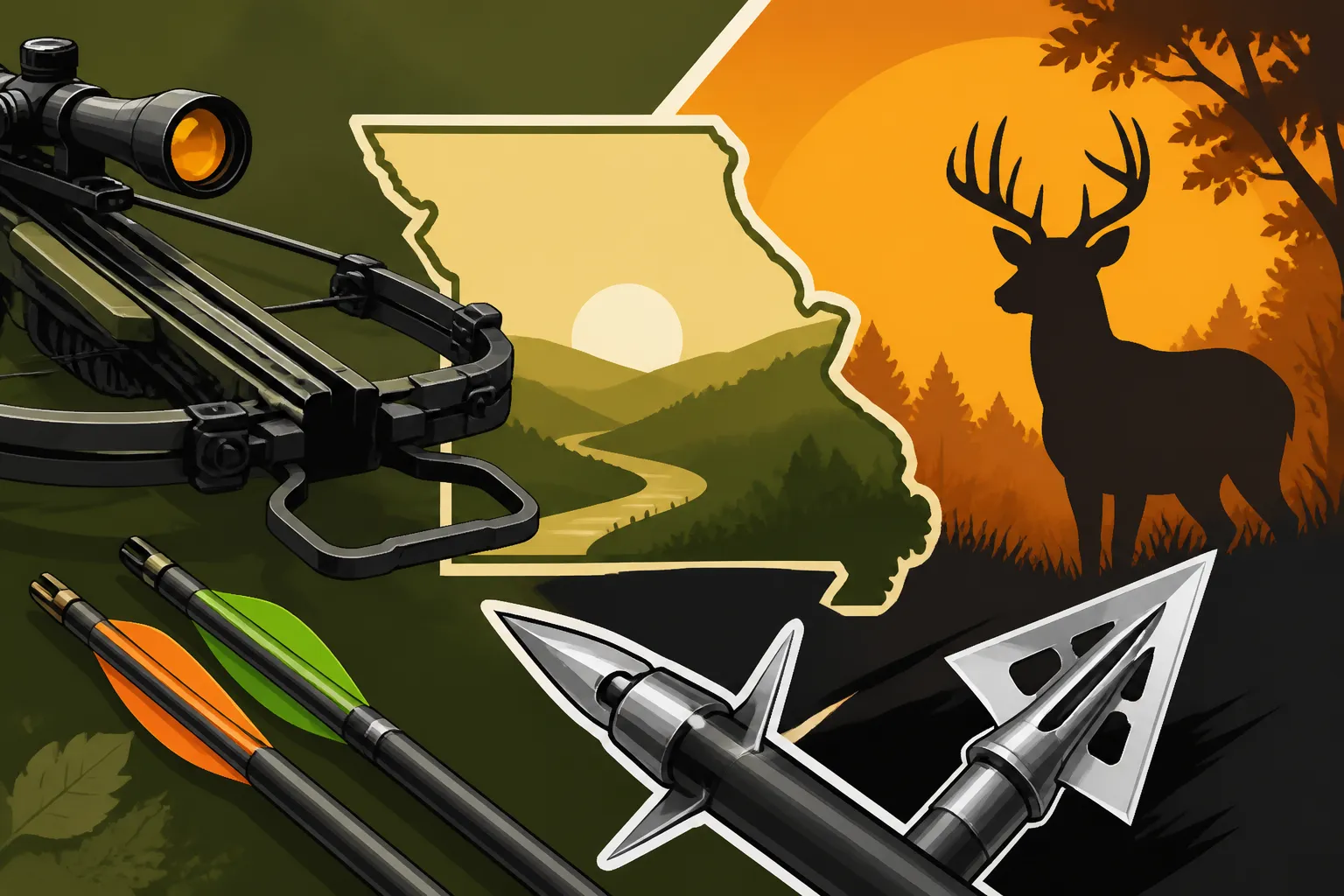
For any broadhead used in Missouri for hunting big game, including deer and turkey, it must have at least two sharpened edges. This isn't just a suggestion; it's a hard and fast rule. A single-bladed broadhead, like some older designs or specialized small game heads, is not legal for big game. These two sharpened edges must also form a minimum width. Generally, the rule states that the broadhead must have a minimum width of 7/8 inch. This measurement refers to the cutting diameter of the broadhead.
Why these specific dimensions? It's all about ensuring sufficient hemorrhage for a quick and humane kill. A broadhead that's too small or lacks enough cutting surface might wound an animal without creating a wide enough wound channel for effective blood loss, leading to a prolonged recovery or a lost animal. Whether you prefer fixed-blade or mechanical broadheads, they both need to meet this 7/8 inch minimum cutting width when deployed.
| Broadhead Type | Minimum Sharpened Edges | Minimum Cutting Width | Common Uses | Pros for Missouri Hunting | Cons for Missouri Hunting |
|---|---|---|---|---|---|
| Fixed Blade | 2 | 7/8 inch | Deer, Turkey, Bear | Extremely durable, reliable, no deployment failure | Can be less accurate than mechanicals, larger profile in flight |
| Mechanical (Expandable) | 2 (when open) | 7/8 inch (when open) | Deer, Turkey, Bear | Excellent accuracy, smaller profile in flight, larger wound channels | Potential for deployment failure, less durable if hitting bone |
| Chisel Tip | 2 (when open) | 7/8 inch (when open) | Deer, Turkey, Bear | Good penetration, often combined with mechanical blades | May require more tuning for accuracy |
Fixed Blade vs. Mechanical Broadheads
Missouri allows both fixed-blade and mechanical (expandable) broadheads, provided they meet the aforementioned requirements. Each type has its proponents and its particular strengths and weaknesses.
Fixed-blade broadheads are, as the name suggests, solid and unmoving. Their blades are fixed in place, meaning they offer exceptional reliability. There's no mechanism to fail, making them a favorite for many hunters who prioritize bulletproof performance. They are incredibly strong and can withstand impact with bone without collapsing. The downside can sometimes be their flight characteristics; a wider fixed-blade can "catch" the wind more, potentially affecting accuracy at longer distances, especially if your crossbow isn't perfectly tuned. When choosing fixed-blade broadheads, make sure the individual blades are sharp, and keep extras on hand, as they can dull after a practice shot or a successful harvest.
Mechanical broadheads, on the other hand, feature blades that retract during flight and deploy upon impact. This design typically results in a smaller, more aerodynamic profile in flight, leading to excellent accuracy that often mirrors field point performance. Upon striking the animal, the blades expand, often creating a wider cutting diameter than many fixed-blade options. This can lead to larger wound channels and potentially quicker recovery. However, mechanical broadheads introduce a moving part, which means there's a slight chance of mechanical failure – blades not deploying fully or cleanly. Reputable brands like Rage or NAP have largely ironed out these issues, but it's always something to consider. Always test a few mechanical broadheads before the season to ensure they deploy correctly and fly true with your specific crossbow setup.
Ultimately, the choice between fixed and mechanical often comes down to personal preference, confidence in your gear, and how well they perform with your specific crossbow. Both are legal and highly effective when used correctly. For more details on broadhead types, check out Fixed Versus Mechanical Broadheads.
Broadheads for Small Game and Special Portions
While our primary focus is often on deer, remember that small game hunting with a crossbow is also a possibility in Missouri. For critters like squirrels and rabbits, you definitely wouldn't want to use a deer broadhead. Special small game broadheads, like blunt tips, Judo points, or bludgeon heads, are designed to stun or kill small animals without burying themselves in the ground or damaging excessive meat. These do not have the same minimum cutting width requirements as big game broadheads because the goal is different. They’re meant for quick incapacitation without deep penetration, often for headshots on small targets.
It's also worth noting that if you're participating in any special managed hunts or specific alternative methods portions, there might be additional or slightly altered rules. Always consult the MDC's current regulations or the specific hunt's brochure. For a general overview of weapon choices in those unique seasons, Alternative Methods Portion Weapon Choices is a great resource.
Practical Considerations for Choosing Bolts and Broadheads
Beyond legality, there are practical aspects to consider when selecting bolts and broadheads for your Missouri hunting adventures. These choices can significantly impact your accuracy, effectiveness, and overall hunting experience. It's about finding the right balance for your setup and hunting style.
Matching Bolts to Your Crossbow
Just like you wouldn't put diesel in a gasoline engine, you shouldn't just grab any bolt for your crossbow. Crossbows are engineered to shoot specific types of bolts within a certain weight range. Using bolts that are too light or too heavy can not only impact accuracy but also potentially damage your crossbow. Always refer to your crossbow manufacturer's recommendations for bolt length, weight (often measured in grains), and spine stiffness.
The "spine" refers to the stiffness of the bolt, which affects how it flexes when shot. A bolt with the wrong spine for your crossbow's draw weight and speed can result in erratic flight. A proper match ensures optimal energy transfer from the string to the bolt, leading to consistent accuracy and maximum kinetic energy at impact. This kinetic energy is vital for proper broadhead penetration and is discussed further in Arrow Weight for Short Shots. Many hunters rely on resources like GoHunt's extensive gear reviews and guides to help them narrow down these choices, ensuring they're making an informed decision for their specific setup.
The Importance of Bolt Fletching and Nock
The fletching on your crossbow bolt (the "vanes" or "feathers" at the back) is crucial for stabilizing the bolt in flight. Typically, crossbow bolts use vanes, which are more durable and less susceptible to weather than feathers. Pay attention to the size and helical (twist) of the fletching. Larger fletching or a more aggressive helical can provide greater stabilization, which is especially beneficial when shooting broadheads, but it can also increase drag and slightly reduce speed. A good balance is key.
The nock of your crossbow bolt (the end that engages with the string) is equally important. Many crossbows require specific nock types, such as flat nocks or half-moon nocks, to ensure proper string engagement and release. Using the wrong nock can lead to dry firing, string damage, or inaccurate shots. Always use the nock type recommended by your crossbow manufacturer. Some crossbows even have lighted nocks, which can be invaluable for tracking your shot in low light and locating a downed animal or a missed bolt, and these are perfectly legal in Missouri.
Broadhead Selection and Practice
Choosing your broadhead isn't a decision to be made lightly, and it's certainly not something to wait until opening day to figure out. Once you've selected a broadhead type – fixed or mechanical – that meets Missouri's legal requirements and appeals to your hunting style, extensive practice is absolutely essential.
Broadheads, even mechanical ones, can fly differently than field points. The extra surface area and blade dynamics can alter the bolt's trajectory. You must practice shooting your actual broadheads (or identical practice versions provided by the manufacturer) at various distances you expect to shoot in the field. Don't assume your field points and broadheads will impact the same spot. It’s a common mistake that can lead to missed shots or, worse, wounded animals.
Shoot from your intended hunting positions – whether that's from a ground blind or a treestand. Pay attention to how the broadhead flies and make any necessary sight adjustments. This practice builds confidence, refines your shooting form, and ensures that when the moment of truth arrives, you're prepared to make an ethical, accurate shot. Many serious hunters track their broadhead performance using tools or apps suggested by platforms like GoHunt, helping them fine-tune their setup.
Ensuring Compliance and Ethical Hunting Practices
Adhering to Missouri's crossbow bolt and broadhead rules isn't just about avoiding a ticket; it's about upholding the principles of ethical hunting. Responsible hunters strive for quick, humane harvests, and using proper equipment is a huge part of that.
Staying Updated on Regulations
Missouri's hunting regulations are dynamic. While major changes to crossbow bolt and broadhead rules are infrequent, they can happen. It's your responsibility as a hunter to stay informed. Don't rely solely on what you heard from a buddy at the deer camp last year. Always check the current year's Missouri Department of Conservation (MDC) "Wildlife Code of Missouri" or their annual "Fall Deer & Turkey Hunting Regulations and Information" booklet before each season. These resources are readily available online on the MDC website, and many stores that sell hunting permits also carry physical copies. You can also leverage online platforms like GoHunt which often provide updated summaries or links to official state regulations.
Ignorance of the law is not an excuse. Taking a few minutes to review the regulations ensures that your season isn't cut short by a simple oversight. This is especially true if you hunt in multiple states, as rules can vary significantly from one jurisdiction to another.
Ethical Implications of Broadhead Choice
The choice of broadhead has significant ethical implications. A dull or undersized broadhead increases the risk of a non-lethal wound, leading to a suffering animal and a lost harvest. This is why the MDC sets minimum requirements – to promote humane hunting practices.
Always use broadheads that are razor-sharp. Even the best broadhead is useless if it's dull. Carry a broadhead sharpener if you use fixed blades, and replace mechanical blades if they are bent or dulled from practice or accidental impact. The goal is to maximize the cutting potential to create massive hemorrhage and a quick, clean kill. A well-placed shot with a sharp, legal broadhead is the cornerstone of ethical bowhunting.
The Bigger Picture: Your Role as a Hunter
Ultimately, the rules surrounding crossbow bolts and broadheads are part of a larger framework designed to ensure sustainable wildlife management and ethical hunting in Missouri. Every hunter plays a vital role in upholding these standards. By meticulously following regulations, practicing with your equipment, and always striving for the most humane shot possible, you contribute positively to the perception and future of hunting.
Remember, the goal is not just to take an animal, but to do so with respect for the animal and the traditions of fair chase. Ensuring your crossbow bolts and broadheads are legal, sharp, and properly matched to your setup is a fundamental part of that respect. Good luck out there, and hunt safe!
Disclaimer
This article is for general informational purposes only and does not constitute professional advice. Laws, prices and regulations vary by location and change over time. Consult a qualified professional for guidance on your specific situation.