Crossbows Under Missouri Rules
It can feel overwhelming trying to keep up with all the specific rules and regulations for different hunting methods here in Missouri. One area that often brings up a lot of questions, and sometimes a fair bit of debate, is the use of crossbows. This comprehensive guide is here to clear up the confusion, lay out exactly what Missouri's rules are for crossbow hunting, and help you understand how to incorporate this effective tool into your hunting strategy, whether you're a seasoned archer or new to the woods.
The Legal Landscape: Crossbows in Missouri Deer Hunting
When you're passionate about getting out in the Missouri woods, especially for whitetails, understanding the legalities around your chosen weapon is paramount. Crossbows have gained immense popularity over the years, and for good reason—they offer a unique blend of archery challenge and accessible accuracy. However, their legal status and usage often get intertwined with traditional archery, leading to some misunderstandings. Let's really dig into what the Show-Me State says about cocking a crossbow in deer season.
General Legality and Hunter Education Requirements
First and foremost, let's establish this: crossbows are perfectly legal for hunting deer and other legal game species in Missouri. They're typically categorized under "archery methods" in our state's regulations, which means they fall under the same general season structures as vertical bows. This wasn't always the case, and older hunters might remember a time when crossbows were restricted to hunters with specific disabilities or for only certain seasons. But times change, and regulations evolve to reflect both modern equipment and hunter participation. You won't need any special permit beyond your standard Missouri Archery Deer Permits and Tags to use a crossbow during the archery season.
That being said, every hunter, regardless of their weapon choice, needs to meet the general hunter education requirements if they were born on or after January 1, 1967. This isn't just a hoop to jump through; it's a critical foundation for safe and ethical hunting. Hunter education covers firearm safety, wildlife identification, conservation principles, and landowner relations—all of which apply whether you're carrying a rifle, a compound bow, or a crossbow. So, if you're new to hunting or haven't taken the course, make sure you complete your Missouri Hunter Education and Orange Rules before heading afield. It’s about being responsible and setting a good example for other outdoor enthusiasts.
Crossbows in Archery Season: A Specific Look
Here's where many people get a little fuzzy on the details: the use of crossbows specifically within the dedicated archery deer season. The good news is, in Missouri, crossbows are indeed allowed throughout the entire Bowhunting Missouri's Four-Month Archery Season. This means from the very first day in September, through the firearms portions (where specific rules about hunter orange apply, which we’ll cover in a bit), and all the way to the season close in January, your crossbow is a legal tool. This is a huge benefit for many hunters, as it offers a longer window of opportunity to pursue deer with an archery-style weapon.
This broad allowance means that if you prefer the ergonomics or accuracy potential of a crossbow, you're not missing out on those prime early season opportunities or the late-season cold weather hunts. It allows you to focus on deer behavior, scout effectively, and practice your shooting, knowing your chosen equipment is good to go. This inclusion has also opened up archery hunting to more people, including those who might have physical limitations preventing them from drawing a traditional vertical bow, or newcomers who find the crossbow less intimidating to learn initially.
Age Restrictions and Special Permits for Crossbow Use
Missouri aims to make hunting accessible to as many people as possible, and that includes our youth and those with disabilities. For crossbow use, there aren't any specific age restrictions that differ from general hunting age requirements. Youth hunters, once they've completed hunter education (or are hunting under an apprentice permit with a mentored adult), can legally use a crossbow. This can be a fantastic way to introduce younger hunters to archery, as the crossbow can be less physically demanding than a compound or recurve bow, allowing them to focus on shot placement and hunting strategy without the added challenge of drawing and holding heavy poundage.
Additionally, while crossbows are now generally legal for everyone during archery season, there used to be special disability permits required. That’s no longer the case. If you have a physical disability, you simply fall under the general regulations for crossbow use. This simplification is a welcome change for many, as it removes an extra layer of bureaucracy and makes it easier for all hunters to participate. The emphasis is on safety and ethical hunting, not on limiting equipment choices for arbitrary reasons.
Understanding When and Where You Can Hunt with a Crossbow
Knowing that crossbows are legal is one thing, but understanding the nuances of when and where you can actually use them during Missouri's diverse deer hunting seasons is crucial. Our state has a unique calendar with various portions, each with its own set of rules and considerations. Let’s break down how your crossbow fits into the broader hunting picture.
Crossbow Use During the Regular Archery Portion
As we touched on, the regular archery season is your primary window for crossbow hunting. This season spans from mid-September through mid-January, with a break during the main November firearms portion. During this lengthy period, you can pursue deer with your crossbow, just as you would with a compound or recurve bow. This means you’re looking for those early season velvet bucks, tracking rutting activity in October and November, and pursuing late-season food sources. Hunting the Pre-Rut in Late October can be especially exciting with a crossbow, as bucks are becoming more active and responsive to calls and scents.
One crucial detail to remember is the hunter orange requirement. Even though you're using an "archery" method, if you are hunting deer during the concurrent firearms deer portions (like the November portion, the early youth portion, or the late youth portion), you are required to wear hunter orange. This is for your safety and the safety of others who might be using firearms. Check the current regulations for the specific dates of these overlaps, but always err on the side of caution. An easy rule of thumb: if it’s a firearms season for deer, wear orange, even with your crossbow. Orange Requirements for Missouri Archers are explicit about this, so make sure you're compliant.
Crossbows in the Alternative Methods Portion
Beyond the regular archery season, Missouri offers an "Alternative Methods" portion of the deer season, typically in late December. This portion is a bit of a hybrid, allowing certain types of weapons that aren't traditional firearms but also aren't exclusively bows. The great news for crossbow hunters is that crossbows are unequivocally legal during this specific portion. In fact, they are a very popular choice for many during these late-season hunts.
The Alternative Methods Deer Hunting in Missouri provides an opportunity to extend your deer hunting, often in colder weather when deer patterns might be more predictable around food sources. This is a great time to be out there with a crossbow. When considering the Legal Weapons in the Alternative Methods Portion, crossbows offer a quiet, low-recoil option that is still very effective at typical deer ranges. Many hunters use this portion to fill antlerless tags, contributing to herd management while stocking their freezers. It’s a chance to put those late-season scouting efforts, perhaps done with a tool like a GoHunt mapping system to identify overlooked food plots or bedding areas, into action.
Crossbows and Other Game Species Regulations
While deer hunting often dominates the conversation around crossbows, it's worth noting that they can be legal for other game species in Missouri as well. For example, crossbows are legal for hunting turkeys during both the spring and fall turkey seasons. Again, they fall under the general "archery" rules for these species. This opens up opportunities for hunters who might find the draw weight of a traditional bow challenging, or who simply prefer the stable aiming platform a crossbow offers when a tom struts into range.
It's absolutely critical to always consult the current Missouri Department of Conservation (MDC) regulations handbook for any species you plan to hunt with a crossbow. Regulations can change, and specific rules might apply to certain species, areas, or permit types. Don’t ever assume; take the time to read the latest guide. While we focus on deer here, the principle of checking the regs applies universally.
Essential Crossbow Equipment and Setup for Missouri Hunters
So, you've decided a crossbow is the right tool for your Missouri hunting adventures. That's awesome! But like any hunting method, success isn't just about having the right permit; it's about having the right equipment, set up correctly, and knowing how to use it safely and effectively. Let's delve into what you need to consider for your crossbow arsenal.
Choosing the Right Crossbow and Accessories
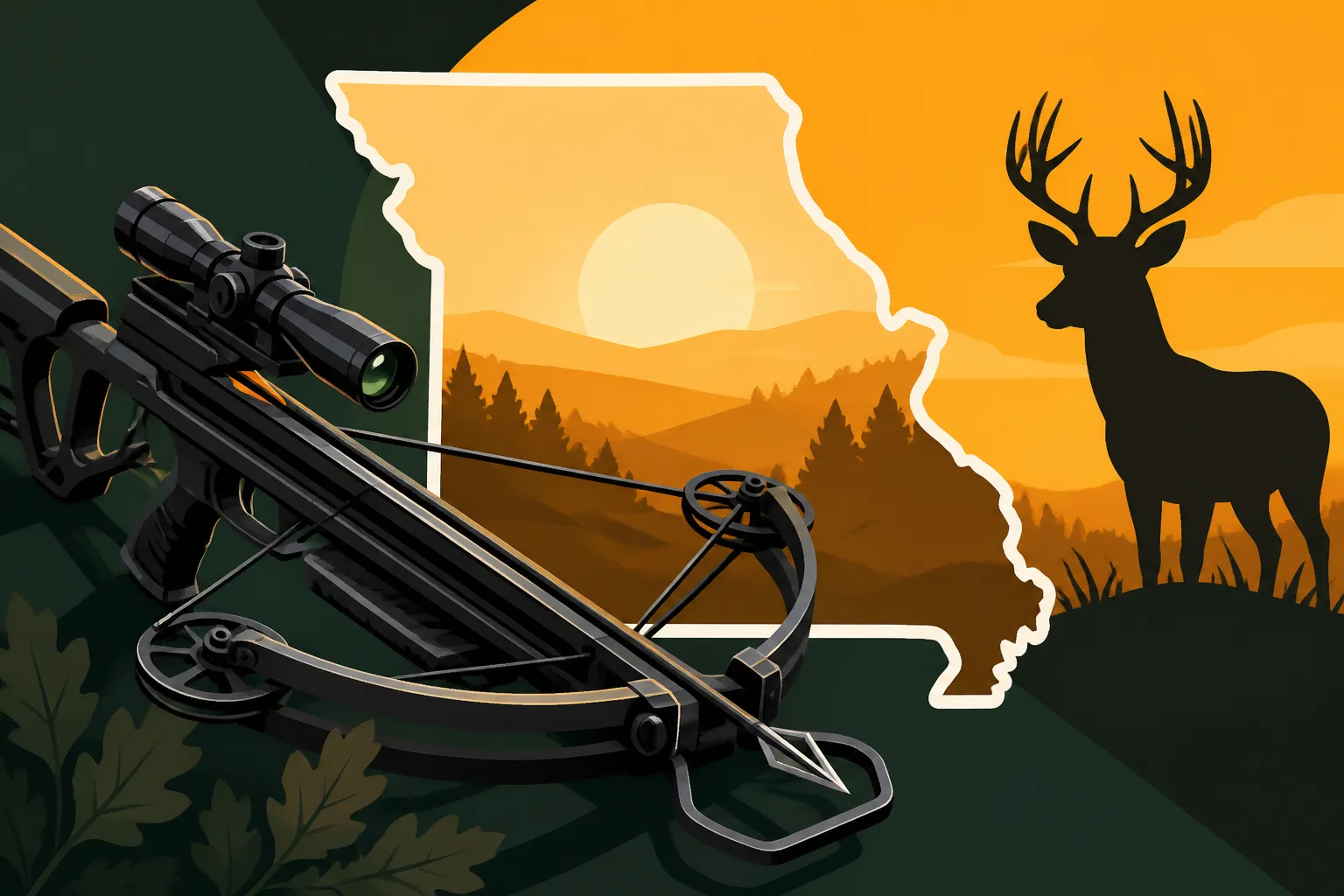
The market for crossbows has exploded, offering an incredible array of choices. When selecting your crossbow, consider your physical size, strength (for cocking, though many offer aids), and the type of hunting you'll primarily be doing. Recurve crossbows are simpler, often more durable, and easier to maintain in the field, but can be wider. Compound crossbows are typically more compact, faster, and often quieter, but also more mechanically complex. Try to shoulder a few models at your local pro shop. What feels good in your hands, points naturally, and isn't too heavy for a long sit in a Treestand Setups in Hardwood Timber?
Beyond the bow itself, key accessories include a reliable scope (many crossbows come with one, but an upgrade can make a huge difference), a cocking device (rope cockers are common, but crank cockers are excellent for those with less strength or who want minimal effort), and a quiver that securely holds your bolts. A good sling is also invaluable for long walks through the timber, especially if you're Still-Hunting a Missouri Ozark Hollow or covering a lot of ground on public land. Don't skimp on these crucial additions; they contribute significantly to your hunting experience and safety.
Bolts, Broadheads, and Sighting In
Your crossbow is only as good as the bolts and broadheads you put through it. For bolts, pay close attention to the manufacturer's recommendations for weight and length. Using bolts that are too light or too heavy, or not the right length, can negatively impact accuracy and even damage your crossbow. Carbon bolts are generally preferred for their durability and consistent flight. You'll want to have several practice bolts for sighting in and regular target practice, separate from your hunting bolts.
When it comes to broadheads, you have a choice between fixed-blade and mechanical designs. Both are legal in Missouri for deer. Fixed Versus Mechanical Broadheads each have their proponents. Fixed-blade broadheads are known for their ruggedness and reliability, while mechanical broadheads typically fly more like field points at higher speeds and create larger cutting diameters upon impact. Whichever you choose, ensure they are razor-sharp and practice with them (or a practice version of the mechanical head) to confirm flight characteristics. Always ensure your broadheads meet Missouri’s minimum cutting diameter requirements (generally 7/8 inch).
Sighting in your crossbow is paramount. Start close, say 10 or 20 yards, and gradually move back to your maximum ethical hunting range. Many crossbows today are incredibly accurate out to 40 or even 50 yards, but know your personal limitations and practice regularly. A good rangefinder, like those integrated into some of the optics found on the GoHunt platform's recommended gear lists, is essential for confirming distances in the field. Remember, crossbows shoot at flatter trajectories than vertical bows, but gravity still wins, so precise range estimation is key.
Maintenance and Transporting Your Crossbow Safely
Like any precision instrument, a crossbow requires regular maintenance to perform reliably. Keep the string waxed, lubricate the rail as per manufacturer instructions, and regularly check all screws and bolts for tightness. A loose cam or riser bolt can ruin accuracy and even be dangerous. After a day in the field, especially if it's been wet or muddy, clean your crossbow thoroughly before putting it away.
Transporting your crossbow safely is also a major consideration. Always de-cock your crossbow after hunting (unless you're returning directly to the field for another hunt very soon and are following all safety protocols). Never transport a cocked crossbow in a vehicle. A good hard or soft case will protect your investment from bumps and scrapes, and it also ensures that your crossbow is stored securely, preventing accidental discharge. When carrying it to and from your stand or Ground Blinds on Crop Field Edges, keep the safety on and a bolt in the quiver, not loaded onto the rail, until you're ready to hunt. Safety first, always.
Crossbows vs. Other Hunting Methods: Pros, Cons, and Considerations
The decision to hunt with a crossbow is a personal one, often influenced by a variety of factors, from physical capability to hunting style preference. It’s helpful to understand how crossbows stack up against other popular hunting methods in Missouri, like traditional vertical bows and firearms, to truly appreciate their place in your hunting toolkit.
Crossbows Compared to Traditional Vertical Bows
For many years, the debate between crossbows and traditional vertical bows (compound and recurve) has been a hot topic among archers. From a regulatory standpoint in Missouri, they share the same seasons, which simplifies things. However, their mechanics and user experience are quite different.
Pros of Crossbows over Vertical Bows:
- Ease of Use: Crossbows are generally easier to learn, cock, and shoot accurately than vertical bows, which require significant strength and practice to hold at full draw. This makes them more accessible for new hunters, youth, or those with physical limitations.
- Accuracy: With a stable platform, a rifle-like stock, and often a magnified scope, crossbows can achieve remarkable accuracy, especially at longer "archery" ranges.
- Hold Time: Once cocked, a crossbow can be held at full draw indefinitely, allowing a hunter to wait for the perfect shot opportunity without fatigue. This is a huge advantage when a deer hangs up just out of range or takes a long time to present a broadside shot.
- Shorter Learning Curve: While proficiency still takes practice, the basic shooting mechanics of a crossbow are often quicker to grasp than those of a vertical bow.
Cons of Crossbows compared to Vertical Bows:
- Bulk and Weight: Crossbows are generally heavier and bulkier than vertical bows, which can be a disadvantage when navigating dense timber or climbing into a stand.
- Recocking Time: Unlike a vertical bow, which can be quickly re-drawn, recocking a crossbow (even with a cocking device) takes time, making follow-up shots slower.
- Perception: Some traditional archers view crossbows as less "challenging" or "sporting" than vertical bows, leading to ongoing debates within the hunting community.
Ultimately, the choice comes down to personal preference and what fits your hunting style and physical capabilities best. Both are highly effective at taking deer ethically.
Crossbows Versus Firearms: Range and Ethics
Comparing crossbows to firearms is another common discussion point, especially when considering the range and ethical shot distances. Missouri's hunting rules keep firearms and archery methods largely separate, with distinct seasons and weapon categories.
Crossbows vs. Firearms – Key Differences:
- Range: While crossbows can be accurate out to 50-60 yards for skilled shooters, this pales in comparison to the effective range of modern hunting rifles, which can be hundreds of yards. Even slug guns generally have a greater effective range than crossbows. This means crossbow hunting often requires more emphasis on close-range tactics and deer movement patterns, similar to traditional archery.
- Kinetic Energy/Wounding Potential: Firearms deliver significantly more kinetic energy and hydrostatic shock than crossbows, leading to different wounding characteristics. A broadhead relies on cutting and hemorrhage for a quick, ethical kill.
- Noise and Recoil: Crossbows are much quieter than firearms, which can be an advantage for not spooking other game in the area and for personal comfort. They also have minimal recoil.
- Season Length: Crossbows typically offer a much longer season than firearms for deer, allowing more time in the woods.
Ethically, both methods demand proficiency and respect for the animal. Just as you wouldn't take a 400-yard shot with a rifle if you haven't practiced it, you shouldn't take a 50-yard crossbow shot if you're not consistently accurate at that distance. The responsibility to make a clean, ethical kill rests solely on the hunter, regardless of the tool.
The Learning Curve and Accessibility of Crossbows
One of the most significant advantages of crossbows is their accessibility. For individuals who are just getting into hunting, or perhaps transitioning from other outdoor pursuits, crossbows offer a relatively shallow learning curve compared to vertical bows. The aiming system, often a scope, is familiar to those with firearm experience, and the consistent release removes a major variable found in traditional archery.
This accessibility makes crossbows an excellent tool for:
- New Hunters: It allows them to focus on scouting, tracking, and deer behavior without being overwhelmed by complex shooting mechanics.
- Youth Hunters: Crossbows can provide a safe and effective way for younger hunters to participate, giving them confidence and a higher chance of success early on.
- Hunters with Physical Limitations: For those with shoulder injuries, back issues, or other physical constraints that prevent them from drawing a vertical bow, a crossbow can keep them in the woods. This inclusive aspect is truly a benefit to the hunting community.
- Cross-Training: Some rifle hunters enjoy using a crossbow to extend their season and challenge themselves with a closer-range weapon, honing their woodsmanship.
- The GoHunt Platform's resources often highlight how various gear, including crossbows, can enhance the hunting experience for a wider audience, focusing on strategy and effective use rather than just the equipment itself. It's all about making hunting enjoyable and successful for everyone.
Strategic Hunting with a Crossbow in Missouri's Diverse Terrain
Missouri offers a fantastic variety of hunting landscapes, from the dense hardwoods of the Ozarks to the rolling farm country of the north. To consistently harvest deer with a crossbow, you need to adapt your strategies to these different environments and leverage the unique advantages your crossbow provides.
Optimizing for Close-Range Shots in Timber
Much of Missouri's deer hunting, especially on public land or smaller private tracts, happens in timbered environments. Whether you're in oak-hickory forests or thick creek bottoms, shot distances with a crossbow are often under 30 yards, sometimes even closer. This requires a different approach than open-field hunting.
Key strategies for timber hunting with a crossbow:
- Concealment is King: In close quarters, deer are much more likely to spot you. Utilize natural cover, wear good camouflage, and pay meticulous attention to your entry and exit routes to avoid spooking deer. A well-placed Treestand Setups in Hardwood Timber or even a natural ground blind brushed into thick cover can be incredibly effective.
- Lane Clearing: Before the season, or well in advance of a hunt, trim shooting lanes to ensure a clear path for your bolt. Remember, a crossbow bolt travels slower and is more susceptible to deflection than a rifle bullet. Even a small twig can send your shot off course. Clear lanes should be wide enough for your broadhead and fletching to pass through cleanly.
- Shot Selection: Focus on broadside or slightly quartering-away shots that offer the best chance for a clean pass-through and vital organ destruction. Avoid head-on or steep quartering-to shots, as the kill zone is smaller and penetration can be hindered.
- Practice Short Shots: While it's tempting to practice at your maximum range, dedicate significant time to practicing 10, 15, and 20-yard shots. These are often the most common shots in dense timber, and proficiency at these distances is crucial.
Remember, a crossbow's effective range is still relatively short compared to a firearm, making stealth and smart stand placement paramount in timber.
Ground Blind Tactics and Crossbow Advantages
Ground blinds have become incredibly popular in Missouri, and for good reason: they offer excellent concealment, protection from the elements, and are particularly well-suited for crossbow hunting. The contained space and window system of a ground blind play directly into a crossbow's strengths.
How to maximize ground blind hunting with a crossbow:
- Brushing In: Don't just pop up a blind in an open field. Take the time to brush it in thoroughly with natural vegetation. This breaks up its outline and helps deer accept its presence. For tips, check out Brushing In a Blind on a Field Edge.
- Window Management: Modern ground blinds offer multiple window configurations. Identify your primary shooting lanes and keep only those windows open. Close or cover the others to maximize your concealment. The confined space of a blind means you don't need to worry about drawing a vertical bow, giving you more freedom of movement.
- Stabilization: The windows of a ground blind can provide excellent stabilization for your crossbow. Many hunters use shooting sticks or simply rest their crossbow on the bottom of the window frame to steady their aim, enhancing accuracy.
- Scent Control: While a blind offers some containment, it's not foolproof. Continue to practice strict scent control, especially if hunting near bedding areas or travel corridors.
- Location, Location, Location: Place your blind strategically. Field edges, pinch points, and timbered draws are prime spots. Hunting a Missouri Fencerow Between Fields can also be very productive. GoHunt's mapping tools can be invaluable for identifying these key terrain features before you even set foot on the property.
Ground blinds can be especially effective for introducing new hunters or youth to crossbow hunting, providing a comfortable and forgiving environment for learning.
Treestand Setups for Crossbow Hunters
While ground blinds are great, treestands remain a staple for many Missouri deer hunters, and crossbows integrate seamlessly into this elevated strategy. Treestands offer a wider field of view, help with scent dispersal, and get you above a deer’s primary line of sight.
Considerations for crossbow hunting from a treestand:
- Safety First: Always use a full-body safety harness and a lifeline when climbing, descending, and hunting from a treestand. This is non-negotiable.
- Shooting Angle: From an elevated position, your shooting angle changes dramatically. Practice shooting from an elevated stand or platform to understand how the trajectory differs, especially at closer ranges. You’ll be aiming slightly lower to hit the vitals when shooting down.
- Clearance: Ensure you have enough clearance to maneuver your crossbow, especially if it’s a wider model. You don't want your limbs or scope hitting the tree or stand railing at the moment of truth.
- Quiet Operation: Keep your crossbow quiet. Pad any metal-on-metal contact points, and make sure your gear doesn't clank against the stand. A sudden noise can spoil an otherwise perfect setup.
- Draw Weight Advantage: The ability of a crossbow to remain cocked is a huge advantage in a treestand. You can remain ready for an extended period, waiting for the deer to present the ideal shot without the strain of holding a vertical bow. This can be particularly beneficial during the rut when bucks might be cruising through at unexpected angles. Consider exploring different stand types, like a saddle, as discussed in Saddle Hunting in Missouri Oaks, which can offer even more flexibility for crossbow shot angles.
By adapting your tactics to the specific terrain and understanding the strengths of your crossbow, you can significantly increase your chances of success across Missouri's diverse hunting landscape.
Common Misconceptions and FAQs about Crossbows
Despite their widespread legality and use, crossbows still carry a few persistent misconceptions and often generate common questions. Let's tackle some of these head-on to ensure you have all the facts about crossbow hunting in Missouri.
Addressing Perceptions of "Easiness" in Crossbow Hunting
One of the most enduring debates around crossbows revolves around the perception that they make hunting "too easy." This sentiment often comes from traditional archers who highlight the physical and mental demands of shooting a vertical bow. While it's true that crossbows can be easier to learn and shoot accurately than a compound or recurve bow, framing it as "easy" hunting is an oversimplification that undervalues the core challenges of hunting itself.
Here's why:
- Hunting is More Than the Shot: The shot is just one small part of hunting. The real challenge, and skill, comes from scouting, understanding deer behavior, mastering scent control, identifying optimal stand locations, navigating terrain, and patiently waiting for an opportunity. A crossbow doesn't make a deer appear out of thin air, nor does it remove the need for woodsmanship. You still need to find the deer, get into range undetected, and make an ethical shot.
- Limited Range: While more accurate than vertical bows for some, crossbows still operate within relatively short ranges compared to firearms. This means hunters must still employ archery-specific tactics to get close to their quarry. A 50-yard shot with a crossbow still demands excellent judgment and practice.
- Ethical Responsibility: Just like any weapon, a crossbow demands the hunter's full ethical responsibility. Taking a shot beyond your effective range, failing to practice, or making a poor shot choice is just as unethical with a crossbow as it would be with any other weapon.
- Inclusivity: Dismissing crossbows as "too easy" overlooks their crucial role in making hunting accessible to a wider demographic, including those with physical limitations or newcomers who want to learn without the steep initial physical curve of a vertical bow. This inclusivity strengthens the hunting community as a whole.
The "easiness" argument often misses the point that hunting is an art form, not just a technical exercise.
Understanding Missouri's Telecheck and Tagging Rules for Crossbow Kills
Missouri has a very clear system for reporting harvested deer and turkeys, and crossbow kills are no exception. After you’ve successfully harvested a deer with your crossbow, the process for tagging and reporting is exactly the same as if you had used a vertical bow or a firearm. There are no special distinctions based on the weapon used.
Here’s a quick rundown of what you need to do:
- Tagging: Immediately after recovering your deer, you must notch your permit (either an archery antlered or archery antlerless permit) and attach it to the deer. Make sure it's securely attached so it won't fall off during transport. For more details on this, look up Missouri Deer Tag Notching Rules.
- Telechecking: Within 24 hours of harvest, you must telecheck your deer. This can be done online through the MDC website, via the MO Hunting app (which is incredibly convenient), or by calling the Telecheck phone number. You'll need information from your permit and the deer itself (like sex and antler points). Telechecking a Missouri Deer is a critical step, and failing to do so is a serious violation.
- Confirmation Number: Once telechecked, you’ll receive a confirmation number. This number must remain with the deer until it's processed.
The consistency of these rules across all weapon types ensures a smooth and efficient system for wildlife management and compliance. Don't let the excitement of a successful hunt distract you from these important administrative steps!
Future Outlook for Crossbow Regulations in Missouri
While regulations can always change, the current trend in Missouri, and nationally, suggests that crossbows are firmly established as a legal and accepted method for hunting deer and other game. The Missouri Department of Conservation (MDC) makes decisions based on wildlife population management, hunter participation, and safety data, not solely on traditionalist sentiment.
The inclusion of crossbows has demonstrably increased hunter participation and provided more opportunities for different demographics to enjoy the outdoors. This positive impact on hunter recruitment and retention is generally viewed favorably by wildlife agencies. Therefore, it's unlikely we'll see a reversal of crossbow legality in the foreseeable future.
However, hunters should always remain engaged with MDC and other conservation organizations. Stay informed about proposed regulation changes by regularly checking the MDC website or attending public meetings. Your voice, as an informed and ethical hunter, matters. The landscape of hunting equipment is always evolving, and it's exciting to see how tools like crossbows continue to help people connect with Missouri's rich hunting heritage.
Disclaimer
This article is for general informational purposes only and does not constitute professional advice. Laws, prices and regulations vary by location and change over time. Consult a qualified professional for guidance on your specific situation.