Muzzleloader Calibers Legal in Missouri
It can feel like a maze trying to figure out exactly what gear is legal for hunting in Missouri, especially when it comes to specific weapon types like muzzleloaders. You’ve probably heard different interpretations or seen conflicting advice, leaving you wondering if your trusty firearm is even allowed in the field. This guide aims to cut through that confusion, giving you a crystal-clear understanding of the legal muzzleloader calibers and related rules for hunting deer in the Show-Me State, so you can hunt with confidence.
Understanding Missouri's Muzzleloader Regulations
Missouri’s hunting regulations are designed to provide various opportunities while managing wildlife populations effectively. Muzzleloaders hold a special place in these regulations, offering hunters a unique challenge and an extended season. But their legality isn't just about whether it's a "muzzleloader" – it dives deeper into caliber, projectile type, and even when you're using it. It's crucial to understand these nuances to ensure you're hunting legally and ethically.
The "Any Legal Modern Firearm" Rule for Muzzleloaders
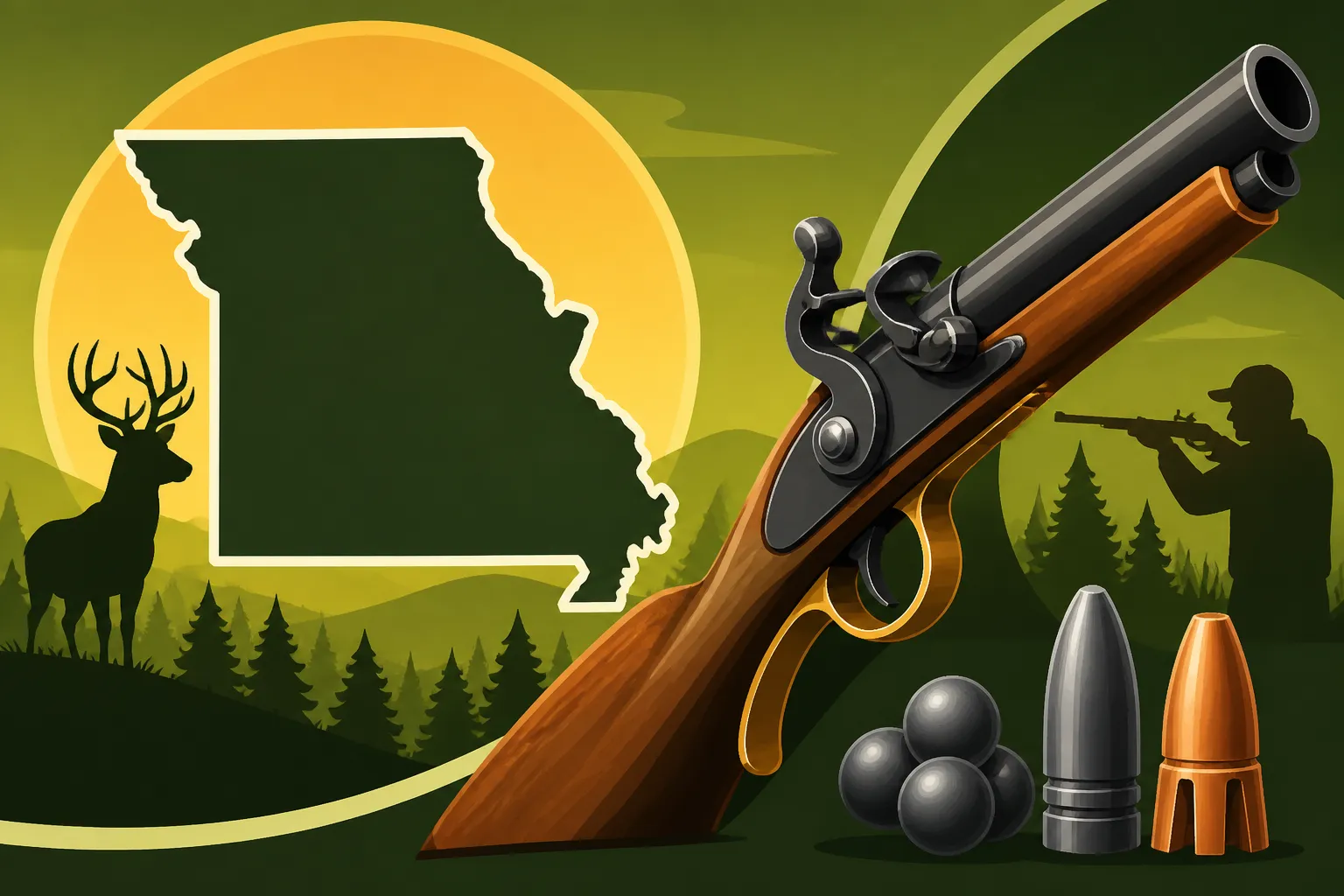
When you dig into the regulations, you'll find that during many portions of Missouri’s deer season, muzzleloaders are generally considered under the umbrella of "any legal modern firearm." This means that for the main November firearms portion, and even the early and late antlerless portions, if your muzzleloader meets the basic criteria for a legal firearm, you can use it. The key here is that it has to be a cap-and-ball, flintlock, or in-line muzzleloading rifle or pistol that fires a single projectile. We're talking about firearms that load from the muzzle, not breech-loaders or cartridge guns. This broad definition ensures that the spirit of traditional hunting is preserved while allowing for modern advancements in muzzleloader technology. For many, this flexibility is a huge draw, allowing them to use their preferred traditional weapon during the most popular deer hunting times.
Specific Caliber Requirements and Exemptions
While muzzleloaders might fall under the "any legal modern firearm" rule during some seasons, there are still specific caliber requirements you must adhere to. For deer hunting in Missouri, any legal muzzleloader must be at least .40 caliber or larger. This minimum ensures that the projectile carries enough energy to humanely harvest a deer. You won't find any specific upper limit on caliber, but anything over .60 or .62 caliber starts getting pretty unwieldy for most hunters. The important thing is meeting that .40 caliber minimum. This rule is in place for animal welfare, ensuring that hunters are using adequate equipment to make a clean kill. It's not about restricting your choice unnecessarily, but rather about promoting responsible hunting practices. Always double-check the latest regulations, perhaps even using a resource like GoHunt, to ensure there haven't been any minor updates that could affect your specific setup.
Common Legal Muzzleloader Calibers for Missouri Deer
Once you understand the basic rules, you'll see that a few calibers dominate the Missouri muzzleloader scene. These are proven performers, readily available, and generally make selecting a legal setup quite straightforward. The choice often comes down to personal preference, recoil tolerance, and the type of hunting you plan to do, but all within that legal framework.
.50 Caliber Muzzleloaders: The Gold Standard
Without a doubt, the .50 caliber muzzleloader is the most popular and widely used choice for deer hunting in Missouri. It’s often considered the "gold standard" for good reason. A .50 caliber projectile, whether a patched round ball, a conical bullet, or a sabot holding a smaller bullet, carries excellent energy and has a substantial wound channel, making it highly effective for whitetails. The ballistic performance of a .50 caliber is generally well-suited for the typical shot distances encountered in Missouri's diverse habitats, from open agricultural fields in the north to the dense timber of the Ozarks. Many manufacturers offer a wide array of .50 caliber muzzleloaders, from traditional flintlocks and percussion rifles to modern in-lines, making accessories and ammunition readily available. If you're new to muzzleloading or just looking for a reliable, no-nonsense setup that meets all legal requirements and performs exceptionally well, a .50 caliber is an excellent choice. It truly offers a blend of power and practicality that's hard to beat.
.45 Caliber Muzzleloaders: A Powerful Alternative
While .50 caliber reigns supreme, the .45 caliber muzzleloader has grown significantly in popularity and is a perfectly legal and powerful alternative for Missouri deer hunters. Many modern in-line muzzleloaders are chambered in .45 caliber, often utilizing sabots to fire smaller, faster projectiles, like a .40 or .44 caliber bullet. This setup can offer flatter trajectories and often reduced recoil compared to heavier .50 caliber loads, which can be appealing to hunters who are sensitive to recoil or prefer a slightly lighter rifle. The .45 caliber still delivers more than enough energy for humane deer harvest within typical muzzleloader ranges. When considering a .45 caliber, it's important to remember that while the bore is .45, the actual bullet inside a sabot might be smaller. As long as the muzzleloader itself is .40 caliber or greater, and you're firing a single projectile, you're good to go. It’s a versatile option that demonstrates how modern advancements can still fit within traditional hunting methods.
Other Legal Calibers
Beyond the dominant .50 and .45 calibers, other options meet Missouri's .40 caliber minimum for muzzleloaders, though they are less common for deer hunting. You might encounter .54 caliber muzzleloaders, which offer even more power and a larger projectile, often favored by hunters seeking to replicate a more traditional "big bore" experience or those targeting larger game in other states. While certainly legal and effective for deer, the increased recoil and potentially higher cost or reduced availability of components can make them less attractive for the average Missouri deer hunter. Less commonly, you might find some .40 caliber specific muzzleloaders. While they meet the minimum, many hunters feel that for deer, the .45 or .50 calibers offer a better margin of error in terms of energy delivery, especially with less-than-perfect shot placement or at the upper end of effective range. Ultimately, the .40 caliber minimum is a floor, and most hunters prefer to operate a bit above it for peace of mind and ethical harvesting. When researching different calibers, an invaluable tool like the GoHunt app can sometimes provide quick references to state regulations, although direct consultation with the Missouri Department of Conservation (MDC) is always the most definitive source.
Projectiles, Propellants, and Other Muzzleloader Gear
Choosing a legal caliber is just one piece of the muzzleloading puzzle. To be truly prepared for the field in Missouri, you also need to understand the legalities and practicalities of the projectiles you load, the propellants you use, and even the sighting systems on your rifle. These elements collectively determine your muzzleloader’s performance and ensure you’re hunting within the rules.
Legal Projectile Types
Missouri regulations are quite specific about the projectiles you can use in your muzzleloader for deer. The primary rule is that you must fire a single projectile. This means no buckshot or shot charges like you’d use in a shotgun for small game or birds. Within that single projectile rule, you have a few main types to choose from:
- Patched Round Balls: These are lead spheres, typically slightly undersized for the bore, wrapped in a lubricated cloth patch. They are the most traditional projectile and can be incredibly accurate at moderate distances. For a .50 caliber, you'd use a .490" ball with a thick patch. They work well for deer, particularly when shot placement is precise, and are often the choice for those who enjoy the historical aspect of muzzleloading.
- Conical Bullets: These are solid lead bullets, often weighing 300-500 grains for a .50 caliber, that are designed to load directly into the bore without a patch. Examples include PowerBelt bullets or traditional Maxi-Balls. They offer better ballistic coefficients and energy retention than round balls, making them a popular choice for hunters seeking more punch and a flatter trajectory at longer ranges.
- Saboted Projectiles: These are arguably the most popular choice for modern in-line muzzleloaders. A sabot is a plastic sleeve that holds a smaller, typically jacketed, bullet (like a pistol bullet) and allows it to be fired through a larger bore. For instance, a .50 caliber muzzleloader might fire a .45 caliber bullet encased in a sabot. These offer excellent accuracy, higher velocities, and often better expansion characteristics due to the jacketed bullets. However, it's important to ensure your sabot-bullet combination is legal. The key is that the muzzleloader itself must be at least .40 caliber, and it must still be a single projectile.
Regardless of your choice, ensure your projectile is suitable for deer, meaning it will expand or transfer enough energy for a humane kill. You'll want to practice extensively with your chosen projectile, just like you would with any other firearm, to understand its flight characteristics.
Propellant Considerations
The propellant you use in your muzzleloader is just as important as the projectile, and Missouri regulations are straightforward: you must use black powder or a commercially manufactured black powder substitute. This includes popular options like Pyrodex, Triple Seven, or Blackhorn 209. You cannot use smokeless powder in a muzzleloader that is not specifically designed and proofed for it, and the vast majority of traditional and in-line muzzleloaders are not designed for smokeless powder. Doing so can be extremely dangerous, leading to catastrophic failure of the firearm.
When choosing a propellant, consider the following:
- Black Powder: The original, traditional choice. It creates a lot of smoke and requires meticulous cleaning due to its corrosive nature. However, it’s reliable and produces excellent accuracy in many rifles.
- Pyrodex/Triple Seven: These are granular black powder substitutes that burn cleaner than traditional black powder and are less corrosive. They are very popular for their ease of use and performance.
- Blackhorn 209: A newer, very clean-burning black powder substitute that offers excellent performance, very little fouling, and is non-corrosive. It typically requires a hotter primer (often a 209 shotshell primer) for reliable ignition.
Always follow the manufacturer's recommendations for load data and safety. Overloading a muzzleloader is dangerous and can lead to serious injury. Proper storage and handling of propellants are also critical. Many hunters rely on resources like Hunting Pressure on Missouri Public Ground to plan their hunts, and the safety of their gear is paramount.
Scopes and Sights on Muzzleloaders
When it comes to sighting systems, Missouri offers a good deal of flexibility for muzzleloader hunters. You are absolutely permitted to use telescopic sights (scopes) on your muzzleloader during deer season. This is a common question, as some states restrict scopes on muzzleloaders, but not so in Missouri. This is excellent news for hunters who want to extend their effective range, improve their accuracy, or who simply struggle with open sights. A good quality, low-power scope (like a 1-4x or 2-7x) can be a real asset, especially in the low light conditions often encountered at dawn and dusk in the Missouri timber.
However, if you prefer a more traditional hunting experience, open sights or peep sights are also perfectly legal and widely used. Many traditional muzzleloaders come equipped with fixed or adjustable open sights, and hunting with them requires a different skill set, often limiting your effective range but adding to the challenge and satisfaction of the hunt. The choice between scopes and open sights often boils down to personal preference and how you want to experience your hunt. Regardless of your choice, make sure your sights are properly zeroed and you've practiced extensively, ensuring you know your effective range. When you consider various gear options, including scopes, comparing them on a platform like GoHunt can help you make informed decisions.
The Advantage of Muzzleloaders in Missouri
Beyond just knowing what's legal, understanding why you might choose a muzzleloader for deer hunting in Missouri adds another layer of appreciation for this unique method. Muzzleloaders offer distinct advantages, from expanding your time in the woods to experiencing a different kind of challenge, making them much more than just an "old-fashioned" firearm.
The Alternative Methods Portion
One of the most compelling reasons to embrace muzzleloading in Missouri is access to the dedicated Missouri's Alternative Methods Portion of the deer season. This is a special, earlier portion that allows the use of archery equipment, crossbows, and muzzleloaders, but excludes modern centerfire rifles and shotguns. It's typically held in mid-December, after the main firearms portion, and offers a fantastic opportunity to hunt deer when hunting pressure might have died down a bit, but before the really deep winter sets in.
This portion provides a crucial window for hunters who might not have filled their tags during the busy November firearms season, or who simply prefer the unique challenge and slower pace of alternative methods. It's a chance to extend your time in the field, often in colder weather that can get deer moving in search of late-season food sources. For many, it's a calmer, more serene hunting experience without the constant sound of rifle shots echoing through the timber. Learning Muzzleloader Tactics in the Alternative Methods Portion can be hugely beneficial, as deer behavior can be different in December compared to the peak rut.
Extending Your Season
Beyond the Alternative Methods Portion, your muzzleloader can actually extend your hunting season even further. As mentioned, a legal muzzleloader is typically permitted during the main November firearms portion and the early and late antlerless portions, which also typically run in October and December. This means that if you own a legal muzzleloader, you essentially have a very versatile tool that covers a significant portion of Missouri's deer hunting calendar.
Consider this: you could bowhunt through the long archery season, switch to your muzzleloader for the November firearms portion, and then pick it up again for the Alternative Methods Portion and potentially the late antlerless days. This kind of flexibility allows you to tailor your hunting strategy to different times of the year and varying weather conditions. It maximizes your opportunities to be out in the woods, observing wildlife and pursuing deer, without needing a full arsenal of different weapon types for each specific season. It truly makes a muzzleloader a strategic addition to any Missouri hunter's gear.
Unique Challenges and Rewards
Hunting with a muzzleloader is, for many, a deeply rewarding experience precisely because it presents a unique set of challenges that differ from modern cartridge rifles. There's a certain ritual to loading a muzzleloader, carefully measuring powder, seating a projectile, and capping the nipple or setting the flint. This slower, more deliberate process often forces hunters to be more selective with their shots, focus on closer ranges, and prioritize woodsmanship.
The limited range and single-shot nature of a muzzleloader mean that stalk and setup become even more critical. You can't just send a follow-up shot downrange in a hurry. This necessitates a more intimate understanding of deer movement, terrain, and wind. It pushes you to become a better hunter in terms of scouting, approach, and patience. The satisfaction of harvesting a deer with a muzzleloader, knowing the added effort and traditional skill involved, is something truly special. It connects you to a hunting heritage that stretches back centuries and provides a profound sense of accomplishment. Whether you're hunting the deep woods of the Deer Hunting the Missouri Ozarks or the rolling farmlands of north Missouri, the muzzleloader offers a rich, immersive experience.
| Caliber | Legal for Deer in MO | Common Projectile Types | Typical Effective Range | Advantages | Disadvantages |
|---|---|---|---|---|---|
| .50 | Yes (min .40) | Round Ball, Conical, Sabot | 75-150 yards | Widely available, strong energy, versatile | Can have significant recoil with heavy loads |
| .45 | Yes (min .40) | Conical, Sabot | 75-175 yards | Flatter trajectory with sabots, often less recoil | Slightly less energy than .50 with some loads |
| .54 | Yes (min .40) | Round Ball, Conical | 75-125 yards | Very powerful, large wound channel | Less common, components can be harder to find, heavy recoil |
Disclaimer
This article is for general informational purposes only and does not constitute professional advice. Laws, prices and regulations vary by location and change over time. Consult a qualified professional for guidance on your specific situation.