.308 Versus .270 for Whitetails
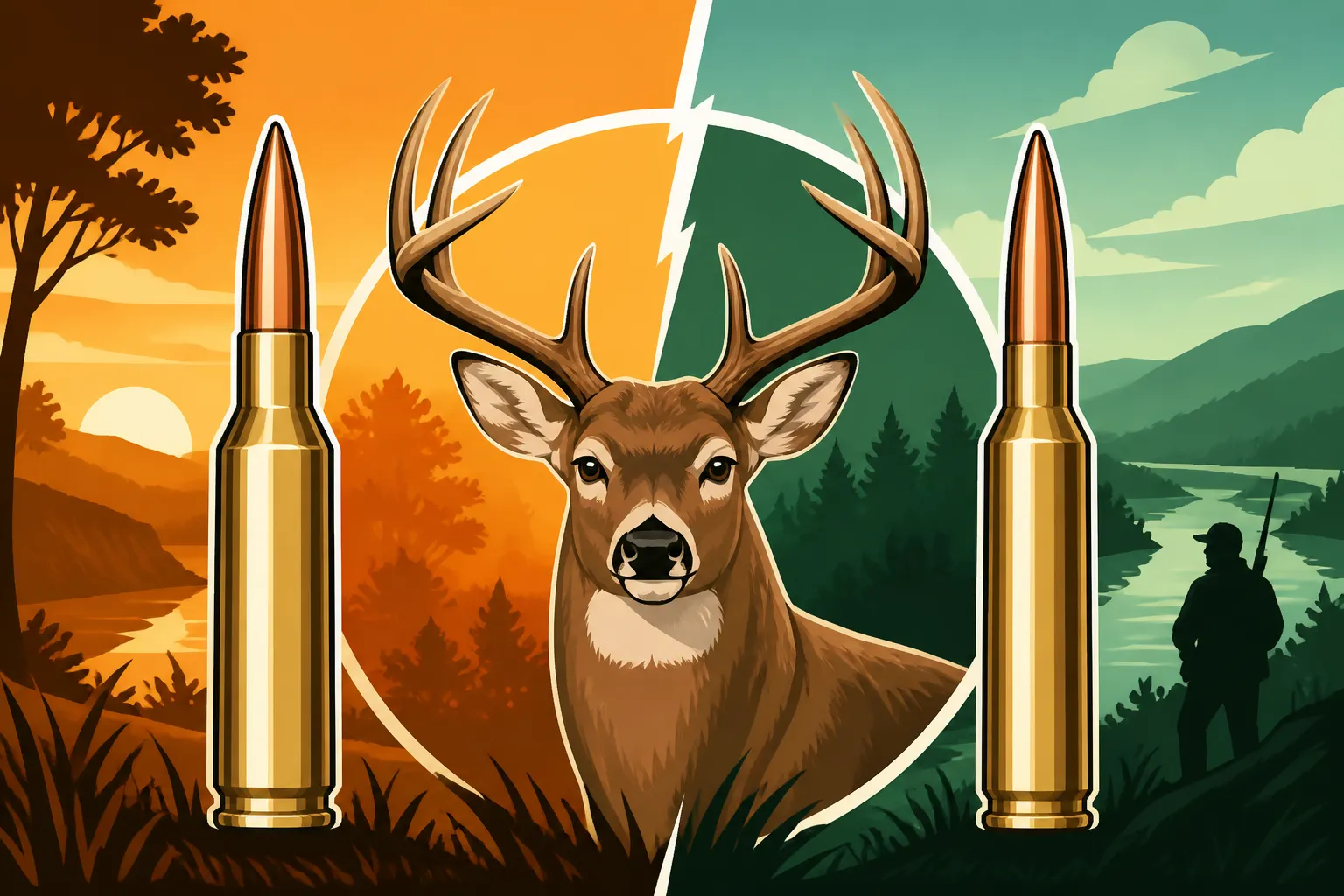
Alright, let's dive into one of those age-old debates that hunters love to chew on around the campfire: .308 versus .270 for Missouri whitetails. It’s a choice that can genuinely agonize a hunter, especially when you’re looking to invest in a new rifle or just want to be sure your current setup is optimal for the varied landscapes we have here in Missouri. This guide isn't about telling you one is definitively "better" than the other in every single situation, but rather to break down what each caliber brings to the table so you can make an informed decision for your own unique hunting style.
Understanding the .308 Winchester for Missouri Deer
The .308 Winchester is a cartridge that has truly earned its stripes, not just in the hunting world but in military applications as well. It’s a workhorse, plain and simple, and often praised for its efficiency and reliability. For us here in Missouri, whether you're navigating the dense timber of the Ozarks or sitting on a field edge in northern farm country, the .308 has proven itself time and again.
The .308's Reputation and Versatility
The .308 Winchester has a reputation that precedes it, and for good reason. Born from military design, it quickly transitioned into the civilian market as a powerhouse hunting cartridge. What makes it so appealing is its inherent accuracy, especially in a compact, efficient package. You often hear hunters talk about the "shootability" of a .308, referring to its moderate recoil and excellent ballistic characteristics. This means that a wide variety of shooters, from seasoned veterans to those just getting into the sport, can handle it comfortably and confidently.
When you think about Legal Firearms for Missouri Deer, the .308 is right there at the top of the list for popularity. It's a short-action cartridge, which allows for lighter, quicker-handling rifles—a real bonus when you're still-hunting through thick brush or maneuvering in a treestand. The range of bullet weights available for the .308, typically from 150 to 180 grains, gives hunters a lot of flexibility. A 150-grain bullet will scream out of the barrel, offering a flatter trajectory for those longer shots, while a heavier 180-grain slug carries more kinetic energy and is excellent for punching through bone or dense tissue, especially on quartering shots. This versatility means you can tailor your ammunition choice to the specific conditions you anticipate on a given hunt, which is something I always appreciate when heading out into unfamiliar territory.
Advantages of the .308 in Typical Missouri Scenarios
Let's talk about where the .308 really shines here in Missouri. Our state is a patchwork of landscapes. You've got the rolling hills and thick forests of the Ozarks, then the sprawling crop fields and timbered draws of northern Missouri. The .308, with its moderate velocity and good bullet energy, is incredibly effective in both.
For the majority of shots we take on whitetails in Missouri, especially when hunting Deer Hunting the Missouri Ozarks or dense river bottoms, the range is typically under 150 yards, often much closer. In these close-to-medium range encounters, the .308 delivers ample energy and tissue damage for a clean, quick harvest. The slightly slower velocity compared to some magnum cartridges means less meat damage on close shots, which is always a bonus for the freezer. It’s a very forgiving cartridge in terms of bullet performance at these common distances. The availability of Ammunition Availability Before Missouri Season is also a huge plus; you'd be hard-pressed to find a sporting goods store in Missouri that doesn't stock a variety of .308 loads. Companies like Federal, Hornady, and Winchester all offer excellent hunting ammunition that performs exceptionally well on whitetails. Whether you prefer bonded bullets for deep penetration or rapidly expanding projectiles, the options are vast.
Potential Drawbacks and Considerations
While the .308 is fantastic, it's not without its specific characteristics that might be seen as minor drawbacks depending on your exact hunting style. Its trajectory, while perfectly adequate for most Missouri hunting ranges, isn't as "flat" as some of the higher-velocity cartridges, especially as distances stretch beyond 250-300 yards. This means you might need to hold over a bit more or adjust your scope for longer shots across those wide-open Hunting a Missouri Fencerow Between Fields or vast alfalfa fields. This isn't a huge issue for most hunters, as many ethical shots on whitetails are taken well within this range, but it's something to be aware of if you frequently encounter very long-range opportunities.
Another point to consider, though less critical for whitetails, is that its upper bullet weight limit is generally around 180 grains. While this is more than enough for any whitetail, if you ever contemplated hunting significantly larger game out of state, some hunters might lean towards a caliber that can handle heavier bullets for increased penetration on thick-skinned animals. However, for the sole purpose of Missouri whitetails, this is rarely a genuine limitation. The .308 is simply a highly efficient, reliable, and powerful enough tool for the job.
Exploring the .270 Winchester for Missouri Whitetails
Now, let's shift our focus to the venerable .270 Winchester, a cartridge with its own legendary status, largely thanks to the writings and hunting adventures of figures like Jack O'Connor. The .270 has been the darling of open-country hunters for decades, and its characteristics make it incredibly well-suited for many Missouri hunting situations, particularly those involving longer sightlines.
The .270's Legacy and Flat-Shooting Nature
The .270 Winchester burst onto the scene in the 1920s and quickly gained a reputation as a flat-shooting, hard-hitting cartridge ideal for deer and elk. Unlike the .308's military roots, the .270 was designed from the ground up as a sporting cartridge. Its key characteristic is its high velocity, which results in a remarkably flat trajectory. This means less bullet drop over distance, simplifying holdover calculations for those longer shots.
The typical bullet weights for the .270 range from 130 to 150 grains, though you can find some lighter or heavier options. These lighter, faster bullets carry significant energy downrange and are known for their impressive terminal performance on whitetails. When a 130-grain .270 bullet impacts a deer at high velocity, it delivers a tremendous amount of hydrostatic shock, often resulting in very quick, humane kills. For hunters who appreciate a cartridge that "reaches out there" with minimal fuss, the .270 has always been a top contender. It's a classic for a reason, still incredibly popular among hunters who value accuracy and speed for open country and longer shots.
Strengths of the .270 for Missouri's Open Spaces
If your hunting grounds include wide-open crop fields, power line cuts, or long views down a timbered ridge, the .270 Winchester really shines. Imagine you're hunting North Missouri's Big-Buck Farm Country where bucks might be working the edges of a massive cornfield or crossing a cut bean field. Shots of 200, 300, or even 400 yards are not uncommon in these areas. The .270’s flatter trajectory gives you a distinct advantage here, making those longer shots more manageable and increasing your confidence that your bullet will impact where you aim without significant guesswork on holdover.
The excellent energy retention of .270 bullets at extended ranges ensures that even far-off whitetails receive a powerful blow. This isn't just about accuracy; it's about ethical hunting. Knowing your bullet will still have plenty of punch after a long flight path is crucial. It’s also a caliber that tends to perform consistently across various bullet manufacturers and designs. Whether you're using a Hornady SST, a Barnes TSX, or a classic Federal Power-Shok, the .270 generally delivers reliable expansion and penetration on deer-sized game. The crisp crack of a .270 report is a familiar sound on many Missouri openings, a testament to its enduring popularity for good reason.
What to Keep in Mind with the .270
While the .270 boasts a flatter trajectory and impressive velocity, there are a few things to consider. Compared to the .308, the .270 typically has slightly more felt recoil. While still manageable for most shooters, it can be a bit more noticeable, especially in lighter rifles. For new hunters or those sensitive to recoil, this might mean a bit more practice at the range to maintain consistent accuracy. However, proper shooting technique and a good recoil pad can mitigate much of this.
Another point is the range of bullet weights. As mentioned, the .270 generally uses lighter bullets than the .308. While 130-150 grains is perfect for whitetails, if you had aspirations of hunting much larger game like moose or grizzly bears in other regions, you might find the .270's versatility a bit more limited compared to the wider array of heavy bullet options available for .30-caliber cartridges. But again, for dedicated Missouri whitetail hunting, this is a non-issue. Some hunters also worry about "over-penetration" at very close ranges due to high velocity, but with modern bullet designs, this is rarely a practical concern for deer; the bullet still does its job effectively.
Side-by-Side Comparison: .308 vs. .270 for Missouri
It’s often helpful to lay these two excellent cartridges out next to each other to see how their core characteristics stack up, especially when we're thinking about typical Missouri hunting scenarios. It’s less about a knock-out punch and more about a nuanced understanding of their individual strengths.
Ballistics and Trajectory for Real-World Shots
Let's get down to the brass tacks of how these two perform in the field. Both the .308 and the .270 are incredibly capable deer cartridges, well within what's needed for a clean harvest.
For the vast majority of deer hunting in Missouri, say out to 250-300 yards, the ballistic differences are often negligible in a practical hunting sense, assuming good shot placement. For example, a typical 150-grain .308 might drop around 6-7 inches at 200 yards with a 100-yard zero, while a 130-grain .270 might only drop 4-5 inches. That's a mere 2-3 inch difference, which for most hunters, is easily compensated for or falls well within the vital zone of a whitetail. However, as you push past that 300-yard mark, the .270's flatter trajectory starts to show a clearer advantage, requiring less holdover.
Here's a simplified look at how they compare, keeping typical Missouri hunting in mind:
| Feature | .308 Winchester | .270 Winchester |
|---|---|---|
| Typical Bullet Weight | 150-180 grains | 130-150 grains |
| Velocity | Moderate-High (e.g., 2,600-2,800 fps for 150gr) | High (e.g., 3,000-3,100 fps for 130gr) |
| Trajectory | Good, slightly more arced at longer range | Excellent, notably flatter |
| Felt Recoil | Moderate, generally perceived as lighter | Moderate-Heavy, slightly more than .308 |
| Effective Range | Highly effective to 300+ yards | Highly effective to 400+ yards |
| Wind Drift | Good | Slightly better due to higher velocity |
| Rifle Actions | Short Action | Long Action |
Note: Ballistic performance varies significantly with specific bullet types, barrel lengths, and environmental conditions. Always consult manufacturer data for your chosen ammunition.
When considering Practical Range in Missouri Timber, both are more than sufficient. You're usually talking about shots under 100 yards, and often much less, in the thick stuff. The main difference really comes into play when you're looking at open areas like those in Hunting Standing Corn Before Harvest or What Changes After the Beans Come Off, where visibility might allow for longer shots.
Recoil, Shooter Comfort, and Practical Accuracy
Recoil is a subjective thing, but generally speaking, the .308 Winchester is perceived as having slightly less felt recoil than the .270 Winchester. This isn't to say the .270 is a shoulder thumper, but that difference can be noticeable, especially during extended range sessions or for smaller-framed shooters. Lower recoil contributes to greater shooter comfort and often translates to better practical accuracy, as the shooter is less likely to flinch or anticipate the shot.
Ultimately, accuracy isn't solely about the caliber; it's about the shooter. A rifle in .308 or .270 is only as accurate as the person pulling the trigger. The ability to place a shot precisely in the vitals trumps any marginal ballistic difference between these two cartridges. That's why consistent practice, knowing your rifle, and understanding how to effectively Zeroing a Rifle for Short Woods Shots or longer field shots, are far more critical than arguing over a few feet per second of velocity. This is also where good optics come into play. Having a reliable scope that gathers light well, especially in the low-light conditions of dawn and dusk, can make all the difference, regardless of caliber. You might want to consider Rifle Scopes for Low-Light Timber if you find yourself hunting dense areas frequently.
Ammunition and Rifle Availability
Both the .308 Winchester and the .270 Winchester are incredibly popular cartridges, meaning that finding rifles and ammunition is rarely an issue. They are staples in just about every gun shop and sporting goods store across Missouri.
- Rifles: You'll find a vast selection of rifles chambered in both calibers, from budget-friendly options to high-end custom builds. Companies like Ruger, Remington, Savage, Winchester, and Browning all offer excellent rifles in both. This widespread availability means you have plenty of choices when it comes to action type, barrel length, stock material, and overall ergonomics to find a rifle that fits you perfectly.
- Ammunition: Similarly, ammunition for both is plentiful. You'll find a huge array of bullet types and weights for both, from basic soft-points for general hunting to premium bonded or monolithic bullets designed for maximum penetration and weight retention. This makes it easy to experiment and find the load that performs best in your specific rifle and for your specific hunting conditions. While general availability is great, if you're looking for specialized loads or want to ensure you have enough before a busy season, checking current stock and maybe picking up a few boxes beforehand is always a good idea, as you would for any popular caliber.
Making Your Choice for Your Missouri Hunting Style
So, after all that, how do you actually decide between two such excellent contenders? It really boils down to your personal hunting style, the terrain you most frequently encounter, and what feels most comfortable and confident in your hands.
Matching Caliber to Terrain and Shot Distances
Consider the primary areas you hunt in Missouri.
-
If you primarily hunt dense timber, thick creek bottoms, or the rugged terrain of the Ozarks: You're likely looking at shot opportunities that are relatively close, often under 150 yards. In these situations, the .308 Winchester is an absolute hammer. Its moderate velocity, solid energy transfer, and diverse bullet options make it perfectly suited for quick, decisive shots in heavy cover. The slight ballistic arc isn't an issue at these ranges, and the milder recoil can be an asset when you need to quickly get back on target or if you're taking a shot from an awkward position in a treestand. It’s tough to beat the .308’s performance in tight quarters where quick handling and reliable terminal performance are paramount.
-
If your hunting focuses more on large agricultural fields, power lines, open ridge tops, or areas where longer shots are common: The .270 Winchester begins to show its true advantage. Its flat trajectory means you'll have less to compensate for on those 250, 300, or even 400-yard shots. When you're glassing a distant deer in a freshly cut soybean field or watching a fencerow for movement, the .270 gives you confidence that your shot will arrive with minimal drop. Its high velocity ensures excellent expansion and energy transfer even after a lengthy flight. For hunters who spend their time in Hunting North Missouri's Big-Buck Farm Country or other expansive landscapes, the .270 might just be your ideal partner.
Personal Preferences and Ethical Considerations
Beyond the ballistics and terrain, your personal preference and comfort level with the rifle are perhaps the most important factors.
- Recoil Sensitivity: If you are sensitive to recoil, or you're setting up a rifle for a younger hunter, the slightly softer-shooting .308 might be a more comfortable and confidence-inspiring choice. The less a shooter anticipates recoil, the better their fundamentals tend to be, leading to greater accuracy.
- Confidence in Your Rifle: Ultimately, the best caliber is the one you shoot most accurately and confidently. Regular practice with your chosen rifle and ammunition is far more important than a few feet per second or inches of drop difference between these two. Know your gun, know your zero, and understand its capabilities. A well-placed shot from either a .308 or a .270 will ethically harvest a Missouri whitetail.
- Ethical Hunting: No matter which caliber you choose, the ethical responsibility of a hunter is to make a clean, humane kill. This means practicing shot placement, understanding deer anatomy, and taking shots only within your effective range and confidence level. Tools like the GoHunt app can be invaluable for scouting and understanding terrain, helping you position yourself for ethical shots, no matter your caliber. Using features that show you property lines and topography can greatly assist in finding the best entry routes and stand locations before you even step foot in the woods. Scouting Missouri Public Land Before Season is crucial, and having a tool like that can help you visualize the distances you might encounter.
The Bottom Line for Missouri Whitetails
So, what's the verdict for Missouri whitetails? Both the .308 Winchester and the .270 Winchester are fantastic cartridges, supremely capable of taking down any deer you'll encounter in our state.
- For the all-around hunter who mostly hunts timber, wants less recoil, and values versatility with bullet weights, the .308 Winchester is an outstanding choice. It's a reliable, efficient, and accurate cartridge that performs admirably in the vast majority of Missouri hunting situations.
- For the hunter who frequently encounters longer shots across open fields, prefers a flatter trajectory, and appreciates a powerful, high-velocity punch, the .270 Winchester is arguably the better option. It excels where distance is a factor, simplifying aiming and delivering a decisive blow.
Honestly, you can't go wrong with either. If you're agonizing over the decision, think about your most common hunting scenario. Do you spend more time deep in the woods, or are you glassing vast fields? Let that be your guide. The key isn't necessarily having the "best" caliber, but rather the one that best suits you and your typical hunting environment, allowing you to place that bullet exactly where it needs to go. And always remember, regardless of your rifle, good scouting, solid planning, and excellent woodsmanship will put you on deer more often than a slight ballistic advantage ever will.
Disclaimer
This article is for general informational purposes only and does not constitute professional advice. Laws, prices and regulations vary by location and change over time. Consult a qualified professional for guidance on your specific situation.