Missouri Mountain Lion Sightings
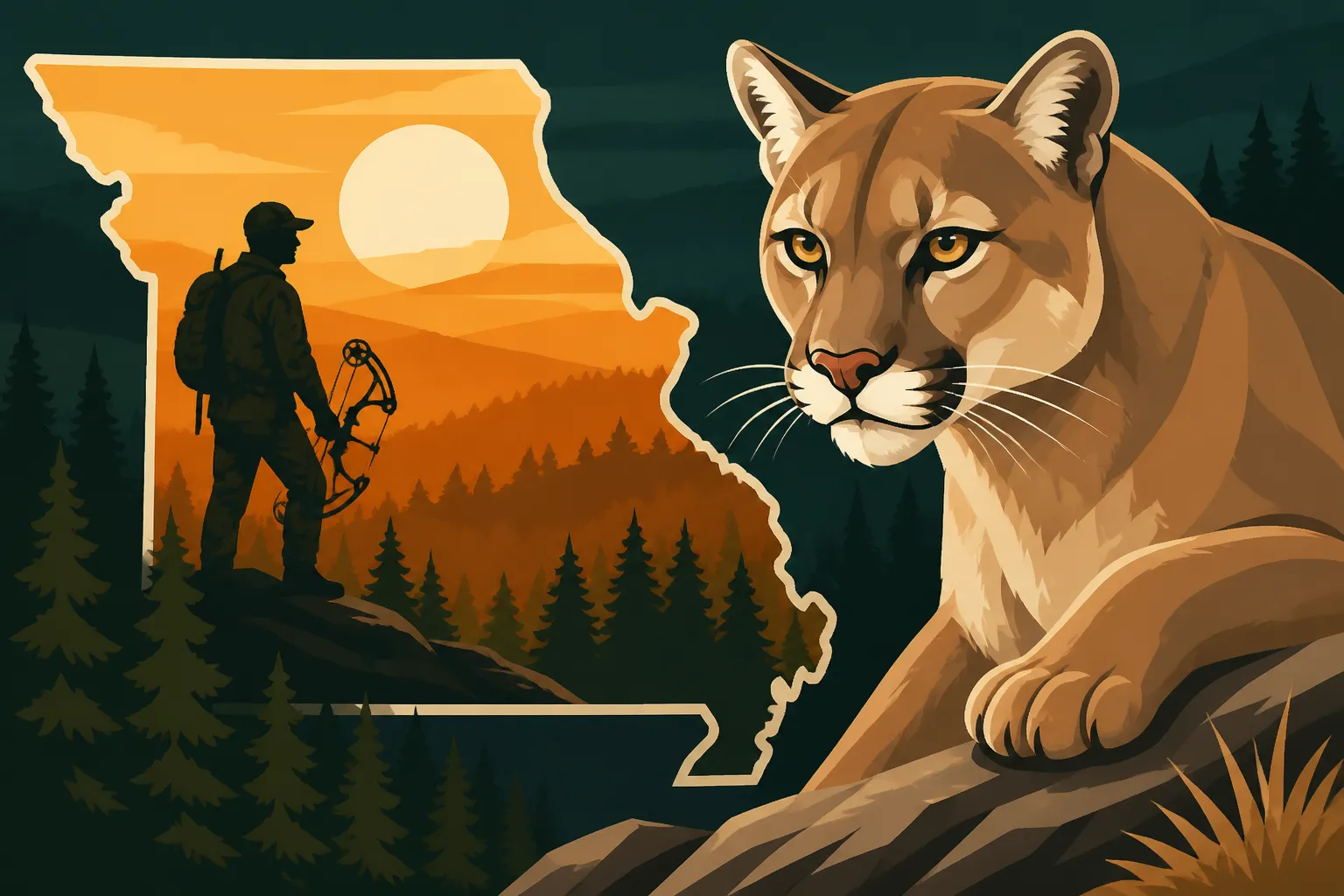
The whispers of mountain lions in Missouri are as old as the hills themselves, often a topic of lively debate around campfires and coffee shop tables. Many of you have sworn you’ve seen one, a flash of tawny fur or a long, distinctive tail vanishing into the timber, only to be met with skepticism. This guide is here to dig into the truth behind those sightings, explain what the Missouri Department of Conservation (MDC) officially says, and help you understand the difference between an unconfirmed report and verified proof of these elusive big cats in the Show-Me State.
The Enduring Mystery: Understanding Missouri's Mountain Lion Reports
There's no denying that stories of mountain lion sightings in Missouri ignite a unique kind of fascination and, for some, a touch of fear. Hunters tell tales of seeing them while in a stand, farmers mention tracks near their livestock, and hikers report fleeting glimpses. These anecdotal accounts are incredibly common, but they also bring up a critical question: how do we separate the genuine encounters from mistaken identities or even pure legend?
Separating Fact from Fiction in the Show-Me State
I know many of you are absolutely convinced you've seen a mountain lion in Missouri, and frankly, I don't doubt your conviction. Our state's landscape, particularly the rugged Ozarks, can certainly feel wild enough to harbor such a creature. The challenge, however, comes from the elusive nature of these animals. A quick glimpse, a shadowy figure, or even tracks that could belong to a large domestic dog can easily be misinterpreted, especially when our minds are already primed to expect something extraordinary. Raccoons, bobcats, coyotes, and even large house cats can be mistaken for a mountain lion, particularly at a distance or in low light. The sheer volume of unverified reports often outpaces the rare, concrete evidence needed for official confirmation, leading to understandable frustration among those who feel their experiences are being dismissed.
It’s easy for skepticism to creep in when the official word is often "unconfirmed." But it’s not to say that people aren’t seeing something. It simply means the evidence collected wasn't robust enough to definitively say it was a mountain lion. Whether it's a lack of a clear photograph, identifiable track casts, or other physical proof, the distinction between "seen something" and "definitively a mountain lion" is a wide one in the world of wildlife biology. We have to remember that these animals are masters of camouflage and stealth, making a clear, undeniable encounter exceedingly rare.
The Role of the Missouri Department of Conservation (MDC)
The Missouri Department of Conservation (MDC) takes all reported mountain lion sightings seriously, and they have a dedicated process for evaluating them. However, their standard for "confirmed" is, by necessity, quite high. They aren't looking for a blurry photo from 200 yards away or a second-hand account. What they need is irrefutable evidence: clear photographs or video footage, identifiable tracks (preferably with multiple prints to rule out anomalies), scat for DNA analysis, or, in some rare cases, a carcass.
When a report comes in, MDC staff, often a conservation agent or a wildlife biologist, will investigate. They'll visit the site, look for tracks, scat, or other signs, interview witnesses, and try to piece together the puzzle. It's a meticulous process because misinformation can spread quickly, and the agency wants to provide accurate, scientifically backed information to the public. Their goal isn't to deny the presence of mountain lions, but rather to document their presence with certainty. This rigorous approach is crucial for understanding the true status and distribution of these animals in Missouri, ensuring that management decisions are based on solid data, not speculation.
A Glimpse into the Past and Present: Missouri's Mountain Lion History
Understanding where mountain lions fit into Missouri's natural heritage means looking back in time and examining the very real changes our landscape and wildlife populations have undergone. They weren't always a ghost of the past; they once roamed freely across much of the state.
Historical Presence and Extirpation
Yes, mountain lions, also known as cougars, pumas, or catamounts, were once a natural part of Missouri's wildlife. Historically, these magnificent predators ranged across nearly all of North America, including the diverse habitats of Missouri. They played a vital role in our ecosystems, helping to keep deer and other prey populations in check. However, as European settlers moved westward, bringing agriculture and livestock, the presence of large predators was increasingly seen as a threat. Intensive hunting, trapping, and habitat destruction led to the extirpation of mountain lions from Missouri by the early 1900s.
It’s a story we see with many species across the country – the clash between expanding human civilization and the needs of large wild animals. The vast, unbroken forests and prairies that once sustained them were fragmented by farms, towns, and roads. Prey animals, particularly deer, were also heavily hunted, further reducing the food source for predators like mountain lions. So, while the idea of them being "native" to Missouri might surprise some younger hunters, it's an undeniable historical fact that these cats once called the Show-Me State home. Their disappearance marked a significant loss in the state's natural biodiversity.
Modern-Day Confirmations and Transient Visitors
Despite their historical extirpation, mountain lions do occasionally show up in Missouri today. The MDC has a public record of confirmed sightings, which typically involve indisputable evidence. Most of these confirmations come from trail camera photos, clear track casts verified by biologists, DNA evidence from scat or hair, or, very rarely, a deceased animal. What's important to understand is that nearly all confirmed sightings in recent decades have been determined to be transient animals – typically young male mountain lions dispersing from established breeding populations in states to our west, such as Nebraska, Colorado, South Dakota, or Arkansas. Think of them as wanderers, pushed out by older, more dominant males to find new territory.
These transient males can travel hundreds of miles, and it’s not unusual for them to pass through states like Missouri without ever establishing a permanent territory or finding a mate. While you might be meticulously scouting your deer property, perhaps even using a comprehensive mapping and data platform like GoHunt for your out-of-state big game aspirations, those same diligent efforts can sometimes accidentally capture photos of these incredibly elusive creatures right here at home. They're passing through, like a traveler on a long journey, rather than taking up residence. The MDC has documented various confirmed sightings over the years, proving that while rare, these animals do make their way into our state. For more detailed information on specific confirmed instances, you might look into Missouri Mountain Lion Confirmations.
Here's a quick look at the difference between what's typically reported and what constitutes a confirmed sighting:
| Category | Unconfirmed Sighting | Confirmed Sighting |
|---|---|---|
| Evidence Type | Brief glimpse, distant photo, general "cat" track | Clear trail camera photo/video, verifiable tracks/scat, DNA evidence, carcass analysis |
| Verification | Relies on witness testimony, often lacks definitive proof | Verified by wildlife biologists/conservation agents |
| Implication | Raises awareness, fuels speculation | Adds to data on transient individuals or range expansion |
| MDC Stance | Acknowledged but not officially documented as lion | Officially recorded as a mountain lion presence |
What to Do If You Encounter a Mountain Lion
While actual encounters with mountain lions are incredibly rare in Missouri, even with the occasional transient individual, it's always wise to know what to do if you're ever faced with one. Preparedness isn't about fear; it's about common sense when sharing the woods with any large, wild animal.
Prioritizing Safety in the Wild
First and foremost, if you're lucky (or unlucky, depending on your perspective) enough to see a mountain lion in Missouri, the most important thing is to prioritize your safety and the safety of anyone with you. Rule number one: never run. Running can trigger a chase instinct in a predator. Instead, stand your ground and make yourself appear as large and intimidating as possible. Raise your arms, open your jacket, and try to make eye contact. Pick up small children immediately. If you have a hiking stick or backpack, use it to create more perceived size.
Back away slowly, if possible, but keep facing the animal. Make loud noises, yell, and throw rocks or sticks if the animal doesn't retreat. The goal is to convince the mountain lion that you are not prey and that you are a potential threat. While mountain lion attacks on humans are exceedingly rare, especially in areas where they aren't habituated to people, knowing these defensive actions can make all the difference. Remember, most wildlife encounters end peacefully when you give the animal space and demonstrate you're not an easy meal. This advice applies to any large predator, from Black Bears Returning to Missouri to coyotes.
Reporting a Sighting to Authorities
If you do have a confirmed sighting, especially if you get clear photographic evidence, or if you find tracks or scat that you believe are from a mountain lion, it's crucial to report it to the Missouri Department of Conservation. You can contact your local conservation agent or call your regional MDC office. When you report, try to provide as much detail as possible: the exact location (GPS coordinates are best!), the date and time of the sighting, a description of the animal, its behavior, and any evidence you collected, like photos or videos.
Don't be shy about providing this information. Even if the sighting isn't officially confirmed, every report helps the MDC understand where people are seeing things and where to focus their monitoring efforts. They are interested in facts and evidence, not just sensational stories. Your detailed report could contribute to a clearer picture of transient mountain lion activity in the state and help biologists track their movements. Reporting unusual wildlife is part of being a responsible outdoor enthusiast and helps with overall wildlife management, much like reporting any Missouri Wildlife Disease Monitoring.
Unpacking the "Breeding Population" Question
The presence of individual mountain lions is one thing, but the question of whether Missouri has an established, reproducing population of these big cats is an entirely different discussion, with significant implications for wildlife management and public perception.
Evidence and Scientific Consensus
Currently, the scientific consensus from the Missouri Department of Conservation is that there is no evidence of a breeding population of mountain lions in Missouri. This is a distinction that many people struggle with, especially when they hear about confirmed individual sightings. A breeding population means there are adult males and females living within the state, successfully mating, and raising young, which would lead to an increase in their numbers over time. While transient males may wander through, there's been no consistent evidence of female mountain lions, kittens, or repeated denning sites that would indicate reproduction.
To confirm a breeding population, biologists would need to find consistent evidence over time, such as multiple sightings of females with young, repeated captures on trail cameras in the same area, or DNA evidence from multiple generations. So far, the confirmed sightings have been of individual, dispersing animals, largely males, making their way through the state. The MDC's stance on this is based on rigorous scientific methodology, not on simply dismissing public reports. For a deeper dive into this specific aspect, you might want to read Are There Breeding Mountain Lions in Missouri?.
Future Possibilities and Conservation Considerations
While there's no breeding population now, that doesn't mean the situation is set in stone forever. Wildlife populations are dynamic, and as states to our west see their mountain lion numbers grow and disperse, it’s entirely possible that individuals could eventually find their way to Missouri and, over many years, potentially establish a breeding population if habitat and prey resources are sufficient. We've seen similar comebacks with other large mammals; just look at how Missouri Black Bear Population have grown and expanded their range within the state.
The key factors for a successful re-establishment would be vast, contiguous habitat with sufficient prey (like deer) and a tolerance from the human population. Missouri still has large tracts of wild land, particularly in the Ozarks and some river bottoms, that could theoretically support mountain lions. The MDC continuously monitors for these animals, and should a breeding population ever be scientifically confirmed, it would necessitate new management strategies and public education efforts. In the meantime, while you are out scouting, perhaps plotting waypoints on your GoHunt app for your next deer season, keep your eyes open. You just might be one of the few to capture a glimpse of one of these majestic, but still largely transient, predators. These animals remain on the list of Game You Cannot Hunt in Missouri, so any encounter is purely for observation and reporting.
Disclaimer
This article is for general informational purposes only and does not constitute professional advice. Laws, prices and regulations vary by location and change over time. Consult a qualified professional for guidance on your specific situation.