Ruffed Grouse in Missouri
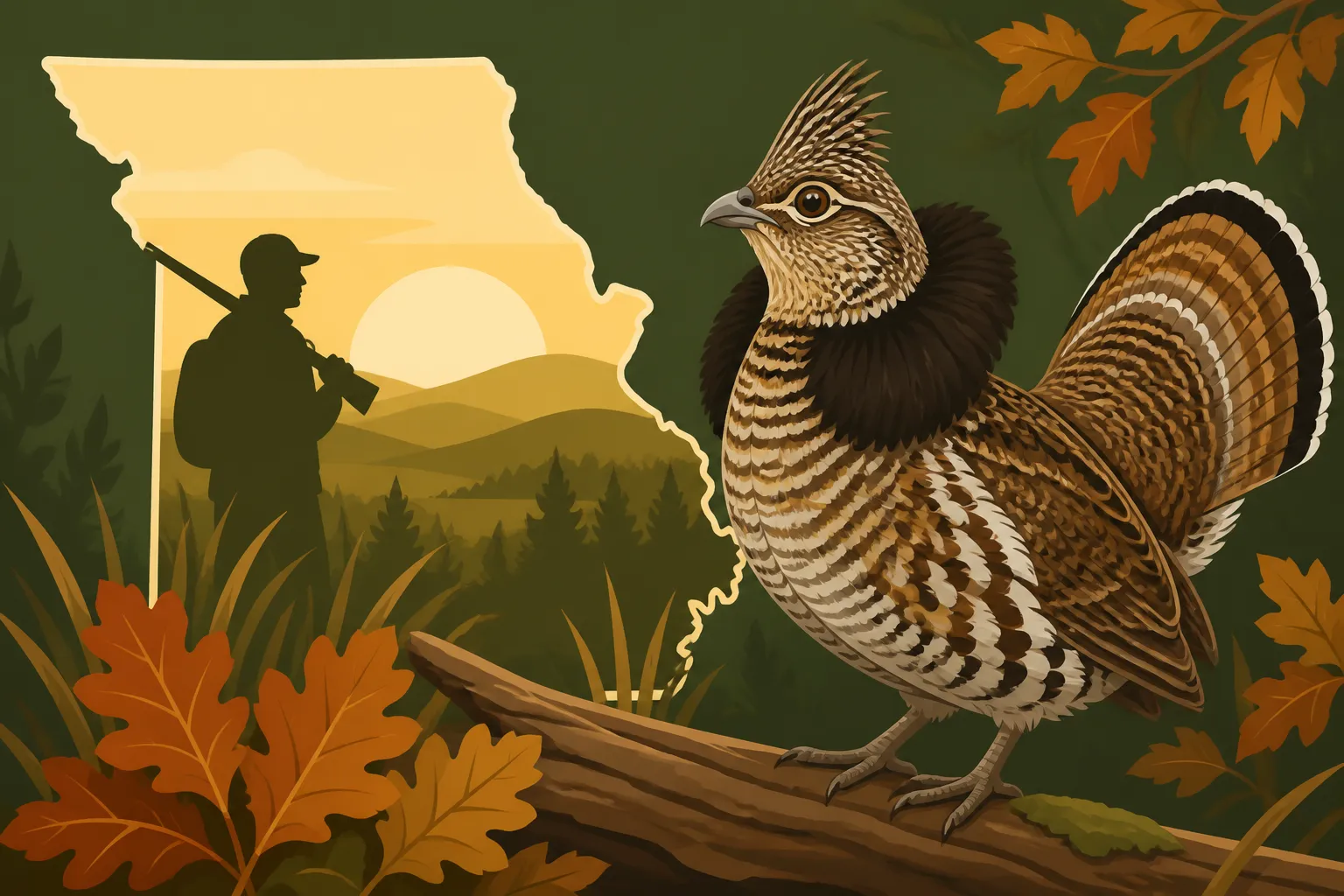
For many seasoned hunters in Missouri, the mere mention of ruffed grouse stirs a potent mix of nostalgia and regret. Once a vibrant part of our state's diverse upland bird hunting tradition, the distinctive drumming of a ruffed grouse is now largely a sound relegated to history books and the memories of a few lucky old-timers. This comprehensive guide delves into the fascinating, yet heartbreaking, story of Missouri's ruffed grouse, exploring their past abundance, the reasons for their dramatic decline, and the ongoing efforts to understand and potentially restore these magnificent forest birds to our landscape.
The Ghost of the Woods: Understanding Missouri's Ruffed Grouse History
There's a certain magic to hunting a bird that blends so seamlessly into its environment, only to explode from cover with a thunderous wingbeat. For generations of hunters, that bird was the ruffed grouse, and its presence in Missouri was once a given, though perhaps never as abundant as in states further north. Understanding their past helps us grasp the gravity of their current status.
A Bygone Era: The Historic Range and Abundance
Back in the day, Missouri wasn't just whitetails and turkeys. Our woodlands, particularly in the Ozarks and parts of the northern timbered regions, held a respectable population of ruffed grouse. These birds thrived in the patchwork of young, regenerating forests that characterized much of the state in the late 19th and early 20th centuries, as logging and agricultural clearings created ideal conditions. They weren't everywhere, mind you, but if you knew where to look – or more accurately, where the right mix of young saplings, thick brush, and mature hardwoods intersected – you could find them.
Imagine walking a timbered draw in the Ozarks, perhaps one that now holds only deer and squirrel, and hearing that unmistakable drumming sound echoing through the trees. It was a sound of wildness, of a vibrant ecosystem supporting a unique game bird. Hunters would spend hours navigating dense thickets, often with bird dogs that had learned the peculiar scent and habits of a grouse. They were considered a prize, a challenging quarry that demanded patience and a keen eye. This era of Missouri Small Game and Rabbits included grouse for many hunters.
The Disappearance Act: Causes of Decline
Sadly, like many wildlife populations, the ruffed grouse in Missouri faced an uphill battle against changing landscapes and environmental pressures. Their decline wasn't sudden but a slow, creeping erosion that ultimately led to their near disappearance. The primary culprit? Habitat loss and degradation. As much of Missouri's landscape matured, the specific conditions grouse needed—early successional forests with dense undergrowth—began to vanish.
The very processes that created their initial boom, like widespread logging, eventually gave way to different forest management practices. Forests either matured into dense, unbroken canopy cover, which grouse avoid, or were cleared entirely for agriculture and development. Additionally, other factors played a role, including increased predation in fragmented habitats, climate shifts affecting brood survival, and potentially even diseases, although habitat change remains the overwhelming driver. It’s a stark reminder that even seemingly robust wildlife populations can quickly fade when their fundamental needs aren't met.
Habitat Requirements: Why Missouri's Landscape Changed for Grouse
To truly understand why the ruffed grouse population dwindled, we need to dive into their specific habitat needs. These aren't birds that can just live anywhere in the woods; they require a very particular, often ephemeral, type of forest structure.
Thicket Lovers: Ideal Cover for Ruffed Grouse
Ruffed grouse are creatures of the thicket. They demand dense, brushy cover for nesting, rearing young, and escaping predators. Think about a young forest, maybe 5 to 20 years old, recovering from a clear-cut or a major disturbance. It's a tangled mess of saplings – oaks, hickories, dogwoods, cedars – growing so close together you can barely walk through them. This kind of "ugliness" to a human eye is prime real estate for a grouse.
Specifically, they need dense woody stems per acre, often exceeding 10,000, to provide overhead and lateral cover. These thickets offer protection from aerial predators like hawks and owls, and ground predators like coyotes and bobcats. The dense cover also provides vital brooding habitat, keeping young chicks safe from the elements and offering a buffet of insects. Alongside this young growth, they also need access to more mature stands of mast-producing trees for food in fall and winter. It’s a mosaic of different age classes of forest that creates the perfect home, a complex arrangement that is often described in detail when studying Where Missouri Ruffed Grouse Survive today.
Logging and Succession: The Impact of Forest Management
Historically, natural disturbances like wildfires or widespread logging created the dynamic, successional habitats that grouse flourished in. When timber was harvested in clear-cuts decades ago, it naturally regenerated into the dense young stands that grouse loved. However, modern forestry practices often prioritize different outcomes, such as growing large, valuable sawtimber or maintaining mature stands for aesthetic or recreational purposes.
While these practices have their own merits, they often don't create the widespread early successional habitat required by grouse. The suppression of natural fires, coupled with a general shift away from large-scale clear-cutting, meant that Missouri's forests largely matured. They became beautiful, cathedral-like stands of towering trees, but beneath that closed canopy, the dense understory grouse needed was shaded out. This long-term trend, much like the Habitat Loss and Missouri Quail faced, slowly but surely squeezed the grouse out of existence across most of their former range in the Ozarks and other timbered areas.
Current Status and Conservation Efforts in Missouri
Given their historical presence, it's natural to wonder about the current state of ruffed grouse in Missouri. The truth is, it's a sobering picture, but one that is met with dedicated efforts by conservation professionals.
Scarcity and Remaining Pockets: Where Grouse Might Still Exist
Today, finding a wild ruffed grouse in Missouri is akin to finding a needle in a haystack – or perhaps, a ghost in the timber. Officially, the population is considered critically imperiled, with only scattered, isolated pockets believed to persist in very specific, small areas of the state. These are typically remote, rugged areas within the Hunting the Missouri Ozarks where some unique combination of natural disturbance or specific land management has created small patches of suitable habitat.
These remaining populations are often so small and fragmented that they are ecologically vulnerable. A harsh winter, a severe drought, or an increase in localized predation can easily wipe out an entire pocket. Hunters, birdwatchers, and naturalists occasionally report sightings, but these are rare and usually represent individuals or very small family groups rather than a viable, reproducing population. Understanding these last vestiges is crucial to any hope of bringing them back. For those interested in wildlife, resources like GoHunt can provide detailed topographical maps and habitat layers that, while not explicitly showing grouse, might help identify historically promising habitat types or areas with diverse forest age classes.
A Dream Deferred: Restoration Attempts and Their Challenges
The story of Missouri Ruffed Grouse Restoration History is a tale of dedicated effort met with immense challenges. Over the years, there have been several attempts to reintroduce ruffed grouse into suitable habitats in Missouri. These efforts often involved trapping birds from states with healthier populations, like Wisconsin or Minnesota, and releasing them into carefully selected areas within Missouri's public lands, particularly Missouri Conservation Areas Explained.
These reintroduction projects were often accompanied by habitat management efforts, such as prescribed burning and targeted timber harvests, designed to create the early successional forest grouse require. Unfortunately, these efforts largely failed to establish self-sustaining populations. The birds released often dispersed quickly, suffered from high predation rates, or simply failed to reproduce sufficiently to overcome mortality. The sheer scale of habitat needed, combined with the difficulty of creating and maintaining it in a fragmented landscape, proved to be an overwhelming hurdle. It's a tough lesson in wildlife management, demonstrating that sometimes, even with the best intentions and significant resources, reversing a long-term decline can be incredibly difficult.
The Absence of a Hunting Season: What Hunters Need to Know
Given the dire status of ruffed grouse in Missouri, it should come as no surprise that there is currently no hunting season for them. This is a critical point for anyone venturing into the Missouri woods.
Protecting a Fragile Resource: Why There's No Season
The decision to close a hunting season is never taken lightly, especially for a historically hunted species. However, for ruffed grouse in Missouri, the reason is clear and compelling: the population is simply too low to sustain any level of hunting pressure. The birds are considered a Protected Species Hunters Should Know within Missouri, and legally, they fall under the category of Game You Cannot Hunt in Missouri. Allowing hunting, even with stringent limits, would only hasten their complete extirpation from the state.
Conservation agencies understand the desire of hunters to pursue these birds, but the priority must always be the long-term health and survival of the species. The absence of a season is a protective measure, a sign that the species is in crisis and needs every chance to recover without additional human-caused mortality. It's a testament to the fact that responsible wildlife management sometimes means making difficult choices to ensure future generations might have a chance to witness, and perhaps one day even hunt, a recovered population. This is the core reason Why Missouri Has No Grouse Season.
Scouting for the Future: Observing and Reporting Sightings
Even without a hunting season, hunters and outdoor enthusiasts can play a vital role in understanding and potentially aiding future conservation efforts. If you spend time in areas of the Ozarks or northern Missouri that historically held grouse, keep an eye and an ear open. Learning how to read the landscape for potential habitat, using tools that integrate aerial imagery like those found through GoHunt, can help you identify areas where a grouse might theoretically exist, even if it's for observing other wildlife.
Any confirmed sighting of a ruffed grouse, especially evidence of breeding activity like drumming males or hens with chicks, should be reported to the Missouri Department of Conservation. These observations, though rare, provide invaluable data points that help biologists understand if any isolated populations are managing to hang on. While you can't hunt them, your presence in the woods, your knowledge of wildlife, and your careful observations are still incredibly valuable for the future of Missouri's wildlife heritage. Who knows, perhaps with continued habitat work and a little luck, the ghost of the woods might one day drum again.
Disclaimer
This article is for general informational purposes only and does not constitute professional advice. Laws, prices and regulations vary by location and change over time. Consult a qualified professional for guidance on your specific situation.