Missouri Deer Population Estimate
It’s easy to feel like the deer numbers in Missouri are a moving target, isn't it? One year, your stand might be overflowing with deer, and the next, it feels like you're hunting ghosts. Trying to make sense of statewide population figures can be frustratingly vague when your local woods tell a different story. This comprehensive guide will walk you through how the Missouri Department of Conservation (MDC) actually estimates our deer population, what factors are really shaping herd dynamics, and how these vital numbers impact your hunting season.
Why Understanding Deer Population Estimates Matters
For anyone who spends time in the Missouri woods, whether you're chasing that elusive buck or just enjoying nature, the health and size of the deer population are always on your mind. But beyond simple curiosity, understanding how these estimates are formed, and what they mean, is absolutely critical for both wildlife managers and us, the hunters who cherish this resource.
Guiding Conservation Efforts and Regulations
Think about it: the MDC isn't just pulling hunting regulations out of thin air. Every decision about antlerless permits, season lengths, and specific county restrictions is rooted deeply in scientific data, and deer population estimates are at the very core of that. If the overall population in a certain region is growing rapidly and exceeding habitat capacity, you might see an increase in available antlerless permits or an extension of the season to help manage the herd. Conversely, if numbers are trending downward due to disease or other factors, the MDC might implement more conservative regulations to allow the herd to rebound. These estimates help prevent overharvest in some areas while encouraging harvest in others to maintain balance. Without these scientific benchmarks, we'd be flying blind, risking either too few deer or an overabundance that could damage ecosystems and lead to widespread disease.
It's a constant balancing act. The goal isn't just "more deer"; it's a healthy, sustainable deer population that provides ample hunting opportunities without causing undue ecological stress or conflicts with landowners. For instance, in areas with high deer densities, crop damage complaints from farmers can rise significantly, and the risk of deer-vehicle collisions on our roads increases. The MDC uses these population figures to pinpoint areas needing more intensive management, such as those that might benefit from additional Missouri Early Antlerless Portion Tactics. These estimates are the roadmap for keeping our deer herd thriving for generations to come, ensuring the long-term viability of White-Tailed Deer Across Missouri for all of us.
Impact on Hunter Success and Experience
Let's be honest, we all want to fill our tags and have a great time doing it. Deer population estimates directly correlate with your potential for success in the field. When the numbers are healthy and stable, it generally means more deer moving through the landscape, which translates to more encounters and better hunting. If you're heading to a county known for high deer density, your odds of seeing multiple deer in a day are significantly better than in an area where the population might be sparse. This knowledge can help you make informed decisions about where and when to hunt, maximizing your chances for a successful outing.
Beyond just putting meat in the freezer, understanding population trends enhances the entire hunting experience. It helps you anticipate changes. If you know a particular region has seen a dip in numbers due to, say, an EHD outbreak, you might adjust your expectations or even choose a different hunting spot that year. This level of insight, often gleaned from resources like the Missouri Deer Harvest Records and the MDC's annual reports, transforms hunting from a pure game of chance into a more strategic endeavor. Knowing the general health and density of the herd allows you to tailor your scouting, choose your stand locations more wisely, and apply tactics that are appropriate for the local conditions, whether you're Hunting North Missouri's Big-Buck Farm Country or trekking through the Ozarks. It allows you to appreciate the bigger picture of wildlife management, knowing that your individual harvest contributes to the overall health of the herd.
How Missouri Department of Conservation Estimates Deer Numbers
Estimating the population of a wild, free-ranging animal like the white-tailed deer isn't as simple as counting sheep in a pasture. The Missouri Department of Conservation (MDC) employs a sophisticated, multi-faceted approach, combining direct observation, hunter-reported data, and advanced statistical modeling to arrive at their best estimates. It's a continuous process that relies heavily on hunter participation and cutting-edge science.
Harvest Data and Telecheck System
One of the most foundational pillars of Missouri's deer population estimation is the mandatory Telecheck system. Every single deer harvested by hunters in Missouri must be reported through Telecheck, whether online or by phone, by 10:00 PM on the day of harvest. This isn't just a formality; it provides the MDC with an incredibly rich dataset that is crucial for understanding the deer herd. Each Telecheck record includes critical information such as the county of harvest, the date, the permit type used, and whether the deer was antlered or antlerless. Over hundreds of thousands of harvests each year, this aggregated data paints a broad picture of harvest pressure and success rates across the state.
From this raw harvest data, wildlife biologists can infer population trends. For example, if harvest numbers are consistently high in a particular county year after year, it suggests a robust deer population in that area. Conversely, a noticeable drop in harvest despite similar hunter effort might indicate a decline in local deer numbers. The MDC doesn't simply equate harvest numbers directly to population, but rather uses them as a significant component in their more complex models. The sheer volume and consistency of this data make it an invaluable resource. To dive deeper into what these numbers look like, you can often find detailed information by Reading a Missouri Harvest Report which the MDC publishes annually.
Hunter Observation Surveys and Other Inputs
Beyond harvest data, the MDC relies on a network of diligent observers to gather additional crucial information: us, the hunters! The Bowhunter Observation Survey is a prime example. During the archery season, bowhunters are encouraged to record every deer they see while on stand, noting factors like the number of does, fawns, and antlered bucks. This data, voluntarily submitted, provides a unique insight into deer behavior, herd composition (such as buck-to-doe ratios and fawn recruitment), and local densities across diverse habitats. Unlike harvest data, which only records deer that are taken, observation data captures the presence of deer, offering a different lens through which to view the population. Many savvy hunters also use tools like GoHunt to log their own observations, creating personal datasets that can often align with broader trends.
But it's not just bowhunters. Other inputs, though perhaps less formally structured for population estimation, still provide valuable pieces of the puzzle. Reports from landowners about crop damage, sightings of sick or deceased animals (especially relevant during outbreaks of EHD Outbreaks in Missouri Deer), and even anecdotal observations from MDC staff in the field all contribute to a holistic understanding. These qualitative and quantitative inputs feed into the bigger picture, helping biologists calibrate their models and understand localized nuances that might not be apparent from harvest data alone. This collective effort is truly How MDC Counts Deer and Turkeys, and other species, on a grand scale.
Sophisticated Modeling and Data Analysis
The real magic happens when all these data points are fed into sophisticated statistical models. MDC biologists don't just add up deer sightings; they use complex population dynamics models that account for various factors like birth rates (fawn recruitment), death rates (harvest, disease, predation, vehicle collisions), and deer movement patterns. One common method involves using harvest data in conjunction with sex and age ratios derived from observations and biological samples (like jawbones from harvested deer). By knowing how many deer of a certain age class are harvested, and understanding typical survival and birth rates, they can back-calculate an estimate of the total population.
These models are continually refined and updated with new data, allowing the MDC to make projections and assess the impact of different management strategies. They can simulate how changes in antlerless limits might affect future herd sizes, or how a severe disease outbreak could alter population trajectory. This analytical depth allows them to move beyond simple counts to a dynamic understanding of the deer herd, factoring in the inherent variability of wild populations. While precise numbers are difficult to achieve for a wild animal, these models provide the most accurate and reliable estimates available, offering the scientific bedrock for Missouri Deer Season Portions Explained and broader management goals.
Current Missouri Deer Population Trends and Regional Differences
Missouri is a diverse state, stretching from the northern farm fields to the rugged Ozark mountains. It stands to reason that deer populations aren't uniform across this varied landscape. The statewide deer population is generally robust, but the numbers, densities, and trends can differ significantly from one region to another, influenced by a unique blend of habitat, harvest pressure, and environmental factors.
Statewide Estimates and Long-Term Shifts
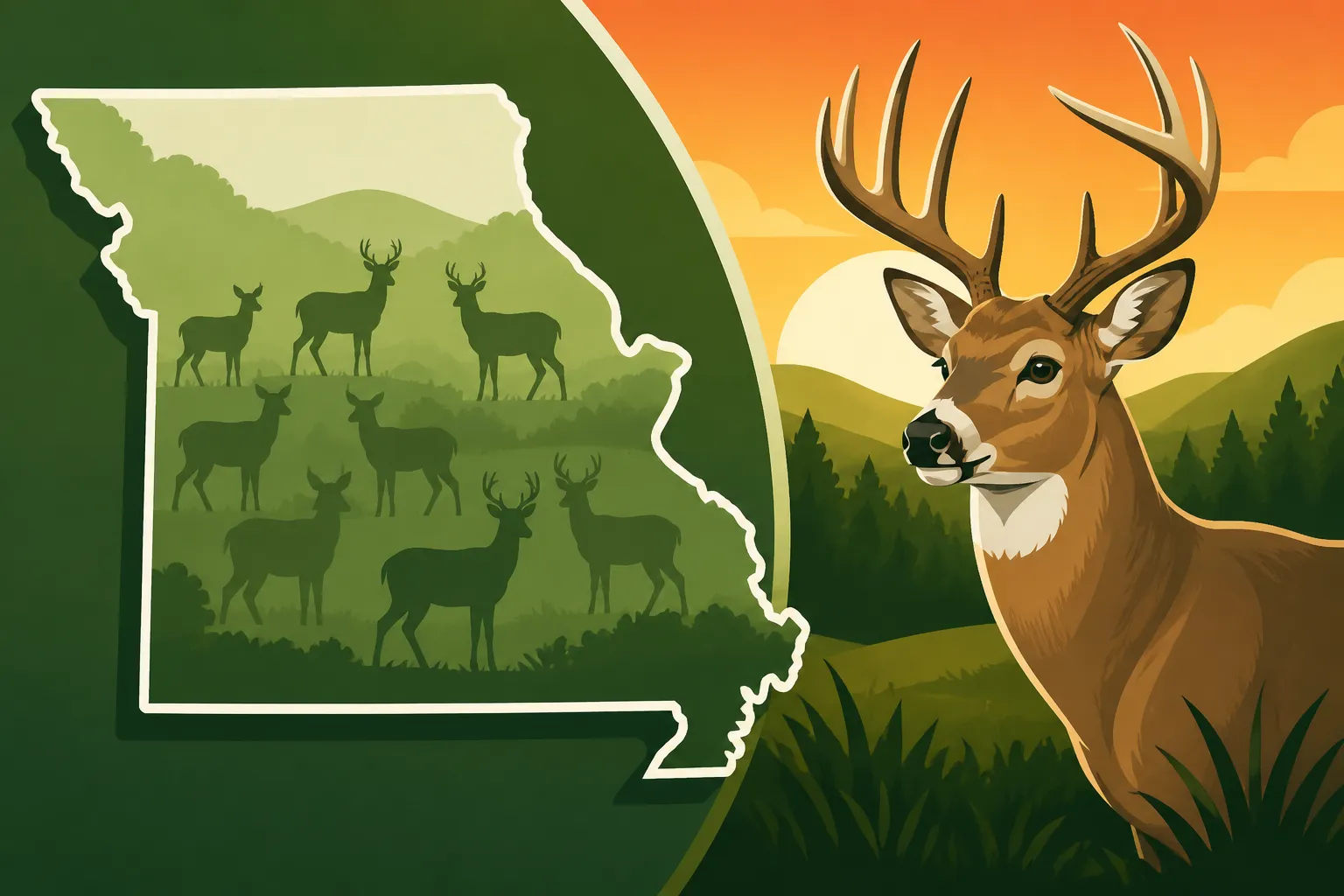
Currently, the Missouri Department of Conservation generally estimates the statewide deer population to be around 1.3 to 1.5 million animals. This is a significant recovery from historical lows in the early 20th century, when deer were nearly extirpated from the state. The long-term trend has been one of growth and stabilization, largely thanks to dedicated conservation efforts, reintroduction programs, and carefully managed hunting regulations over the decades. However, this overall stability doesn't mean there aren't fluctuations. Year-to-year estimates can shift based on factors like fawn survival rates, disease prevalence, and even hunter effort during the various seasons.
For instance, after a mild winter and a healthy spring fawning season, you might see a slight bump in the estimated population the following year. Conversely, a widespread outbreak of EHD or a particularly harsh winter could lead to a temporary dip. The MDC's goal isn't necessarily to grow the population indefinitely, but rather to maintain it at a level that is healthy for the deer, sustainable for the habitat, and provides ample recreational opportunities for hunters. These broad, statewide numbers provide a critical benchmark for the overall health of Missouri's deer resource.
North Missouri Versus Ozark Highlands Density
When you actually hit the woods, you quickly realize that a "statewide average" doesn't tell the whole story. The contrast between North Missouri Versus Ozark Deer Density is a prime example of this regional variation. North Missouri, characterized by its rich agricultural lands, extensive crop fields, and scattered timber blocks, typically boasts much higher deer densities. The abundant food sources from corn, soybeans, and alfalfa provide an excellent nutritional base, allowing does to raise multiple fawns and bucks to grow larger bodies and antlers. It's not uncommon to find areas in northern counties with densities upwards of 30-40 deer per square mile, or even higher in prime pockets. This is why many of the state's largest bucks, those Boone and Crockett contenders, often come from these agricultural powerhouses.
In stark contrast, the rugged Ozark Highlands, with their expansive oak-hickory forests, steep terrain, and less fertile soils, generally support lower deer densities. While there are still plenty of deer, and excellent hunting opportunities, you might be looking at densities of 15-25 deer per square mile. The food sources are more natural – acorns, browse, and forbs – and less concentrated than in farm country. This means deer often have larger home ranges and can be more challenging to locate consistently. Understanding this regional difference is vital for hunters, as it dictates everything from scouting strategies (you might rely more on trail cameras in high-density farm country, but need to cover more ground when Still-Hunting a Missouri Ozark Hollow) to equipment choices. The topography and habitat structure also influence the type of hunting popular in each region, whether it's setting up Ground Blinds on Crop Field Edges in the north or navigating complex Hunting Missouri Ridge Saddles and Benches in the south.
Factors Influencing Localized Populations
Within these broad regions, localized factors can cause even finer-grained variations in deer numbers. Habitat quality is paramount. A small, privately owned property with meticulously managed food plots, mineral sites, and bedding cover will likely support a higher deer density than a nearby tract of unmanaged, mature timber. Access to perennial water sources, escape cover from human disturbance, and the presence of diverse forage all play a role. Land use patterns are also crucial; areas with a patchwork of crop fields, CRP grasslands, and timber often create ideal edge habitat that deer thrive in.
Hunting pressure also heavily influences localized populations. Public lands, especially those close to major population centers, tend to experience higher hunting pressure, which can keep deer densities a bit lower or make deer more nocturnal and wary. Conversely, large, privately managed tracts with limited hunting can become sanctuaries where deer numbers can explode. Weather patterns are another variable; localized droughts can impact forage quality and fawn survival, while severe ice storms can reduce available browse. Finally, local predation, particularly from coyotes, can sometimes impact fawn recruitment, especially in areas with poor fawning cover. All these elements create a constantly shifting mosaic of deer densities across Missouri's landscape.
Here's a quick look at how general deer densities compare across some key Missouri regions:
| Region | Primary Habitat Type | Estimated Deer Density (per sq. mile) | Typical Deer Size | Antlerless Harvest Pressure |
|---|---|---|---|---|
| Northwest Missouri | Row crops, timber blocks, grasslands | 30-45+ | Large | High |
| Northeast Missouri | Row crops, timber, river bottoms | 25-40 | Large | High |
| Central Missouri | Mixed agriculture, timber | 20-35 | Medium-Large | Moderate-High |
| Southwest Missouri | Mixed woods, pasture, rocky hills | 15-25 | Medium | Moderate |
| Ozark Highlands | Extensive oak-hickory forests | 10-20 | Smaller-Medium | Moderate |
| Southeast Lowlands | Agriculture, river bottoms, swamps | 20-30 | Medium-Large | High |
Note: These are general estimates and actual densities can vary widely within each region based on specific local conditions and habitat quality.
Major Challenges Affecting Missouri's Deer Herd
Even with robust populations, Missouri's deer herd faces significant challenges that demand ongoing attention from both conservation managers and hunters. These issues can drastically impact population estimates, herd health, and the future of deer hunting in the state. Understanding them is crucial for anyone invested in Missouri's wildlife.
Chronic Wasting Disease (CWD) Management
Perhaps no issue has cast a longer shadow over deer management in recent years than Chronic Wasting Disease (CWD). This fatal neurological disease affects cervids, including white-tailed deer, and has been a persistent concern in Missouri since its initial detection. CWD is caused by abnormal proteins called prions and is always fatal, slowly deteriorating the animal's brain. What makes it particularly challenging is that it can spread directly from animal to animal or indirectly through environmental contamination (e.g., prions shed in urine, feces, and saliva persisting in the soil). The MDC has dedicated significant resources to understanding and managing Chronic Wasting Disease in Missouri Deer, implementing extensive testing protocols and management zones.
The challenge CWD poses to population estimates is profound. While an infected deer might not die immediately, its eventual demise contributes to natural mortality, and a high prevalence rate within a local herd can suppress population growth. The MDC's management strategies often involve increasing harvest in affected areas, particularly of antlerless deer, to reduce overall deer density and thereby limit opportunities for disease transmission. This impacts hunter decisions, as participation in CWD testing becomes vital, and certain carcass transport rules may apply to prevent the spread to new areas. The goal is to keep prevalence rates low and contain the disease, which directly influences how many deer are truly "healthy" within the estimated population. If you're hunting in or near a CWD management zone, knowing the latest rules and contributing to sampling efforts is more important than ever.
Hemorrhagic Disease (EHD) Outbreaks
Another recurring threat to Missouri's deer population, particularly during hot, dry late summers, is Hemorrhagic Disease (HD), often referred to as Epizootic Hemorrhagic Disease (EHD) or Blue Tongue. Unlike CWD, EHD is caused by a virus transmitted by biting midges (often called "no-see-ums" or "gnats"). When outbreaks occur, they can be devastating, leading to rapid and localized deer die-offs. Symptoms include fever, swelling of the head and neck, internal bleeding, and often result in deer seeking water sources, where they are frequently found deceased. The severity of EHD outbreaks varies year to year, largely dependent on weather patterns that favor the midge population.
These outbreaks can cause significant, albeit temporary, dips in local deer populations, making accurate population estimates even more challenging. A region that experienced a severe EHD event in late summer might see significantly fewer deer the following hunting season, impacting hunter success and potentially necessitating adjustments to local management. The MDC monitors these outbreaks closely, often relying on public reports of sick or dead deer to track the disease's spread. While deer that survive an EHD infection develop immunity, the immediate impact on numbers can be dramatic. Hunters often ask about how EHD Outbreaks in Missouri Deer affect hunting plans, and the answer is usually to expect lower numbers in severely affected areas for a year or two as the herd rebuilds.
Habitat Changes and Predation Pressures
Beyond diseases, the underlying health of the deer herd is intrinsically linked to habitat quality and the pressures of predation. As Missouri's landscape evolves, so does the deer habitat. Urban and suburban sprawl can fragment habitat, leading to isolated deer populations that struggle to find mates or disperse, while increasing human-deer conflicts. Changes in agricultural practices, such as larger monoculture fields and reduced edge habitat, can also impact food availability and cover. Conversely, conservation programs that promote diverse forage, forest management practices that create early successional habitat, and the establishment of dedicated public lands (like many of Missouri's Conservation Areas that you can explore with the Scouting With the Missouri Conservation Atlas) can significantly enhance deer health and population resilience.
Predation pressure, particularly from coyotes, is another natural factor that influences deer populations. While coyotes rarely take down healthy adult deer, they are opportunistic predators of fawns. In areas with poor fawning cover or already stressed deer populations, high coyote numbers can sometimes suppress fawn recruitment, impacting the overall growth rate of the herd. Black bear populations are also growing in parts of the Missouri Ozarks, and while their diet is largely omnivorous, they can occasionally predate on fawns. Understanding these complex ecological interactions is part of the ongoing challenge of deer management, ensuring that both habitat and natural predation are balanced to support a healthy and thriving deer population. The removal of Antler Point Restrictions (APRs) in many counties, for example, was a management decision influenced by a complex understanding of herd dynamics and habitat, with implications for What APR Removal Means for Young Bucks and older deer alike.
The Hunter's Role in Population Monitoring
It's easy to think that deer population estimates are solely the domain of wildlife biologists in distant offices. But the truth is, hunters are on the front lines, acting as invaluable citizen scientists. Our direct participation and adherence to regulations are absolutely critical for the Missouri Department of Conservation (MDC) to gather the accurate, real-world data needed to manage the herd effectively.
Accurate Telechecking and Data Submission
This cannot be stressed enough: every time you harvest a deer in Missouri, Telechecking it accurately and promptly is one of the most important contributions you can make to deer conservation. The Telecheck system is the bedrock of the MDC's harvest data, which in turn is a primary component of their population models. Failing to Telecheck a deer, or submitting inaccurate information (like the wrong county or gender), creates gaps and inaccuracies in this vital dataset. Think of it this way: if hundreds or thousands of hunters neglect this step, the MDC's ability to gauge harvest pressure and localized population health becomes severely compromised.
When you Telecheck your deer, you're not just complying with the law; you're providing a data point that helps biologists understand current harvest rates, buck-to-doe ratios, and even the general age structure of the harvested herd. This information directly informs management decisions for subsequent seasons, influencing things like permit quotas and season structures. So, the next time you tag a deer, take a moment to ensure your Telecheck is done correctly and on time. It's a small but mighty contribution to the bigger picture of Missouri Deer Permits and How to Buy One and effective wildlife management.
Participating in Surveys and Reporting Observations
Beyond the mandatory Telecheck, hunters have a fantastic opportunity to further contribute by participating in voluntary surveys. The Bowhunter Observation Survey, as mentioned earlier, is a prime example. By taking a few extra minutes after your hunt to record the number of deer, does, fawns, and bucks you observed, you provide the MDC with invaluable insight into local deer densities and herd composition. These real-time observations, collected over thousands of hunter-hours across the state, help to validate and refine the population models derived from harvest data.
But don't stop there. If you observe anything unusual – deer acting sick, a cluster of dead deer, or even significant habitat changes in an area you regularly hunt – reporting these observations to the MDC is extremely helpful. This is how early warnings for things like EHD outbreaks or the presence of CWD in new areas often come to light. The MDC provides clear channels for reporting, and your boots-on-the-ground perspective is often the first indication of a developing issue. Tools like GoHunt or other mapping apps can also help you log your observations with precise locations, further enhancing the quality of the data if you choose to share it.
Ethical Harvesting Practices for Herd Health
Finally, the way we hunt and the choices we make in the field also play a significant, if less direct, role in managing and monitoring the deer population. Ethical harvesting practices, such as adhering to antler point restrictions (where they still apply), understanding bag limits, and making responsible shot choices, contribute to the long-term health of the herd. For example, in areas where deer populations are high and need to be reduced, focusing on antlerless harvest helps balance the sex ratio and control overall numbers, leading to a healthier herd dynamic.
Understanding the management goals for the area you're hunting is key. If you're on public land or a private tract where the landowner is actively managing for herd health, your decisions about which deer to harvest can align with those goals. This responsible approach ensures that hunting remains a sustainable and effective tool for wildlife management, allowing us to continue enjoying Bowhunting Missouri's Four-Month Archery Season or Missouri's Eleven-Day November Firearms Deer Season for generations to come. By being informed, engaged, and responsible, Missouri hunters are not just consumers of a resource; we are essential partners in its conservation.
Disclaimer
Please note: Hunting regulations and wildlife population estimates are subject to change. Always consult the most current Missouri Department of Conservation (MDC) regulations before planning any hunting activity. This guide is for informational purposes only and does not supersede official MDC guidelines.