Crow and Blackbird Numbers in Farm Country
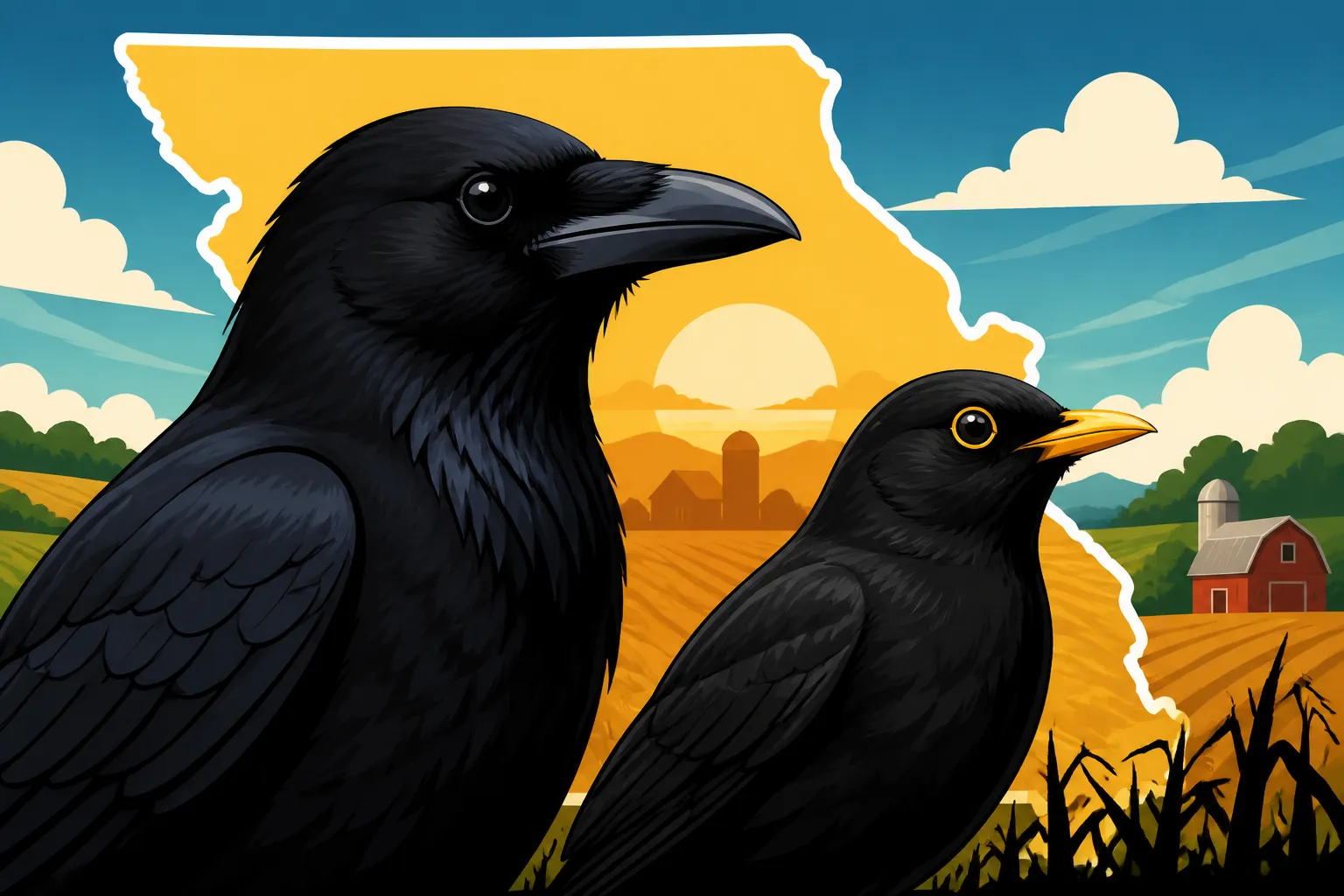
Many folks who live near or hunt in Missouri's vast agricultural lands know the sight all too well: immense flocks of crows and blackbirds descending upon fields, sometimes seemingly out of nowhere. It's a spectacle that can be both awe-inspiring and, for farmers and landowners, incredibly frustrating, as these birds can have a real impact on crops and feed. Understanding the dynamics of these populations, how their numbers fluctuate, and what influences their presence in our farm country is key to both managing their impact and, for hunters, making the most of the opportunities they present. This guide will dive deep into the world of crows and blackbirds in Missouri's rural landscapes, helping you grasp their habits, numbers, and how they interact with our agricultural heartland.
The Seasonal Dance of Crows and Blackbirds in Missouri's Farm Country
What We See and When We See It
Crows are a year-round presence in Missouri, but their numbers in farm country truly swell during certain times. In the fall and winter, especially, you’ll witness those massive congregations, sometimes hundreds or even thousands strong, flying to and from communal roosts. This isn’t just a random gathering; it’s a strategic move, offering safety in numbers against predators and sharing information about food sources. Think of a farmer watching his newly planted corn, only to see a dark cloud of crows descend – it's a frustrating, but common, sight that speaks volumes about their intelligence and adaptability.
Blackbirds, on the other hand, are often more of a migratory spectacle. While some species, like common grackles, might be around during the breeding season, the truly enormous flocks, composed of red-winged blackbirds, grackles, and sometimes European starlings, usually make their grand entrance during late summer and fall. These birds are often moving through the state or gathering before heading further south. They absolutely adore the abundant food sources that Missouri's crop fields provide, making agricultural areas prime locations for their foraging efforts.
The sheer scale can be hard to grasp until you witness it firsthand. Imagine driving down a gravel road in north Missouri on a perfect autumn day, and suddenly the sky darkens with what looks like a living, shifting blanket of birds. This isn't just a few dozen; we're talking about congregations that can truly number in the tens of thousands. For a hunter looking for opportunities, understanding these seasonal movements is crucial. You won't typically find large groups of blackbirds in the same spots in May as you will in October, highlighting the dynamic nature of their presence.
Why Farm Country Is a Blackbird and Crow Magnet
It's no secret why these birds flock to agricultural lands: food, glorious food. Missouri's farm country is a veritable buffet for crows and blackbirds. From newly sprouted corn and soybeans in the spring, to ripening grains in the summer, and leftover stubble fields after harvest, there's always something on the menu. These birds are opportunists, and modern farming practices, with their large, monoculture fields, essentially create massive, predictable food sources that are hard to resist. Understanding tactics like Hunting Standing Corn Before Harvest or What Changes After the Beans Come Off can provide insight into how these fields become feeding grounds for all sorts of wildlife, including these adaptable birds.
Beyond the crops themselves, farm country also offers essential habitat elements. Hedgerows, scattered woodlots, and timbered draws provide crucial roosting cover and nesting sites, especially for crows. Even the shelterbelts around old farmsteads can become temporary havens, offering protection from the elements and predators. For blackbirds, the tall grasses and cattails in ditches and wetlands bordering fields offer ideal overnight roosting locations, often close enough to their feeding grounds to make daily commutes efficient and safe.
Water sources, too, play a vital role in attracting and sustaining these populations. Ponds, creeks, and even rain-filled depressions in fields provide necessary hydration, especially during warmer months. The combination of abundant food, suitable roosting and nesting cover, and accessible water makes Missouri's agricultural mosaic an irresistible draw for these adaptable bird species, allowing their numbers to flourish year after year.
Factors Shaping Their Presence and Impact
The Buffet Line of Row Crops and Livestock Feed
Let's be frank: the biggest factor influencing crow and blackbird numbers in farm country is the availability of food. And in Missouri, that means corn, soybeans, and other cereal grains. Crows are infamous for pulling up young corn sprouts, seeking out the sweet kernel planted just beneath the soil. Later in the season, blackbirds can inflict significant damage on ripening corn, pecking kernels off the cobs. They also love to forage in newly planted or harvested fields, picking up seeds left on the surface, making every stage of the crop cycle a potential target. It's a constant battle for farmers trying to protect their investment from these persistent visitors.
It's not just field crops either. Anyone with livestock knows the frustration of blackbirds, and sometimes crows, congregating around feedlots and stealing high-value feed. Whether it's cattle rations, chicken scratch, or even pet food left outside, these birds are not shy about helping themselves to readily available sustenance. This pilfering can add up, costing farmers money and creating sanitation issues from their droppings. Their ability to adapt to human-provided food sources is a testament to their intelligence and resilience, but it certainly doesn't make things easier for the producers.
The seasonal availability of these food sources dictates where and when you'll find the largest concentrations. Early spring planting draws them, as does the late summer harvest when grains are at their peak. Farmers often share their frustrations about the timing, seeing birds appear almost as soon as the tractors leave the field. For a hunter, this means knowing the local crop cycles can give you a major advantage in locating these birds. Tools like GoHunt can help you understand general habitat patterns and scout potential food sources from an aerial perspective, even before you set foot in the field, making your scouting efforts more efficient.
Roosting, Migration, and Local Concentrations
While food draws them in, where crows and blackbirds choose to spend the night, their roosts, can be just as important for understanding their local numbers. Crows often use dense stands of timber, sometimes even urban parks or residential areas, for their communal winter roosts. These can be miles away from their daytime feeding grounds, with birds funneling in from all directions at dusk. It’s an incredible sight, and if you know where a major roost is, you’ll understand the flight paths and concentrations you see during the day.
Blackbirds, especially during migration, will also form massive communal roosts, often in dense cattails along wetlands, thick stands of cedars, or even urban trees. These roosts can hold hundreds of thousands of birds and are often quite noisy and messy. The locations of these major migratory staging areas can dramatically impact local numbers, as birds will radiate out from these roosts to feed in the surrounding farm fields. Knowing about a nearby lake or wetland with extensive cattails can tell you a lot about the blackbird presence in the surrounding cornfields, and understanding Reading Roost-to-Field Flight Lines can help you intercept them.
Migration itself plays a huge role. While some crows are year-round residents, others migrate into Missouri from more northern states for the winter, swelling our numbers significantly. Blackbirds are largely migratory, with different species passing through or overwintering depending on the severity of the season. These migratory pulses mean that numbers aren't static; they ebb and flow with the changing seasons, often presenting new hunting opportunities for those paying attention to these shifts.
The Pros and Cons: Nuisance, Opportunity, and Management
The Realities of Crop Damage and Nuisance Behavior
Let's not sugarcoat it: crows and blackbirds can be a genuine problem for Missouri farmers. The damage to ripening corn, especially the sweet corn varieties, can be substantial, leading to punctured kernels and mold. Blackbirds, in particular, can decimate fields, leading to significant economic losses for producers who are already operating on tight margins. I've heard countless stories from farmers who’ve invested so much into their crops, only to see entire sections rendered unmarketable by these persistent birds. It’s a frustrating reality that hunters often overlook when they see endless flocks.
Beyond crops, the sheer number of birds in feedlots or around grain bins can cause sanitation issues and potentially spread disease. Their droppings can contaminate feed and water, and while direct disease transmission to humans or livestock from these wild birds is often exaggerated, it's still a legitimate concern for producers trying to maintain healthy flocks and herds. The noise and mess alone can be a significant nuisance, particularly in areas where large roosts form near homes or businesses, creating an ongoing problem for residents.
For these reasons, farmers often employ various deterrents, from scarecrows and noisemakers to propane cannons, trying to keep the birds at bay. These methods, however, often provide only temporary relief, as the birds quickly habituate to the disturbances, demonstrating their intelligence and problem-solving abilities. It's a continuous, expensive dance between farmer and fowl, with no easy answers.
Hunting Crows and Blackbirds as a Management Tool and Opportunity
Thankfully, hunting can play a role in managing crow populations, and it offers some fantastic opportunities for hunters too. Crows are considered game birds in Missouri, with specific seasons and regulations, though they are usually quite liberal. Blackbirds, while not typically hunted for sport in the same way, are often classified as depredation species, allowing for control measures when they are actively causing damage. This means that if you're a farmer dealing with blackbirds ruining your crops, you likely have options for managing them. Always check with the Missouri Department of Conservation for the most current rules, as they can change.
Crow hunting can be an incredibly engaging and challenging pursuit. They are intelligent birds with keen eyesight and excellent communication skills. Calling them in, especially in farm country where they are actively feeding, can be a thrilling experience. It's also a great way to hone your calling skills, practice shooting, and introduce new hunters to the field without the pressure of a major big game season. Imagine setting up a few decoys near a timbered draw and having a flock of crows dive-bombing your position – it's exhilarating! You might even find success combining tactics, as crow calls can sometimes mimic prey distress and also attract other predators, making them a useful addition to your gear when Coyote Calling in Missouri Farm Country.
For blackbirds, while not a traditional game animal, understanding their habits can open doors for nuisance control efforts. Landowners experiencing heavy damage might seek assistance or permission from hunters to help reduce populations, providing a valuable service. This offers a unique chance to hunt a less conventional "game" bird, often with high volume, and directly aid a landowner in the process. It's a different kind of hunting, but one that can be incredibly rewarding.
Regulations and Responsible Practices for Hunters
Before heading out, always consult the current Missouri Department of Conservation regulations. While crows have a dedicated season, blackbirds are generally covered under "depredation" rules, which often require landowner permission and specific conditions if you intend to reduce their numbers. The specific hunting hours are generally consistent with Missouri Legal Shooting Hours, but it's always best to double-check for crow season, as these can sometimes have unique stipulations. Hunters will also need to ensure they have the proper Missouri Resident Small Game Permit Cost or a nonresident equivalent.
For crow hunting, typical setups involve decoys and electronic calls to mimic distress or congregating birds. Blinds, whether natural cover or a pop-up, are essential given their sharp eyesight and intelligence. You'll often find success targeting them along their flight paths between roosts and feeding areas, or by ambushing them in feeding fields. Just remember to use ethical shooting practices and retrieve any downed birds. This isn't just about bagging numbers; it's about being a responsible hunter and contributing to sound wildlife management, similar to the ethics applied when hunting Missouri Small Game and Rabbits.
When dealing with blackbirds for depredation, the focus shifts to reducing their impact where they are causing direct damage, such as in ripening crop fields or around livestock feed. Again, landowner permission is paramount, and understanding the local situation is key. GoHunt, while primarily for big game, can still provide satellite imagery that helps you identify potential roosting cover or field edges where birds might concentrate. This digital scouting, coupled with on-the-ground observation, will make you far more effective, much like Scouting Missouri Public Land Before Season benefits any hunter.
Here's a quick comparison of crows and typical blackbird species in Missouri's farm country:
| Feature | American Crow | Blackbirds (Red-winged, Grackle, Starling) |
|---|---|---|
| Appearance | Large, entirely black, intelligent looking | Smaller, often dark with iridescence (redwing patches) |
| Primary Diet | Omnivorous: insects, carrion, crops, eggs | Grains, seeds, insects, fruit, invertebrates |
| Seasonality | Year-round resident, numbers swell in winter | Migratory, large flocks in late summer/fall |
| Roosting Habit | Large communal roosts in dense timber | Dense cattails, cedars, urban trees |
| Crop Damage | Pulls up young sprouts, eats mature corn | Pecking ripening corn, fruit, stealing feed |
| Hunting Status | Game bird with specific seasons | Depredation species, often requires landowner action |
| Vocalization | Distinctive "caw-caw," wide range of calls | Various chirps, whistles, harsh calls |
| Intelligence | Highly intelligent, learn quickly | Intelligent, adapt well to human environments |
The Bigger Picture: Ecosystem Role and Human Interaction
Crows and Blackbirds in the Ecosystem
While we often focus on their impact on agriculture, it's important to remember that crows and blackbirds are integral parts of Missouri's ecosystem. Crows, as omnivores, play a role as scavengers, cleaning up carrion and helping to control insect populations. They can also be predators of other birds' eggs and nestlings, which is another aspect of their natural role, though sometimes a contentious one for birdwatchers. Their presence signifies a healthy, if sometimes complicated, food web that is constantly in flux.
Blackbirds, particularly species like the red-winged blackbird, are voracious insect eaters during the breeding season, helping to control agricultural pests. In fact, many of these species, when their numbers are balanced, provide more benefits than detriments. It's when their populations become highly concentrated, often due to abundant food resources like monoculture crops, that their impact shifts from beneficial to problematic. They are simply adapting to the landscape we've created, and sometimes that adaptation comes with a cost for us, even though it's a natural response.
Understanding their role helps us frame the conversation beyond just "nuisance." These are adaptable, successful species, and their continued presence, even in large numbers, reflects their ability to thrive in human-altered landscapes. It’s a testament to their resilience, even if that resilience causes headaches for farmers and demands thoughtful management strategies, similar to how we manage other abundant species like those in Missouri's Long Squirrel Season Explained.
Long-Term Trends and Management Strategies
Long-term trends for crow and blackbird populations in Missouri can be complex. Crow numbers have generally remained stable or even increased in some areas, benefiting from their adaptability to urban and suburban environments in addition to agricultural ones. Blackbird populations, like those of the red-winged blackbird, are still abundant, but specific population trends can vary by species and region. Overall, they remain widespread and common across Missouri, demonstrating robust populations.
Management strategies often involve a combination of approaches. For farmers, this can mean a mix of deterrents, habitat modification (though often difficult in large agricultural operations), and, when necessary, lethal control under depredation permits. For hunters, it means enjoying a challenging pursuit within the established crow seasons, contributing to management while honing skills. The Missouri Department of Conservation continuously monitors these populations and adjusts regulations to maintain balance, recognizing both their ecological role and their impact on human activities. For those serious about understanding the landscape, tools like GoHunt offer invaluable mapping capabilities. By studying historical aerial photos, you might even discern long-standing flight corridors or consistent feeding grounds that these adaptable birds utilize year after year.
Ultimately, living with large populations of crows and blackbirds in Missouri's farm country is a balancing act. It requires understanding their behavior, acknowledging their impact, and utilizing a range of tools, from non-lethal deterrents to regulated hunting, to manage their numbers responsibly. For the hunter, it offers a unique chance to engage with a highly intelligent and challenging bird, often with liberal seasons, and gain a deeper appreciation for the intricate natural systems at play in our agricultural heartland.
Disclaimer
This article is for general informational purposes only and does not constitute professional advice. Laws, prices and regulations vary by location and change over time. Consult a qualified professional for guidance on your specific situation.