Missouri Wild Turkey Records Program
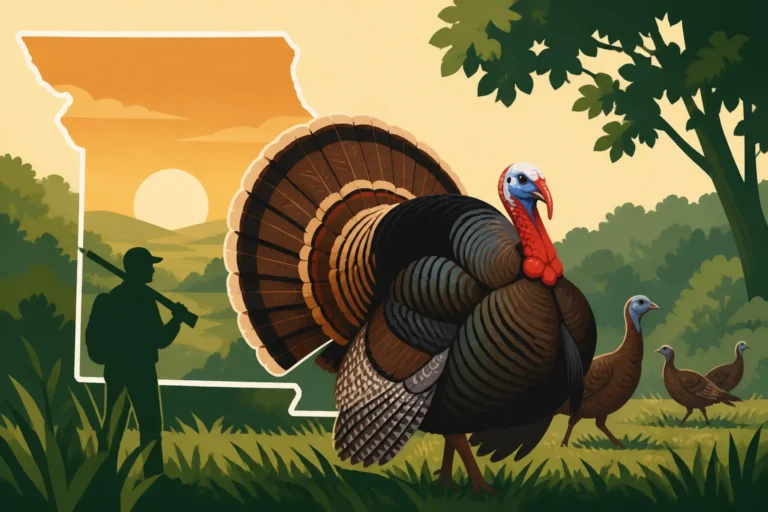
There’s nothing quite like the sound of a gobbler hammering on the roost in a Missouri spring morning, or the sight of a big tom strutting into your decoys. We work hard for those moments, putting in the miles, scouting, and enduring early mornings. When you finally punch your tag on a truly magnificent bird, you might wonder if it’s more than just a trophy for your wall – could it be a Missouri record? This guide is going to walk you through everything you need to know about the Missouri Wild Turkey Records Program, explaining how it works, what makes a gobbler record-worthy, and how you can officially document your incredible harvest.
Understanding Missouri's Turkey Records Program
For many of us, turkey hunting in Missouri is a deeply personal endeavor, steeped in tradition and the thrill of the chase. But when you harvest a truly exceptional gobbler, one with an impressive set of spurs, a thick, long beard, and a substantial weight, there’s a natural curiosity: how does it stack up against other giants taken in the state? That's precisely where the Missouri Wild Turkey Records Program comes into play. It’s not just about bragging rights, though let’s be honest, those are pretty sweet. It's a way to formally recognize and celebrate the truly outstanding wild turkeys harvested by hunters across the Show-Me State.
What is the Missouri Wild Turkey Records Program?
The Missouri Wild Turkey Records Program is a structured system designed to catalog and honor exceptionally large or unique wild turkeys taken by hunters within Missouri. It's managed by dedicated conservationists and hunting organizations who understand the pride hunters take in their successful pursuits. Think of it as a historical registry for the state's most impressive birds. This program doesn't just collect numbers; it tells a story, contributing to a rich tapestry of Missouri's hunting heritage. It allows individual hunters to immortalize their harvest and join a select group of sportsmen and women who have taken truly remarkable birds. It also creates a valuable database over time, highlighting areas that consistently produce top-tier gobblers and contributing to the overall understanding of the health and genetics of Missouri's Restored Wild Turkey Flock.
Why Document Your Harvest?
You might think documenting your harvest is just for the elite hunters, but that's really not the case. First and foremost, it's a fantastic way to personally celebrate a monumental achievement. Imagine showing your grandchildren a certificate proving you took one of the biggest gobblers in state history! Beyond personal satisfaction, these records serve a greater purpose. They provide a historical snapshot of turkey populations and individual bird characteristics across different regions of Missouri. This data, compiled over years, can offer valuable insights into turkey genetics, habitat quality, and management strategies. For a hunter who is passionate about conservation, contributing to this body of knowledge is a meaningful way to give back. Plus, it connects you to a broader community of hunters who appreciate the dedication and skill it takes to harvest a record-book bird. While a service like GoHunt is invaluable for scouting and planning your hunt, the records program is about the post-harvest recognition and contribution.
Eligibility and Measurement Basics
So, you've tagged a monster gobbler, and your heart is still pounding. Now what? Before you start clearing space on your wall, it’s essential to understand what makes a wild turkey eligible for the Missouri Wild Turkey Records Program and how these magnificent birds are actually measured and scored. It’s not just about one impressive feature; it’s a combination of several key attributes that paint the full picture of an exceptional bird.
Criteria for a Record Book Gobbler
To be considered for the record book, a gobbler needs to excel in three distinct categories: beard length, spur length, and overall weight. It’s the combination of these three factors that determines a bird’s final score. You can have a bird with incredibly long spurs, but if the beard is short and the weight is average, it might not make the cut. Conversely, a bird with a massive beard might be overlooked if its spurs are underdeveloped. The program typically looks for birds that exhibit significant development in all these areas, indicating a mature, healthy, and impressive tom. While the exact minimums can vary or be adjusted, generally, you're looking for beards that are impressively long, spurs that are sharply pointed and of substantial length, and a weight that stands out from the average gobbler you might encounter while Hunting Turkeys in Ozark Hollows or open fields.
The Scoring System: How It Works
The scoring system for a wild turkey is a composite of its most prominent physical features, designed to provide a comprehensive measure of its impressiveness. Each component is measured with precision, and then a formula is applied to calculate the total score.
Here's a breakdown of the components:
- Weight: The gobbler's live weight is a critical factor. It's usually taken to the nearest ounce. A heavy bird often indicates a healthy bird with access to good food sources.
- Beard Length: Measured from the base where it emerges from the skin to the tip of the longest strand, typically to the nearest 1/16th of an inch. Multiple beards are usually measured and added together, as they contribute significantly to the overall score.
- Spur Length: Each spur is measured along its outside curve from the point where it emerges from the scaly leg skin to its tip, usually to the nearest 1/8th of an inch. The lengths of both spurs are added together.
The final score is a formula that combines these elements. While I won't give you the exact mathematical equation here, understand that it's designed to give appropriate weight to each of these three impressive characteristics. For instance, a gobbler might have a score calculated by adding its weight (in pounds) to ten times the length of its beard(s) and ten times the length of both spurs combined. This ensures that birds truly exceptional in all categories are recognized as top contenders.
Let's look at a simplified example of the components:
| Feature | Measurement Unit | Contribution to Score | Notes |
|---|---|---|---|
| Live Weight | Pounds and Ounces | Direct Value | Indicates overall size and health |
| Total Beard Length | Inches (1/16th increments) | Multiplied Value | Multiple beards are combined |
| Total Spur Length | Inches (1/8th increments) | Multiplied Value | Both spurs measured and combined |
This systematic approach ensures fairness and consistency when comparing one incredible gobbler to another, whether it was taken during the Missouri Spring Turkey Season Structure or a later portion.
The Submission Process Step-by-Step
You’ve done the hard part – called in and harvested a truly exceptional Missouri gobbler. Now, to get that bird recognized by the state records program, there’s a specific process to follow. It’s not overly complicated, but it does require attention to detail and a little patience. Rushing things or missing a step could delay your entry, and nobody wants that after a phenomenal hunt.
Initial Documentation and Waiting Period
The moment you tag that impressive bird, your documentation process officially begins. First, take plenty of clear photos. Capture the bird from various angles, making sure the beard, spurs, and overall size are evident. These photos are not just for your memories; they often accompany the official submission. Next, you might be tempted to do some preliminary measurements yourself. Go for it! Use a flexible tape measure for the beard and a ruler for the spurs. Note down the weight, even if it's just from your hanging scale at home. This gives you a good idea of what you’re working with.
However, here’s a crucial step many folks overlook: there's often a required "drying period" for the beard and spurs before an official measurement can be taken. This isn't some arbitrary rule; it's to ensure accuracy. Beards and spurs can shrink slightly as they dry out, and you want to ensure the final, recorded measurements are stable and true. This period usually lasts for a certain number of days or weeks post-harvest. During this time, keep your gobbler parts in a cool, dry place. Avoid direct sunlight or extreme heat, which could cause damage or uneven drying. It’s all about preserving the integrity of your trophy for an accurate measurement.
Finding an Official Measurer
Once your gobbler's beard and spurs have properly dried, the next step is to find an official measurer certified by the state or the record-keeping organization. These individuals are trained to meticulously measure your bird according to the program's precise standards. They know exactly how to measure beard length to the nearest fraction of an inch and spur length along the curve, ensuring consistency across all entries.
Finding one of these certified measurers is usually quite straightforward. The Missouri Department of Conservation (MDC) website is an excellent resource for locating official measurers in your area. You can often find a directory listed by county or region. Sometimes, local taxidermists or hunting pro shops also have certified measurers on staff or can point you in the right direction. While GoHunt might not directly list measurers, they are a fantastic resource for general hunting information and community forums where fellow hunters might share contacts. Don't hesitate to reach out to these resources. When you contact a measurer, be prepared to schedule an appointment and bring your properly prepared turkey parts (beard, spurs, and sometimes a photo of the whole bird to confirm its integrity). They'll walk you through the process and answer any questions you have.
Submitting Your Entry
After the official measurements are taken, the measurer will usually help you complete the necessary paperwork. This typically includes a submission form where all the details of your harvest – the date, county, weapon used, and the official measurements – are recorded. You'll likely need to include clear photographs of your gobbler, especially highlighting the beard and spurs. There might also be a nominal fee associated with submitting your entry; this fee helps cover the administrative costs of maintaining the records program.
Once everything is filled out and signed, and any required fee is paid, the measurer will often assist you in sending the complete package to the records program administrator. Double-check everything before it goes in the mail or is submitted online. Make copies for your own records! The turnaround time for officially being inducted into the record book can vary, but once it's processed, you'll typically receive a certificate recognizing your achievement. This officially places your bird in the esteemed company of Missouri's most impressive wild turkeys, a testament to your skill, dedication, and the robust health of the state's turkey population. It's a fantastic feeling, knowing your bird is part of that legacy, and a great conversation starter at deer camp, especially after you've been working on your Spring Turkey Calling in Missouri Timber.
Beyond the Numbers: The Value of the Program
While the specific measurements and final score are certainly exciting, the Missouri Wild Turkey Records Program offers value far beyond mere numbers. It’s a reflection of our deep connection to the land and the wildlife we cherish in Missouri, and it plays a quiet but important role in the bigger picture of conservation.
Celebrating Missouri's Turkey Hunting Heritage
Missouri has an incredible story when it comes to wild turkeys. Just a few generations ago, turkeys were practically non-existent in many parts of the state. Thanks to monumental conservation efforts, including trap-and-transfer programs, our wild turkey population has made a phenomenal comeback. This records program is a living testament to that success. Every record-book bird entered represents not just a hunter's skill, but also the health and vitality of a species that was almost lost. It’s a way to honor that restoration, to celebrate the rich tradition of turkey hunting that has been passed down through generations, and to encourage future generations to appreciate these magnificent birds. When you harvest a record-book bird, you’re not just taking a trophy; you're becoming a part of Missouri’s conservation legacy. It's a story you can share with pride, much like stories about learning Calling a Missouri Gobbler Off the Roost or perfecting Decoy Placement for Pressured Birds.
Contribution to Conservation Data
At its heart, the Missouri Wild Turkey Records Program contributes valuable data to wildlife management. Each entry, with its detailed measurements and harvest location, adds to a growing database that the Missouri Department of Conservation (MDC) can utilize. This data can help biologists track trends in Missouri Turkey Population Trends, understand regional differences in gobbler size and health, and even identify areas where habitat improvements might be leading to more robust birds. For instance, if certain counties consistently produce larger, heavier gobblers with longer beards and spurs, it could indicate prime habitat or successful management practices in those areas.
This kind of long-term data collection, even if it comes from individual hunter submissions, is crucial for making informed decisions about season structures, bag limits, and habitat projects. It's another way hunters actively participate in conservation, even if they don't realize it at the moment of submission. Think of it as citizen science for the turkey world. Platforms like GoHunt, which help hunters track their own harvest data and scout extensively, reinforce the idea that good data, whether personal or statewide, is a powerful tool for understanding and appreciating our wildlife resources. So, when you submit that record-book gobbler, know that you’re not just chasing personal glory; you're also helping to ensure a healthy future for wild turkeys across Missouri.
Disclaimer
This article is for general informational purposes only and does not constitute professional advice. Laws, prices and regulations vary by location and change over time. Consult a qualified professional for guidance on your specific situation.