Missouri Pheasant Range in the North
If you've ever dreamt of those classic pheasant hunts you see in magazines, complete with a brace of colorful roosters flushing from golden fields, you might have felt a pang of frustration trying to replicate that dream in much of Missouri. Our state isn't exactly renowned as a pheasant mecca compared to our neighbors to the north and west, and finding consistent pheasant hunting can feel like searching for a needle in a very large haystack. But don't despair! This guide is going to walk you through exactly where and how to focus your efforts in the northern reaches of the Show-Me State to maximize your chances of encountering these magnificent birds.
Missouri's Pheasant Landscape: Where to Even Begin Looking
Let's be honest right from the start: Missouri's pheasant population isn't what it used to be, and it's certainly not comparable to states like Iowa, Kansas, or the Dakotas. The habitat just isn't as widespread or as consistently rich. However, that doesn't mean pheasant hunting is impossible here. It simply means you need to be strategic, knowledgeable, and ready to put in some legwork. The key is understanding why pheasants exist where they do in Missouri and what kind of specific environments they cling to.
Why North Missouri? A Habitat Story
The reason we focus almost exclusively on North Missouri for pheasants boils down to geology and historical land use. As you move north of the Missouri River, the soil changes, becoming richer and deeper, more akin to the prairie soils found further north. This is prime agricultural country, dominated by vast fields of corn and soybeans. While intensive row-cropping isn't ideal for pheasants, the remnants of native grasslands, CRP (Conservation Reserve Program) acres, and specific farming practices create crucial pockets of survival for these birds. Pheasants thrive where they have a mosaic of cover: dense nesting cover in spring, tall protective cover for winter, and readily available food sources. This combination is most prevalent, albeit fragmented, in Missouri's northern counties, particularly those bordering Iowa and Nebraska. It's a subtle difference from the timbered hills of the Ozarks or the mixed agriculture and woodland south of the river, but it's a critical one for pheasants.
Think about it: a pheasant needs heavy, grassy cover for nesting in the spring, typically in undisturbed areas like CRP fields, hayfields, or even ditches. Once the chicks hatch, they need bug-rich areas, often found in the same grassy fields or field edges. As winter approaches, that cover becomes even more critical, needing to be tall and robust enough to provide shelter from snow and brutal winds, often found in standing crop fields or brushy draws. Food, of course, is everywhere in agricultural country – waste grain from corn and soybean harvests is a pheasant staple. Without that combination of cover and food, pheasants simply cannot sustain themselves, which is why their presence dwindles rapidly as you head south into more timbered or less intensively farmed regions.
The Ideal Pheasant Environment: What to Look For
When you're trying to locate pheasants in North Missouri, you're not just looking for "fields." You're looking for specific types of fields and the transitions between them. The absolute best habitat includes a mix of tall, undisturbed grasses (often CRP), proximity to row crops (corn and soybeans), and escape cover like brushy draws, fencerows, or even small patches of timber. These birds are master hiders, and they need that dense cover to feel secure from predators and hunters alike.
Imagine a perfect pheasant spot: you've got a several-acre block of thick, chest-high CRP grass, maybe with some scattered broadleaves or small shrubs. Adjacent to that, there's a picked cornfield, providing a constant food source. Running through or along the edge of this setup is a brushy creek bottom or a fencerow choked with multiflora rose and small trees. This entire ecosystem provides everything a pheasant needs to survive throughout the year. The grass is for nesting and loafing, the corn is for food, and the brush offers thermal cover and a quick escape route when danger approaches. Any deviation from this ideal mosaic, such as an area dominated solely by short fescue pasture or only vast open row crops, will likely result in very few pheasants, if any. Your scouting, whether on foot or with tools like GoHunt satellite imagery, should focus on identifying these habitat components.
Pinpointing the Prime Pheasant Real Estate in Northern Missouri
While pheasants can theoretically be found in many northern counties, some areas consistently hold better numbers due to a more favorable mix of agricultural practices, conservation efforts, and historical populations. Knowing where to start your search saves you valuable time and increases your odds of success.
Spotlight on the "Pheasant Belt"
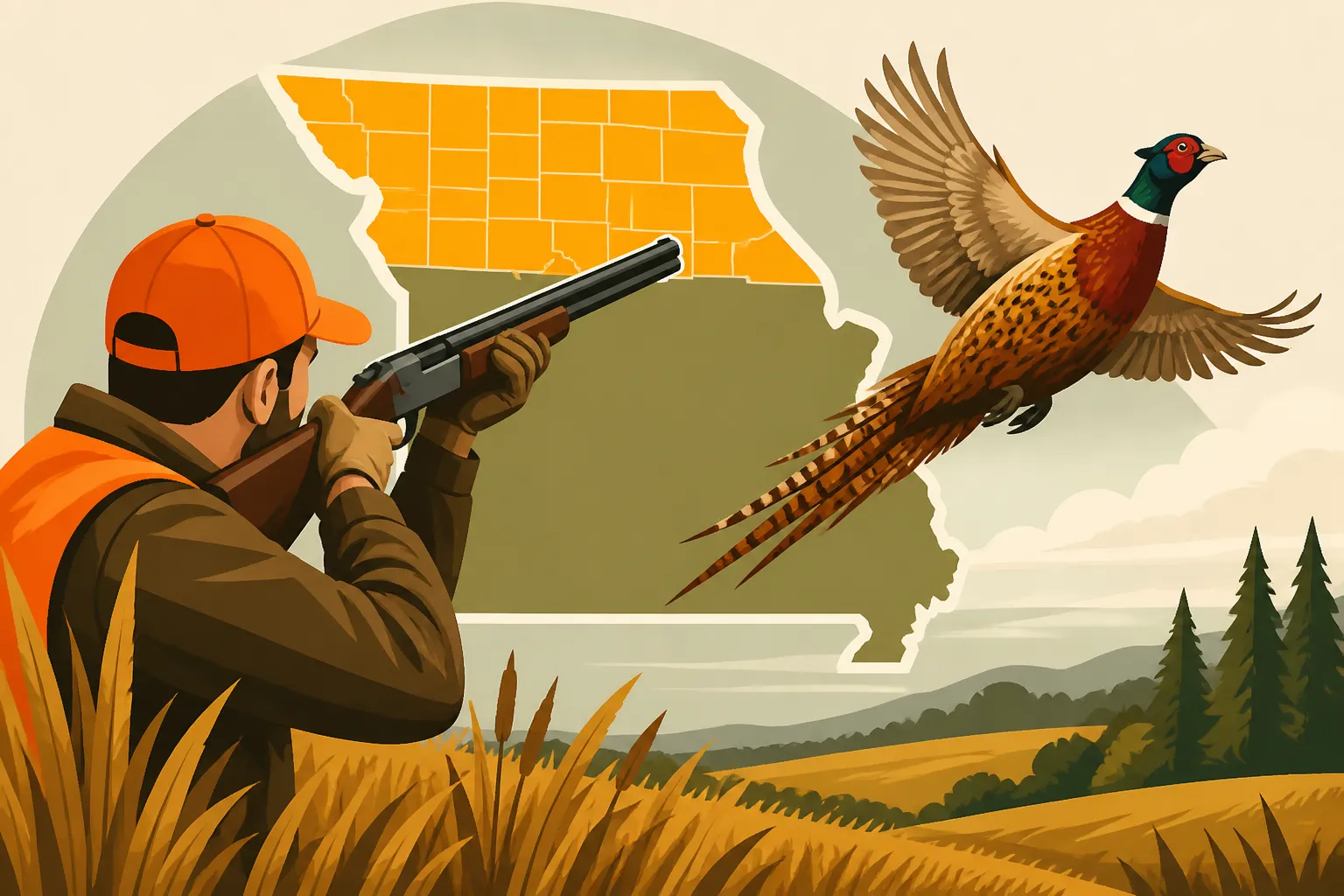
When hunters talk about Missouri pheasants, their minds inevitably drift to the northwestern corner of the state. This region, often informally called the "pheasant belt," includes counties like Atchison, Holt, Nodaway, Andrew, Gentry, Worth, and Harrison. These counties share borders with Iowa and Nebraska, which are classic pheasant states, and they inherit some of that productive habitat. Here, you'll find larger blocks of CRP, more expansive row crop fields, and a landscape that generally favors pheasants more than other parts of Missouri.
Specifically, look for areas with significant enrollments in programs like CRP, often identifiable by the distinct texture of native grasses and wildflowers in aerial photos. Many of these fields will be adjacent to large corn and soybean tracts. It's in these transition zones, especially where old fencerows or small timber patches provide additional sanctuary, that pheasants will hold tight. I've spent many cold December days walking public land in these counties, and while it's never easy, these are the places where I've heard the tell-tale cackle of a flushing rooster. Success here often depends on cold, snowy weather, which concentrates birds in the thickest cover and makes them more reluctant to run. You might even find birds holding in standing strips of milo or soybeans that haven't been harvested yet.
Areas Beyond the Traditional Hotbeds
While the extreme northwest gets most of the attention, other northern Missouri counties can also offer pheasant opportunities, particularly in a banner year or if you know a specific private landowner. Counties like Mercer, Putnam, Schuyler, and Clark along the Iowa border to the northeast also have pockets of suitable habitat. The key is to look for the same habitat components: large agricultural fields combined with sufficient undisturbed grassy cover. However, the density of these suitable areas tends to decrease as you move east and south from the northwestern "belt."
It's about finding those isolated islands of habitat. A farmer might have enrolled a specific field in a program, or a landowner might manage a few acres of cover just for wildlife. These smaller, isolated patches can sometimes hold surprising numbers of pheasants, precisely because they are overlooked. Don't be afraid to Hunting Small Private Tracts in Missouri and knock on doors in these counties. Even a 20-acre patch of cover bordering a cornfield can hold a covey of pheasants. Remember, just because a county isn't famous for pheasants doesn't mean it has zero birds; it just means you'll have to work harder and more specifically to locate them. Use your scouting tools, including services that might highlight potential habitat, to identify these overlooked gems.
Unlocking Access: Finding Your Pheasant Field in the North
Finding pheasants is one thing; getting permission to hunt them is another. North Missouri is primarily private land, and while there are public options, a well-rounded strategy considers both avenues.
Public Land Opportunities and Challenges
Missouri does offer public hunting opportunities in the northern counties, primarily through Conservation Areas (CAs) managed by the Missouri Department of Conservation (MDC). Many of these CAs, especially those in the northwestern region, will have habitat managed for various small game, including pheasants. They often include blocks of switchgrass, native warm-season grasses, food plots, and brushy edges that pheasants utilize. You can find these areas using the Missouri Conservation Atlas or by looking at aerial maps.
However, public land pheasant hunting comes with its challenges. These areas can receive significant pressure, especially on weekends and during the Missouri Quail and Rabbit Seasons which overlap. Birds on public land tend to be wilder and more prone to running than holding for a dog. You'll often need to walk farther, push through denser cover, and be prepared for less predictable flushes. Success on public ground often means hunting midweek, targeting less accessible corners, or waiting for snow cover to concentrate birds. Always check the specific area regulations, as some CAs might have unique rules regarding methods or seasons, and be prepared for other hunters. A good strategy is to use the GoHunt platform to identify public land areas and scout them remotely for promising habitat.
Here's a quick comparison of general public land pheasant habitat:
| Habitat Type | Typical Location on Public Land | Pheasant Appeal | Hunter Challenge |
|---|---|---|---|
| Native Warm-Season Grass | Dedicated habitat plots, old fields, CRP plantings | Excellent nesting, brood, and winter cover | Very dense, tough to walk, can be overlooked |
| Cool-Season Grass (Fescue) | Roadsides, older pastures, some field borders | Limited, mostly for loafing/traveling; poor cover | Less productive, birds move quickly |
| Brushy Draws/Fencerows | Along creeks, field edges, timber breaks | Critical escape cover, thermal protection | Tangled, difficult to traverse, can hold birds |
| Standing Food Plots | Corn, milo, sorghum strips | Excellent food source, winter thermal cover | May be small, birds can be very spooky |
| Harvested Row Crops | Adjacent to cover, provides waste grain | Food source, minimal cover | Birds will quickly move to dense cover |
The Quest for Private Land: Strategies for Success
Given the fragmented nature of pheasant habitat in Missouri, securing private land access can significantly improve your hunting experience. Landowners often have ideal habitat configurations, like CRP fields bordering their corn and soybean acreage, and they may manage it with wildlife in mind. The birds on private land that isn't heavily hunted are often less pressured and more likely to hold for a dog, offering those classic flushing opportunities.
The best strategy for private land is, and always has been, knocking on doors. Start by scouting promising habitat using tools like GoHunt's mapping features which can show property boundaries and ownership information. Identify fields that scream "pheasant habitat"—those mosaic patterns of grass, crops, and brush. Then, politely approach the landowner. Explain your intentions clearly, offer to share game, and emphasize safety. Sometimes, offering to help with a chore or two on the farm can go a long way in building trust. You might be surprised how many landowners are willing to grant access, especially if you demonstrate respect for their property and their operation. Early season is often a good time to ask, before other hunters have worn out their welcome. Remember, the Missouri Resident Small Game Permit Cost is a small price to pay for the chance to pursue these birds, and a good relationship with a landowner is priceless.
Tactics and Tools for a Successful Pheasant Hunt in Missouri
Once you've found your promising pheasant ground, whether public or private, it's time to think about how you'll actually hunt these wily birds. Missouri pheasants, like pheasants everywhere, have a knack for disappearing or flushing out of range.
Walking the Cover: Tactics and Techniques
Pheasant hunting is a walking sport, plain and simple. You need to cover ground, pushing through dense cover to get birds to flush. The most effective method is often a methodical walk, either alone or with a small group of hunters. If you're alone, focus on walking into the wind, as pheasants prefer to flush into the wind, giving you a better shot. Zig-zag through cover, pause frequently (pheasants often flush when they think you've passed them), and pay close attention to escape routes like fencerows or ditch banks.
With a group, you can coordinate a small drive, with blockers at the end of a field while other hunters walk through. The key is to keep lines tight and move at a steady pace, trying to prevent birds from running out the sides or doubling back. Early in the season, pheasants might hold tighter, but as the season progresses and they get pressured, they become incredibly adept at running. Hunting on cold, snowy days can be a game-changer, as the snow makes running more difficult and concentrates birds in the thickest thermal cover, making them more reluctant to move until pushed. This is where Still-Hunting After a Fresh Snow for deer tactics can even inform your pheasant approach, as quiet, deliberate movement becomes paramount.
Essential Gear for Northern Missouri Pheasants
Having the right gear makes a huge difference in comfort, safety, and success.
- Shotgun: A 12-gauge or 20-gauge shotgun is standard. An improved cylinder or modified choke is versatile, allowing for both close flushes and longer shots. Choose a shotgun that you're comfortable carrying all day.
- Ammunition: For pheasants, typically #4, #5, or #6 lead shot is effective. Given the requirements for Nontoxic Shot Rules on Missouri Wetlands, if you're hunting on certain public areas, be prepared to use steel, bismuth, or other approved alternatives. Always double-check area regulations.
- Upland Vest: An upland vest is indispensable. It allows you to carry shells, water, snacks, a first-aid kit, and, most importantly, provides a game bag for any birds you harvest. Look for one with good ventilation and comfortable straps.
- Brush Pants/Chaps: Missouri cover can be brutal—thorns, multiflora rose, and thick briars are common. Quality brush pants or chaps will save your legs from a lot of pain and scrapes.
- Boots: Waterproof, comfortable boots are a must. You'll be walking through damp grass, mud, and potentially snow, so good ankle support and traction are critical.
- Blaze Orange: Safety is paramount. Missouri requires hunters (including small game hunters) to wear at least 400 square inches of hunter orange during the November firearms deer portion. Even outside of this time, it's highly recommended for visibility and safety, especially if hunting with a group or dogs. A good blaze orange hat and vest or jacket are ideal.
- Bird Dog: While you can hunt pheasants without a dog, a well-trained bird dog (especially a flushing breed like a Springer Spaniel or an English Cocker, or a pointer like a German Shorthaired Pointer or Brittany) dramatically increases your success rate. A dog's nose can find birds you'd walk past, and they excel at retrieving downed birds from thick cover, preventing lost game. Be sure your dog has proper Bird Dog Gear for Missouri Heat if hunting early in the season, and keep them hydrated.
Pheasant hunting in North Missouri is an achievable goal, but it demands dedication, smart scouting, and a willingness to adapt your expectations. It might not be a high-volume hunt every time, but those cackling flushes and vibrant roosters are worth every step.
Disclaimer
This article is for general informational purposes only and does not constitute professional advice. Laws, prices and regulations vary by location and change over time. Consult a qualified professional for guidance on your specific situation.