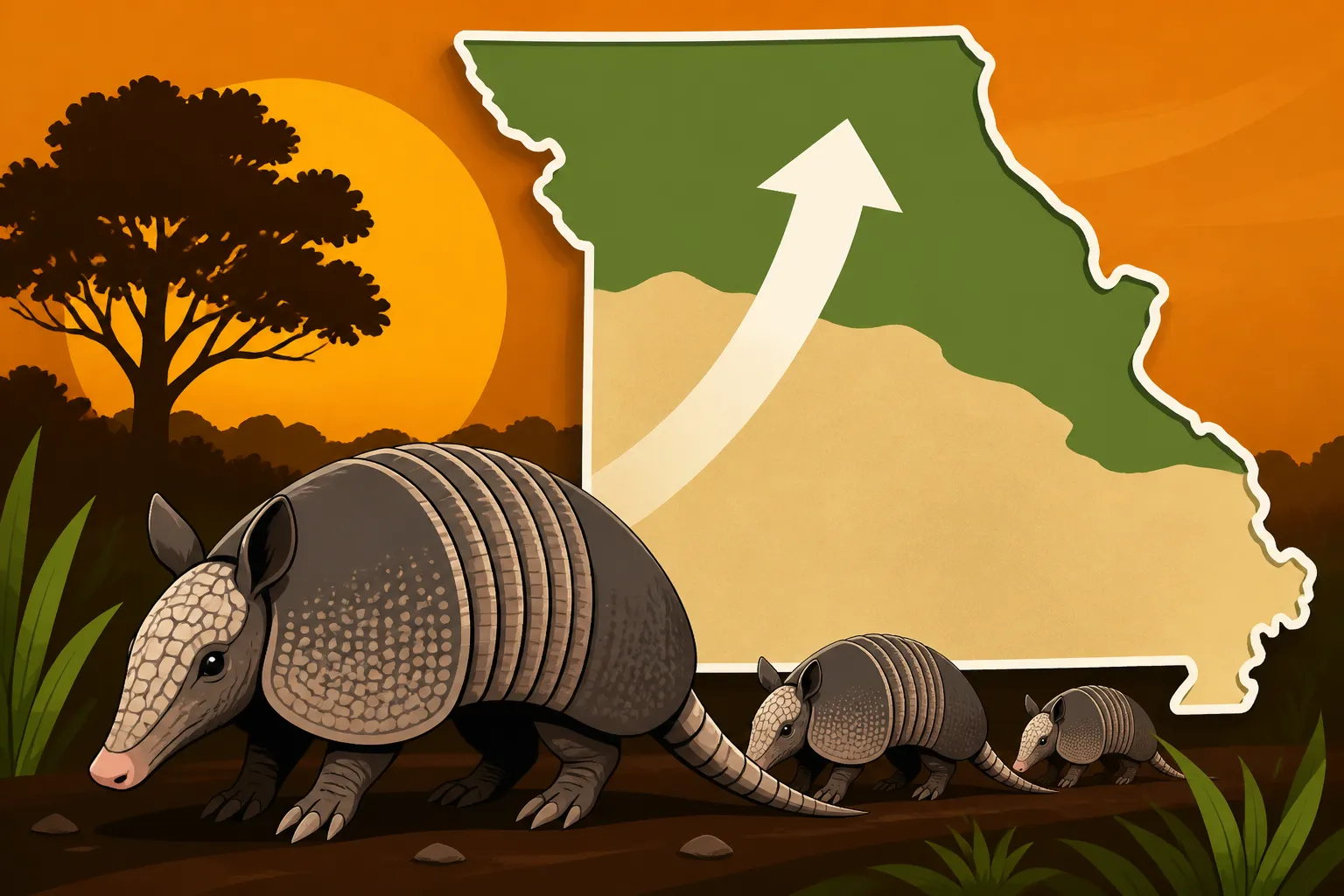
Armadillos Moving North Through the State
If you've spent any time outdoors in Missouri recently, particularly in the southern and central parts of the state, you might have done a double-take at a strange, armored creature scurrying across a field or rummaging through leaf litter. That's right, we're talking about armadillos, and they're steadily making their way further north, causing a mix of curiosity, concern, and sometimes, a little frustration for landowners and wildlife enthusiasts alike. This guide is all about understanding why these unique animals are expanding their range into the Show-Me State and what their presence means for our natural landscape.
Understanding the Armadillo's Historical Range and Expansion
It's easy to think of armadillos as a creature of the deep South, something you'd expect to see trundling along in Texas or Florida. For generations, that was largely true. But like many wildlife species, their story isn't static; it's one of slow, persistent change.
Where Did Armadillos Traditionally Live?
Historically, the nine-banded armadillo, the species we see in Missouri, made its primary home in Central and South America. Over time, they migrated north, naturally colonizing much of Mexico and the southern United States. They've been firmly established across Texas, Louisiana, Oklahoma, Arkansas, and eastward into Mississippi, Alabama, Georgia, and Florida for a very long time. These regions offered everything an armadillo could want: mild winters, abundant insects (their primary food source), and soft, sandy soil perfect for burrowing.
Their preference for these southern climes wasn't just about comfort; it was a matter of survival. Armadillos have a low metabolic rate and very little body fat, making them particularly vulnerable to prolonged cold snaps. Deep snow cover or extended periods of frozen ground meant starvation and exposure were real threats. This natural barrier kept their northern expansion in check for a long time, maintaining a relatively clear line where their population tapered off as the climate became less hospitable.
The Factors Driving Northward Movement
So, what changed? Why are we now seeing these armored wanderers crossing state lines and showing up in places like northern Missouri? The answer is a combination of environmental shifts and their own remarkable adaptability.
The biggest driver is arguably climate change, leading to milder winters across what was once their northern range limit. When the ground doesn't freeze as deeply or for as long, and when snowfall isn't as persistent, armadillos have a much better chance of surviving the colder months. This allows them to push incrementally further north, establishing new populations where they might have perished just a few decades ago. It's a slow but steady march, one generation at a time, each pushing the boundary a little further than the last.
Beyond climate, human alterations to the landscape play a role. Extensive agricultural lands and suburban development often create fragmented forests and open areas that can be surprisingly welcoming to armadillos. These areas often have disturbed soils, making it easier for them to dig their burrows and find food. Roads, while dangerous, also offer clear travel corridors, and the warmer microclimates found in developed areas can provide pockets of refuge in colder regions. When hunters are out Scouting With the Missouri Conservation Atlas or looking at satellite imagery through an app like GoHunt, they might notice these habitat changes that open doors for new species.
Armadillo Sightings and Presence in Missouri
For many Missourians, spotting an armadillo still feels like a novelty, a sign that something is shifting in our wildlife landscape. But these aren't just isolated incidents anymore; they're becoming a more common part of the scenery.
Documenting Their Arrival in the Show-Me State
Armadillos first really started making their presence known in southern Missouri decades ago, slowly but surely spreading from Arkansas. Over the past twenty or so years, however, the pace seems to have picked up considerably. What was once a rare sighting in the Ozarks has become fairly routine, and now, they're showing up further north than ever before. Folks around Columbia, Kansas City, and even further towards the Iowa border have reported seeing them.
Hunters, who spend countless hours observing the natural world, are often the first to notice these changes. While out pursuing White-Tailed Deer Across Missouri or calling in Missouri's Restored Wild Turkey Flock, you might stumble upon an armadillo rooting around. For those of us who grew up knowing armadillos as an "Arkansas animal," it can be quite a surprise! Many have anecdotal stories of seeing them crossing rural roads or digging up grubs in a food plot. Using mapping tools like GoHunt, you can sometimes observe changes in vegetation patterns over time, which might correlate with areas where armadillos are finding suitable new homes, even if they aren't the primary focus of your scouting.
What Does Their Presence Mean for Missouri's Ecosystem?
Any time a new species moves into an area, it raises questions about how it will impact the existing ecosystem. For armadillos, the concerns are typically pretty minor compared to, say, invasive carp or feral hogs, but they're still worth considering.
One of the most common concerns revolves around their digging habits. Armadillos are prolific excavators, constantly digging shallow holes to find insects and grubs, and deeper burrows for shelter. While this can be a nuisance for homeowners with meticulously manicured lawns or gardeners, it can also have ecological implications. Their digging could potentially disturb the nests of ground-nesting birds like Northern Bobwhite Quail in Missouri or other small mammals. The good news is that armadillos are not aggressive predators and primarily focus on insects, so they're not typically a direct threat to adult game species.
Another aspect that sometimes comes up is the link between armadillos and leprosy. Yes, it's true that armadillos can carry the bacteria that cause leprosy (Mycobacterium leprae), and they are the only other known animal reservoir for the disease besides humans. However, the risk of transmission to humans is extremely low. You'd typically need prolonged, repeated contact with an infected armadillo to be at risk, and cases of human leprosy in the US are rare and almost always linked to direct contact or specific genetic predispositions. It's wise to avoid handling wild armadillos, but there's no need for widespread panic. The Missouri Department of Conservation (MDC) is actively involved in Missouri Wildlife Disease Monitoring, and they can provide the most current information.
What to Do If You Encounter an Armadillo
Finding an armadillo on your property or while out in the woods can be an interesting experience. Most of the time, they're just going about their business, but there are some sensible practices to follow.
Observing and Reporting Sightings
If you spot an armadillo, the best course of action is generally to observe it from a distance and leave it alone. They are wild animals, and like any wildlife, deserve their space. There's no need to approach or try to pet them.
The Missouri Department of Conservation is very interested in tracking the spread of armadillos. Reporting your sightings can help them understand their current range and population trends across the state. Typically, they'll want to know the date, time, and specific location (GPS coordinates if you have them, which a mapping app like GoHunt can provide easily!) and perhaps a photo if you can safely take one without disturbing the animal. This kind of citizen science data is invaluable for wildlife managers trying to keep tabs on changing species distributions. You can often report these sightings through the MDC's website or by contacting your local conservation agent. If you find an animal that appears sick or injured, it's always best to follow the guidelines for Reporting a Sick Animal in Missouri.
Managing Armadillos on Private Property
For many homeowners, the biggest headache with armadillos isn't their presence itself, but the holes they dig in search of food. These shallow, conical depressions can quickly turn a lush lawn into a pockmarked landscape.
The most effective long-term solution to prevent armadillo damage is often habitat modification. This means reducing their food source by controlling grubs and insects in your lawn and garden. There are various commercial and organic treatments available for this. Another strategy is exclusion; a sturdy fence buried at least a foot deep can deter them from burrowing under. While GoHunt is designed for hunting, its detailed property line and topographic maps can be surprisingly useful for landowners trying to understand and manage their property, even for unexpected guests like armadillos.
| Trait / Behavior | Typical Armadillo Characteristics | Impact on Missouri Landscape/Homeowners |
|---|---|---|
| Diet | Primarily insects (grubs, worms, beetles), some plant matter. | Digs shallow holes in lawns, gardens, and fields for food. |
| Burrowing | Digs burrows up to 7 feet deep for shelter, raising young. | Can undermine foundations, sidewalks, or damage root systems. |
| Activity | Primarily nocturnal, but can be seen during the day in cooler weather. | May be encountered at dawn/dusk, or during overcast days. |
| Reproduction | Gives birth to identical quadruplets. | High reproductive rate contributes to rapid population expansion. |
| Cold Tolerance | Low body fat, susceptible to cold and prolonged frozen ground. | Milder winters allow them to survive and expand northward into MO. |
| Habitat Preference | Soft, sandy soil; brushy areas, woodlands, grasslands. | Thrives in many Missouri habitats, from Ozark hollows to farm fields. |
If you're dealing with persistent problems, exclusion fencing around specific garden beds or areas of concern can be effective. Trapping and relocation is generally not recommended unless done by a professional, as it can be stressful for the animal and simply moves the problem elsewhere. Always check with the Missouri Department of Conservation for current regulations regarding trapping and removal of nuisance wildlife on your property. They can often offer practical advice tailored to your specific situation.
The Future of Armadillos in Missouri
The question isn't really if armadillos are in Missouri anymore, but rather how far north they'll go and how established they will become. Their journey is a fascinating case study in wildlife adaptation and range expansion.
Predicting Their Further Spread
Based on current trends, it seems likely that armadillos will continue their northward creep across Missouri. Milder winters are projected to continue, which removes the primary natural barrier to their expansion. They are remarkably adaptable creatures, capable of utilizing a variety of habitats, from dense timber to open farm country.
However, there are still limits. Very harsh, extended cold snaps with deep, persistent snow could still cause significant die-offs in their northern populations, potentially pushing them back temporarily. It's not a guaranteed linear progression. Wildlife biologists are watching closely, and you can bet that observations from hunters and outdoor enthusiasts, especially those who use detailed mapping applications like GoHunt to mark their sightings, will be crucial in understanding just how far and how fast they spread. Finding Ground Others Walk Past or Reading Aerial Photos for Ozark Deer could reveal areas with prime armadillo habitat.
Adaptability and Coexistence
Ultimately, armadillos are likely here to stay in Missouri, at least in many parts of the state. They represent another chapter in the ever-evolving story of our state's wildlife. While they may cause some localized issues with digging, they are generally harmless and, dare I say, quite unique and interesting animals to observe. They don't pose a significant threat to our cherished game species and are simply another part of the mosaic of creatures that make Missouri so diverse.
As Missourians, we've learned to adapt to many changes in our landscape and wildlife over the years. From the reintroduction of elk to managing growing deer populations, we've shown a remarkable ability to coexist. Learning to live with armadillos, understanding their role, and appreciating their distinctive place in the ecosystem will be just another part of our ongoing relationship with the wild heart of the Show-Me State.
Disclaimer
This article is for general informational purposes only and does not constitute professional advice. Laws, prices and regulations vary by location and change over time. Consult a qualified professional for guidance on your specific situation.