Why Missouri Banned Feral Hog Hunting
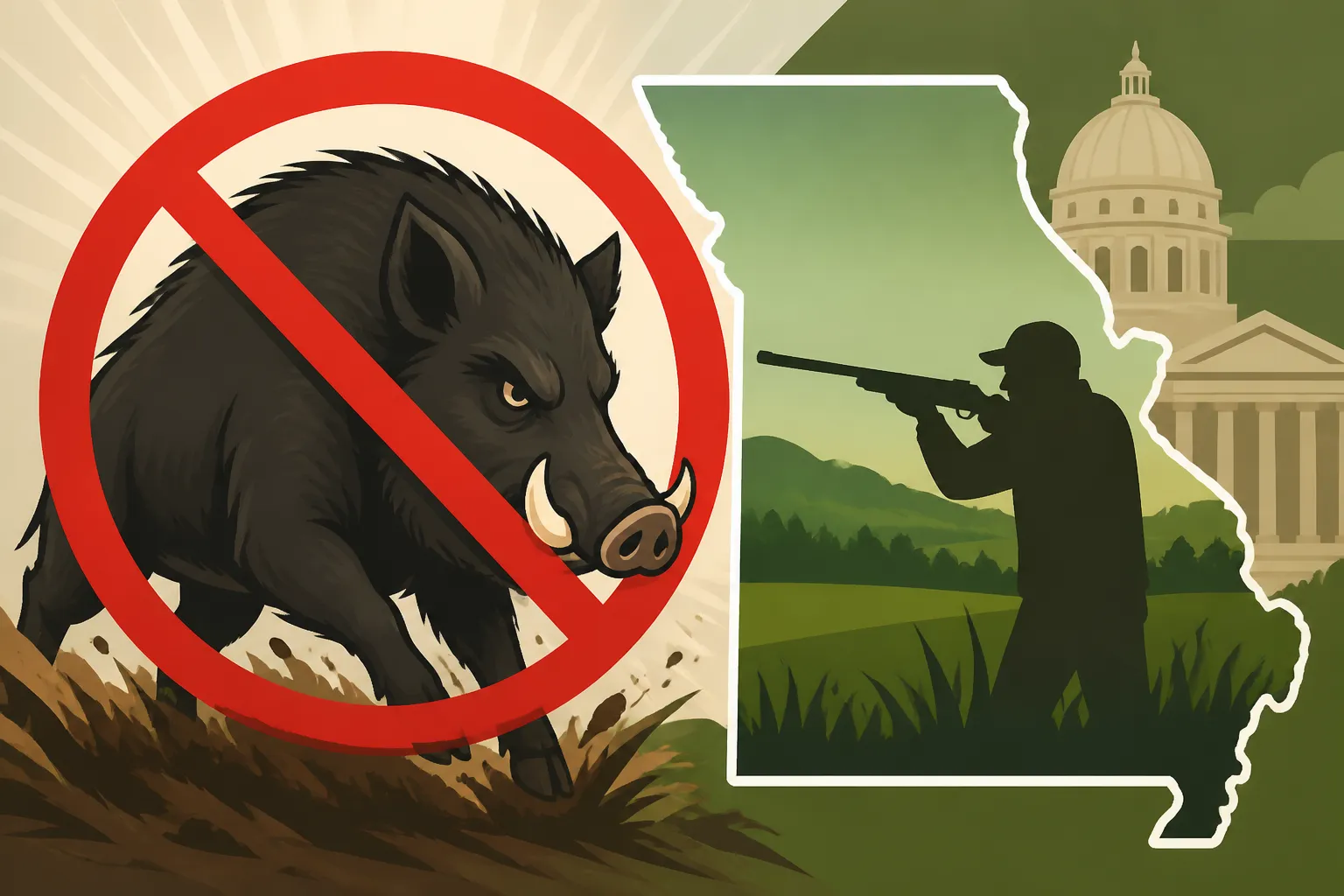
If you're a Missouri hunter, you've likely felt the frustration and confusion around the state's stance on feral hogs. It feels counter-intuitive to see such a destructive animal and be told you can't hunt it, especially when your instincts scream to take action. This guide is here to unravel the complex reasons behind Missouri's ban on hunting feral hogs and explain how this seemingly restrictive policy is, in fact, the most effective strategy for their eventual eradication.
The Feral Hog Problem in Missouri: More Than Just a Nuisance
For years, hunters were encouraged to shoot feral hogs on sight. It seemed like a win-win: hunters got to pursue an exciting, challenging quarry, and the hogs, a known menace, were removed from the landscape. But the truth is, the problem worsened, not improved, under that approach. Feral hogs are far more than just wild pigs; they are an invasive, highly destructive species that poses a significant threat to Missouri's environment, native wildlife, and agricultural economy. They aren't a native game animal, and treating them as such proved to be a costly mistake.
Environmental Devastation on a Massive Scale
Imagine a rototiller, but one that never stops, works day and night, and leaves a path of utter destruction. That's essentially what feral hogs are doing to Missouri's delicate ecosystems. Their constant "rooting" behavior, where they use their powerful snouts to dig for food, tears up vast tracts of land. This rooting disrupts soil structure, destroys native vegetation, and can lead to severe erosion, especially near streams and rivers. When sediment washes into waterways, it degrades water quality, harms aquatic life, and negatively impacts habitats for fish and other species.
Think about a pristine glade or a carefully managed food plot for deer and turkeys. A sounder of hogs can turn it into a lunar landscape overnight, completely stripping it bare. They don't just eat the surface plants; they dig for roots, tubers, and invertebrates, leaving nothing behind. This directly impacts the food sources available for native wildlife, from deer and wild turkeys to smaller mammals and ground-nesting birds. The sheer volume of their impact is astounding, and it's visible in torn-up creek bottoms, destroyed crop fields, and ravaged forest floors across counties where they've established a foothold.
A Hotbed of Disease Transmission
This might be the most insidious threat posed by feral hogs. These animals are carriers for a host of diseases that can easily spread to livestock, wildlife, and even humans. We're talking about serious stuff like pseudorabies virus (PRV), swine brucellosis, leptospirosis, and even E. coli. While PRV and brucellosis don't typically affect humans, they can decimate domestic hog operations, causing huge economic losses for farmers. For native wildlife, the introduction of these diseases can have unforeseen and potentially devastating consequences, especially for vulnerable populations already facing other pressures.
Beyond these, there's the looming concern of Chronic Wasting Disease (CWD). While hogs aren't direct carriers of CWD, their rooting behavior can move soil contaminated with CWD prions, potentially spreading the disease to new areas where deer might then contract it. The Missouri Department of Conservation (MDC) takes Missouri's CWD Rule Changes for 2026 very seriously, and anything that complicates CWD management, including feral hogs, is a major concern. The risk of disease transmission alone is enough to justify aggressive eradication efforts, and it highlights why uncontrolled hunting, which can disperse infected animals, is so problematic.
Competition and Predation on Native Wildlife
Feral hogs are omnivores with a voracious appetite. They compete directly with native wildlife for essential food resources like acorns, nuts, berries, and fungi. This competition puts a strain on species like white-tailed deer, wild turkeys, and Missouri Black Bear Population, especially during lean times of the year. When hogs consume these resources, there's simply less available for the animals that belong here.
But it's not just competition. Feral hogs are opportunistic predators. They will raid the nests of ground-nesting birds like turkeys and quail, consuming eggs and young poults. They'll also prey on fawns, small mammals, and reptiles. Imagine the struggle for species like the Northern Bobwhite Quail, already facing challenges with habitat loss, only to have their nesting efforts undermined by a burgeoning hog population. Every wild turkey nest destroyed, every fawn taken, is a hit to Missouri's native game and non-game species, slowly eroding the biodiversity and health of our wild places.
The "Trap, Not Shoot" Strategy: A Paradigm Shift in Management
The decision to ban feral hog hunting wasn't made lightly, nor was it intended to spite hunters. It came about after years of observation and scientific study by the MDC and the USDA. The hard truth is that traditional sport hunting of feral hogs was actually hindering, rather than helping, eradication efforts. This might sound completely backward to many hunters, but there's solid biological and behavioral science behind it.
The "Sport Hunting" Paradox: Why Shooting Makes It Worse
Here's the core of the issue: when hunters chase and shoot individual hogs, especially smaller groups, it doesn't eradicate the population; it scatters them. Hogs are incredibly intelligent and adaptable animals. When pressured by hunters, a sounder (a group of hogs) will break up and disperse into new areas. This spreading out makes them harder to track, harder to trap, and ultimately, allows them to establish new populations in previously unaffected regions. It's like trying to get rid of dandelions by blowing their seeds all over the yard – you're just spreading the problem.
Furthermore, when hogs are hunted sporadically, they quickly become nocturnal and extremely wary, making large-scale trapping efforts, which rely on predictability, much more difficult. They learn to avoid human activity, becoming "trap-shy" or "hunter-educated." This creates a scenario where the remaining hogs are more elusive and harder to remove, leading to an endless cycle of chasing rather than truly eliminating them. The perceived success of shooting a hog or two was actually masking a much larger, growing problem, making true eradication nearly impossible.
Understanding Hog Behavior: Intelligence and Adaptability
To effectively manage feral hogs, you have to understand them. They are not like deer or turkeys. Hogs breed year-round, with sows able to have multiple litters of 4-8 piglets annually. Their population growth is exponential. A single sounder can explode in numbers if left unchecked. They are highly social animals, often moving in family groups, and they communicate effectively. Their senses of smell and hearing are incredible, and they learn quickly from negative experiences, like being shot at or seeing a trap.
This intelligence and adaptability means that piecemeal hunting efforts simply cannot keep pace with their reproductive rate or their ability to evade pressure. While you might harvest one or two hogs, the remaining group is often already breeding, and the dispersed individuals are likely establishing new home ranges where they can continue to reproduce. Professional eradication efforts focus on eliminating entire sounders at once, often through large-scale trapping operations, which is the only way to make a significant dent in their numbers.
Coordinated Trapping Efforts: The Key to Eradication
The current strategy employed by the MDC and USDA Wildlife Services is centered around strategic, large-scale trapping. This involves:
- Surveillance and Intel: Identifying areas of hog activity through public reports, aerial surveys, and trail cameras.
- Pre-Baiting: Placing bait (often corn) in an area to habituate an entire sounder to a specific feeding location. This can take weeks, even months, but it's crucial for getting all hogs in a group comfortable with a single spot.
- Large Corrals: Once a sounder is regularly feeding, large, robust corral traps are set up. These aren't small box traps; they're often big enough to catch an entire family group.
- Remote Triggering: Many modern traps are equipped with cellular cameras and remote triggers. This allows technicians to monitor the trap in real-time and only drop the gate when all hogs in a sounder are inside, ensuring maximum effectiveness.
- Elimination of the Entire Sounder: Once caught, the entire sounder is humanely euthanized. This prevents dispersal and ensures no "trap-shy" individuals remain to continue breeding or spread disease.
This systematic approach is labor-intensive and requires dedicated personnel, but it's proven to be the most effective method for true eradication. It removes entire breeding units from the landscape, rather than just culling a few individuals and scattering the rest. This is why agencies, despite the pushback from some hunters, stick to this strategy.
How Hunters Can Still Help (Without Hunting Them)
Even though you can't hunt feral hogs in Missouri, that doesn't mean you're powerless. In fact, hunters are uniquely positioned to be the eyes and ears on the ground, providing crucial information that aids eradication efforts. Your knowledge of the land and keen observation skills are invaluable to the MDC and USDA.
Reporting Sightings: Your Most Important Contribution
This is perhaps the single most impactful thing a hunter can do. If you see feral hogs or evidence of their activity (like rooting, wallows, or tracks) while you're out Scouting Missouri Public Land Before Season for deer or Walking Missouri Quail Country with your dog, report it immediately. The MDC has an online reporting tool and a dedicated hotline for this very purpose.
Accurate and timely reports help wildlife managers pinpoint areas of activity, prioritize trapping efforts, and allocate resources where they're most needed. When you use tools like GoHunt to scout and identify land features, take note of any hog sign you come across. Your detailed observations, including location, date, and estimated number of hogs, are vital intelligence for the eradication teams. Don't assume someone else will report it; every data point matters. Think of yourself as an intelligence gatherer for wildlife management.
Here's a quick look at the impact of reporting:
| Action | Impact on Eradication | Effect on Hog Behavior |
|---|---|---|
| Reporting Sightings | High | No immediate change; aids strategic trapping |
| Sporadic Sport Hunting | Low/Negative | Hogs disperse, become nocturnal/trap-shy |
| Coordinated Trapping | High | Eliminates entire sounders |
| Spreading Misinformation | Negative | Undermines eradication efforts |
Spreading the Word: Educating Fellow Hunters and Landowners
Part of the frustration around the ban often stems from a lack of understanding. As an informed hunter, you can be an advocate for the "trap, not shoot" strategy. Talk to your hunting buddies, explain the science behind why shooting individual hogs is detrimental, and encourage them to report sightings instead. Share information about the environmental damage and disease risks.
Many landowners might still be unaware of the policy or the nuances of hog behavior. If you have relationships with landowners (perhaps you're trying Getting Private Land Permission in Missouri for deer), gently educate them about the benefits of working with state agencies to remove hogs through trapping, rather than allowing unregulated hunting on their property. The more people who understand and support the coordinated effort, the faster Missouri can get a handle on this invasive species. Misinformation can be a huge hurdle, and informed hunters can help break it down.
Participating in Eradication Efforts: When Opportunities Arise
While direct hunting is prohibited, there might occasionally be opportunities to assist eradication efforts in other ways. This usually involves working directly with the MDC or USDA Wildlife Services. These opportunities might include helping with trap maintenance, monitoring bait sites, or assisting with other logistical tasks. These are not hunting opportunities, but rather support roles in a scientific eradication program.
Stay informed by checking the MDC's official website and press releases for any volunteer opportunities or specific calls for assistance in your area. Your passion for the outdoors and desire to protect Missouri's natural resources can be channeled into these crucial support roles, making a real, tangible difference. Sometimes, a general knowledge of mapping tools, like those you might use for Hunting North Missouri's Big-Buck Farm Country, can even be helpful in understanding the terrain where trapping efforts are focused, even if you're not directly involved in setting the traps.
Landowner Cooperation: A Critical Partnership
For private landowners struggling with feral hogs, cooperation with the MDC and USDA is paramount. These agencies offer free assistance with trapping and removal. They have the expertise, the specialized equipment, and the personnel to effectively clear hogs from private property. Landowners often worry about the cost or the invasiveness of such operations, but the agencies are there to help, not to impose.
Hunters who lease ground or have permission to hunt on private land can encourage their landowner contacts to utilize these services. Emphasize that allowing unregulated hunting only pushes the problem onto neighboring properties and makes future eradication harder. The goal isn't just to reduce numbers; it's to eliminate them completely, and that requires a unified front. Understanding Missouri Trespass and Permission Law is also crucial for landowners, as it reinforces the importance of knowing who is on their land and for what purpose, especially when dealing with a species like feral hogs.
The Future of Feral Hogs in Missouri
The fight against feral hogs is an ongoing battle, and it's a marathon, not a sprint. The current strategy, while sometimes unpopular, is based on the best available science and has proven to be the most effective way to eliminate these destructive invaders. While it's natural to feel that urge to pull the trigger when you see a hog, remember that contributing to their dispersal ultimately harms Missouri's native wildlife and ecosystems more than it helps.
By understanding why Missouri banned feral hog hunting, actively reporting sightings, and educating others, hunters can play a crucial role in protecting the hunting heritage and natural beauty of the Show-Me State for generations to come. It’s about being part of the solution, even if that solution means putting down the rifle and picking up the phone to make a report. If you're passionate about Missouri wildlife, supporting the eradication program is one of the best ways you can ensure a healthy future for all White-Tailed Deer Across Missouri and Missouri's Restored Wild Turkey Flock.
Disclaimer
This article is for general informational purposes only and does not constitute professional advice. Laws, prices and regulations vary by location and change over time. Consult a qualified professional for guidance on your specific situation.