Coyotes and Bobcats on Farm Country
It can be incredibly frustrating to see fewer pheasants flushing from a ditch row, or to worry about the safety of your newborn calves in the back pasture. For many Missouri landowners and hunters, the presence of coyotes and bobcats in our rich farm country is a constant, often vexing, reality. This comprehensive guide aims to shed light on these intelligent predators, their behavior in agricultural landscapes, and practical strategies for managing them effectively.
Understanding Missouri's Farm Country Predators
Missouri's diverse landscape, especially its expansive farm country with a mix of row crops, pastures, and timber edges, creates an ideal habitat for both coyotes and bobcats. These animals are incredibly adaptable, and understanding their individual traits is the first step toward effective management.
Coyotes The Opportunistic Survivor
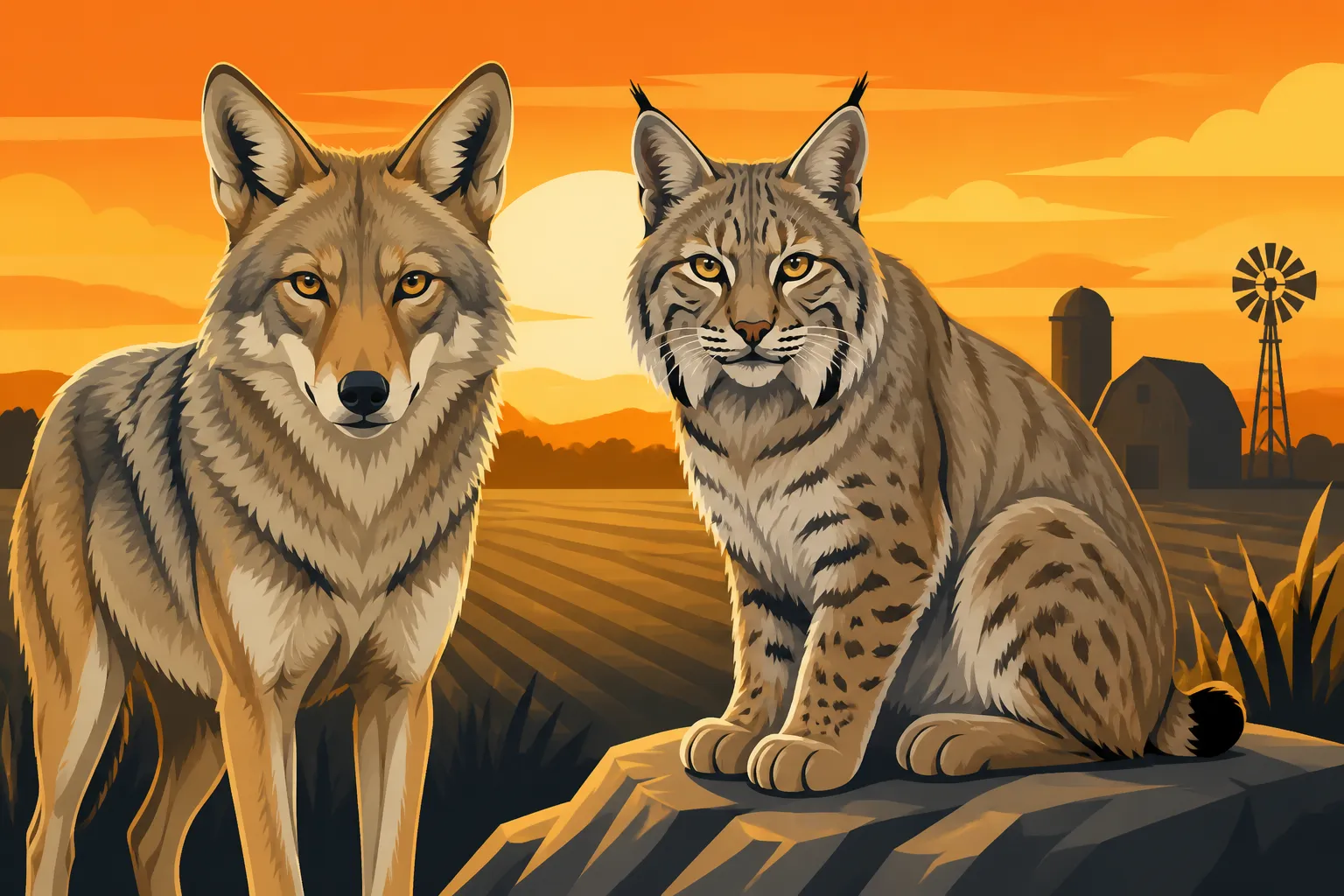
Coyotes are perhaps the most recognized and certainly the most vocal predator in Missouri's farm country. They are truly masters of adaptation, having expanded their range significantly over the last century, thriving in environments ranging from remote wilderness to suburban fringes. In agricultural settings, coyotes are generalists, meaning they'll eat just about anything available. This opportunism is a key to their success. They feast on rodents, rabbits, deer fawns, turkey poults, insects, and even fruits and berries when the season is right. But in farm country, livestock and poultry can also become targets, particularly vulnerable young animals.
Their social structure, often operating in family groups or loose packs, allows them to be highly efficient hunters. These groups maintain territories, often communicating through their characteristic howls, yips, and barks. You might hear them at dusk or dawn, a chorus echoing across the fields, signaling their presence. While they can be a nuisance or a genuine threat to livelihoods, their role in controlling rodent populations shouldn't be overlooked. However, when their numbers are high, or when food sources are scarce, their predation on game species and livestock can become a serious concern for farmers and wildlife enthusiasts alike.
Bobcats The Elusive Feline Hunter
In contrast to the coyote's bold presence, the bobcat is far more elusive and solitary, often going unnoticed even when living in close proximity to human activity. These beautiful felines prefer areas with dense cover – think brushy creek bottoms, thickets along field edges, rocky outcroppings, and timber blocks that offer concealment and denning sites. While a bobcat might occasionally venture into open fields, they are most comfortable operating under the cloak of darkness or dense vegetation.
Their diet primarily consists of rabbits, squirrels, and various rodents, which are abundant in Missouri's farm country that borders timber. They are ambush predators, relying on stealth and explosive speed to catch their prey. Unlike coyotes, bobcats typically pose less of a threat to larger livestock, though they will certainly prey on poultry or smaller domestic animals if given the opportunity. Their impact on deer and turkey populations tends to be less significant than coyotes, focusing more on the smaller, easier-to-catch game. Spotting a bobcat in the wild is a rare treat for most, a testament to their secretive nature, making them a challenging but rewarding quarry for hunters.
Why They Thrive in Farmland
Missouri's farm country provides an almost perfect ecosystem for both coyotes and bobcats. The patchwork of row crops, fallow fields, pastures, and small woodlots offers a mosaic of food sources and cover that is hard to beat. Row crops like corn and soybeans provide excellent cover for coyotes, especially when standing tall, allowing them to move undetected and ambush rodents or even deer. Once harvested, these fields expose waste grain that attracts small mammals, which in turn attract predators. Pastures, on the other hand, offer an abundance of rabbits, voles, and mice, all prime food for both species.
The edges where timber meets fields are particularly rich. These "edge habitats" are biological hotspots, concentrating prey animals and offering predators convenient travel corridors and hunting grounds. Creeks and drainages, often lined with brush and small trees, serve as vital highways for both species, allowing them to traverse vast distances without being seen. Furthermore, the limited hunting pressure in many private land areas, combined with their high reproductive rates, especially for coyotes, allows populations to maintain strong numbers. While hunters actively pursue these animals, the sheer amount of suitable habitat and prey means they continue to thrive.
Impact on Livestock and Game
The presence of coyotes and bobcats in agricultural landscapes isn't just a matter of observation; it can have tangible and significant impacts on both the livelihoods of farmers and the health of local game populations. This is where the frustration often boils over for those living and hunting in Missouri farm country.
Threat to Calves and Lambs
For cattle and sheep producers, coyotes represent a very real and economic threat. Calving season can be a particularly vulnerable time. Newborn calves, especially those born in open pastures without much cover, are easy targets for opportunistic coyotes. They are often born weak, disoriented, and unable to defend themselves or escape quickly. Coyotes, especially those operating in groups or with pups to feed, can quickly learn to target these vulnerable youngsters. The financial loss from even one calf or lamb taken can be substantial, directly impacting a farmer's bottom line.
Producers often employ various strategies to mitigate this risk, from keeping pregnant cows and ewes in pens closer to the farmstead to using guard dogs like Great Pyrenees or Anatolian Shepherds. Some even practice night-hunting during calving season to reduce local coyote populations. While bobcats are less likely to prey on calves due to their smaller size and solitary hunting style, they will certainly take lambs or kid goats, especially if the opportunity presents itself. It's a constant battle for farmers, weighing the cost of prevention against the risk of loss, and a source of genuine worry when a new generation of livestock arrives.
Pressure on Deer and Turkey Populations
Beyond livestock, coyotes, in particular, exert significant pressure on Missouri's deer and turkey populations, especially the very young. Deer fawns, like calves, are extremely vulnerable during their first few weeks of life. They rely on camouflage and remaining still to avoid detection. However, a keen-nosed coyote can easily sniff out a hiding fawn. Studies in various states, including Missouri, have shown that coyote predation can be a leading cause of fawn mortality. This doesn't mean coyotes wipe out deer herds, but they can certainly suppress recruitment, especially in areas with high coyote densities or where other factors, like poor habitat, already stress the deer population.
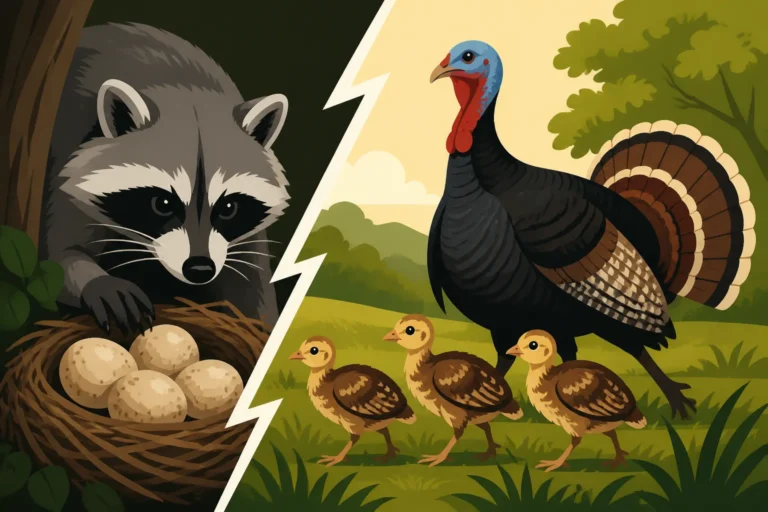
Similarly, wild turkey poults are susceptible to coyote predation. In the spring, after hens hatch their clutches, poults are tiny, slow, and lack the ability to fly to safety for several weeks. As they forage through tall grasses and brush, they present an easy meal for a cruising coyote. While bobcats also prey on poults, their impact is generally less widespread than coyotes. For hunters who spend countless hours scouting and preparing for the season, seeing a strong year-class of fawns or poults is a sign of a healthy future, and the thought of these young animals falling victim to predators can be disheartening. This creates a natural tension, as both game animals and predators are part of the ecosystem, but finding a balance is key for effective wildlife management.
Small Game Vulnerability
When it comes to smaller game animals like rabbits, squirrels, and quail, both coyotes and bobcats are highly efficient predators. Rabbits are a primary food source for bobcats across their range, and Missouri's farm country, with its abundant brush piles, fencerows, and overgrown field edges, is rabbit heaven. Where there are rabbits, there are typically bobcats. Squirrels are also on the menu, particularly for bobcats who are agile climbers and can navigate the timbered areas bordering agricultural fields.
Quail, though a smaller part of their overall diet, can also be impacted. Coveys of bobwhites, especially young birds, are vulnerable to ambush predators. As you're out Walking Missouri Quail Cover With a Dog, you'll often see coyote or bobcat tracks, a clear sign that these predators are also hunting the same areas. While predation is a natural part of any ecosystem, high predator densities, particularly when combined with habitat loss, can make it harder for small game populations to rebound. This is why managing predator numbers, alongside habitat improvement, is often a two-pronged approach for those focused on increasing small game opportunities.
Hunting Methods for Coyotes in Farm Country
Hunting coyotes in Missouri's farm country is a popular pursuit, offering a challenging and often exhilarating experience. It's also a valuable tool for managing populations and mitigating their impact on livestock and game. There are several effective methods, each with its own nuances specific to the agricultural landscape.
Calling Strategies for Open Fields
Electronic and mouth calls are arguably the most effective tools for hunting coyotes in open farm country. Coyotes are incredibly curious and territorial, making them susceptible to a well-executed calling sequence. The key in farm fields is visibility and wind direction. You want to set up with the wind in your face or quartering, so your scent blows away from where you expect the coyote to approach. Often, this means positioning yourself on a slight rise or at the edge of a timber block overlooking a large field. Electronic calls, like those from FOXPRO or ICOtec, allow for a wide range of realistic sounds, from distress cries of rabbits and fawns to coyote howls and barks.
Start with a short, high-pitched distress sound for about 30-60 seconds, then go silent for 2-3 minutes. Repeat this sequence, varying the sounds as needed. Sometimes, an aggressive coyote challenge howl can pique the interest of a dominant male. Keep your eyes peeled, because coyotes often appear quickly and cautiously, skirting the edges of fields or using dips in the terrain for cover. You might see them pause, trying to pinpoint the source of the sound, offering you a brief window for a shot. For more in-depth strategies, check out our guide on Coyote Calling in Missouri Farm Country. Remember, patience is crucial; some coyotes will come charging in, others will hang up at a distance, trying to get downwind.
Stand Placement and Wind Consideration
Just like deer hunting, successful coyote hunting hinges on smart stand placement and meticulous wind management. In farm country, this often means utilizing natural elevated positions like a small knoll, a bluff overlooking a river bottom, or even a strategically placed hay bale or ground blind on a field edge. You want a clear line of sight, ideally for several hundred yards, to spot approaching coyotes. Being able to see them before they see you is half the battle.
Wind is paramount. A coyote's nose is its most powerful tool. Always set up so the prevailing wind carries your scent away from the direction you expect coyotes to come from. This often means sitting with the wind directly in your face or quartering away from your likely shooting lane. Remember that thermals can shift, especially at dawn and dusk, so always be aware of how air currents might be carrying your scent. Using a mapping app like GoHunt can be invaluable here, allowing you to scout potential setups from home, identify windbreaks, and visualize travel corridors that coyotes might use to approach your call while staying out of your scent cone. Don't be afraid to move if the wind shifts unexpectedly and compromises your setup; sometimes, a quick reposition is better than blowing an entire stand.
Night Hunting for Coyotes
Missouri offers excellent opportunities for night hunting coyotes, which can be an incredibly effective strategy, especially for pressured animals or those that are more active after dark. Specialized gear is essential for this method, including powerful spotlights, red or green hunting lights (which are less likely to spook coyotes than white light), or even thermal and night vision optics. Always be sure to check the specific Night Hunting Rules for Missouri Predators with the Missouri Department of Conservation (MDC), as regulations can change.
When hunting at night, the same principles of wind and calling apply, but with an added layer of challenge due to limited visibility. Scan continuously with your light or optic, looking for the tell-tale gleam of eyes. Coyotes often feel bolder under the cover of darkness, sometimes approaching calls more aggressively. Safety is paramount: always know your backdrop, be absolutely sure of your target, and hunt with a partner who can help scan and ensure safe shooting lanes. Many hunters use elevated positions like truck beds or portable blinds for a better vantage point and to help with target identification. The thrill of a coyote appearing silently out of the darkness is an experience unlike any other in Missouri hunting.
Hunting Methods for Bobcats in Farm Country
Hunting bobcats, especially in farm country, requires a different approach than coyotes. They are more solitary, secretive, and generally less responsive to aggressive calling, making them a much tougher trophy. Yet, with persistence and the right tactics, success is certainly possible.
Decoying and Trapping Considerations
While coyotes often respond to audio calls alone, bobcats are highly visual predators. Incorporating a visual decoy can significantly increase your odds when trying to call in a bobcat. A rabbit or bird distress call, paired with a small, motorized decoy that mimics a struggling animal, can be incredibly effective. Place the decoy where it's easily visible from a distance but also in a natural-looking setting, perhaps at the edge of a brush pile or in a small opening in dense cover. The bobcat's keen eyesight will often spot the movement before they hear the call, drawing them in more confidently.
Trapping is another highly effective method for bobcats, often preferred by those serious about population control or seeking prime furs. Snares and foothold traps, when set correctly and legally, can be very efficient. Look for natural funnels, pinch points, and established game trails within the thickest cover along field edges or creek bottoms. Bobcats tend to use the same travel routes repeatedly. Using scent lures, like bobcat urine or gland lures, can help attract them to your sets. Be sure to understand all Missouri Furbearer Permit Rules and legal trap types and sizes before setting anything. Learning the art of Trapping Furbearers in Winter takes time, experience, and careful attention to detail, but it can be incredibly rewarding.
Spot-and-Stalk in Brushy Areas
Unlike calling coyotes in open fields, spot-and-stalk tactics are often more fruitful for bobcats, particularly in the dense, brushy areas they prefer within farm country. This method involves slowly and deliberately moving through prime bobcat habitat, looking for signs of recent activity or even spotting the animal itself. Focus on creek beds, overgrown fencerows, heavy thickets, and timbered draws that cut through agricultural fields. These are their travel corridors and bedding areas.
Movement should be slow, quiet, and deliberate. Stop frequently to glass ahead with good binoculars, searching for any flicker of movement or a cat-like shape. Bobcats are masters of camouflage, and their spotted coats blend seamlessly with dappled sunlight and shadows. You're looking for an animal that might be sitting silently, waiting to ambush a rabbit, or perhaps moving cautiously along a game trail. This method requires a high degree of patience, stealth, and keen observation skills. Early morning or late evening, when bobcats are most active, are the best times to attempt a spot-and-stalk. Using a good mapping application like GoHunt can help you identify these prime habitat types before you even step foot in the woods.
Challenges and Rewards of Bobcat Hunting
Hunting bobcats presents unique challenges that differentiate it from pursuing other game. Their inherent shyness, nocturnal tendencies, and preference for dense cover make them incredibly difficult to locate, let alone harvest. They often travel long distances without being seen, and their senses are incredibly sharp. A bobcat will often circle downwind of a call at an extreme distance, trying to identify the source before ever committing. This means your scent control and stealth need to be absolutely impeccable.
Despite these challenges, the rewards of successfully hunting a bobcat are immense. It's a testament to a hunter's skill, patience, and knowledge of the animal's behavior. A bobcat harvested in Missouri farm country represents a truly wild and elusive trophy. For many, it's not about the numbers, but the experience of pitting their wits against such a wary creature. Moreover, reducing local bobcat numbers can certainly help boost small game populations in specific areas, contributing to broader wildlife management goals. It's a pursuit that demands respect for the animal and the landscape it inhabits.
Gear and Tactics for Success
Successfully hunting coyotes and bobcats in Missouri's farm country hinges not just on understanding the animals, but also on having the right gear and employing smart tactics. The agricultural landscape, with its mix of open fields and dense cover, requires versatile equipment.
Rifles and Shotguns for Predators
The choice of firearm for predator hunting in Missouri's farm country really depends on your primary target and the terrain you're hunting. For coyotes, especially when calling them in open fields, a flat-shooting rifle is often preferred. Calibers like .223 Remington, .204 Ruger, 6mm ARC, or even a .22-250 Remington are popular choices, offering accuracy at longer ranges often encountered in open farmland. A good Rifle Setups for Missouri Timber and Fields guide can help you dial in your specific setup. You'll want a rifle with good optics capable of precision shots out to 200-300 yards or more, as coyotes often hang up at a distance.
For bobcats, or when hunting in tighter cover like brushy creek bottoms or dense fencerows, a shotgun can be incredibly effective. A 12-gauge or 20-gauge loaded with heavy lead or even Tungsten Super Shot (TSS) like those used for turkeys, can put a bobcat down reliably at closer ranges, typically 40-60 yards. Some hunters prefer to carry both—a rifle for long-range coyote opportunities and a shotgun for close-range bobcat encounters when calling in thickets. Handguns, while legal, are generally less practical for typical predator hunting scenarios. Always ensure your firearm is sighted in correctly and you are proficient with it before heading into the field.
Optics and Thermal for Low Light
Predators are often most active during low light conditions – dawn, dusk, and throughout the night. This makes quality optics absolutely critical. For daytime and twilight hunting, a good pair of binoculars (8×42 or 10×42) is essential for spotting wary coyotes and bobcats at a distance or picking them out of thick cover. They are far more effective than just relying on your rifle scope for scanning. Consider something with good low-light performance. Our guide on Optics for Missouri Deer Hunting has some excellent crossover advice that applies to predator hunting as well.
For night hunting, the game changes dramatically. While powerful spotlights and red/green lights are traditional tools, thermal imaging and night vision optics have become game-changers. Thermal scopes and handheld scanners allow you to detect the heat signature of an animal in complete darkness, cutting through brush and fog. Night vision, on the other hand, amplifies ambient light, allowing you to see in near-darkness. These technologies are a significant investment, but for dedicated night hunters, they offer an unparalleled advantage in detecting and identifying coyotes after legal shooting hours. Always verify that any thermal or night vision equipment complies with current MDC regulations for hunting specific species.
Calls, Scents, and Decoys
A diverse arsenal of calls, scents, and decoys will make you a more versatile and successful predator hunter. For coyotes, electronic callers loaded with a variety of distress sounds (rabbit, fawn, bird, rodent), as well as coyote vocalizations (howls, barks, challenges), are indispensable. Having a few mouth calls (like a distress rabbit call or a basic howler) as backups is also a good idea. GoHunt offers great mapping tools to help scout optimal calling locations, considering terrain and wind.
For bobcats, visual appeal is often as important as sound. Small, motorized decoys that mimic a distressed bird or rodent provide that crucial visual cue. These are typically used in conjunction with a high-pitched distress call. Scent lures can also play a role, especially in trapping. Coyote urine, bobcat urine, gland lures, and curiosity scents can attract predators to a specific location, drawing them past your stand or into a trap set. Remember to play the wind when using scents, just as you would with your own body odor, to carry the scent downwind to attract curious animals. Effective predator hunting is often about stacking the odds in your favor, and a combination of these tools does just that.
Managing Predator Populations Responsibly
Dealing with coyotes and bobcats in Missouri farm country isn't just about hunting; it's about responsible management that considers both the animals and the impact they have. This includes understanding and adhering to regulations, employing diverse management strategies, and aiming for a sustainable coexistence.
Understanding Regulations and Seasons
Before you even step foot in the field, it's absolutely crucial to familiarize yourself with Missouri's hunting regulations for predators. While coyotes can typically be hunted year-round without a permit, subject to specific methods and location restrictions, bobcats fall under furbearer regulations. This means there's a specific season for bobcats, and you'll need a valid small game permit or a specific Missouri Furbearer Permit Rules to hunt or trap them. Furthermore, there are often bag limits for bobcats, especially for non-residents, and specific tagging requirements for harvested animals.
Rules around night hunting, the use of artificial lights, electronic calls, and specific firearms can also vary, so always consult the current Missouri Department of Conservation (MDC) regulations handbook. These details are important not only for staying legal but also for respecting the resource. Whether you're interested in Predator and Furbearer Hunting in Missouri or other species, responsible hunting starts with knowing the rules. The MDC website and annual regulations booklet are your best friends here.
Integrated Pest Management Approaches
Managing predator populations effectively, especially when they're impacting livestock or game, often calls for an integrated pest management (IPM) approach. This means not relying on a single method but combining several strategies to achieve your goals. For livestock producers, this might include:
- Exclusion: Fencing, particularly electric fencing, can be highly effective in keeping coyotes away from vulnerable pastures or pens.
- Guard Animals: Dogs like Great Pyrenees or llamas have proven to be excellent deterrents for coyotes.
- Non-lethal Hazing: Scare devices, noisemakers, or even simply increasing human presence can sometimes deter predators.
- Carcass Removal: Promptly removing dead livestock prevents attracting scavengers, including coyotes, to your property.
- Habitat Modification: Clearing dense brush near pastures can reduce cover for predators.
For game managers, IPM might involve targeted hunting efforts in specific areas to reduce pressure on fawns or poults, alongside habitat improvement projects to provide better cover and escape routes for prey species. Utilizing trail cameras, like those you can find on GoHunt's gear section, can help monitor predator activity and identify hot spots, allowing for more precise and effective management actions rather than just blanket efforts.
Coexistence with Missouri's Predators
While management is often necessary, especially in the agricultural context, it's also important to acknowledge that coyotes and bobcats are integral parts of Missouri's ecosystem. They play roles in controlling rodent populations and scavenging, contributing to the overall health of the environment. The goal isn't necessarily eradication, but rather a balance that minimizes conflict and supports healthy wildlife populations.
For many hunters, the challenge of pursuing these intelligent animals is a draw in itself, adding a layer of excitement to their time outdoors. The story of Bobcat Harvest in Missouri tells of a species that has successfully adapted to our changing landscapes. Understanding their behavior, respecting their role, and employing ethical, legal, and effective management strategies allow for coexistence. It’s about being good stewards of the land and its wildlife, recognizing that both predator and prey have their place in the wild heart of Missouri's farm country. This balance ensures that future generations can also experience the thrill of the hunt and the bounty of the land.
| Feature / Trait | Coyote | Bobcat |
|---|---|---|
| Species Type | Canine (Dog family) | Feline (Cat family) |
| Social Behavior | Often social (family groups/packs) | Solitary |
| Primary Diet | Opportunistic (rodents, rabbits, fawns, poults, insects, fruit, carrion, livestock) | Carnivore (rabbits, squirrels, rodents, birds, occasional deer fawns) |
| Habitat Preference | Highly adaptable, thrives in open fields, timber edges, urban fringes | Dense cover, brushy areas, rocky outcrops, timbered creek bottoms |
| Activity Pattern | Crepuscular (dawn/dusk) and nocturnal, some daytime activity | Primarily nocturnal/crepuscular, very secretive |
| Vocalizations | Howls, yips, barks | Growls, hisses, purrs, rarely heard vocalizations |
| Threat to Livestock | Significant (calves, lambs, poultry) | Minor (poultry, small lambs/kid goats) |
| Hunting Response | Responsive to distress calls and howls | Less responsive to calls, highly visual, often requires decoys |
Disclaimer
Please be aware that hunting regulations, seasons, and permit requirements can change. Always consult the most current regulations published by the Missouri Department of Conservation (MDC) before engaging in any hunting or trapping activities. The information provided here is for general guidance and educational purposes only.