Missouri Elk Range by County
It’s easy to dream about Missouri’s elk herd, envisioning those majestic animals roaming our hills, but for many, the actual locations where they truly live feel like a bit of a mystery. Hunters and wildlife enthusiasts alike often wonder where these incredible creatures truly call home in a state primarily known for whitetails. This guide aims to pull back the curtain on Missouri’s elk range, detailing the specific counties where you’re most likely to encounter them, and what kind of habitat draws them in.
The Core of Missouri's Elk Country: Peck Ranch and Its Surroundings
When we talk about elk in Missouri, it's impossible not to start with Peck Ranch. This remote, rugged corner of the Ozarks holds the key to the entire reintroduction story, and it remains the undisputed epicenter of the state's growing elk population.
Peck Ranch: The Heartbeat of the Herd
Peck Ranch Conservation Area, nestled primarily in Shannon and Carter counties, was the chosen site for Missouri's bold elk reintroduction effort. This vast tract of public land, with its mix of dense timber, scattered glades, and carefully managed food plots, provided the perfect blend of solitude, forage, and cover that elk need to thrive. Imagine deep hollows, steep ridges, and an endless canopy of oaks and pines—that's Peck Ranch. It’s where the first elk were released, and where the herd has spent years establishing a strong foundation. While Peck Ranch itself isn't generally open for public elk hunting, it’s still the best place in the state for Watching Elk at Peck Ranch and observing their natural behaviors. This protected core has allowed the population to grow and stabilize before slowly spreading its wings.
Expanding Outward from the Core
Elk, being the wild, wandering creatures they are, don't stay cooped up in one place forever. As the herd at Peck Ranch grew, individual animals and small groups naturally began to explore beyond the sanctuary boundaries. This expansion wasn't a sudden burst but a gradual push into the surrounding areas, driven by the search for new forage, breeding opportunities, and simply more space. They tend to follow major drainages and timbered corridors, leveraging the cover and water these features provide. These initial exploratory movements quickly led to established presences in the immediate neighboring counties, setting the stage for the wider range we see today.
Key Counties for Elk Presence and Potential Sightings
While the bulk of Missouri's elk population remains relatively concentrated, specific counties have emerged as the primary, secondary, and even peripheral ranges for these magnificent animals. Knowing these areas is crucial whether you're scouting for a once-in-a-lifetime hunt or just hoping to catch a glimpse.
Shannon County: The Primary Range
Without a doubt, Shannon County is the undisputed stronghold for Missouri's elk. Not only does it encompass a significant portion of Peck Ranch, but its expansive tracts of Mark Twain National Forest Hunting and other large Missouri Conservation Areas Explained provide ideal conditions for elk. The county is characterized by its heavily forested landscape, rugged terrain, and numerous clear, spring-fed streams, including the renowned Current River. Elk thrive in these conditions, utilizing the dense timber for cover, the glades and openings for foraging, and the river bottoms for travel and water. The mix of mature hardwoods for acorns, scattered pines for thermal cover, and managed openings for browse makes Shannon County a prime location. If you're using a mapping tool like GoHunt to scout potential areas, you'll notice how the vast public land blocks in Shannon County really stand out. This is where most of Missouri's successful elk lottery applicants have drawn their tags, making it the focal point for Missouri Elk Hunting Counties.
Carter and Reynolds Counties: Secondary but Significant
Directly adjacent to Shannon County, Carter and Reynolds counties form a vital part of the secondary elk range. These areas share many of the same rugged, timbered characteristics as Shannon, and they directly benefit from the dispersal of elk from Peck Ranch. While the density might not be as high as in the core areas of Shannon, elk are increasingly establishing themselves here.
Carter County, especially its northern reaches, connects seamlessly with the southern portions of Peck Ranch, offering similar habitat along the Current River corridor and its tributaries. Reynolds County, to the west and north of Peck, also provides extensive national forest and conservation lands, offering suitable refuge and forage. Hunters and outdoor enthusiasts in these counties have a growing chance of encountering elk, particularly in the vast, remote areas of public land. The habitat here often features a mosaic of older growth timber, younger regenerating forest, and scattered openings—all appealing to elk.
Peripheral Sightings and Occasional Wanderers
Beyond the primary and secondary ranges, elk sightings become less frequent but are by no means unheard of. Occasionally, lone bulls, often younger animals, will wander significant distances in search of new territory or cows. These peripheral sightings have occurred in counties like Dent, Ripley, Texas, and even Wayne. While these aren't considered established elk range, these sightings are a testament to the animals' natural inclination to explore and the slow, deliberate expansion of the herd.
These distant travelers are usually isolated incidents, but they underscore the importance of being aware of your surroundings, even if you’re deer hunting in an area not traditionally thought of as "elk country." The Missouri Department of Conservation (MDC) actively tracks these movements, and reporting any unexpected elk sightings helps them monitor the herd's expansion. It's a thrill to stumble upon a track or hear a bugle in an unexpected spot, reminding us that nature can always surprise us.
Understanding Elk Movement and Habitat Preferences
To truly understand Missouri's elk range, it helps to think like an elk. Their movements are dictated by a combination of cover, food, and water, all within the context of the rugged Ozark landscape.
The Allure of Forested Wilderness
Missouri's elk are creatures of the deep woods. They gravitate towards large, contiguous blocks of forested land, shying away from heavily fragmented landscapes or areas with significant human disturbance. This is why the Mark Twain National Forest and extensive conservation areas are so critical to their survival and expansion. They need vast acres where they can feel secure, bed down, and move without constant interruption.
Within these forests, they seek a diverse mix of habitat:
- Mature Hardwoods: Especially important for acorn production in the fall, providing a critical food source.
- Conifer Stands: Pine thickets offer excellent thermal cover during cold winter months and dense security cover year-round.
- Glades and Openings: Natural or managed openings provide succulent forbs and grasses, especially crucial in spring and summer.
- Regenerating Forests: Areas that have been recently timbered or experienced natural disturbance can offer dense browse, a key part of an elk's diet.
Elk in the Missouri Ozarks are constantly balancing their need for food with their need for safety, and these vast, wild areas provide both.
River Bottoms and Creek Drainages
Just like deer, elk often use river bottoms and creek drainages as travel corridors. These areas typically offer more consistent water sources, often have denser vegetation for cover, and can provide a slightly gentler gradient for travel through otherwise steep terrain. The Current River, for example, forms a natural highway for elk movement through Shannon and Carter counties.
When Reading Aerial Photos for Ozark Deer or elk, look for the ribbons of green that follow these water courses. They can be critical pathways connecting different feeding or bedding areas. A small hidden field or an abandoned pasture tucked into a creek bottom can be an irresistible draw for a hungry elk, especially in the early morning or late evening. Understanding how Wind and Thermals in Ozark Hills influence scent and movement along these drainages is also crucial for anyone hoping to locate these animals.
Public Access and Scouting Elk Country
While the number of available elk permits remains incredibly low, the opportunity to explore elk country, scout for sign, or simply enjoy the chance of an encounter is open to everyone. It takes effort, but the rewards are immense.
Navigating Conservation Areas and National Forest
The vast majority of Missouri's elk range falls within public lands managed by the Missouri Department of Conservation (MDC) or the U.S. Forest Service. This is a huge advantage for hunters and outdoor enthusiasts, providing accessible ground for exploration.
- MDC Conservation Areas: These areas are often well-marked and offer detailed maps and regulations. You can find excellent resources, including maps and brochures, through the Missouri Conservation Atlas. This atlas, and tools like GoHunt, can show you precisely where public boundaries lie, helping you plan your approach.
- Mark Twain National Forest: This sprawling national forest offers immense tracts of land, perfect for those seeking solitude and a true wilderness experience. Access can be more challenging, with fewer maintained trails and facilities, but this also means less human pressure. When considering Hunting the Missouri Ozarks, especially for elk, these deep, wild expanses are often your best bet.
Remember, elk are smart and will gravitate to areas with less pressure. Don't be afraid to walk further than most, delve into the deeper hollows, and explore the more challenging terrain.
Ethical Elk Viewing and Scouting
Whether you're one of the lucky few to draw an elk tag or simply want to observe these animals, ethical practices are paramount.
- Respect Private Land: Missouri's elk range includes a mix of public and private property. Always know where you stand and respect boundaries. If you plan to scout or hunt private land, secure proper permission beforehand.
- Best Times for Viewing: Elk are most active during dawn and dusk. Early mornings, when the air is still cool and light is just breaking, are prime times to listen for bugles or spot animals moving between bedding and feeding areas.
- Scouting for Sign: Look for fresh tracks, which are noticeably larger than a deer's and often have a more pointed appearance. Elk rubs on saplings and small trees are also distinct, typically higher up and more extensive than deer rubs. Droppings (pellets) are also a clear indicator of their presence. Finding Sign in Big Timber takes practice, but elk sign is hard to mistake once you know what to look for.
- The Difference Between Deer and Elk: It's important to remember that while their habitat overlaps with deer, elk are much larger, and their movements, vocalizations, and sign will reflect that. Don't mistake a particularly large deer track for an elk, but keep your eyes open for the definitive evidence of these majestic creatures.
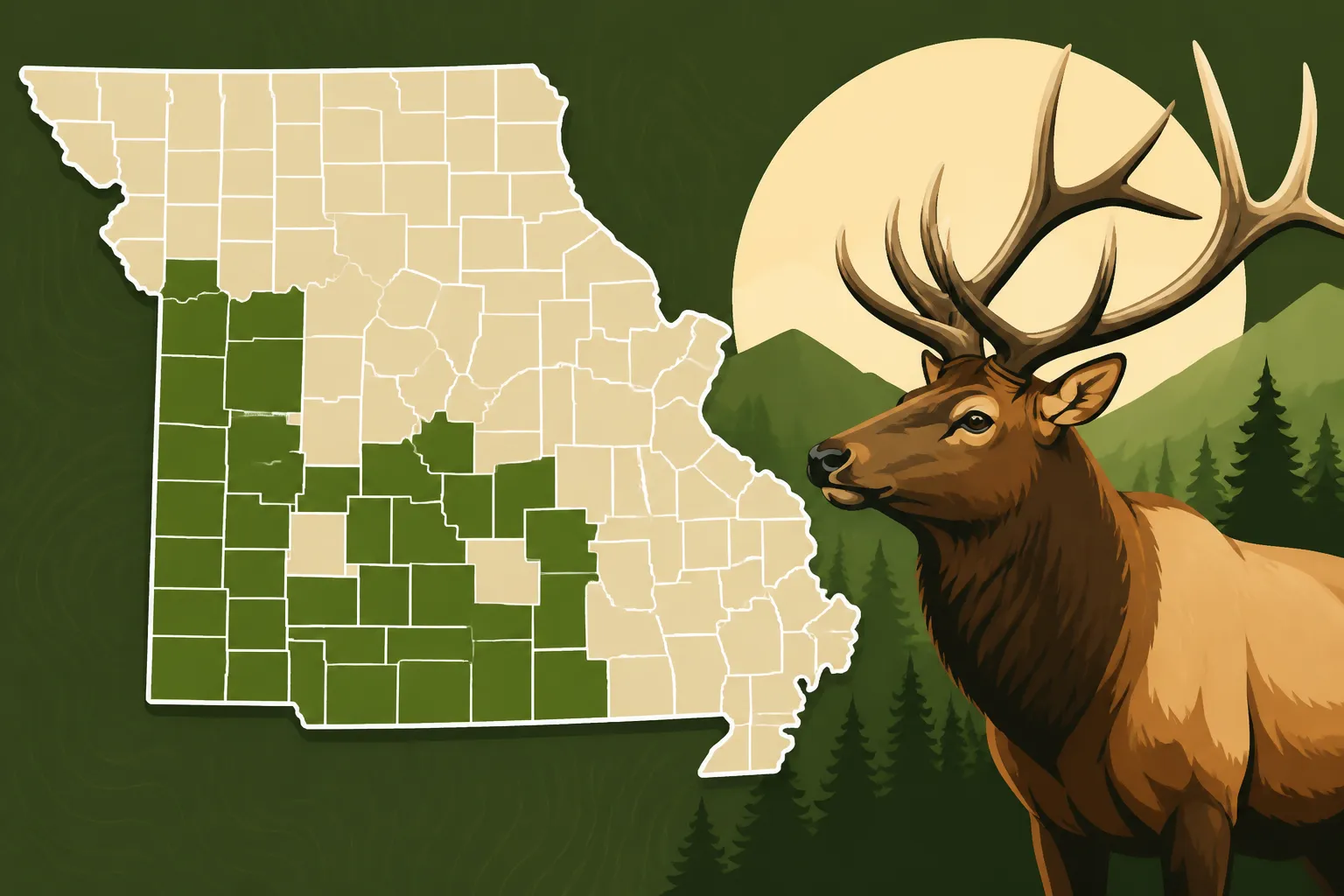
Missouri Elk Range by County Overview
Here’s a simplified breakdown of the elk presence by county in Missouri, focusing on the likelihood of encountering the herd.
| County | Likelihood of Elk Presence | Primary Public Land Types | Notes |
|---|---|---|---|
| Shannon | High | Peck Ranch CA, Mark Twain NF, Sunklands CA | The core of Missouri's elk range. Highest density and most consistent sightings. Rugged, heavily timbered, with river drainages. Many of the state's limited elk permits are focused here. |
| Carter | Moderate to High | Peck Ranch CA, Mark Twain NF, Current River CA | Directly borders Shannon County and Peck Ranch. Significant spillover from the core herd. Habitat is very similar to Shannon, with large tracts of public forest. |
| Reynolds | Moderate | Mark Twain NF, Roger Pryor Pioneer Backcountry | Shares a boundary with Peck Ranch and offers extensive public forest. Elk activity is increasing here as the herd expands. Rugged and remote. |
| Dent | Low (Peripheral) | Mark Twain NF | Occasional sightings, typically lone bulls or small groups that have wandered from the established range. Not considered primary habitat, but not impossible to see. |
| Ripley | Low (Peripheral) | Mark Twain NF | Southernmost county with occasional confirmed sightings. Usually transient animals rather than established residents. |
| Texas | Low (Peripheral) | Mark Twain NF | West of the main range, with sparse, infrequent sightings. Requires significant wanderlust for an elk to reach this far consistently. |
| Wayne | Low (Peripheral) | Mark Twain NF, Wappapello Lake CA | East of the primary range, very rare sightings. Typically, a solo bull passing through. |
This table highlights that your best bet for encountering Missouri's elk is squarely in the central Ozarks, radiating out from the Peck Ranch area. The opportunity to witness these animals in their native habitat, whether through a hunting tag or a quiet afternoon of scouting, is one of Missouri's true wildlife treasures, a testament to the success of Missouri's Elk Reintroduction From Kentucky and How the Missouri Elk Herd Has Grown.
Disclaimer
This article is for general informational purposes only and does not constitute professional advice. Laws, prices and regulations vary by location and change over time. Consult a qualified professional for guidance on your specific situation.