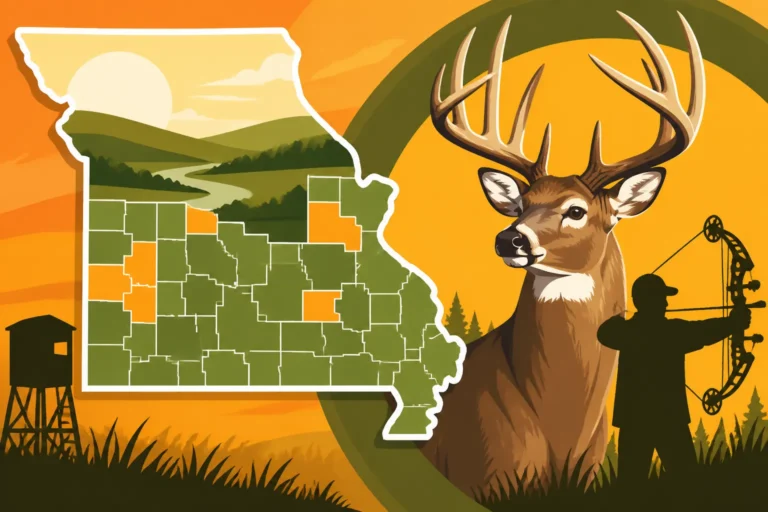
What APRs Did to Missouri Buck Ages
Hunting deer in Missouri often means navigating a fascinating dance between wildlife management goals and the on-the-ground realities hunters experience. One of the most talked-about management strategies over the years has been Antler Point Restrictions, or APRs, and many hunters still wonder what impact they truly had on the age structure of Missouri's buck herd. This guide will dive into the history, intentions, and observed effects of APRs on buck ages in the Show-Me State.
Understanding Antler Point Restrictions in Missouri
Antler Point Restrictions, commonly referred to as APRs, were a tool implemented in specific counties across Missouri with a clear, overarching goal: to influence the age structure of the buck population. The idea wasn't simply to grow bigger antlers, though that was a hoped-for side effect for some; primarily, it was about allowing younger bucks to survive to older age classes. For decades, hunters in many areas were focused on harvesting any legal buck, which often meant yearling deer with small racks were taken. Managers wanted to shift that paradigm.
Essentially, an APR dictates that a buck must have a certain number of antler points on one side, or a minimum antler spread, to be legally harvested. In Missouri, this typically meant a buck needed to have at least four points on one antler to be taken during the firearms season in certain counties. This regulation was designed to protect the majority of 1.5-year-old bucks, as most in that age class would not yet meet the four-points-on-one-side criterion.
The Philosophy Behind APRs
The core philosophy behind implementing APRs was rooted in the desire to foster a more mature buck population. Wildlife biologists understood that for a buck to reach its full antler potential, it needs time. A 1.5-year-old buck, while legal under most general regulations, is still essentially a deer adolescent. By allowing more of these younger deer to survive, the hope was that they would contribute to a healthier breeding population and grow into larger, more mature animals with bigger racks in the 2.5, 3.5, and even 4.5+ age classes.
This wasn't just about "trophy" hunting; it was also about herd health and hunter experience. A more balanced age structure can lead to a more defined rut, as older bucks are better competitors, and can offer a more challenging and rewarding hunting experience for those who prefer to pursue mature animals. The goal was to give more hunters the opportunity to encounter and harvest older bucks, which in turn could increase hunter satisfaction and retention.
Where and When Missouri's APRs Were Applied
APRs weren't a statewide mandate in Missouri; they were strategically implemented in specific counties, primarily in the northern and central portions of the state, where deer densities were higher and habitat often supported larger-bodied and larger-antlered deer. These were the areas where the potential for seeing bucks mature was considered greatest. Hunters often found themselves checking county-by-county regulations, sometimes using mapping tools like GoHunt or the Missouri Conservation Atlas, to understand the specific rules for their hunting grounds. For a comprehensive look at the specific regions, you might recall discussing Which Counties Still Had an APR before the statewide removal.
The implementation wasn't static either; rules evolved over time, and the counties included in APR regulations changed based on ongoing data analysis and management objectives. This dynamic nature meant hunters had to stay informed each year about the current regulations for their chosen hunting spots, which could sometimes be a source of frustration but was ultimately part of adaptive wildlife management.
The Intended Impact: A Strategy for Older Bucks
The primary intention of Antler Point Restrictions was straightforward: increase the average age of bucks harvested and observed in the field. By setting a minimum antler size for harvest, the Missouri Department of Conservation (MDC) aimed to create a bottleneck, allowing most bucks to pass through their yearling stage unharvested.
Protecting Yearling Bucks for Future Growth
Under traditional "any legal buck" regulations, 1.5-year-old bucks, often sporting spikes or small forked antlers, were frequently harvested. These younger bucks typically hadn't reached their full growth potential, either in body size or antler development. The APRs were designed to act as a protective measure, effectively giving these young bucks a "free pass" to live at least one more year. The idea was that by the time these bucks reached 2.5 years old, a larger percentage of them would meet or exceed the four-points-on-one-side requirement, making them legal targets. This strategy was expected to boost the number of bucks in the 2.5-year-old and older age classes significantly.
For many hunters, especially those focused on deer populations in agricultural areas, the concept of letting young bucks walk resonated. It was about investing in the future of the herd, trusting that patience would lead to more mature animals. Programs encouraging hunters to voluntarily pass on young bucks also gained traction, but APRs put the force of regulation behind the concept, ensuring widespread participation in those specific zones.
Shifting Hunter Focus and Satisfaction
Beyond the biological impact, APRs also aimed to influence hunter behavior and satisfaction. When hunters knew that most young bucks were off-limits, the hope was that they would spend more time scouting for and pursuing older, more mature animals. This shift in focus could lead to more challenging hunts and, ultimately, more rewarding harvests of quality deer. It also encouraged hunters to pay closer attention to antler characteristics, becoming more skilled at field judging deer.
The expectation was that if hunters consistently saw and had opportunities to harvest older bucks, their overall satisfaction with the hunting experience would increase. This wasn't just about "trophy" hunting for Boone and Crockett scores, but about simply encountering more mature animals, regardless of their final score. The program also aimed to reduce pressure on the youngest age class, allowing the male segment of the herd to reach sexual maturity and contribute to reproduction for more seasons.
The Reality: How APRs Influenced Buck Age Structure
When Antler Point Restrictions were in place, especially in the northern counties, hunters, biologists, and the Missouri Department of Conservation (MDC) closely monitored the impact on the deer herd. The burning question was always: did APRs actually deliver on their promise of increasing the age structure of Missouri's buck herd? The data, and hunter observations, offered some compelling insights, and also revealed some nuances that shaped future deer management decisions. For a deeper understanding of the overall trend, you might want to look at Missouri Deer Harvest Records.
Observed Changes in Buck Age Structure
Data collected during the years APRs were active did show a noticeable shift in the age structure of harvested bucks in the regulated counties. Generally, there was an increase in the proportion of 2.5-year-old bucks in the harvest. This was often seen as evidence that the APRs were working as intended – those 1.5-year-old bucks that were protected were indeed making it to the next age class and becoming available for harvest.
However, the impact on even older age classes (3.5+ years) was often less pronounced than some might have hoped. While more 2.5-year-old bucks were walking around, the increased pressure on those newly legal bucks meant that many were still being harvested at that age, rather than surviving to become 3.5 or 4.5-year-olds. It was a step in the right direction for many, shifting the harvest from yearling to two-year-olds, but not necessarily creating a widespread boom in truly mature, older-aged bucks across the board. Hunter observation surveys, like The Bowhunter Observation Survey, often backed up these trends, showing more 2.5-year-old bucks seen.
Here's a simplified illustration of how buck harvest percentages might have shifted by age class:
| Buck Age Class | Pre-APR Harvest (Hypothetical %) | During APR Harvest (Hypothetical %) |
|---|---|---|
| 0.5 years (fawn) | 0% | 0% |
| 1.5 years (yearling) | 40-50% | 10-20% |
| 2.5 years | 25-35% | 40-50% |
| 3.5 years+ | 15-25% | 25-35% |
This table illustrates the general intended shift, which was partially realized in practice. The protection of 1.5-year-old bucks successfully moved a significant portion of the harvest into the 2.5-year-old category.
Unintended Consequences and Hunter Behavior
While APRs had their intended effects, they also came with some unintended consequences and influenced hunter behavior in ways that sometimes complicated management. One common issue was increased pressure on the newly legal 2.5-year-old bucks. As soon as bucks met the minimum antler requirements, they became primary targets, potentially limiting how many truly made it to older age classes.
Another challenge involved hunter misidentification. In the heat of the moment, distinguishing antler points accurately could be difficult, leading to accidental violations. Some hunters also developed strategies to specifically target areas outside of APR zones, if possible, or focused more on antlerless deer in APR zones, which was a positive, but also shifted hunter effort. There were also concerns about "ground-checking" – shooting a deer and then checking its antlers, which is unethical and illegal. The importance of Missouri Hunter Education Requirements became even more pronounced, stressing responsible decision-making in the field.
From a hunter's perspective, while many appreciated the opportunity to see more mature bucks, others found the restrictions frustrating. Passing on a perfectly healthy, albeit small-racked, buck could be tough, especially for new hunters or those simply looking to fill their freezer. It also meant hunters had to be more diligent in their scouting and field judging, potentially adding another layer of complexity to their hunts. Many turned to advanced mapping and data platforms like GoHunt to understand parcel boundaries and antler restrictions better.
Regional Differences in APR Impact
It's also important to remember that Missouri is a diverse state, and the impact of APRs wasn't uniform everywhere. In the rich agricultural landscapes of North Missouri, where deer have access to abundant, high-quality nutrition, bucks tend to grow larger antlers faster. In these areas, the biological response to APRs might have been more immediate and pronounced, with bucks meeting the point restrictions at younger ages compared to, say, the more nutrient-poor, rocky soils of the Ozarks. Conversely, in some Ozark regions, it might have taken longer for bucks to develop the necessary points, potentially making the restrictions feel more stringent for hunters there.
Ultimately, understanding these regional differences was crucial for the MDC in evaluating the overall effectiveness and equity of the APR program across the state. The ongoing monitoring of Missouri Deer Population Estimate and specific county harvest data provided valuable insights into these localized impacts.
Why Missouri Eventually Removed APRs
For years, Antler Point Restrictions were a significant part of Missouri's deer management strategy, especially in key hunting zones. However, effective wildlife management is dynamic, constantly evolving based on new data, changing biological needs, and the social desires of hunters. Eventually, the Missouri Department of Conservation (MDC) made the decision to remove statewide APRs, a move that stirred considerable discussion among the hunting community. Understanding the reasons behind this significant policy shift reveals the complex balance inherent in modern wildlife management. You can learn more about the implications of this change in What APR Removal Means for Young Bucks.
Data-Driven Management Decisions
The MDC is committed to data-driven management, and the decision to remove APRs was not made lightly. Over the years, extensive data was collected, including harvest statistics, hunter observation surveys, and deer aging studies. While APRs did demonstrate a shift in the harvest toward 2.5-year-old bucks, the long-term data suggested that the desired impact on significantly increasing the number of truly older (3.5+ year-old) bucks across the landscape wasn't as widespread or sustained as initially hoped. In essence, many protected 1.5-year-old bucks were simply harvested as 2.5-year-olds.
Furthermore, other factors, such as habitat quality, localized deer densities, and harvest pressure on a particular piece of ground, often proved to be more influential in buck age structure than APRs alone. The cumulative data, rigorously analyzed and often shared in reports that hunters could review to inform their own strategies, perhaps through tools like GoHunt, indicated that a different approach might be more effective in achieving overall management goals. For those interested in delving into these reports, understanding how to read a Reading a Missouri Harvest Report is incredibly valuable.
Balancing Biology with Social Factors and Hunter Satisfaction
Wildlife management isn't just about biology; it's also about people. The social aspect of hunting, including hunter satisfaction and retention, plays a vital role in policy decisions. While some hunters embraced APRs and appreciated seeing more 2.5-year-old bucks, others found them restrictive and confusing. New hunters, in particular, sometimes struggled with the added layer of rules, leading to frustration or concerns about accidental violations.
The MDC recognized that a significant portion of the hunting public preferred simpler, more straightforward regulations. The goal of management is to provide abundant opportunities and a quality hunting experience for all hunters, not just those seeking older bucks. When the biological benefits of APRs were deemed less impactful than previously believed, and weighed against the social challenges and frustrations they generated for a segment of the hunting population, the balance shifted towards removal. This decision aimed to streamline regulations and enhance the overall accessibility and enjoyment of deer hunting for more Missourians, recognizing that Missouri Deer Permits and How to Buy One should be as simple as possible.
Shifting Focus to Overall Herd Health and Other Priorities
With the removal of APRs, Missouri's deer management shifted its focus to other critical aspects of herd health and sustainable management. One of the most significant challenges facing deer herds globally, and certainly in Missouri, is Chronic Wasting Disease in Missouri Deer. Concentrating management efforts on CWD monitoring, testing, and prevention became a more pressing biological priority. Strategies for managing herd density, ensuring healthy buck-to-doe ratios through antlerless harvests, and improving habitat across the state gained renewed emphasis.
The MDC's current approach focuses on providing hunters with flexibility while still managing the herd responsibly. This includes offering a variety of permit options and seasons, encouraging antlerless harvest where needed, and relying on voluntary hunter participation in managing the quality of their local deer. The idea is that an informed and engaged hunting community, rather than just strict antler regulations, is ultimately the most effective path to a healthy and robust deer population for generations to come. This aligns with broader strategies for Buck Age Structure After APR Removal, focusing on more holistic health indicators.
Disclaimer
This article is for general informational purposes only and does not constitute professional advice. Laws, prices and regulations vary by location and change over time. Consult a qualified professional for guidance on your specific situation.