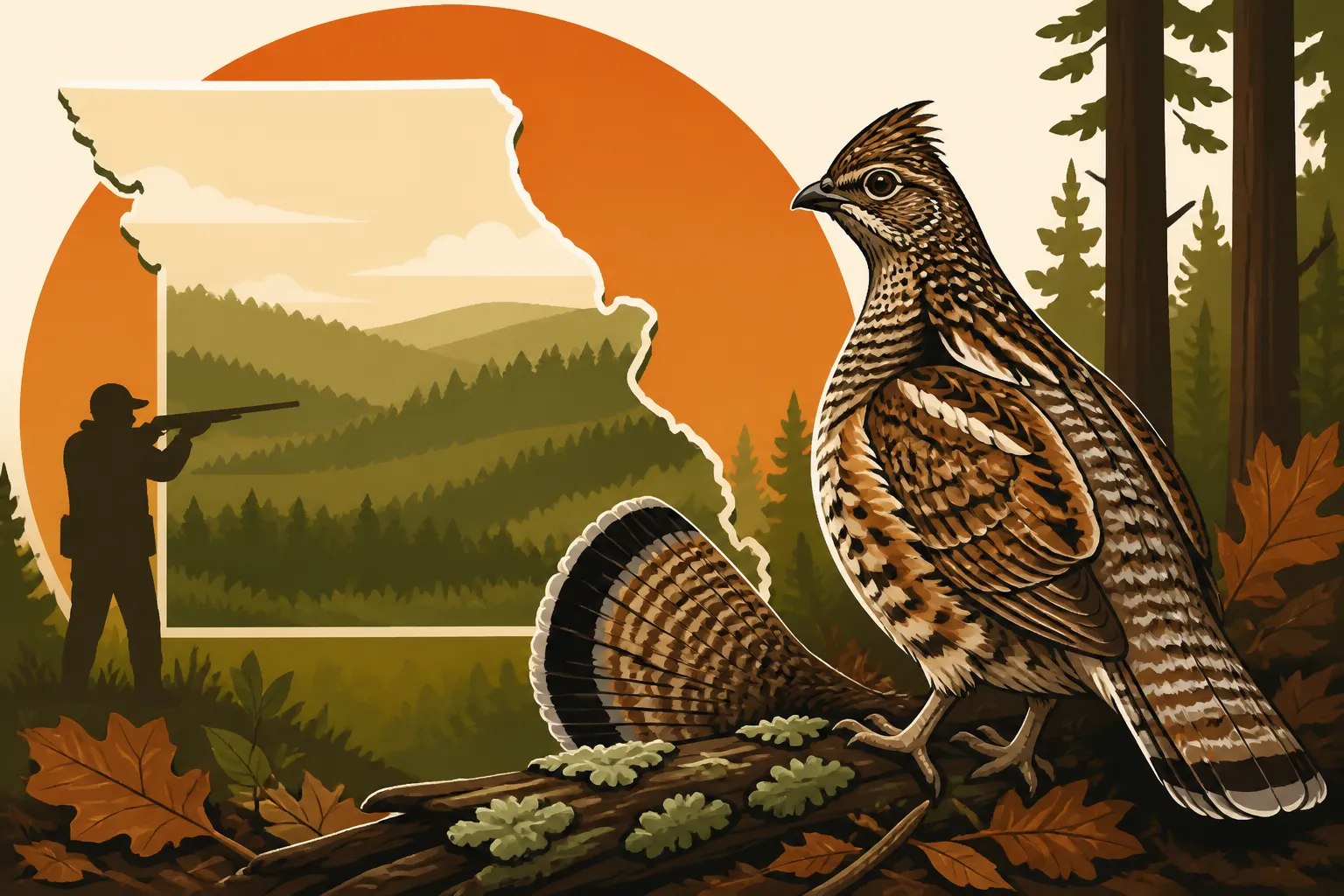
Where Missouri Ruffed Grouse Survive
For many Missouri hunters, the ruffed grouse is more of a ghost than a game bird. It’s a bitter pill to swallow for those who remember the good old days when their drumming could be heard more widely across the timber, and a source of quiet frustration for newcomers who rarely encounter one. This guide isn't just about wistful memories; it's a realistic look at the sparse, isolated pockets where these magnificent woodland birds still cling to survival in the Show-Me State, and how discerning hunters might approach understanding their last strongholds.
The Historical Landscape of Missouri Grouse
It’s easy to feel a pang of nostalgia, or even a sense of missing out, when you hear tales of Missouri’s grouse hunting past. The truth is, the landscape has changed dramatically, and with it, the fortunes of these forest phantoms. Understanding where they were is key to appreciating the challenges of finding where they are now.
A Look Back: Once Widespread, Now Remnant
Believe it or not, there was a time when ruffed grouse were relatively common across much of Missouri, especially in the central and southern forested regions. If you talk to old-timers, they’ll tell you stories of hunting them in places where you’d be hard-pressed to find even a feather today. They weren't everywhere, of course, but their range was considerably larger and their populations healthier than what we see now. The prime grouse habitat of yesteryear often followed the cycles of logging and regrowth. As large tracts of timber were cut in the late 19th and early 20th centuries, new, young forests sprang up. This created the perfect mosaic of dense, brushy cover and regenerating timber that grouse absolutely thrive in. It was a boom-and-bust cycle for many wildlife species, and for a time, grouse were on the boom.
However, as those large-scale logging operations dwindled and forest management practices shifted, much of that ideal, early successional habitat matured. We started valuing older, more open timber, and the dense, brushy growth that grouse require to hide from predators and raise their young began to disappear. This wasn't a sudden event, but a slow, steady change over decades. The cumulative effect was a gradual shrinking of the grouse's habitable range, pushing them into smaller, more isolated pockets. For many who remember those more abundant days, it’s genuinely sad to witness, and for newer hunters, it can feel like a mythical creature they’ll never encounter.
The Importance of Early Successional Habitat
To truly grasp why grouse are so hard to find, you need to understand their absolute reliance on what wildlife biologists call "early successional habitat." Picture a forest that’s just been disturbed – perhaps a timber harvest, a wildfire, or even a severe ice storm. The sunlight now streams to the forest floor, spurring a chaotic burst of new growth: young saplings of oak, hickory, sassafras, dense thickets of blackberry and greenbrier, and a tapestry of small shrubs. This isn’t a neat, park-like forest; it's a tangled, briar-choked mess that most humans would rather avoid. And that's exactly what makes it perfect for ruffed grouse.
This dense, young cover provides everything a grouse needs to survive: impenetrable shelter from raptors and ground predators, a rich buffet of buds, catkins, and berries, and crucial brooding cover for chicks. Think of it as their safe haven, where they can escape danger with a quick, explosive flush. Without this specific type of habitat – a forest that is continually regenerating and offering diverse age classes – grouse simply cannot sustain viable populations. As Missouri's forests matured and management practices leaned towards maintaining older, more open stands, the continuous creation of these crucial young-forest patches became less common, directly impacting grouse numbers. It's not enough to have "woods"; they need the right kind of woods, perpetually renewed.
Understanding Current Strongholds: Where to Focus Your Search
Given their challenging status, locating ruffed grouse in Missouri often feels like searching for a needle in a haystack. However, if you know what kind of haystack to look in, your chances, while still slim, improve slightly.
The Ozark Highlands: Pockets of Persistence
If there's one region in Missouri where ruffed grouse still manage to cling on, it’s the rugged, heavily timbered landscape of the Ozark Highlands. This isn’t to say they are abundant here, far from it, but the conditions in certain parts of the Ozarks are slightly more favorable for their survival. We’re talking about areas with deep, broken terrain, steep hollows, and a history of diverse forest management practices that have, by design or by chance, created some of that vital early successional habitat. You won't find them on every ridge or in every valley. Instead, look for specific areas within the Ozarks that show signs of recent timber stand improvement, selective logging, or even past clear-cuts that are now 10-20 years into regeneration.
Areas with a mix of pine plantations, especially those that are being actively thinned, and hardwood timber can sometimes offer a good mosaic. The key is finding that dense understory – think briar patches so thick they snag your clothes and visibility is limited to a few yards. It’s often in these incredibly difficult-to-walk places that grouse feel secure. Places with natural disturbances, like areas prone to ice damage that breaks up the canopy and encourages new growth, can also create transient pockets of suitable habitat. The grouse here are often survivors, tucked away in spots that other game species might shun, precisely because they offer that critical protective cover. If you're serious about finding them, it's going to involve a lot of walking through some of the thickest stuff Missouri has to offer, often on public lands that are less intensively managed for specific game species. This means really digging into your maps and looking for those distinct habitat features.
The Role of Specific Conservation Areas and National Forest Lands
For the dedicated grouse hunter or wildlife enthusiast, certain public lands offer the best, albeit still challenging, opportunities to find these elusive birds. The Mark Twain National Forest, with its vast acreage and varied topography, is one such place. Within its boundaries, you might find pockets where foresters have implemented specific timber management plans that benefit grouse, often targeting a mix of forest age classes. Similarly, the Missouri Department of Conservation (MDC) manages numerous conservation areas, and some of these have historically been part of Missouri Ruffed Grouse Restoration History efforts or continue to have specific timber management plans that try to create or maintain grouse habitat.
However, it’s important to manage expectations. Even on these lands, grouse populations are very low and highly localized. You're looking for areas that have had recent forest thinning, prescribed burns (which can encourage new growth), or small-scale clear-cuts that are now growing back into dense thickets. These aren't vast tracts of uniform grouse woods, but rather isolated patches that might hold a few birds. A good example might be exploring the fringes of areas like the Sunklands Conservation Area Deer Ground or other parts of the Mark Twain National Forest that have seen recent forest management. Look for areas described as "young timber," "brushy draws," or "regenerating clear-cuts" on area maps or through tools like GoHunt, which can help you pinpoint specific cover types. It often requires meticulous scouting, looking for signs of recent forest disturbance and the resulting dense undergrowth.
Habitat Requirements for Ruffed Grouse Survival
Understanding the historical context and current strongholds gives us a clue, but truly appreciating why grouse are so rare means digging into their specific ecological needs. They’re not just any forest bird; they’re incredibly particular about their surroundings.
The Critical Need for Diverse Age Classes of Forest
Ruffed grouse don't just need "forest"; they need a mosaic, a patchwork quilt of different forest ages and structures within a relatively small home range. Think of it like a carefully planned neighborhood for birds. They need very young, dense stands (1-15 years old) for hiding from predators and raising their chicks – this is their nursery and escape cover. These are the places where you can barely see your hand in front of your face, choked with brush and small trees. Then they need slightly older, pole-timber stands (15-30 years old) with a good understory for feeding and courtship (the drumming logs that define the species). Here, the trees are taller, but there’s still plenty of cover closer to the ground. Finally, they also use mature forests for certain food sources and thermal protection, especially during harsh winters.
The problem in Missouri, and much of the Midwest, is that our forests often tend towards a more uniform, mature age class due to past management practices and a lack of natural disturbance. We've largely lost that dynamic cycling of forest regeneration that creates the necessary diverse structure. Without this continuous creation of varied habitats, grouse can’t find all their needs in close proximity, forcing them to move more, exposing them to predators, and ultimately leading to lower survival rates. It’s a delicate balance that is incredibly hard to maintain on a large scale, especially in a state where grouse aren't a primary management focus compared to, say, deer or turkeys. This is also Why Missouri Has No Grouse Season is a practical management decision, as their populations simply can't sustain hunting pressure.
Food Sources and Roosting Cover in Missouri
Beyond just structure, ruffed grouse have specific dietary needs that tie them to certain plant communities. Their diet changes with the seasons, but generally consists of buds, catkins, leaves, soft mast (berries), and a variety of insects. In Missouri, they rely heavily on the buds of trees like aspen (where it exists), oaks, hickories, and especially hazelnut, dogwood, and greenbrier berries. The presence of these specific food plants within their required dense cover is non-negotiable for a healthy grouse population. If an area lacks these food sources, even if the cover looks good, it won't sustain them.
Crucial roosting cover is another vital piece of the puzzle. During cold winter nights or when evading predators, grouse need dense shelter to spend the night. This can come in the form of thick stands of young conifers (like cedar or pine plantations), dense deciduous thickets that still hold their leaves, or even deep snow burrows when conditions are right. Without adequate, secure roosting cover, grouse are highly vulnerable to predation and exposure, especially during the colder months in the Ozarks. Finding a confluence of all these needs – food, escape cover, brooding cover, and roosting cover – in a single, contiguous area is the ultimate challenge for both the grouse and the hunter.
The Challenges and Future of Missouri's Grouse
The story of the ruffed grouse in Missouri is one of resilience in the face of immense habitat change, but also a stark reminder of how easily a species can be pushed to the brink.
Low Population Densities and Isolated Pockets
The most frustrating reality for anyone hoping to encounter a Missouri ruffed grouse is their extremely low population density. We're not talking about finding a covey of quail or a flock of turkeys. A "good" day of grouse hunting in Missouri might mean walking all day in prime habitat and hearing or seeing one bird, if you're lucky. These aren't widespread, robust populations; they are small, fragmented groups, often isolated from one another. This isolation makes them incredibly vulnerable. If one pocket faces a localized habitat disturbance, a disease outbreak, or heavy predation, it can be extremely difficult for it to recover, as there aren't nearby populations to "fill in" the gaps through natural dispersal.
For hunters, this translates into a pursuit that demands an incredible amount of effort for a minimal, if any, reward. It often feels like you’re walking miles of brutal terrain just for the chance of hearing that explosive flush. This low density also means that even minimal hunting pressure can have a disproportionate impact on their survival. It’s why the thrill of hearing a grouse drum or flush is so profound for those who experience it here – it’s a truly rare and special encounter, a testament to the bird’s tenacity, and often, the hunter’s dogged determination.
Habitat Management and Restoration Efforts
The Missouri Department of Conservation has long understood the plight of the ruffed grouse. Efforts to restore their populations and habitat have been ongoing for decades, often involving trapping birds from healthier populations in other states and releasing them into carefully managed areas. However, these efforts have faced an uphill battle. While grouse releases can establish new populations, the long-term success hinges entirely on the sustained availability of suitable habitat, which as we've discussed, is a complex and ever-changing mosaic. Many of these projects were part of larger forest management plans aimed at increasing early successional forest, which also benefits other species like Northern Bobwhite Quail in Missouri and some deer populations.
Despite these dedicated efforts, the ruffed grouse population in Missouri remains tenuous, leading to management decisions like the indefinite closure of hunting seasons. The primary challenge continues to be habitat. Maintaining the necessary diverse age classes of forest across large enough landscapes is a monumental task, requiring significant resources and a long-term commitment to active forest management. While there’s always hope that targeted efforts on specific public and even private lands can help these remnant populations persist, the future of the ruffed grouse as a widespread game bird in Missouri is unfortunately quite dim. For now, encountering one is a rare privilege, a fleeting glimpse into a wilder, past Missouri.
Here's a quick overview of what makes good grouse habitat:
| Habitat Feature | Description | Why It's Important for Grouse |
|---|---|---|
| Young Forest Thickets | Dense stands of saplings (1-15 years old), briars, and shrubs | Escape cover from predators, brooding cover for chicks |
| Pole Timber Stands | Trees 15-30 years old, with an understory for drumming and feeding | Courtship (drumming logs), feeding, winter cover |
| Diverse Food Sources | Buds of oaks, hickories, aspen; berries of greenbrier, dogwood, hazel | Provides essential nutrition year-round |
| Conifer Cover | Dense cedar thickets or pine plantations | Thermal protection in winter, secure roosting sites |
| Water Source | Proximity to small creeks, seeps, or moist areas | Essential for hydration, especially during dry periods |
| Varied Topography | Broken terrain, hollows, ridges, small drainages | Creates microclimates and diverse plant communities |
In Missouri, the ruffed grouse is a symbol of wild, untamed woodlands and the delicate balance of habitat. While they may never return to their former numbers, understanding where and why they survive gives us a profound appreciation for their tenacity and the critical importance of diverse forest management. Spotting one of these magnificent birds is a rare gift, a reminder of the rich natural heritage that Missouri still holds, even in its most elusive forms.
Disclaimer
This article is for general informational purposes only and does not constitute professional advice. Laws, prices and regulations vary by location and change over time. Consult a qualified professional for guidance on your specific situation.