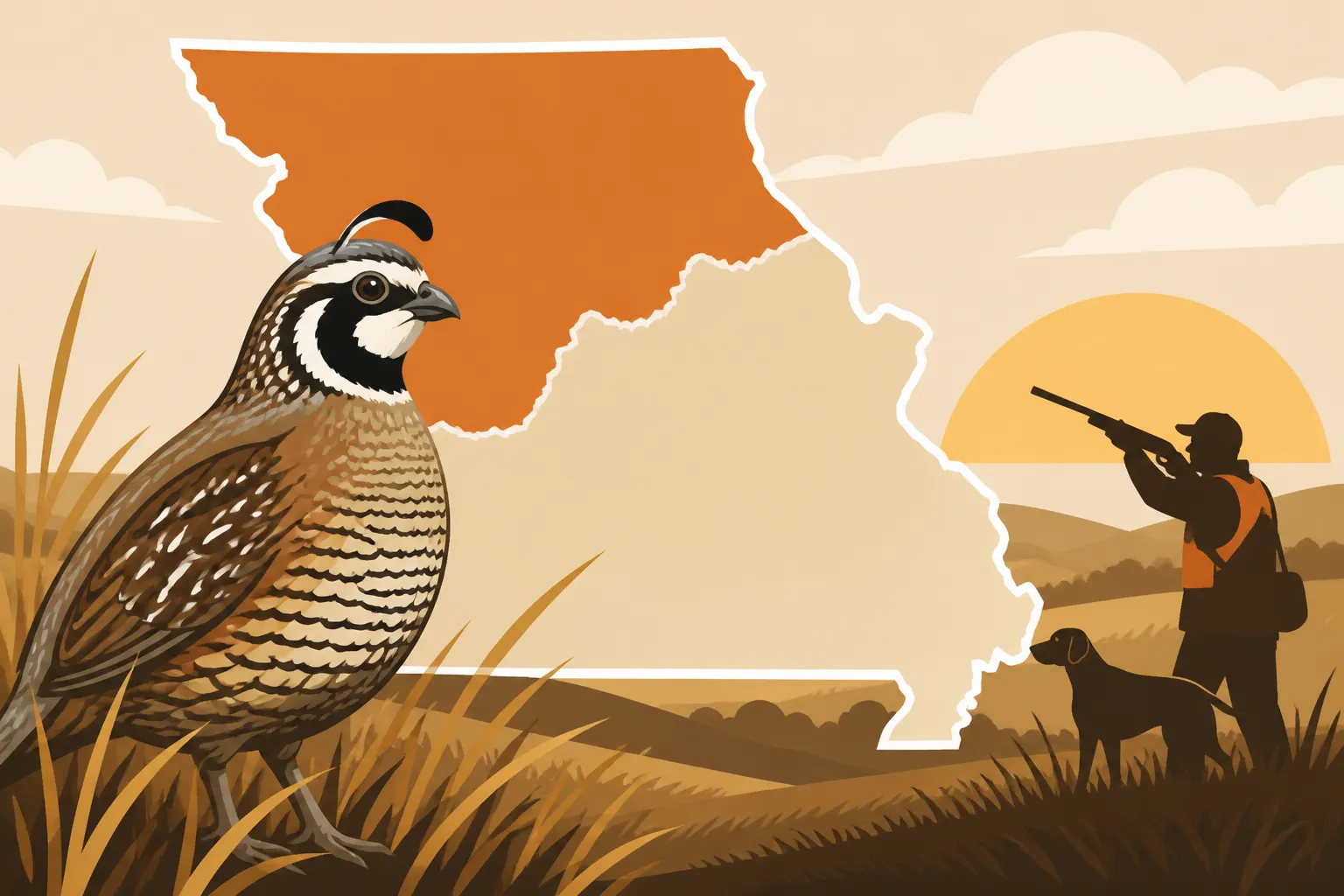
Northern and Western Missouri Quail Range
For many Missouri quail hunters, the classic image of bobwhite country might conjure up thoughts of the rolling Ozark hills or dense pockets of southeast Missouri. But if you’ve spent any time chasing these explosive little birds, you know the frustration of trying to decipher where coveys might hold out in the vast, often agricultural landscapes of northern and western Missouri. It can feel like finding a needle in a haystack, but with the right understanding of these unique environments, you can absolutely locate pockets of bobwhites. This guide will help you pinpoint those crucial ranges and successful hunting strategies in Missouri's northern and western quail country.
Understanding Northern Missouri's Quail Landscape
Northern Missouri presents a very different challenge for quail hunters compared to the southern reaches of the state. Here, the landscape is largely dominated by expansive row crops – corn and soybeans primarily – interspersed with smaller timber blocks, brushy draws, and fencerows. It’s a region of vast fields and often subtle terrain changes. Quail in these areas aren't relying on massive tracts of undisturbed native prairie; instead, they are masters of adapting to the agricultural mosaic.
Finding quail in northern Missouri means looking for the nuances, the "edge habitat" that breaks up the monoculture of crops. This includes those often-overlooked brushy fencerows that divide fields, the thickets along creeks and ditches, and the edges of small woodlots. These areas provide the crucial cover for nesting, loafing, and escape from predators, all while being close enough to food sources like waste grain from harvested fields or the seeds of various weeds that thrive along the field edges. Successful hunters know that these small, linear features are often much more productive than trying to walk through a vast timber stand, which might hold deer but offers little for a covey of quail. You need to be thinking about how quail navigate this landscape, often using these strips of cover as highways. Hunting a Missouri Fencerow Between Fields can be incredibly productive.
Western Missouri's Mixed-Grass Prairies and Edge Cover
Moving into western Missouri, particularly the counties bordering Kansas, you'll encounter a landscape that begins to blend agricultural fields with more significant remnants of mixed-grass prairies and warm-season grass plantings. This region, while still heavily influenced by farming, often boasts larger tracts of undisturbed native grasses, Conservation Reserve Program (CRP) fields, and managed Missouri Quail Restoration Landscapes. Here, the habitat can feel a bit more traditional for quail, offering extensive blocks of nesting and brooding cover.
However, even in these areas, quail are creatures of edge. While the native grass fields provide excellent nesting and escape cover, the birds still need diverse food sources and reliable winter protection. This means focusing your efforts on the transitions: where the tall grasses meet a timber edge, a brushy draw, or a field of harvested crops. Often, cattle grazing plays a role here too; lightly grazed pastures can create a more diverse grass structure beneficial to quail, but overgrazing can destroy critical cover. Identifying these specific areas often requires good mapping tools, and many hunters find apps or platforms like GoHunt invaluable for pinpointing specific field types, property boundaries, and potential habitat features before they ever set foot in the field. Understanding how Working Field Edges and Draws for Quail specifically in these mixed environments can lead to more consistent flushes.
Critical Habitat Features in Northern and Western Missouri
Regardless of whether you're in the predominantly agricultural north or the mixed-grass western counties, certain habitat features are absolutely non-negotiable for bobwhite quail. Their survival hinges on a delicate balance of these elements being present in close proximity. Without them, a covey simply won't survive the year.
First and foremost is suitable nesting and brooding cover. This means dense, undisturbed grasses, often warm-season varieties like big bluestem or switchgrass, that provide protection for nests and young chicks. In northern Missouri, this might be found in overgrown ditches, field corners, or CRP strips. In western areas, it's often the heart of those prairie remnants. The structure of the grass is vital; it needs to be dense enough to hide nests from predators but open enough at the ground level for chicks to move through and forage for insects. After a harvest, What Changes After the Beans Come Off significantly impacts available cover and food.
Second is escape and loafing cover. Quail need quick access to dense, shrubby thickets or brush piles to escape aerial predators like hawks or ground predators like coyotes. These are often found in brushy draws, old fencerows, plum thickets, or multiflora rose patches. These spots also provide crucial thermal cover, protecting birds from harsh winter winds and extreme summer heat. Imagine a covey dusting in a sunny, protected thicket on a cold winter day – that’s ideal loafing cover.
Finally, food sources are paramount. While waste grain from corn and soybean fields provides a temporary feast, quail also rely heavily on a variety of weed seeds (ragweed, smartweed, beggar's-lice) and insects. The diversity of plant life along field edges, within CRP fields, or in fallow areas directly impacts the availability of these essential food items. Hunting efforts should always consider what food sources are available and where the birds might be feeding at different times of the season. Hunting Standing Corn Before Harvest can also be a unique approach to finding birds still utilizing food sources.
Here's a quick comparison of key habitat elements:
| Habitat Feature | Northern Missouri (Agricultural) | Western Missouri (Mixed-Grass/Prairie) |
|---|---|---|
| Dominant Landscape | Row crops (corn, soybeans), small woodlots, brushy fencerows | Mixed-grass prairie, CRP fields, smaller row crop sections, brushy draws |
| Nesting Cover | Overgrown ditches, field margins, CRP strips, small grass patches | Native warm-season grass prairies, large CRP fields, undisturbed pastures |
| Escape/Loafing Cover | Brushy fencerows, plum thickets, multiflora rose, timber edges | Extensive brushy draws, plum thickets, timber edges, dense shelterbelts |
| Primary Food Sources | Waste grain, ragweed, smartweed, insects along edges | Diverse prairie seeds, insects, waste grain from smaller fields |
| Water Access | Creeks, drainage ditches, farm ponds, dewdrops | Natural springs, stock ponds, creeks, dewdrops |
This table highlights how while the general needs are the same, the specific manifestations of those needs differ slightly between these two broad regions.
Effective Strategies for Hunting Northern and Western Quail
Hunting bobwhites in these regions requires a blend of persistence, keen observation, and good dog work. These aren't areas where you'll find coveys behind every tree; rather, you're looking for specific, often linear, habitat features that concentrate the birds.
Scouting is your best friend. Before you ever step out of the truck, spend significant time studying aerial maps. Look for those brushy draws, distinct fencerows, isolated clumps of timber, and especially any CRP or native grass plantings. These features will stand out against the agricultural backdrop. Pay attention to how these features connect; quail often use them as travel corridors. Platforms like GoHunt allow you to layer different maps, identify property boundaries (which is crucial for permission), and even note potential water sources, all from your computer or phone. This pre-hunt scouting can drastically reduce the amount of unproductive walking.
Good dog work is non-negotiable. While it's possible to stumble into a covey without a dog, consistently finding and flushing birds in these vast landscapes is incredibly difficult without a well-trained bird dog. They cover more ground, penetrate denser cover more effectively, and are invaluable for pinpointing where a covey has flushed to. In these open-ish landscapes, birds might run, so a dog that can follow scent trails is a huge asset. Remember to keep Bird Dog Gear for Missouri Heat in mind, especially during early season hunts, as dogs can overheat quickly covering a lot of ground.
Focus on "The Edge." Whether it's the edge of a timber block meeting a bean field, a brushy creek bottom winding through open ground, or the transition from tall prairie grass to a shorter, more open area, these edges are where quail spend most of their time. They offer a balance of food, cover, and escape routes. Walk these edges slowly and methodically. A covey flush can be exhilarating, but the real test is often finding those scattered singles afterward. Finding Coveys on a Restoration Landscape often means understanding how these edges are managed.
Be prepared for long walks and patient hunting. This isn't often a fast-paced hunt. You'll likely cover more ground between covey finds than in some other parts of the state. Stay hydrated, carry enough Upland Vests With Water Capacity, and be ready for the reward of a hard-earned flush. When you do find birds, take your time with the covey rise, focusing on one bird, and practicing Covey Rise Shooting Discipline. Then, be ready to follow up on those singles, as they often hold tighter and can offer excellent shooting opportunities.
Northern and western Missouri might not be the traditional postcard image of quail hunting, but for those willing to put in the scouting and footwork, they offer rewarding opportunities to chase Missouri's favorite little rocket.
Disclaimer
This article is for general informational purposes only and does not constitute professional advice. Laws, prices and regulations vary by location and change over time. Consult a qualified professional for guidance on your specific situation.