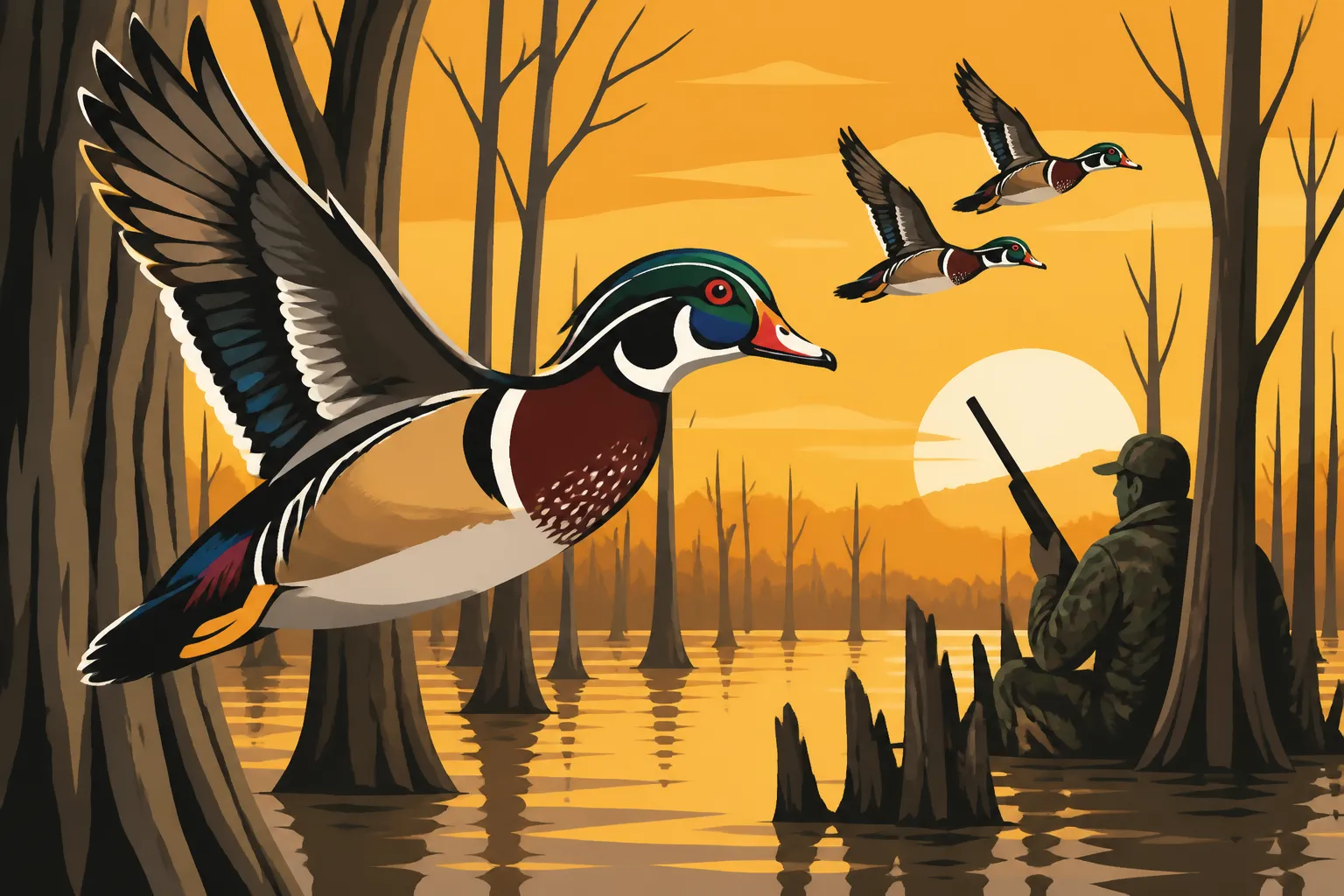
Wood Ducks in Bottomland Timber
It's no secret that Missouri offers some truly incredible duck hunting, but if you've spent any time chasing greenheads and pintails in big open water or sprawling sheet-water fields, you know it can be a completely different ballgame when you turn your attention to the tight confines of bottomland timber. There's a certain magic to hunting flooded woods, a close-quarters intimacy that sets it apart, but it also comes with its own unique set of challenges. Getting wood ducks to commit in this environment requires a deep understanding of their preferences, meticulous scouting, and precise execution. This guide is all about helping you unlock the secrets to consistently finding and successfully hunting wood ducks in Missouri's beautiful, often overlooked, bottomland timber.
Understanding the Wood Duck's Habitat Preference in Missouri's Bottomland Timber
Wood ducks, with their striking iridescent plumage and their distinctive squealing calls, are truly one of the jewels of the Missouri waterfowl scene. Unlike some of their open-water cousins, these ducks are absolute connoisseurs of flooded timber and densely vegetated swamps. They don't just prefer it; they rely on it for pretty much every aspect of their lives, from nesting and feeding to resting and seeking refuge from predators. If you want to consistently put woodies in the bag, you need to think like a wood duck and understand what makes a particular piece of timber irresistible to them.
These aren't birds that are going to be sitting out on the main channel of the Missouri River in a stiff north wind. No, wood ducks are looking for shelter, abundant natural food, and safety. They thrive in areas with a high canopy that provides cover from above, but also a relatively open understory that allows them to maneuver through the trees. Think backwater sloughs, oxbow lakes, and the flooded fringes of river systems where the timber has been allowed to mature. These are the places where you'll find them day in and day out.
The type of timber also makes a big difference. While they'll use various species, they have a particular fondness for hardwoods that produce mast crops. Oaks, especially pin oaks and Nuttall oaks, are absolute magnets. The acorns they drop are a primary food source, easily accessible when the water rises to cover the forest floor. Beyond the food, the complex structure of flooded timber provides countless nooks and crannies where they can hide, loaf, and feel secure, a stark contrast to the vulnerability they might feel in wide-open expanses.
The Allure of Acorns and Invertebrates
When the water starts to creep up into the timber, especially in the early fall and through the cooler months, it’s like ringing the dinner bell for wood ducks. Acorns, specifically, are a huge draw. As different oak species drop their acorns at various times throughout the season, a diverse stand of timber can provide a sustained food source for these birds. They’ll actively dabble and dive just below the surface, sifting through the submerged leaf litter to find those protein-rich morsels. If you can find a patch of timber with a good acorn crop that's now under a few inches to a foot of water, you've likely found a wood duck buffet.
It’s not just about the acorns, though. Flooded timber is a vibrant ecosystem, teeming with other delectable treats for wood ducks. Think about all the invertebrates, insects, larvae, and small crustaceans that suddenly become accessible once the water level rises. These tiny creatures, often hidden in the soil or decaying vegetation, are a crucial part of the wood duck's diet, providing essential nutrients, especially during migration and prior to nesting. A healthy, diverse bottomland forest floor, once submerged, turns into a smorgasbord that’s hard for a hungry wood duck to resist.
So, when you're scouting, it's not enough to just see water in the woods. You need to look for the right kind of woods. Are there mature oaks? Are there signs of a good acorn drop, even if it's just shells on the drier ground before the flood? Understanding these subtle indicators can dramatically increase your success. The best hunting spots are often those that combine excellent cover with a rich and accessible food source that changes with the season and water levels.
Water Levels and Roosting Trees
Water levels are arguably the most critical factor when it comes to patterning wood ducks in bottomland timber. Too low, and the food sources aren't accessible; too high, and the birds might spread out too much or avoid areas with strong current. They thrive in that sweet spot where the water is shallow enough for them to dabble comfortably, typically ranging from a few inches to a couple of feet deep, allowing them to access acorns and invertebrates without expending too much energy. A slight rise in water from heavy rains or managed wetland areas can completely change their behavior, pushing them into new feeding grounds or making previously inaccessible areas suddenly prime real estate. Reading Water Levels on a Wetland can provide insights into how water management affects duck behavior, even in natural timber settings.
Beyond feeding, wood ducks are also very particular about their roosting sites. They often communal roost in large groups, especially during migration and in the colder months. These roosts are almost exclusively in timbered areas, often over water, providing safety from ground predators. They'll fly into these roosts just before dark and depart shortly after dawn. Identifying these roosting areas, even if you don't hunt them directly, can be an invaluable tool for understanding their daily patterns and finding adjacent feeding spots. These roosts are usually in dense stands of timber, often older, larger trees that offer secure perches.
When scouting with a tool like GoHunt's mapping features, you can analyze satellite imagery to identify likely timbered areas that align with river systems and historical flood plains. Look for older growth, areas with sloughs or oxbows, and any indications of consistent water presence. Observing flight paths into and out of these areas at dawn and dusk can give you a direct line to where the birds are spending their nights, which can then help you locate where they're feeding during the day. Remember, their routine is largely dictated by these two critical needs: food and a safe place to rest.
Scouting and Locating Wood Duck Hotspots in Missouri's Timber
Successfully hunting wood ducks in bottomland timber starts long before you ever set foot in the woods with a shotgun. It begins with diligent, observant scouting. These birds are creatures of habit, but those habits can shift dramatically based on environmental factors like water levels, food availability, and hunting pressure. If you're just showing up on opening morning hoping for the best, you're likely to be disappointed. True success comes from understanding the nuances of their movements and preferences within a specific timber block.
One of the biggest mistakes hunters make is only scouting during legal shooting hours. While you certainly want to see where they're feeding during the day, observing their movements at dawn and dusk is paramount for wood ducks. They have distinct flight patterns to and from their roosts, and these "flyways" can tell you a lot about their preferred areas. Pay attention to exactly where they're entering and exiting the timber, as these narrow corridors can become prime setup locations.
Furthermore, don't just look for ducks. Look for sign. Are there tell-tale splashes on the water surface from where they've been dabbling? Are there feathers on logs or stumps? Is there evidence of chewed acorns? Even if you don't see birds, these clues can indicate recent activity and suggest a spot worth revisiting. The timber can be dense and disorienting, so use a GPS or a reliable mapping app like GoHunt on your phone to mark any areas of interest or potential ambush points.
Reading the Water and Timber Cues
When you're walking or paddling through flooded timber, every ripple and every tree can tell a story if you know how to read it. First, observe the water itself. Is it stagnant or flowing? Wood ducks generally prefer calmer water, especially for feeding, but a slow current can sometimes carry food to them. Are there areas of slightly deeper water adjacent to shallower flats? Often, these transition zones are where the birds will congregate, feeling safe enough in the deeper water but still able to reach submerged food in the shallows.
The timber itself provides countless cues. Look for areas where the canopy is relatively open directly above the water, creating "holes" or clearings where ducks can drop in more easily. Conversely, dense thickets along the edges of these clearings can provide excellent cover for you to set up. Identifying key "flight lanes" through the trees is also crucial. Woodies are agile fliers, but they still prefer clearer paths. Watch for sections of timber where the branches allow for easier navigation, as these will be their preferred entry and exit routes.
Finally, pay attention to the species of trees. We touched on oaks being a primary food source, but also consider other mast producers like cypress, tupelo, and even some varieties of gum trees, depending on the specific region of Missouri you're hunting. Areas with a diverse mix of these trees offer a more consistent food supply throughout the season. These details might seem small, but they collectively paint a picture of why wood ducks are using a particular patch of timber, which is invaluable for predicting their movements.
Early Season Scouting and Roost Flights
Early season scouting, even before duck season officially opens, can give you a significant advantage. This is when water levels might be different, but you can still identify key timber characteristics, potential acorn crops, and general duck usage. Drive around, walk the edges of public access points, or even take a boat or kayak into areas with accessible water to get a feel for the lay of the land. Use tools that allow you to layer aerial imagery with topographical maps. GoHunt is fantastic for this, allowing you to identify potential access points, dense timber blocks, and low-lying areas that are likely to flood first.
One of the most effective ways to locate wood ducks is by observing their roost flights. Just before sunset, position yourself on the edge of a suspected timbered area, or even in an elevated position overlooking a large expanse of bottomland. Listen for their distinctive wheeeet-wheeeet call as they begin to gather and fly into their communal roosts. Pay close attention to the direction they're coming from and going to. This observation can reveal primary feeding areas and travel corridors. Then, reverse the process at dawn; watch where they exit the roost and head out for their morning meal.
Hunting a roost directly is generally frowned upon and can quickly burn out a good spot, scattering the birds for good. The goal of scouting roost flights is not to hunt the roost, but to find where they feed and loaf during the day. Once you've identified a roost, you can then focus your efforts on nearby flooded timber that offers food and cover, setting up along their flight path or in their daytime loafing areas. Remember, wood ducks are sensitive to pressure, so a light touch with your scouting, especially regarding roosts, will pay dividends in the long run.
Effective Strategies for Hunting Wood Ducks in Bottomland Timber
So, you've done your homework. You've scouted, you've located some promising timber, and you understand what makes wood ducks tick. Now comes the exciting part: putting those plans into action. Hunting wood ducks in bottomland timber is a more intimate experience than hunting in open fields or big lakes. It's often a game of close-quarters encounters, quick decisions, and impeccable concealment. You're not just waiting for birds; you're becoming a part of their environment.
One of the most crucial elements is stealth. Wood ducks are incredibly wary, especially in timber where every rustle can sound like an approaching predator. Your entry and exit routes need to be quiet and planned out. Consider using a canoe, kayak, or even just wading in silently if the water depth allows. Avoid crashing through brush or making unnecessary noise. The fewer ducks you spook on the way in, the better your chances when the shooting starts.
Moreover, embrace the cover the timber provides. Unlike open-water hunting where you might rely on a layout blind, here the trees are your blind. Find a good, wide tree to break up your silhouette, or tuck into a dense thicket. Use natural foliage to enhance your concealment. The more you blend in, the closer those woodies will come, offering you better, cleaner shots. This style of hunting can be incredibly rewarding, but it demands patience and attention to detail.
Decoy Spreads and Calling Techniques
When it comes to decoys for Flooded Timber Duck Hunting in Missouri, simplicity is often key for wood ducks. You don't need a massive spread like you might for mallards in a field. A handful of good quality wood duck decoys, perhaps 6-12, is usually sufficient. Place them in a natural-looking cluster, often within one of those clearings or "holes" you identified in your scouting. Wood ducks are social birds, so a small group conveys safety and invitation. Mix in a few mallard decoys if you like, as wood ducks will often associate with them, but keep the focus on woodies.
Consider using a jerk cord or a spinner decoy, sparingly. Movement can be very attractive in still timber water, simulating ducks actively feeding. However, too much artificial movement can sometimes spook wary birds, so experiment with what works for your specific location. Place your decoys within easy shooting range, typically 15-25 yards from your concealment, keeping in mind that timber shooting lanes are often narrower than you're used to. For more specific advice on setup, check out Decoy Numbers for Green Timber.
Calling for wood ducks is different from calling for mallards. Their signature call is that high-pitched wheeeet-wheeeet or a descending whistle. Learning to mimic this call is essential. You're not trying to produce complex routines; instead, use short, sharp calls to grab attention, and then follow up with softer, reassuring calls to bring them in. A simple wood duck whistle can be highly effective. They respond well to "social" calls that indicate safety and contentment. Don't overcall; let the decoys do most of the work once they've committed to a flyby. Remember, Duck Calling in Timber Versus Open Water requires different approaches.
Camouflage and Concealment in the Woods
In bottomland timber, your camouflage and concealment are paramount. Wood ducks have excellent eyesight, and because they are often flying directly overhead or at eye level through the trees, any unnatural movement or silhouette will be quickly detected. Your clothing needs to blend seamlessly with the browns, grays, and greens of the forest. Opt for patterns that break up your outline effectively in a wooded environment.
Beyond your clothing, think about your entire setup. As mentioned before, use the natural cover to your advantage. A large tree trunk, a cluster of cypress knees, or a thick patch of briars can all serve as an effective blind. When choosing your spot, position yourself so you have a clear shooting lane, but also ensure you have a solid backdrop to break up your shape. Avoid standing in the open against a bright sky, as your silhouette will be glaringly obvious.
Movement is the enemy of concealment. Once you're in position, minimize all movement. That means keeping your head still, your gun ready, and only raising it when the birds are fully committed and within range. Even subtle shifts can be enough to send a flock of woodies veering off. Practice smooth, controlled movements before the season to ensure you can shoulder your shotgun without flailing. Face masks and gloves are non-negotiable in timber hunting; any exposed skin, especially a shining face or hands, will stand out against the muted tones of the woods.
Gear and Safety Considerations for Timber Hunting
Hunting wood ducks in bottomland timber is a unique experience that often means getting wet, navigating uneven ground, and dealing with potentially chilly conditions. Having the right gear isn't just about comfort; it's about safety and effectiveness. You're not typically hunting from a heated blind or a boat, so your personal equipment needs to be up to the task of keeping you dry, warm, and mobile in a sometimes challenging environment.
Think about the conditions you'll face. Will you be wading through knee-deep water? Pushing through thick brush? Sitting still for hours in a damp, cold spot? Your gear choices should directly address these realities. Don't skimp on essentials, and always prioritize functionality and durability over flashy aesthetics. A broken wader or a jammed shotgun can quickly turn a promising hunt into a miserable or even dangerous situation.
Beyond the physical gear, remember that timber hunting, especially on unfamiliar public land, requires a keen sense of direction. The dense woods can quickly become disorienting, and it's easy to lose your bearings. Always carry a reliable GPS device or a mapping app like GoHunt on your phone, and make sure you understand how to use it. Mark your entry point and potential exit routes. Having a compass and knowing how to use it as a backup is also a wise choice.
Waders, Shotguns, and Non-Toxic Shot
First and foremost, a good pair of waders is absolutely essential for timber hunting. You will be getting wet. Whether it's to retrieve a downed bird, set decoys, or simply walk to your spot, you'll be in the water. Choose a pair that is durable, fits well, and provides adequate insulation for the temperatures you expect to encounter. Neoprene waders are great for colder weather, offering warmth and puncture resistance, but breathable waders might be more comfortable for early season hunts when temperatures are milder. For more options, check out Waders for Missouri Flooded Timber. Make sure your waders don't leak, because nothing saps morale faster than cold, wet feet.
For your shotgun, a 12-gauge or 20-gauge pump or semi-automatic is ideal. Reliability is key in these damp, often muddy conditions. Pattern your shotgun with your chosen non-toxic shot before the season. In Missouri, as in all waterfowl hunting, lead shot is prohibited. Steel shot is the most common and affordable option, but bismuth or tungsten alloys offer better performance and denser patterns, albeit at a higher cost. For wood ducks, which are smaller birds and often shot at closer ranges, a lighter load of #4 or #6 steel shot can be very effective. Be sure to understand Nontoxic Shot Rules on Missouri Wetlands, as these regulations apply to all waterfowl hunting.
Choke selection is also important. Because shots in timber are often close, a modified or even improved cylinder choke is generally preferred. A tighter choke, like full, can result in blown patterns at short range and make it harder to hit fast-flying wood ducks amidst the trees. Remember that your effective shooting range in timber is likely less than in open water due to the obstacles and the rapid flight of the birds.
Navigating Challenging Terrain Safely
Bottomland timber, especially when flooded, can be deceptively challenging terrain. The forest floor is often uneven, with submerged logs, stumps, root masses, and hidden holes that can easily trip you up. Always take your time and be mindful of where you're stepping. A wading staff can be an invaluable tool for testing water depth and stability, helping you avoid unexpected plunges or falls. If you're wading in deep mud, lift your feet high to avoid getting stuck.
Be aware of changing water conditions. Heavy rains can quickly raise water levels, making previously navigable areas impassable or creating strong currents in sloughs. Always check weather forecasts and water level reports before heading out. If conditions seem unsafe, err on the side of caution and postpone your hunt. It's simply not worth the risk.
Finally, always inform someone of your hunting plans: where you're going, when you expect to be back, and who you're with. Carry a fully charged phone in a waterproof case, along with a whistle for signaling in an emergency. Dress in layers, as timber hunting can involve periods of high exertion followed by long waits in potentially cold, damp conditions. Hypothermia is a real risk if you get wet and cold. A small first-aid kit, a headlamp, and a fire starter are also wise additions to your pack. Hunting wood ducks in Missouri's bottomland timber offers a truly unique and rewarding experience, but preparing properly and prioritizing safety will ensure those memories are good ones. It's a fantastic way to spend a fall or winter day, chasing these incredible birds through their natural environment.
Aspect of Timber Hunting Considerations Why it Matters for Wood Ducks
:Tired of the guessing game when it comes to Missouri's wild turkey populations? It's a question every passionate hunter asks: "How are the birds doing this year?" We watch the poults, listen for those early morning gobblers, and sometimes just scratch our heads when spring rolls around. Understanding the health and trends of Missouri's wild turkey populations isn't just academic; it directly impacts our hunting strategies, our expectations for the season, and even our commitment to conservation. In this comprehensive guide, we're going to dive deep into how Missouri's turkey numbers are actually counted, what factors influence them, and how you, as a hunter, can interpret those reports to have a more successful season.
How Missouri's Turkey Population Estimates Are Formed
It's easy to assume that wildlife population numbers are just wild guesses, or perhaps based on some secret government counting method involving tiny turkey drones. But the truth is far more grounded in science and consistent observation. The Missouri Department of Conservation (MDC) employs a variety of systematic approaches to gather data, synthesize it, and then produce the population estimates that shape our hunting seasons and conservation efforts. These methods aren't perfect – no wildlife count ever is – but they provide the best possible picture of how our beloved birds are faring across the state.
The MDC doesn't just count every single turkey. That would be an impossible task across the diverse landscapes of Missouri. Instead, they use scientifically sound sampling methods designed to give a statistically reliable estimate of the population. This involves collecting data from different sources and locations, then using that data to extrapolate across broader areas. Think of it like taking a pulse on different parts of the state to understand the overall health of the entire turkey flock. It's a year-round effort, with different surveys and observations taking place in distinct seasons, each contributing a vital piece to the overall puzzle.
These methods have evolved over time, becoming more refined and accurate with advancements in technology and ecological understanding. They account for the various life stages of a turkey, from poult to mature gobbler, and attempt to factor in variables like habitat quality, weather patterns, and predation. For hunters, knowing the effort behind these numbers can give us a greater appreciation for the MDC's work and confidence in the information we use to plan our hunts.
Summer Brood Surveys by Public and Private Cooperators
One of the most critical components of estimating Missouri's turkey population health, especially for predicting future hunting success, is the annual Summer Brood Survey. This isn't just a survey conducted by MDC staff; it's a massive cooperative effort that relies on the eyes and ears of thousands of Missourians. From July 1st through August 31st each year, volunteers – including hunters, landowners, farmers, and even just everyday folks who enjoy watching wildlife – submit observations of wild turkey hens and their poults.
These cooperators record the number of adult hens they see, and crucially, the number of poults accompanying them. This data is then used to calculate what's known as the "poult-to-hen ratio." This ratio is a strong indicator of nesting success and poult survival for that year. A high poult-to-hen ratio suggests a good hatch and favorable conditions for young turkeys, while a low ratio can signal challenges like poor weather during nesting, high predation, or habitat issues. Poult-to-Hen Ratios and What They Mean can tell you more about how these numbers are interpreted.
The widespread nature of this survey is its strength. By collecting data from every corner of the state, the MDC can identify regional variations in turkey production, pinpointing areas where poults are thriving versus areas where they might be struggling. This ground-level, anecdotal data, when aggregated and analyzed statistically, becomes a powerful predictor of future turkey populations and influences management decisions. If you're looking for a good resource to track these trends, GoHunt often provides breakdowns of these survey results as they become available.
Telecheck Data and Hunter Harvest Reports
While brood surveys give us a glimpse into the future of the flock, hunter harvest reports provide a very real and immediate snapshot of the current hunting season and the existing adult population. In Missouri, hunters are required to Telecheck their harvested turkeys within a specific timeframe after the kill. This mandatory reporting system is incredibly valuable for the MDC.
When a hunter Telechecks a bird, they provide crucial data: the date of harvest, the county where the bird was taken, whether it was a bearded bird or a hen (during fall season), and other details. This information is meticulously compiled and helps the MDC track annual harvest numbers, identify high-harvest counties, and understand the age and sex structure of the birds being taken. High harvest numbers can indicate a healthy, robust population, while declining numbers might prompt further investigation into population dynamics.
This data is then compared year-over-year, allowing the MDC to identify trends in turkey harvest. For instance, a strong spring harvest following a year with a good poult-to-hen ratio helps validate the brood survey predictions. Conversely, a poor harvest in an area might prompt a closer look at local factors impacting turkey survival. The consistency and widespread participation in the Telecheck system make it a cornerstone of Missouri's turkey management program. You can often find summaries of these harvest reports on the MDC website and various hunting publications, offering excellent insights into Missouri Spring Turkey Harvest Numbers and overall turkey activity.
Factors Influencing Missouri's Wild Turkey Numbers
Wild turkey populations are incredibly dynamic, constantly fluctuating in response to a complex interplay of environmental factors. It's never just one thing that determines if we have a "good" or "bad" turkey year. Instead, it's a delicate balance of habitat, weather, predation, and even human influence. Understanding these influencing factors helps us appreciate the challenges turkeys face and why population numbers can swing from year to year.
Missouri's diverse landscape, from the Ozark Highlands to the northern river breaks and agricultural plains, means that these factors can have different impacts in different regions. What might be a boon for turkeys in one part of the state could be a detriment in another. This regional variability is why the MDC gathers data from across Missouri and why statewide averages sometimes don't tell the whole story for your specific hunting area.
As hunters, recognizing these factors can also make us more effective. If we know that a late spring freeze or a particularly wet nesting season might have impacted poult survival, we can adjust our expectations and tactics for the upcoming fall or spring. It also highlights the importance of habitat conservation efforts, as a healthy, resilient habitat can help turkeys weather some of these natural challenges more effectively.
Weather During Nesting and Poult Rearing
One of the most significant external factors influencing turkey numbers is the weather, particularly during the critical nesting and poult-rearing periods. Wild turkeys are ground-nesting birds, making their nests highly vulnerable to environmental extremes. A cold, wet spring can have a devastating impact on nesting success. Prolonged periods of heavy rain can flood nests, chill eggs, or lead to hypothermia in newly hatched poults, which are particularly susceptible in their first few weeks of life.
Conversely, a warm, dry spring with mild temperatures provides optimal conditions for hens to successfully incubate their eggs and for poults to thrive after hatching. Dry conditions also mean more insects are available for young poults, which rely heavily on high-protein insect diets in their early weeks. If you've ever wondered Weather in the Weeks After the Hatch can tell you a lot about the health of the upcoming turkey season, it's because these early weeks are so crucial.
Severe weather events, such as late spring freezes or extended periods of drought, can also play a role, albeit less directly. A late freeze can impact the availability of early spring food sources, weakening hens going into nesting season. Prolonged drought can reduce overall habitat quality, impacting both food and water availability. These weather patterns are closely monitored by the MDC and are a major component in interpreting brood survey results.
Habitat Quality and Predation Pressure
Even the most perfect weather won't make up for poor habitat. Habitat quality is the foundational element for healthy turkey populations. Turkeys need a mosaic of different habitats: mature timber for roosting and nesting cover, open woodlands for foraging, and brushy edges or old fields for brood rearing. Areas with dense undergrowth, tall grasses, and scattered brush provide crucial concealment for nesting hens and young poults from predators. For deeper insights into how habitat impacts turkeys, you can check out resources on Nest Predation and Turkey Hatches and Why Missouri Turkey Numbers Fell.
In recent decades, habitat fragmentation and changes in land use, particularly in some parts of Missouri, have presented challenges for turkey populations. While turkeys are adaptable, they still require specific conditions to thrive. Loss of suitable nesting cover, reduction in insect populations due to agricultural practices, or conversion of woodlands to less diverse landscapes can all impact turkey numbers. Conservation efforts, like those that focus on creating Missouri Quail Restoration Landscapes with diverse native grasses and forbs, can also indirectly benefit turkeys by improving brood-rearing habitat.
Predation is another natural and constant pressure on turkey populations. Raccoons, opossums, skunks, coyotes, bobcats, and various avian predators all prey on turkey eggs and poults. While predation is a natural part of the ecosystem, an imbalance – such as an overabundance of certain predator species or a lack of adequate escape cover for poults – can contribute to lower survival rates. Healthy habitat helps mitigate predation by providing more places for hens to hide their nests and for poults to seek refuge. The MDC often conducts studies on predator populations to understand their impact on game species, helping to paint a more complete picture of the turkey's challenges.
Reading and Interpreting Missouri's Turkey Reports
So, the MDC releases its annual brood survey results or the latest harvest figures, and you're staring at a bunch of numbers. How do you translate that into actionable intelligence for your next hunting trip? It's more than just looking at a single number; it's about understanding the context, recognizing trends, and applying that information to your specific hunting ground. This skill allows you to move beyond generalized statewide predictions and make informed decisions that can significantly improve your odds of success.
The reports typically break down data by region or even county, and this localized information is gold. A statewide average might mask the fact that birds are booming in one region while struggling in another. Always dig into the specific data for the area you intend to hunt. Look for the poult-to-hen ratios and harvest trends for those particular counties. This granular detail is what really allows you to tailor your strategy.
Remember that these reports are retrospective; they tell you what has happened. While they are good indicators for the current season, they don't predict the future perfectly. Use them as a foundational layer of information, but always combine them with your own on-the-ground scouting and observations. The most successful turkey hunters are those who can synthesize broad reports with their intimate knowledge of specific hunting properties.
Understanding Poult-to-Hen Ratios
The poult-to-hen ratio is arguably the most important metric for forecasting future turkey populations and hunting success. This ratio is expressed as the number of poults observed per adult hen. For example, a ratio of 2.0 poults per hen means that for every adult hen sighted, two poults were also seen. Generally, a ratio below 1.5 is considered poor, indicating a challenging year for turkey production. A ratio of 2.0 or higher is typically considered good, suggesting a strong hatch and good survival.
Why is this ratio so important? Because those poults are the gobblers and hens of tomorrow. A year with a strong poult crop means more juvenile birds will be entering the population in the following year, and more 2-year-old gobblers (often the most aggressive and vocal during the spring rut) will be available in two years. If you see a consistently low poult-to-hen ratio for several years in a row in your hunting area, it’s a strong indicator that the turkey population is likely declining, and you might need to adjust your expectations or even consider hunting different areas.
When you look at the reports, pay attention to the year-over-year comparison for your specific counties or regions. Is the ratio up or down compared to previous years? Are there any significant anomalies? A sudden drop might be tied to a specific weather event, while a steady increase suggests improving conditions. The MDC often publishes charts that make these trends easy to visualize, providing invaluable context for your hunt planning.
Interpreting Harvest Data and Trends
Harvest data, while reflecting the present, also tells us a lot about the past and future. The total number of turkeys harvested, along with breakdown by county and season (spring vs. fall), gives us a clear picture of hunter success and overall population health. A consistent, healthy harvest, especially of adult gobblers in the spring, suggests a robust population that can sustain hunting pressure. Significant dips in harvest numbers, however, can be a red flag, prompting managers to investigate underlying issues like poor recruitment or habitat degradation.
When reviewing harvest reports, don't just look at the total numbers. Pay attention to the age structure of the harvest. If a high percentage of the harvested gobblers are younger birds (jakes and 2-year-olds), it can sometimes indicate a healthy incoming cohort of birds, especially if preceded by a good poult-to-hen ratio. Conversely, if older, mature gobblers dominate the harvest, it might suggest lower recruitment of younger birds in recent years. This level of detail helps you understand Missouri Turkey Population Trends on a deeper level.
Also consider the impact of hunting pressure. In areas with historically high harvest numbers, birds may become more wary, requiring different tactics. This is where your individual scouting and understanding of specific hunting locations, perhaps even through detailed mapping provided by GoHunt, becomes crucial. The reports provide a broad stroke, but your on-the-ground observations will fill in the fine details. By combining the insights from both brood surveys and harvest reports, you can build a comprehensive understanding of Missouri's turkey populations and significantly improve your chances of a successful and rewarding hunt.
Disclaimer
This article is for general informational purposes only and does not constitute professional advice. Laws, prices and regulations vary by location and change over time. Consult a qualified professional for guidance on your specific situation.