Poult-to-Hen Ratios and What They Mean
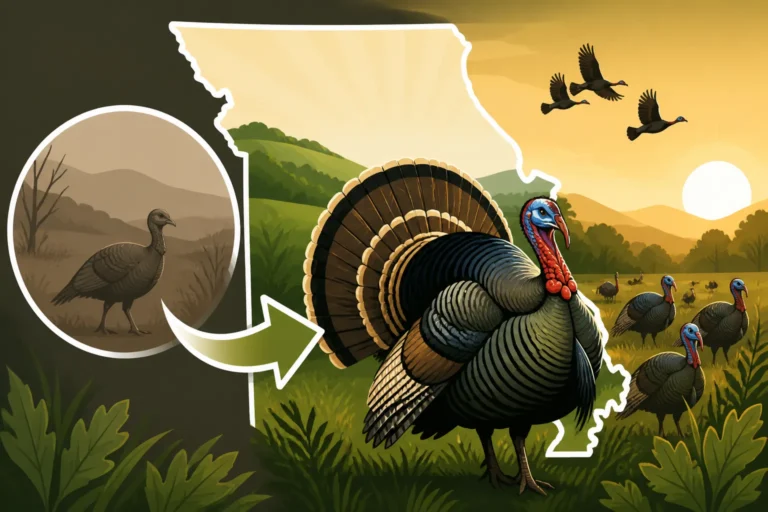
It's frustrating, isn't it, when one year you're hearing gobblers on every ridge, and the next, the woods feel silent? Hunters often wonder what drives these huge swings in turkey populations, and a lot of it comes down to something wildlife biologists call the poult-to-hen ratio. This guide will walk you through exactly what those numbers mean for Missouri's wild turkeys and how you can use that information to better understand and prepare for your next spring season.
Understanding the Poult-to-Hen Ratio
If you've spent any time tracking wild turkey populations or reading reports from the Missouri Department of Conservation, you've likely come across the term "poult-to-hen ratio." It might sound like technical jargon, but it's actually one of the most straightforward and vital metrics for understanding the health and future prospects of our spring gobbler season.
What is a Poult-to-Hen Ratio?
At its simplest, the poult-to-hen ratio is exactly what it sounds like: a count of the number of young turkeys, called poults, observed per adult hen turkey. Imagine you're driving down a gravel road in July, and you see a hen with six little poults scurrying behind her. That single observation, if part of a larger, organized survey, contributes to this ratio. It's a snapshot, taken typically in the summer months after the hatch, that tells wildlife managers and, by extension, us hunters, how successful the breeding season was.
This ratio isn't just an academic exercise; it's a direct indicator of reproductive success. A high number means lots of baby turkeys made it through those crucial first few weeks of life, suggesting a healthy hatch and good early poult survival. A low number, on the other hand, tells a different story—perhaps a poor hatch, or maybe many of the poults that did hatch didn't survive to be seen by the survey. These observations are incredibly valuable for setting future hunting regulations and understanding long-term population trends. In Missouri, these numbers are often gathered through summer brood surveys, where staff and volunteers keep an eye out for hens and their broods, recording what they see.
The "Magic Number" and What It Means
So, what's a "good" poult-to-hen ratio? While specific numbers can vary slightly by region and habitat, a common benchmark that biologists often look for to indicate a stable or growing turkey population is around 2.0 to 2.5 poults per hen. If the ratio consistently falls below this threshold, it suggests that the population isn't replacing itself fast enough, and a decline could be on the horizon.
Consider a ratio of 1.0 poult per hen. This means that, on average, for every hen observed, only one poult survived. When you factor in natural mortality rates for adult turkeys throughout the year, this number often isn't enough to sustain the population. A ratio of 3.0 or higher is generally fantastic, indicating booming reproductive success that will likely translate into more jakes (young gobblers) the following spring and more mature birds two years down the road. These numbers are critical for understanding Missouri Turkey Population Trends and why those trends matter to your hunting success.
A particularly low ratio can be a real punch to the gut for hunters, signaling potential issues. It might point to widespread nesting failure due to prolonged cold, wet weather during incubation, or it could highlight significant predation pressure on young poults. Understanding these numbers doesn't just manage expectations; it helps you appreciate the challenges our wild turkeys face year after year.
Factors Influencing Missouri's Poult Production
Missouri's landscape and weather patterns are incredibly diverse, and these factors play a huge role in the success or failure of a wild turkey hatch. From the Ozark hills to the rolling farm country of the north, conditions can vary, directly impacting poult-to-hen ratios.
The Weather's Crucial Role
Few things impact wild turkeys more profoundly than the weather, especially during the critical nesting and brooding periods. A beautiful, mild spring with gentle rains can set the stage for a fantastic hatch, giving poults a great start. However, Missouri weather can be notoriously fickle, and harsh conditions can devastate a turkey's reproductive efforts.
Think about a spring with prolonged cold, heavy rains, or even late frosts. Hens might struggle to maintain body temperature during incubation, leading to poor hatch rates or even abandonment of nests. Even if eggs hatch, young poults are incredibly vulnerable to hypothermia in cold, wet conditions. They don't regulate their body temperature well for the first few weeks, and getting soaked can quickly lead to their demise. Furthermore, wet weather can reduce the availability of insects, a crucial protein source for rapidly growing poults. Conversely, extreme drought conditions can also be problematic, drying up crucial water sources and impacting the lush vegetation that provides cover and food for broods. Understanding Weather in the Weeks After the Hatch is paramount to understanding annual turkey numbers.
These weather events, whether it's a cold snap in late May or a summer deluge, directly translate into the poult-to-hen ratio we see reported later in the year. A string of bad weather years can have a cumulative effect, leading to noticeable dips in turkey numbers in your favorite hunting spots.
Predation and Habitat Quality
Beyond the weather, predation is another enormous factor influencing how many poults survive to be counted in the summer surveys. Turkey nests are veritable buffets for a host of opportunistic predators common across Missouri. Raccoons, opossums, skunks, coyotes, and even snakes are all keen on finding a clutch of turkey eggs. Once hatched, poults face threats from raptors, foxes, and other ground predators. This constant pressure can significantly impact Nest Predation and Turkey Hatches and thus, the overall poult-to-hen ratio.
This is where habitat quality really shines. Good habitat provides hens with dense, protective cover for nesting, making it harder for predators to find their nests. After hatching, varied landscapes offering open, grassy areas rich in insects, interspersed with thicker cover for concealment from aerial predators, are vital for poult survival. Timber stand improvement, prescribed burns, and brush hogging can create the kind of diverse environments turkeys need. For instance, areas with scattered forest openings, diverse understory, and accessible water sources tend to fare better. Many hunters who use advanced mapping applications, perhaps like GoHunt, will study aerial photos to identify these critical habitat components on public and private lands, looking for those hidden pockets that offer both food and protection. Without quality habitat, even a perfect hatch can be decimated by predators.
Hen Health and Breeding Conditions
The health of the adult hen going into the breeding season is another often-overlooked but crucial piece of the poult production puzzle. A hen that has endured a particularly harsh winter or suffered from disease may not be in prime condition to lay a large clutch of viable eggs or even survive the incubation period. Her ability to fend off predators, incubate eggs successfully, and lead her poults to food and safety is directly tied to her overall health.
Factors such as winter food availability—acorns, waste grain, and other forage—can significantly impact her fat reserves and overall vitality. If hens enter spring stressed and underweight, they may lay smaller clutches, have lower hatch rates, or be less resilient to environmental challenges. Similarly, disease outbreaks, though less common on a widespread scale for wild turkeys, can weaken a flock and reduce reproductive output. Wildlife managers constantly monitor these variables, understanding that the strength of the breeders directly translates to the strength of the future generations. This is one of the underlying reasons Why Missouri Turkey Numbers Fell in some areas might be more complex than just one bad spring.
Interpreting Ratios for Your Hunting Strategy
Understanding poult-to-hen ratios isn't just about admiring data; it's about translating those numbers into actionable insights for your next turkey hunt. These ratios offer a peek into the future, helping you gauge expectations and refine your approach.
Short-Term and Long-Term Implications
The poult-to-hen ratio you see reported in the summer actually tells you a lot about the next spring's hunting season. If Missouri experienced a fantastic hatch this past summer, with high poult-to-hen ratios, it means that come next April, there will likely be a bumper crop of jakes—those vocal, often less cautious year-old gobblers. These birds can be a lot of fun to hunt and offer more opportunities for newer hunters to fill a tag. A really strong year for poult production also sets the stage for a great season two years out, as those jakes mature into more experienced, two-year-old gobblers. That's why keeping an eye on those summer numbers is so important; they provide a valuable forecast.
Conversely, a string of low poult-to-hen ratios over several years can signal a more concerning trend. Consistent reproductive failures mean fewer young birds entering the population, which can lead to an overall decline in flock numbers. This often results in fewer gobblers, less consistent calling, and tougher hunting conditions. Wildlife agencies, like Missouri's, pay close attention to these long-term trends to make decisions about season lengths, bag limits, and conservation efforts to help the birds rebound. For hunters, it means adjusting expectations and perhaps considering different hunting areas if your traditional spots are consistently showing low numbers.
Local vs. Statewide Ratios and Scouting
It's crucial to remember that statewide poult-to-hen ratios are just averages. Missouri is a big, diverse state, and local conditions can vary wildly. A great hatch in the fertile river bottoms of northern Missouri might coincide with a poor hatch in the rugged Ozark hills due to vastly different weather patterns or habitat conditions. Your specific hunting property or public land area might buck the statewide trend, either for better or worse. This is why local observation and scouting are so incredibly important.
As hunters, we can contribute to our own "local" poult-to-hen ratio data. Pay attention when you're driving around in July and August. Are you seeing hens with large broods, or single hens, or no poults at all? Make note of it. Keep a log. Many hunters use apps and platforms, such as GoHunt's mapping features, to mark these observations on their digital maps, tracking how brood sizes look on specific tracts of public land or private ground. This personal scouting helps you build a more accurate picture for your immediate hunting area. The Missouri Department of Conservation often collects regional data, and sometimes you can find reports that break down poult production by different areas of the state, which can be invaluable when trying to decide between Hunting North Missouri's Big-Buck Farm Country or Deer Hunting the Missouri Ozarks for turkeys.
Adapting Your Tactics to Population Trends
Once you have an idea of what the poult-to-hen ratios suggest for the upcoming season, you can adapt your hunting strategy accordingly. If the numbers indicate a booming population, with lots of jakes and two-year-olds coming up, you might find more success with aggressive calling. These younger birds are often less wary and more eager to investigate a hen call. You might be able to Run-and-Gun Turkey Tactics in the Missouri Ozarks more effectively, covering ground and trying to strike a bird.
However, if poult-to-hen ratios have been consistently low, suggesting fewer birds, a more patient and subtle approach might be more effective. You'll likely encounter fewer gobblers, and those that are around might be older, more call-shy birds. In such scenarios, consider setting up in areas with known turkey activity, using quieter, more subtle calling, and waiting longer. You might focus on known roosting areas or feeding spots, rather than trying to make a bird come to you from a long distance. Understanding When Missouri Gobblers Go Quiet often aligns with times of lower bird density, requiring a shift in approach. Utilizing detailed topographic maps, perhaps from a tool like GoHunt, to identify subtle terrain features where birds might travel or feed, can become even more critical when every bird counts. Your ability to adapt to what the poult-to-hen ratios imply for the local turkey population will greatly influence your success and enjoyment of Missouri's spring turkey season.
| Poult-to-Hen Ratio | General Interpretation (Missouri) | Likely Impact on Next Spring's Hunt | Recommended Tactical Adjustment |
|---|---|---|---|
| Below 1.5 | Poor reproductive success; declining population | Fewer gobblers, especially jakes; tougher hunting | More patient, subtle calling; focus on known hot spots; extensive scouting. |
| 1.5 to 2.0 | Fair reproductive success; stable to slightly declining | Moderate number of gobblers; some jakes but not abundant | Balanced approach; mix of aggressive and subtle calling; focus on prime habitat. |
| 2.0 to 2.5 | Good reproductive success; stable population | Healthy number of gobblers and jakes; good opportunities | Confident calling; strategic run-and-gun or patient setups as desired. |
| Above 2.5 | Excellent reproductive success; growing population | Abundant jakes; strong gobbler numbers in subsequent years | Aggressive calling can be highly effective; wide-ranging scouting rewarded; good numbers for Missouri Spring Turkey Season Structure. |
Disclaimer
This article is for general informational purposes only and does not constitute professional advice. Laws, prices and regulations vary by location and change over time. Consult a qualified professional for guidance on your specific situation.