How Missouri Restored Turkeys From 2,500 Birds
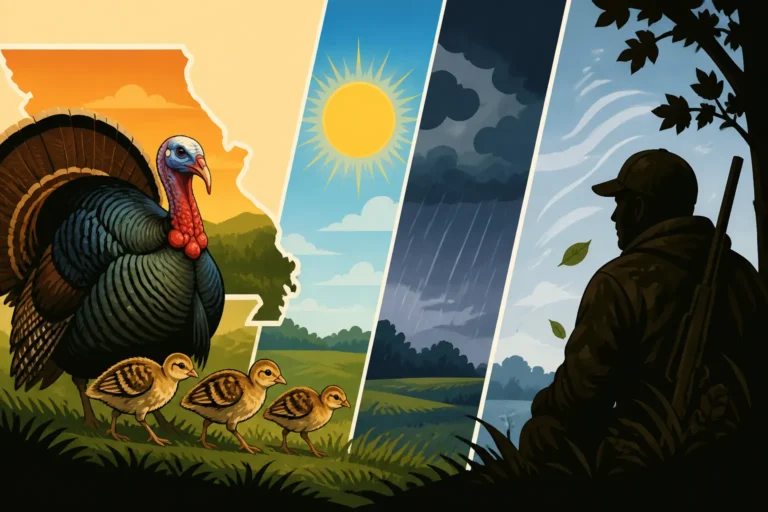
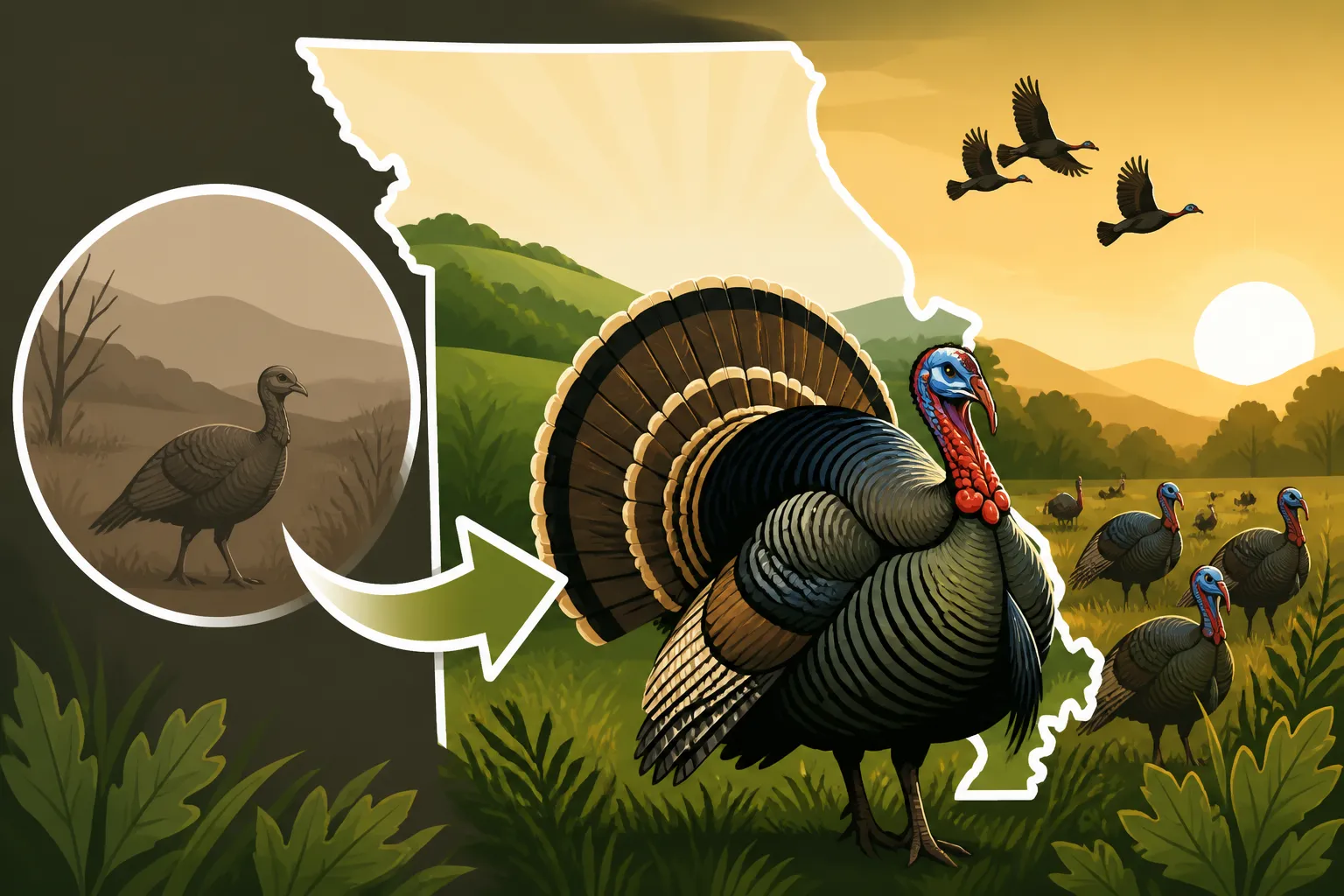
It's hard to imagine now, with gobblers sounding off from every timbered ridge and strutting birds filling fields across the state, but there was a time when hearing a wild turkey in Missouri was an incredibly rare event. We're talking about a population so low, it was on the brink of vanishing forever. This guide will walk you through the remarkable, decades-long journey of how Missouri's wild turkey flock was brought back from a mere 2,500 birds to the thriving populations we enjoy today, a true testament to dedicated conservation.
The Dire State of Missouri's Wild Turkeys: A Near Miss with Extinction
To truly appreciate the comeback, we have to look back at just how dire things were. It’s a story many younger hunters might find hard to believe, especially if their experience is limited to today’s abundant flocks. But for those who remember, or who have heard the tales from their grandparents, Missouri’s turkey population was once a ghost of its former self.
The Low Point: A Handful of Flocks
Imagine a Missouri landscape where hearing a gobble was less likely than seeing a mountain lion. That was the reality for wild turkeys by the early 20th century. By the 1930s, estimates suggested there were fewer than 2,500 birds left in the entire state. Not 2,500 birds per county, but 2,500 total in all of Missouri. These few remaining flocks were isolated pockets, clinging to existence in the most remote corners of the Ozarks, often deep in areas like the Current and Eleven Point River country where human impact was still minimal. They were shy, pressured, and barely surviving, a stark contrast to the bold, vocal birds we chase today. It was a terrifyingly small number, a true bottleneck that threatened the very genetic future of the species here. Hunters of that era weren't just thinking about filling a tag; they were watching a heritage disappear right before their eyes.
Why Turkeys Vanished: The Perfect Storm
So, how did we get to such a desperate situation? It wasn't one single factor, but rather a perfect storm of unsustainable practices and rapid land transformation. Unregulated market hunting played a huge role in the late 1800s and early 1900s. People were killing turkeys for their feathers and meat to sell, with no limits or seasons, making an already stressed population plummet even faster. But even more devastating, perhaps, was the massive habitat destruction. Missouri’s forests, particularly the vast expanses of the Ozarks, were clear-cut to fuel burgeoning industries, build railroads, and clear land for agriculture. When the timber was gone, erosion set in, streams silted up, and the diverse understory that turkeys rely on for food and cover simply vanished. Agricultural expansion further fragmented what little habitat remained, leaving turkeys with fewer and fewer places to roost, nest, and raise their poults safely. Without the vast, unbroken tracts of timber and diverse undergrowth, wild turkeys—a species that depends heavily on mature forests for survival—simply couldn't sustain themselves. It was a lesson in how quickly human activity can unravel a natural system.
The Groundbreaking Strategy: Trap-and-Transfer
Faced with a near-extinct population, Missouri’s conservationists knew they had to act decisively. The conventional wisdom of simply protecting the remaining birds wasn't enough; they needed a radical, proactive approach to bring turkeys back to areas where they had been completely extirpated. This led to one of the most successful wildlife restoration stories in North American history: the trap-and-transfer program.
Pioneering Conservation: A Radical Idea
The concept was simple in theory but revolutionary in practice: capture healthy, abundant wild turkeys from strong, isolated flocks and physically move them to suitable habitats where turkeys no longer existed. This wasn't just about moving a few birds; it was a carefully planned, scientific endeavor to re-establish breeding populations across the state. The idea took hold in the 1950s, when conservation agencies finally had the resources and dedicated staff to undertake such an ambitious project. It was a painstaking process, requiring a deep understanding of turkey behavior, habitat needs, and the patience of a saint. These pioneers weren't just wildlife biologists; they were visionaries, recognizing that direct intervention was the only path forward. They had to prove that wild turkeys could truly thrive again if given the chance and the right starting conditions.
The Science Behind the Success: Rocket Nets and Release Sites
The logistics of the trap-and-transfer program were fascinating. One of the primary methods involved the use of rocket nets. Imagine a large net, carefully concealed and baited with corn, with small rockets attached to one end. When turkeys gathered to feed, the rockets would fire, propelling the net over the birds, capturing them safely and humanely. Once captured, the birds were quickly processed—sexed, aged, banded, and often fitted with leg bands to track their movements after release—and then transported to new release sites. These sites weren't chosen arbitrarily; they were meticulously selected based on extensive habitat surveys, ensuring ample mature timber, diverse food sources, and minimal human disturbance. Landowner cooperation was absolutely critical, as many of the best release sites were on private property. Without the buy-in from farmers and landowners who agreed to protect the newly released birds, the entire effort would have failed. This careful planning meant that the released birds had the best possible chance to not just survive, but to establish new, thriving populations. The initial success stories from these carefully managed releases provided the blueprint for expanding the program across the entire state. If you’re interested in current turkey hunting regulations and seasons, take a look at our guide on Missouri Spring Turkey Season Structure.
Patience and Perseverance: Building a Foundation
It's easy to look at the success today and assume it was a quick fix, but nothing could be further from the truth. The trap-and-transfer program was a marathon, not a sprint, spanning decades of tireless work. The first trap-and-transfer operations began in the 1950s, but it wasn’t until the 1970s that a statewide spring turkey season was finally implemented, a full two decades later. Even then, harvests were small and carefully regulated to ensure the burgeoning populations continued to grow. Conservation agents and biologists spent countless hours tracking released birds, monitoring nesting success, and assessing habitat conditions. They learned, adapted, and refined their techniques with each passing year. This sustained effort, backed by sound scientific principles and the dedication of countless individuals, slowly but surely built the foundation for the healthy turkey population we enjoy today. It's a powerful reminder that true conservation success often requires a long-term commitment, unwavering patience, and the ability to adapt to challenges along the way.
Habitat Revival: The Unsung Hero
While the trap-and-transfer program rightly gets a lot of credit for directly moving turkeys to new areas, it wouldn't have worked without a simultaneous and equally critical effort: habitat revival. You can release all the birds you want, but if they don't have suitable places to live, feed, and reproduce, they simply won't survive. Missouri’s conservationists understood this profoundly, integrating habitat improvements as a cornerstone of the restoration.
The Critical Role of Forest Management
Wild turkeys are intrinsically tied to healthy forests. They need mature trees for roosting, a diverse understory for nesting and bugging, and open woodlands for feeding and strutting. Recognizing this, coordinated forest management efforts became paramount. This meant more than just letting trees grow; it involved active management practices designed to create ideal turkey habitat. Selective logging helped create openings and promote new growth, increasing food sources like acorns and insects. Prescribed burns, carefully controlled and executed, cleared out dense underbrush, rejuvenated native grasses and forbs, and created the open, park-like conditions turkeys thrive in, while also preventing catastrophic wildfires. These practices weren't always popular or understood, but they were vital in reshaping landscapes that had been ravaged by clear-cutting. These efforts didn't just benefit turkeys; they improved the overall health and biodiversity of Missouri’s forests, a topic explored further in our article on Missouri's Restored Wild Turkey Flock. By consciously managing timber resources with wildlife in mind, Missouri created a mosaic of habitats that allowed turkeys to not just survive, but truly flourish.
Landowner Partnerships and Education
Missouri is predominantly private land, which means successful conservation absolutely hinges on the cooperation of landowners. It’s one thing to manage public forests, but another entirely to influence habitat practices across millions of private acres. The state’s conservation agency embarked on extensive educational campaigns to inform landowners about turkey habitat needs and the benefits of specific land management practices. They offered technical assistance, advising on everything from planting food plots to selective timber stand improvement. Incentive programs were also key, providing financial or material support to landowners who committed to creating and maintaining turkey-friendly habitat on their property. Many farmers and rural residents, seeing the return of these magnificent birds, became passionate partners in the effort. Without their willingness to adapt land use, protect nesting hens, and manage their woodlands with conservation in mind, the state’s turkey recovery would have been severely limited. This widespread buy-in from private citizens was as important as any rocket net in bringing turkeys back. Understanding these partnerships can also be helpful when researching Getting Private Land Permission in Missouri for hunting.
The Fruits of Labor: A Thriving Turkey Population Today
After decades of dedicated effort, meticulous planning, and the unwavering commitment of conservationists and landowners alike, the story of Missouri's wild turkey is one of resounding success. Today, the majestic gobbler is a common sight and sound across nearly every county, a testament to what's possible when science, community, and passion converge.
The Modern Missouri Turkey Hunter's Experience
For anyone who hunts turkeys in Missouri today, it's hard to imagine a time when these birds weren't abundant. The thrill of hearing a distant gobble shatter the pre-dawn quiet, the sight of a longbeard strutting across a field, or the heart-stopping moment a tom comes into shotgun range – these are experiences that countless hunters enjoy every spring. We often talk about Calling a Missouri Gobbler Off the Roost or Run-and-Gun Turkey Tactics in the Missouri Ozarks because we have turkeys to call and chase. This abundance is a direct result of the restoration efforts. From the rolling farmlands of northern Missouri to the rugged Ozark hills, hunters can realistically expect to find and pursue wild turkeys. It's a stark and beautiful contrast to the near silence of a century ago. This incredible success allows us to enjoy a robust hunting tradition, where opportunities are plentiful, and the challenge is in outsmarting a wary bird, not just finding one. The joy of a successful hunt now extends to many, fostering a deep appreciation for the wildlife management that made it all possible. If you’re looking for areas with strong turkey populations, our guide on the Best Missouri Counties for Turkeys can be a useful starting point.
Continued Management and Challenges
While the restoration story is a triumph, the work of conservation is never truly finished. Maintaining a healthy wild turkey population requires ongoing vigilance and adaptive management strategies. Missouri's conservation agency continues to monitor turkey numbers, track poult survival rates, and adjust hunting regulations as needed to ensure sustainable populations for future generations. Issues like habitat fragmentation from development, increased predation on nests, and the potential for disease outbreaks—similar to those that can impact other species, as discussed in Nest Predation and Turkey Hatches—are ongoing concerns. Tools and resources like those offered by GoHunt can provide valuable data and insights to hunters, helping them understand local population dynamics and better plan their hunts in areas with robust, well-managed turkey populations. By staying informed and adhering to regulations, hunters play a crucial role in supporting these ongoing efforts. The health of the flock depends on a careful balance, and biologists are constantly studying the factors that influence Missouri Turkey Population Trends to proactively address potential issues.
Lessons Learned and a Model for Conservation
Missouri’s wild turkey restoration is more than just a local success story; it's a globally recognized model for how to bring a species back from the brink. The principles and techniques developed here, particularly the trap-and-transfer method, were adopted by conservation agencies across North America and beyond, aiding in the recovery of wild turkeys in numerous states and even other species. It taught us the immense value of sound scientific research, the importance of public and private partnerships, and the power of dedicated funding, often derived from hunting and fishing permit sales, to fuel conservation efforts. This success story continues to inspire new generations of conservationists and reminds us that, even when faced with seemingly insurmountable challenges, a concerted effort can yield incredible results. It's a powerful legacy, one that every hunter, every outdoor enthusiast, and every citizen of Missouri can be proud of, and it underpins the vibrant outdoor opportunities we have today. When you're planning your next hunt, perhaps using a platform like GoHunt to scout new areas, remember the incredible journey that made those opportunities possible.
Missouri Wild Turkey Restoration: A Snapshot
| Era | Estimated Population | Key Challenges | Key Solutions | Outcome |
|---|---|---|---|---|
| Early 1900s | ~2,500 | Unregulated hunting, extensive clear-cutting | Protection, habitat preservation | Near extinction |
| 1950s – 1970s | Growing | Limited range, fragmented populations | Trap-and-transfer (rocket nets), habitat management | Populations establishing in new areas |
| 1980s – Present | Thriving | Habitat fragmentation, disease, predation | Ongoing management, hunter support, research | Robust, huntable populations statewide |
This article is for general informational purposes only and does not constitute professional advice. Laws, prices and regulations vary by location and change over time. Consult a qualified professional for guidance on your specific situation.