Missouri Feral Hog Numbers Today
It's incredibly frustrating to see a wild landscape you love, whether it's your back forty or a favorite public hunting ground, ravaged by something as destructive as feral hogs. These aren't just nuisance critters; they're an invasive force that tears up habitat, eats everything from acorns to fawns, and spreads diseases. If you've been wondering what's really happening with feral hog numbers here in Missouri and what's being done about them, you're in the right place. This guide is all about shedding light on the current situation with these destructive animals in our state and the ongoing fight to keep their populations in check.
The Persistent Problem of Feral Hogs in Missouri
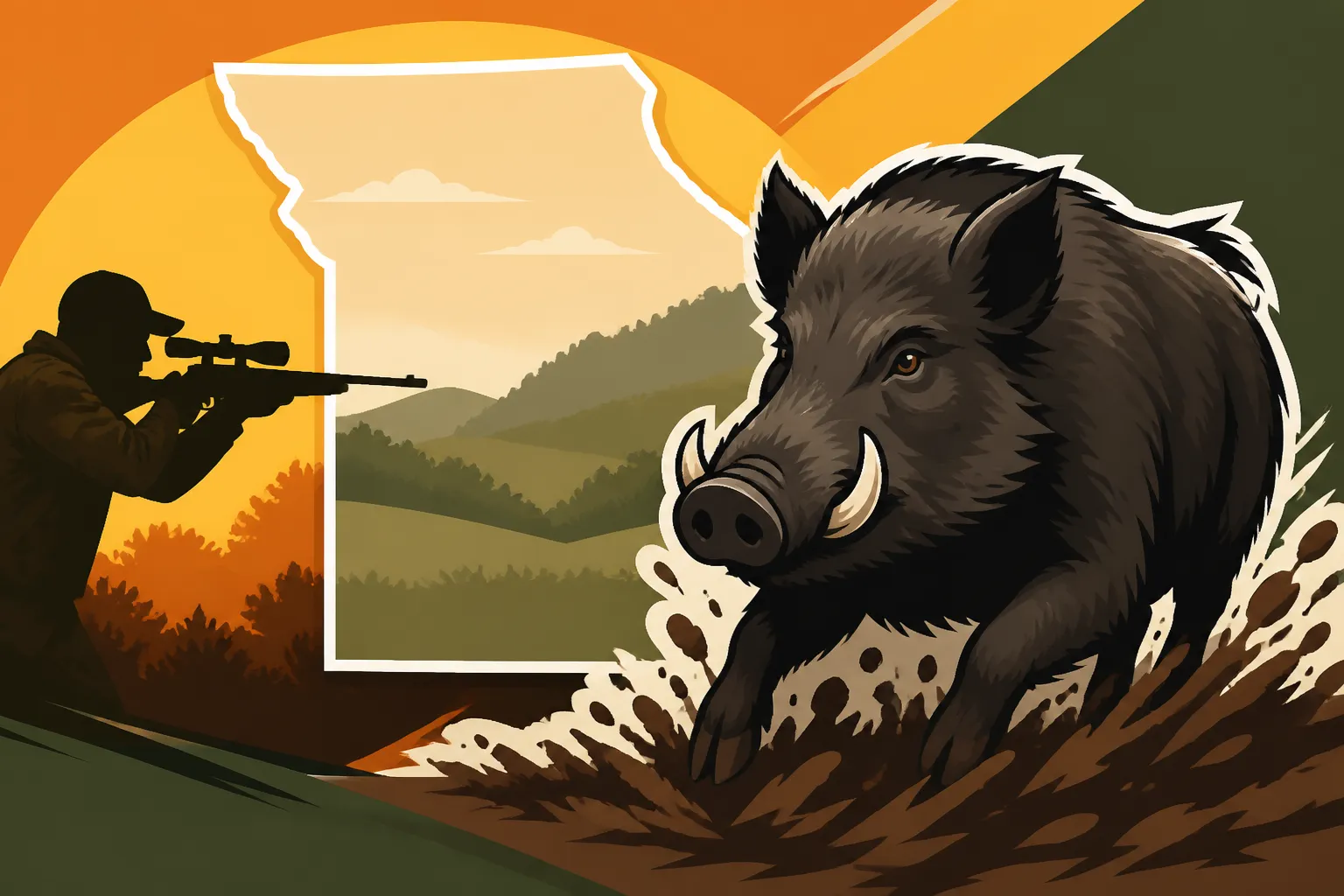
Feral hogs are a scourge, plain and simple. They're not native to Missouri, and their presence causes immense ecological damage, economic loss to agriculture, and even poses risks to the health of our native wildlife and livestock. Unlike deer or turkeys, which are managed for sustainable populations, the goal with feral hogs is absolute elimination. This might sound drastic, but once you understand their biology and the sheer scale of the destruction they wreak, you quickly realize it's the only viable path.
Missouri's landscape, with its mix of timber, row crops, and abundant water sources, offers an ideal, albeit unfortunate, habitat for these intelligent and adaptable animals. They thrive in these conditions, rapidly expanding their range and numbers, often leaving a trail of destruction in their wake that’s hard to imagine until you see it firsthand. The tell-tale "rooting" – where they tear up the ground looking for food – can turn lush fields into barren mud pits overnight.
Why Feral Hogs Are Such a Threat
The threats posed by feral hogs are multi-faceted and alarming. It's not just about a few torn-up fields or an occasional sighting; it's about a systemic attack on our natural resources and rural economy. These animals are incredibly resilient, reproduce at an astonishing rate, and are notoriously difficult to control, making them a significant challenge for land managers and wildlife agencies alike.
First and foremost, their destructive foraging habits are catastrophic. They root up vast areas, destroying crops, pastures, and sensitive ecosystems like wetlands and native prairies. This rooting damages tree roots, destroys ground-nesting bird habitats, and pollutes water sources with their waste. Imagine a group of them tearing through a sensitive stream bank, causing erosion and muddying up vital spawning grounds for fish. The sheer volume of their activity can fundamentally alter an ecosystem.
Beyond habitat destruction, feral hogs are direct predators of native wildlife. They'll eat anything from acorns, seeds, and fungi to the eggs and young of ground-nesting birds, fawns, and even small livestock. A sow can have two litters a year, each with 4-10 piglets, and those piglets can start reproducing within a few months. This incredible reproductive rate means that if even 70% of a population isn't removed annually, their numbers will continue to grow exponentially. This is why agencies emphasize sustained, aggressive removal.
Disease Vectors and Economic Impact
The health risks associated with feral hogs are another grave concern for Missouri. These animals are known carriers of numerous diseases that can impact livestock, pets, wildlife, and even humans. Diseases like pseudorabies, brucellosis, leptospirosis, and even tuberculosis can be harbored and spread by hog populations. For cattle farmers, an outbreak of pseudorabies could be devastating, leading to significant economic losses and impacting the marketability of their herds. The potential for these diseases to jump to domestic animals is a constant worry.
Consider a scenario where a hog with brucellosis crosses paths with a herd of cattle. The financial implications for the farmer could be enormous, from testing and quarantines to potential culling of affected animals. This isn't just a theoretical threat; it's a very real concern for agricultural communities across the state. The cost of managing and containing these disease risks adds another layer of burden to an already challenging situation.
Furthermore, the economic damage to Missouri's agriculture sector is substantial. Farmers often face damaged crops, ruined pastureland, and fence lines destroyed by hogs, leading to direct financial losses and increased repair costs. The cost of planting a cornfield only to have it rooted up by a sounder of hogs is a frustrating and expensive reality for many in areas with established populations. This is why the state takes such a serious stance on their removal.
Understanding Feral Hog Population Trends
Pinpointing exact numbers for a mobile, nocturnal, and highly evasive animal like the feral hog is incredibly challenging. Unlike deer or turkey populations, which are estimated through various surveys and harvest data, feral hog populations are measured more by their activity and the success of removal efforts. The Missouri Department of Conservation (MDC) focuses heavily on eradication, which means tracking their presence and the effectiveness of control operations is paramount.
Historically, feral hogs were largely confined to the southern Ozarks, primarily within and around the Mark Twain National Forest. However, over the years, their range expanded, often due to illegal releases by individuals looking to create "hunting" opportunities, which is both irresponsible and illegal. The good news is that sustained efforts have started to shrink their core range. While it's hard to give a single "number" for the entire state, the MDC's strategy aims for zero, region by region.
The Challenges of Estimating Numbers
You might wonder why we can't just count them like we do deer. The truth is, it's far more complex. Feral hogs are masters of concealment. They prefer dense cover, often become nocturnal when pressured, and can disappear into vast timber tracts or thickets, making visual counts nearly impossible. Aerial surveys, while useful in some open landscapes, are less effective in Missouri's heavily wooded terrain.
Instead, MDC and its partners rely on a combination of methods to gauge their presence and estimate local population density. These include tracking observations from landowners, hunters, and the public, monitoring damage reports, and using trail cameras in suspected areas. The primary metric of success isn't an annual population estimate, but rather a decrease in active hog sign and a reduction in the number of hogs captured and removed from an area. When an area that once had frequent hog activity goes quiet, and traps stop yielding animals, that's a strong indicator of success.
Another significant challenge is their rapid reproduction. Even if you manage to remove a large percentage of a local population, the remaining few can quickly rebound. This biological characteristic means that control efforts must be persistent and comprehensive, leaving no survivors to restart the cycle. It's a continuous battle, not a one-and-done solution.
Missouri's Eradication Strategy and Successes
Missouri has taken a firm, clear stance on feral hogs: they are an invasive species, and the goal is complete eradication, not management. This means that recreational hunting of feral hogs on public land is strictly prohibited, and even on private land, the MDC actively discourages recreational hunting of them because it can disperse sounders, making trapping and coordinated removal efforts much harder. Instead, the focus is on a strategic, professional approach.
The MDC employs a dedicated team of feral hog specialists who work directly with landowners and other agencies to implement effective removal programs. These programs primarily utilize large, corral-style traps equipped with remote-sensing technology. This allows specialists to monitor hog activity, ensure all hogs in a sounder have entered the trap, and then trigger it remotely, capturing entire groups at once. This method is far more effective than scattered hunting, which often only removes a few animals and scatters the rest, making them warier and harder to catch.
The Ban on Recreational Hunting of Hogs
For many hunters, the idea of not being able to shoot a feral hog might seem counterintuitive. After all, they're destructive, and hunting is a primary tool for wildlife management. However, for feral hogs in Missouri, the data and experience clearly show that recreational hunting actually hinders eradication efforts. When hunters shoot one or two hogs, the surviving animals become "trap shy" and disperse, making them incredibly difficult to catch in the large traps that are central to the MDC's strategy.
Think of it this way: if you try to catch a mouse in your house, and you keep scaring it with noisy traps that don't quite work, that mouse becomes much smarter and harder to catch. Feral hogs are the same, but on a much larger, more destructive scale. The MDC's coordinated trapping efforts aim to remove entire sounders, ensuring no breeding animals are left behind to repopulate the area. Scattered hunting prevents this efficient, strategic removal.
Here's a breakdown of why the ban is critical for Missouri's eradication goals:
| Factor | Recreational Hunting (Ineffective for Eradication) | Coordinated Trapping (Effective for Eradication) |
|---|---|---|
| Impact on Sounder | Disperses hogs, making survivors wary | Captures entire sounders at once, no survivors left |
| Reproduction | Leaves breeding sows, allowing rapid rebound | Removes all breeding animals from the local population |
| Efficiency | Low success rate per effort, often targets single animals | High success rate, targets multiple animals simultaneously |
| Behavior | Creates trap-shy, nocturnal animals | Exploits hog social behavior for mass capture |
| Disease Spread | Can push diseased hogs into new areas | Contains hogs for humane dispatch and disease testing |
This is why the MDC consistently educates the public about the ban and works to change the perception that "any hog shot is a good hog." For eradication to work, the science-backed, coordinated approach is essential. The focus remains on Feral Hog Elimination.
Successes and Remaining Challenges
Despite the uphill battle, Missouri has seen notable successes in its feral hog eradication program. Over the past several years, MDC specialists have removed tens of thousands of hogs from the landscape. Critically, these efforts have resulted in a significant reduction in the geographical range of established hog populations, particularly in parts of the central and northern regions of the state that once saw increasing hog activity. While they still exist, their numbers and the areas they inhabit have shrunk considerably.
The continuous vigilance and rapid response to new sightings are vital. A key component of this success is the public reporting system. When landowners or concerned citizens report hog sightings or damage, MDC specialists can quickly deploy to assess the situation and set up traps. This proactive approach prevents small, isolated groups from becoming established breeding populations. It's a testament to the dedication of the MDC and the cooperation of landowners that progress is being made.
However, challenges remain. The vastness of some of Missouri's remote timberlands, particularly in the Ozarks, makes comprehensive surveying and trapping difficult. Illegal releases of hogs continue to be an issue in some areas, frustrating eradication efforts and requiring continuous monitoring. Plus, the sheer reproductive potential of these animals means that even a small oversight can lead to a quick resurgence in numbers.
What Hunters and Landowners Can Do
Even though recreational hunting is prohibited, you, as a hunter or landowner, play a crucial role in the fight against feral hogs. Your eyes and ears on the ground are invaluable, and your understanding of the eradication strategy is key to its continued success. It's about being part of the solution, not inadvertently contributing to the problem.
If you encounter feral hogs or see signs of their destructive rooting, the single most important thing you can do is report it. Don't try to take matters into your own hands by shooting them, especially on public land. Contact the Missouri Department of Conservation immediately. They have a dedicated team and the necessary equipment to address the problem effectively. Your report allows their specialists to pinpoint hog activity and deploy their strategic trapping methods.
Landowners, in particular, have a vital role. If hogs are on your private property, the MDC will work with you to implement a free, professional trapping program designed for maximum effectiveness. This collaboration is essential for shrinking the hogs' range and ultimately ridding Missouri of them. Programs like these often involve landowners giving access to specialists, allowing them to survey, set traps, and manage the removal process.
Identifying and Reporting Feral Hogs
Knowing what to look for is the first step. Feral hogs leave distinct signs. The most obvious is "rooting" – areas where the ground has been torn up, looking like someone tilled it with a small plow. They'll also leave "wallows," muddy depressions where they cool off, often near water sources. Tracks are similar to domestic pigs, with a cloven hoof, but often larger and more pointed than a deer. You might also find rubs on trees where they scratch themselves, or evidence of them eating crops or wildlife.
When you spot these signs, or even better, if you see the hogs themselves, make a mental note of the location, date, time, and number of animals. Then, contact your local MDC office or use their online reporting tools. This information is critical for their specialists to respond efficiently. Remember, every piece of information helps in the larger effort to track and eliminate these pests. This goes hand-in-hand with Missouri Wildlife Disease Monitoring, as reporting sightings can help track any potential health issues.
It's tempting to want to "do something" when you see these destructive animals, but trust the experts. The MDC's approach is designed to be the most effective way to eliminate feral hogs. Misguided efforts, such as opportunistic shooting, only make the problem worse in the long run by making the hogs more elusive and harder to trap. Understanding Game You Cannot Hunt in Missouri is crucial for all outdoors enthusiasts.
Cooperation and Community Involvement
Effective feral hog eradication isn't just about traps and specialists; it's about a community-wide effort. Landowners, hunters, farmers, and conservationists all need to be on the same page, understanding the threat and supporting the eradication strategy. This often means open communication and collaboration between neighbors to ensure that eradication efforts in one area aren't undermined by unaddressed hog populations just across the property line. Missouri Landowner Cooperatives and Shared Ground can be a valuable model for this.
Participating in educational outreach, sharing accurate information with friends and neighbors, and dispelling myths about feral hog hunting are all important contributions. The more people understand why the current strategy is in place and how they can best help, the faster Missouri can become feral hog-free. This collective commitment ensures that precious resources and native wildlife, like White-Tailed Deer Across Missouri, are protected from this invasive threat.
By working together, reporting sightings, and allowing specialists to do their vital work, we can make significant strides in reducing and ultimately eliminating feral hog populations from Missouri. It's a long-term commitment, but one that is absolutely necessary for the health of our natural heritage and agricultural economy.
Disclaimer
This article is for general informational purposes only and does not constitute professional advice. Laws, prices and regulations vary by location and change over time. Consult a qualified professional for guidance on your specific situation.