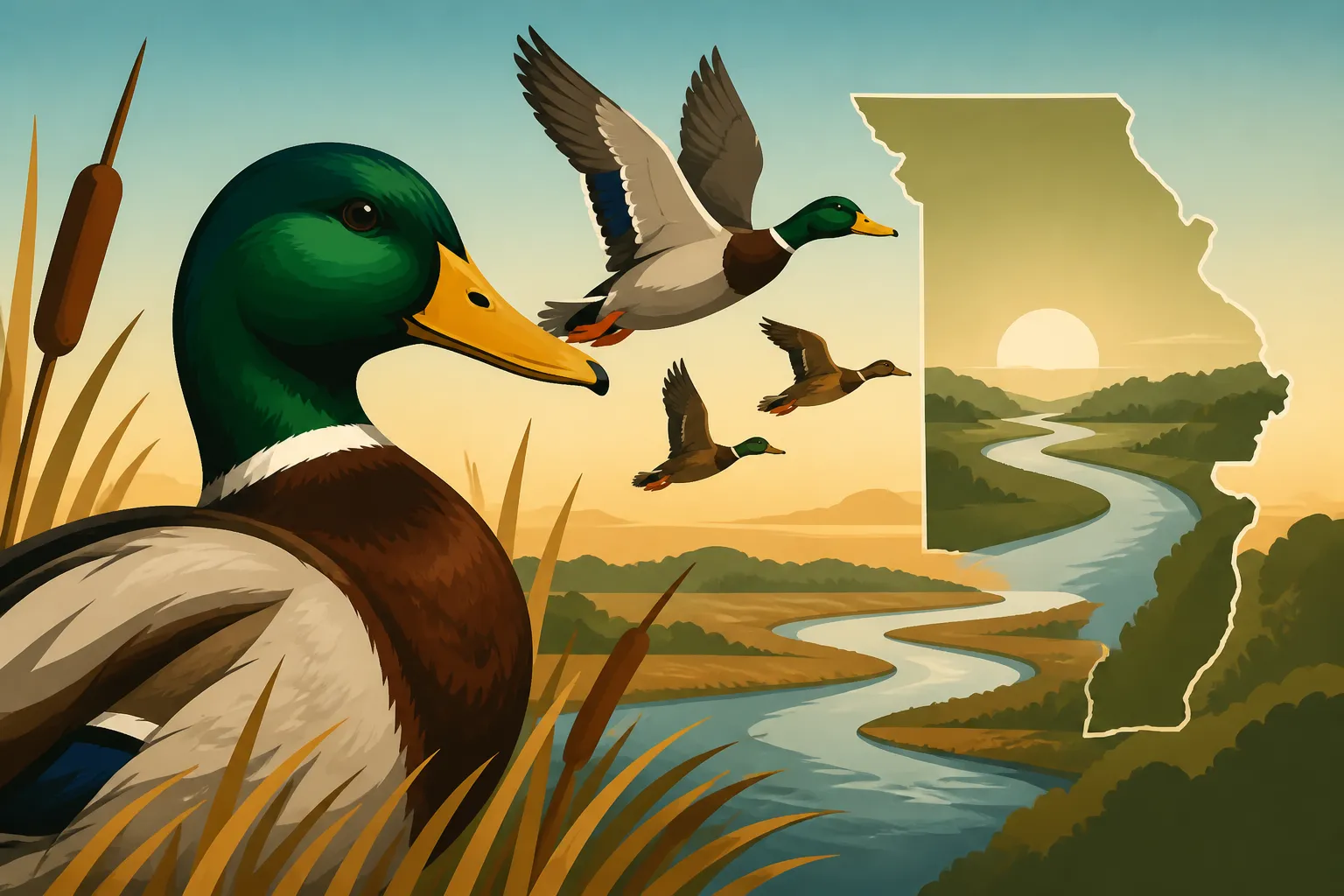
Mallards and the Mississippi Flyway
There's nothing quite like the sound of whistling wings overhead, especially when those wings belong to a flock of mallards circling your decoys on a crisp Missouri morning. But consistently putting yourself under those birds, especially the wily greenheads, can feel like a lifelong puzzle. It’s a challenge rooted deep in the complex migratory patterns and critical habitats found right here in the Show-Me State, which sits squarely in the heart of the mighty Mississippi Flyway. This guide will help you unpack those patterns, understand their habitat, and fine-tune your approach to hunting mallards across Missouri.
The Mississippi Flyway's Crucial Role for Missouri Mallards
For countless duck hunters in Missouri, the mallard isn't just a duck; it's the duck. These intelligent, resilient, and delicious birds are the backbone of many a duck season, and their journey is inextricably linked to one of North America's greatest avian superhighways: the Mississippi Flyway. Understanding this massive migratory corridor is the first step to unlocking consistent success in the blinds and timber.
Understanding the Flyway's Geography and Impact
The Mississippi Flyway is essentially a giant aerial roadmap, stretching from the arctic breeding grounds of Canada and the northern United States, all the way down to the Gulf Coast of Mexico and beyond. It’s a network of rivers, lakes, wetlands, and agricultural fields that guides millions of waterfowl, including a significant portion of the continent's mallard population, on their annual north-south journeys. Think of it as a series of interconnected rest stops and diners for birds, allowing them to refuel and recuperate along their incredibly demanding flights.
Missouri sits smack dab in the middle of this incredible migration route. Our state's diverse landscape, from the vast river bottoms of the Missouri and Mississippi to the smaller sloughs and agricultural fields scattered across the central and northern regions, provides crucial staging and wintering habitat. The health and abundance of mallards here are a direct reflection of conditions both far to our north and within our own borders. Hunters often feel the pulse of this flyway directly, with cold fronts and northern migrations dictating the quality of hunting from week to week.
Missouri's Position as a Key Wintering and Staging Ground
Missouri isn't just a quick pass-through for mallards; it’s a destination. As temperatures drop and ice begins to form in the northern states, a significant portion of the mallard population pushes south, and many choose Missouri as their primary wintering ground or a critical late-season staging area before continuing further south. The sheer volume of birds that can pile into Missouri's managed wetlands and private waters is a testament to the quality of habitat available, even if it feels like a constant battle to secure hunting spots.
Our state's location means we get birds that have traveled from Manitoba, Saskatchewan, and the Dakotas, bringing a fresh wave of naive (and sometimes not-so-naive) birds to our waters. This influx of new ducks can completely change the hunting dynamics, often revitalizing areas that had gone quiet. The timing of these pushes is something every serious waterfowler watches intently, knowing that a strong northern front can mean a phenomenal day in the blind. Learning about Duck Migration Timing Through the Flyway can give you a significant advantage in predicting these movements.
Mallard Migration Patterns and Behavior in Missouri
Mallards are creatures of habit, yet they're also incredibly adaptable, making their patterns both predictable and, at times, infuriatingly unpredictable. Their behavior in Missouri is heavily influenced by the progression of the season, from the warm days of early fall to the bitter cold of deep winter. Understanding these shifts is paramount to consistent success.
Early Season Arrivals and Local Movements
When Missouri's duck season first opens, often in late October, the mallards we encounter are generally "local" birds or early arrivals from nearby states that haven't faced significant hunting pressure yet. These birds are often less wary, accustomed to smaller bodies of water, and can be found dabbling in flooded timber, small ponds, and backwater sloughs. They're still focused on building up fat reserves, often feeding in newly flooded fields or easily accessible grain.
During this early period, mallards haven't developed the wariness that comes with weeks of being shot at. Their flight patterns might be more relaxed, and they're more likely to respond enthusiastically to calling and decoy spreads. However, as soon as hunting pressure mounts, even these "local" birds become educated quickly. This is where diligent scouting, using tools like the GoHunt app to mark potential spots, becomes critical to staying ahead of the crowd.
Peak Migration and Cold Front Influence
The true magic of Missouri duck hunting often ignites with the arrival of significant cold fronts from the north, usually hitting their stride in mid-November and continuing through December. These fronts act like a natural funnel, pushing massive numbers of new mallards down the Mississippi Flyway directly into Missouri. These are often birds that have already traveled hundreds or even thousands of miles, encountering hunting pressure along the way, making them far warier than the early arrivals.
When these northern flights arrive, wetlands that were quiet can suddenly erupt with thousands of birds. These migrating mallards are primarily concerned with finding safe roosting areas and abundant food sources to replenish their energy. They'll key in on large managed wetlands, expansive river systems, and big agricultural fields offering flooded corn or beans. This is the period when understanding Missouri Duck Zone Boundaries and the specific season dates for your area becomes crucial, as the arrival of these birds often coincides with the most productive hunting weeks.
Late Season Stays and Food Source Reliance
As winter settles in and much of the northern part of the flyway freezes solid, Missouri becomes an even more critical wintering haven. Mallards that decide to stick around through late December and January are tough, seasoned veterans. They've seen it all, and they've learned to be incredibly cautious. Their movements become highly predictable, revolving almost entirely around easily accessible, high-energy food sources.
During the late season, mallards will gorge themselves on waste grain in agricultural fields, like harvested corn and soybeans, or seek out submerged vegetation in unfrozen waters. Their daily routine often involves roosting on large, undisturbed bodies of water during the night, flying out to feed in fields at dawn and dusk, and then loafing in protected loafing areas during the day. Success in late-season hunting demands extreme camouflage, minimal calling, and precise timing to intercept birds along these predictable flight lines. You really need to scout heavily, often driving backroads at first light to see where birds are hitting the fields.
Essential Missouri Mallard Habitat: More Than Just Water
While water is obviously central to a duck's existence, the specific type of water and surrounding cover matters immensely for mallards in Missouri. From the iconic flooded timber to vast agricultural landscapes, understanding the nuances of these habitats is key to locating birds and setting up effective hunts.
Flooded Timber and Green-Tree Reservoirs
Ask any Missouri duck hunter about their dream mallard hunt, and many will describe a flooded timber experience. Missouri's green-tree reservoirs, where oak and other hardwood timber are intentionally flooded, offer mallards a unique combination of food (acorns!), cover, and protection. The broken canopy and myriad of trunks create a natural sanctuary, and when the acorns are dropping, mallards flock to these areas. The timber offers concealment for hunters, and the unique acoustics make calling incredibly effective. Flooded Timber Duck Hunting in Missouri is a legendary pursuit for a reason.
However, hunting flooded timber isn't without its challenges. Water levels are constantly managed or influenced by rainfall, and finding the right depth for feeding birds can be tricky. Navigation can be difficult, and stealth is paramount. Decoy spreads in timber are typically smaller and more realistic, mimicking a small group of birds feeding quietly. Mastering Missouri Flooded Timber Duck Tactics involves a deep understanding of water levels, timber layout, and how to effectively use call and motion in a confined space.
Agricultural Fields and Wetland Complexes
Beyond the timber, vast agricultural fields provide indispensable feeding grounds for mallards across Missouri, especially in the northern and central parts of the state. Harvested corn and soybean fields, particularly those with standing water after a rain or intentionally flooded, are mallard magnets. These fields offer a huge caloric payoff for birds preparing for long flights or enduring harsh winter conditions. Many of the state's premier managed wetland areas, like those you can find through the GoHunt mapping platform, are designed to incorporate these agricultural components.
Hunting these field setups usually involves layout blinds and a large decoy spread, mimicking hundreds of feeding birds. The challenge here is less about concealment and more about reading bird movement, understanding prevailing winds, and getting into the exact right spot. Mallards hitting fields are often coming from distant roosts, and their flight paths can be incredibly high. Knowing when to call, and with what intensity, is a skill honed over many hours watching birds work open ground.
River Systems and Backwater Sloughs
Missouri's major river systems, particularly the Missouri River and sections of the Mississippi, provide vital migratory corridors and a patchwork of essential habitats. The main channels themselves can hold diver ducks and some mallards, but it's the adjacent backwater sloughs, oxbow lakes, and sandbar complexes that truly shine for mallards. These calmer waters, often lined with timber or emergent vegetation, offer protected loafing and feeding areas away from the main river's current and boat traffic.
Hunting Missouri River Sandbars for Ducks offers a completely different experience than timber or field hunting. These areas can be dynamic, changing with water levels and shifting sand. Mallards will use small pockets of calm water behind sandbars, feed on mudflats, or roost on the sunny side of a protected bank. Access can be challenging, often requiring a boat, and hunters need to be acutely aware of ever-changing river conditions. The constant presence of flowing water also means these areas are often the last to freeze, making them late-season havens.
Strategies for Hunting Missouri Mallards
Hunting mallards in Missouri is a game of adaptation. No two hunts are ever truly the same, and what worked last week might utterly fail this week. Success often hinges on a blend of good scouting, intelligent decoy placement, effective calling, and a keen understanding of bird behavior and pressure.
Decoy Spreads and Calling Techniques
When it comes to mallards, your decoy spread is your advertisement, and your call is your sales pitch. For early-season birds or those fresh off a cold front, a moderately aggressive calling sequence combined with a visible spread can be highly effective. A mix of active feeders, resting birds, and perhaps a few motion decoys can create a realistic scene. However, as the season progresses and birds become "educated," less is often more. Over-calling or an unrealistic spread will flare birds faster than anything.
In timber, smaller, more natural spreads (1-2 dozen decoys) often work best, mimicking a small group. Focus on creating open landing zones within the timber. In open fields or large water, bigger spreads (5-10 dozen or more) are typical, often with a "J" or "U" shape to funnel birds into a shooting hole. For calling, learn to read the birds. A soft, contented chuckle or cluck often works better on wary birds than aggressive hail calls. Understanding Duck Calling in Timber Versus Open Water is critical; the acoustics are completely different.
Scouting and Adaptability
Scouting is, without a doubt, the single most important factor in consistently killing mallards. You can have the best decoys and call like a pro, but if you're not where the birds want to be, you're just practicing. This means spending time driving, walking, or using aerial maps to locate birds. Look for concentrations of ducks in fields at dawn and dusk, find their preferred loafing areas during the day, and identify their flight paths between these locations. A good hunting app like GoHunt can be invaluable for pinpointing property lines and identifying potential public access points or overlooked sloughs.
Adaptability goes hand-in-hand with scouting. What if the birds aren't working your spread? Can you adjust your decoy pattern? Change your calling cadence? Move to a different spot entirely? The best duck hunters are constantly observing and willing to change tactics on the fly. If you consistently find yourself in areas with low bird numbers, it might be time to broaden your scouting efforts, looking for new spots or trying different public lands. Learning to utilize resources like Scouting Missouri Public Land Before Season can greatly improve your chances.
Understanding Public and Private Land Dynamics
Missouri offers a fantastic array of hunting opportunities, both on public and private land, each with its own dynamics. Public lands, especially the managed wetland areas, are often intensively managed for waterfowl and can hold incredible numbers of mallards. However, they also see significant hunting pressure, meaning birds can become extremely wary very quickly. Hunters often face intense competition for spots, with systems like the Managed Hunt Draws on Missouri Wetlands requiring advance applications or early morning lines.
Private land, while harder to access, can offer less pressured hunting, especially if managed specifically for waterfowl. Landowners who put in the effort to plant food plots, create small flooded areas, or simply provide undisturbed sanctuaries often reap the rewards. Regardless of where you hunt, respecting the land, knowing the rules (such as Nontoxic Shot Rules on Missouri Wetlands), and understanding how hunting pressure influences bird behavior are paramount.
Conservation and the Future of Missouri's Mallards
The vibrant mallard hunting tradition in Missouri isn't just about the current season; it's about the long-term health of the species and the habitats they rely on. Hunters have historically been, and continue to be, the most ardent conservationists, playing a critical role in ensuring that future generations can experience the thrill of working a flock of mallards.
Habitat Preservation Efforts
The cornerstone of mallard conservation in Missouri, and indeed across the flyway, is habitat preservation and enhancement. Organizations like Ducks Unlimited, along with state agencies, work tirelessly to acquire, restore, and manage wetland ecosystems. These efforts aren't just about creating duck hunting opportunities; they're about maintaining healthy, biodiverse environments that benefit countless other species. Ensuring the health of Wetland Habitat and Duck Numbers is a continuous and vital undertaking.
In Missouri, this often translates to complex water management on conservation areas, strategic plantings of moist-soil vegetation, and collaborative projects with private landowners. The challenge is immense, with ongoing threats from agricultural conversion, development, and climate change. Every acre of restored wetland or flood-plain forest is a victory for mallards and all waterfowl. Hunters contribute directly to these efforts through permit purchases and the Federal Duck Stamp.
Hunter's Role in Sustainable Management
As mallard hunters, we are critical stakeholders in the future of these birds. Our permit dollars fund research and habitat work, and our participation in harvest surveys provides invaluable data to wildlife biologists. Adhering to bag limits and season dates, understanding Missouri Duck Harvest Numbers, and practicing ethical hunting are not just about following the law; they are about being responsible stewards of a shared resource.
Beyond direct financial contributions, hunters are often the eyes and ears on the ground, reporting observations of bird numbers, habitat conditions, and any unusual activity. We have a vested interest in the long-term sustainability of mallard populations and their habitats. By continuing to advocate for wetland protection, participate in conservation efforts, and pass on ethical hunting traditions, we ensure that the legacy of Missouri mallard hunting endures for generations to come.
Disclaimer
This article is for general informational purposes only and does not constitute professional advice. Laws, prices and regulations vary by location and change over time. Consult a qualified professional for guidance on your specific situation.