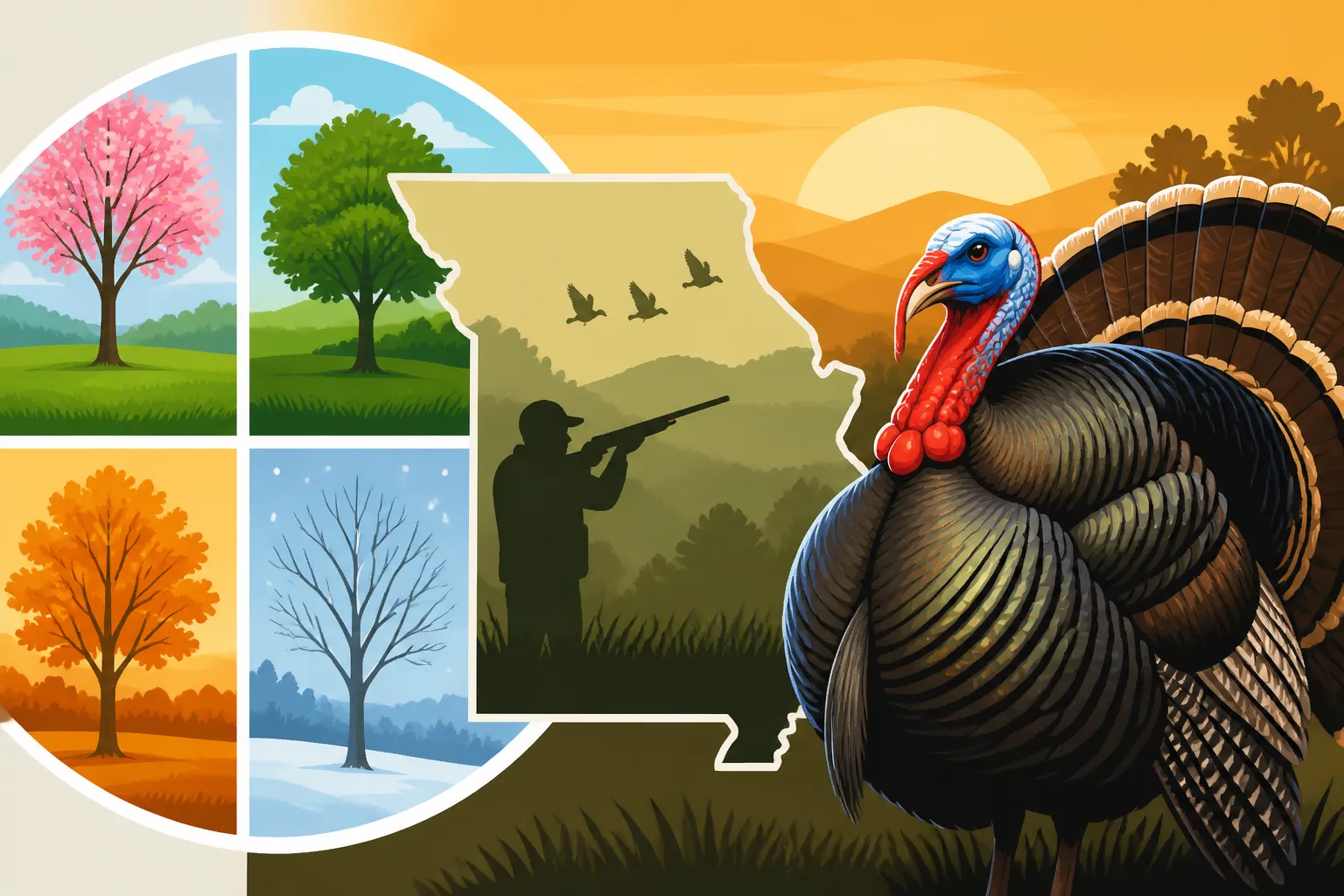
Turkey Harvest Numbers by Season
It's no secret that chasing a Missouri gobbler, whether in the vibrant, vocal spring woods or the quiet, rustling leaves of autumn, is a deeply rewarding experience. But let's be honest, we all wonder where the birds are, what our chances truly are, and how the overall turkey population is doing year after year. This comprehensive guide is here to unravel the mysteries behind Missouri's turkey harvest numbers, offering you a clear picture of what the data means, the factors at play, and how you can best position yourself for success in the field.
Understanding Missouri's Turkey Hunting Seasons
Missouri offers distinct opportunities for turkey hunting, each with its unique flavor, challenges, and, consequently, its own set of harvest statistics. Understanding these seasons is the first step in appreciating the nuances of turkey hunting in the Show-Me State.
The Spring Season: A Focus on Bearded Birds
Ah, spring turkey season! For many of us, this is the pinnacle of turkey hunting, marked by the booming gobble of a lovesick tom echoing through awakening timber. Missouri's spring season is primarily focused on harvesting bearded turkeys, which are almost exclusively males. This emphasis is a critical management tool, ensuring the population's breeding success isn't significantly impacted by hunter harvest.
The spring season kicks off with a special youth portion, typically held over a weekend in early April. This gives young hunters a fantastic chance to experience the thrill before the general season opens, often leading to some memorable first-bird stories. Following the youth hunt, the regular statewide spring season usually runs for about three weeks, spanning late April through mid-May. The intensity, the calling, the cat-and-mouse game with a wary gobbler – it’s what draws so many of us back year after year. The bag limit for resident hunters allows for two bearded turkeys during the spring season, though specific rules apply to when that second bird can be taken, while non-residents are limited to one. You can find all the specific dates and regulations by checking out Missouri Spring Turkey Season Dates and Missouri Youth Turkey Weekend Dates for the upcoming year.
Fall Hunting Opportunities: Any-Sex Turkeys
While spring gets most of the glory, Missouri also offers fall turkey hunting opportunities, which present a completely different experience. Fall turkey season includes both an archery portion, running concurrently with deer archery season from September through mid-November and again from late November through mid-January, and a shorter firearms portion, usually in October.
The significant difference in the fall is that hunters can harvest any sex turkey. This means you can take a hen or a gobbler. This "any-sex" opportunity opens up entirely different strategies, often revolving around locating flocks, breaking them up, and then calling scattered birds back to the gun or bow. It’s less about engaging a dominant gobbler in a strut-and-gobble showdown and more about observing flock dynamics and using realistic assembly calls. Fall hunting tends to see far fewer participants than spring, and the harvest numbers reflect this difference dramatically. Many hunters find it a great way to fill the freezer or extend their time in the woods after deer season. If you're looking to try your hand at fall turkeys, delving into Missouri Fall Turkey Seasons and Fall Turkey Hunting Tactics can give you a real edge.
Deciphering the Annual Turkey Harvest Numbers
Understanding the raw numbers from the Missouri Department of Conservation (MDC) is more than just a tally; it’s a narrative about our wild turkey population, hunting pressure, and environmental factors. Let's dig into what those harvest reports really tell us.
What the Official Data Reveals
Every year, after the dust settles on both spring and fall seasons, the state conservation agency compiles comprehensive harvest reports. These reports are invaluable because they provide a snapshot of the health and distribution of Missouri’s wild turkey population. The numbers themselves are primarily collected through the Telecheck system, which requires every harvested turkey to be reported within a specific timeframe after the kill. This mandatory reporting is crucial for accurate data collection and allows the MDC to manage the resource effectively. You can learn more about this process by reading up on Missouri Turkey Telecheck Rules.
Looking at recent years, the harvest numbers paint a clear picture. The spring season consistently accounts for the vast majority of turkeys harvested in Missouri. For example, in Spring 2023, hunters checked in an impressive 39,091 turkeys. Compare that to the Fall 2023 harvest, which saw only 2,581 turkeys checked in across both archery and firearms portions. This stark difference isn't just about hunter preference; it reflects the biological reality that male turkeys are more vulnerable and vocal in the spring due to breeding season, making them easier to locate and call in. It also reflects management goals to keep the hen population robust for future reproduction. Analyzing these trends over several years helps us understand population stability and how various factors might be impacting overall turkey numbers.
Key Factors Influencing Harvest Fluctuations
Harvest numbers aren't static; they ebb and flow based on a complex interplay of natural and human-related factors. The most significant natural driver is often poult survival, which directly impacts the number of juvenile birds available in subsequent years. Poor weather during nesting and hatching — think cold, wet springs — can decimate poult numbers, leading to fewer jakes and jennies the following spring. Conversely, mild, dry springs can result in booming poult crops. This is a topic that MDC monitors closely, and you can delve deeper into Why Missouri Turkey Numbers Fell and Poult-to-Hen Ratios and What They Mean to understand the science behind it.
Habitat conditions also play a massive role. Abundant food sources, like acorns in a good mast year or insects in lush fields, contribute to healthier birds with better survival rates. Adequate nesting and brooding cover is essential for successful reproduction. Disease outbreaks, while less common, can also impact localized populations. Avian influenza or Lymphoproliferative disease can cause mortality, especially in denser turkey populations. Finally, predation from coyotes, raccoons, and bobcats, particularly on nests and poults, always factors into the overall population health. These interwoven elements make turkey management a continuous balancing act for conservation agencies.
Regional Harvest Disparities Across the Show-Me State
Missouri is a diverse state, from the rolling farmlands of the north to the rugged hills of the Ozarks. This geographical variation directly impacts turkey populations and, consequently, harvest numbers. Where you choose to hunt can significantly influence your chances of success.
North Missouri's Production Powerhouses
When you look at the spring turkey harvest maps, certain counties in North Missouri consistently stand out as production powerhouses. Counties like Franklin, Callaway, Chariton, Schuyler, and Knox frequently report some of the highest turkey harvests in the state. What makes these areas so productive? Often, it's a combination of fertile soils, extensive agricultural lands interspersed with timber blocks, and relatively good habitat management on private lands.
The mix of corn, soybeans, and wheat provides abundant food sources, while the timbered draws, creek bottoms, and fencerows offer crucial roosting and nesting cover. This mosaic of habitat allows turkeys to thrive. While much of this land is private, many landowners practice wildlife-friendly farming, and the sheer volume of birds means that even public land opportunities can be fruitful if you're willing to scout hard. These areas often feature robust flocks, and encountering multiple gobblers is not uncommon. Understanding the unique challenges and benefits of these landscapes can be a game-changer; for instance, familiarizing yourself with Turkey Tactics for Crop Country is essential for success in these areas.
Ozark Challenges and Hill Country Rewards
Shift your focus south to the Missouri Ozarks, and you'll often see a different pattern in turkey harvests. While the Ozarks boast vast tracts of public land, turkey densities can be lower compared to the northern farm country. The rugged, heavily timbered terrain, characterized by steep hollows, rocky ridges, and expansive oak-hickory forests, presents its own set of challenges. Birds can be more dispersed, and the sheer amount of cover can make locating and calling them more difficult.
However, for the adventurous hunter, the Ozarks offer immense rewards. The solitude of deep woods, the satisfaction of working a gobbler across multiple ridges, and the sheer beauty of the landscape are unparalleled. While the overall harvest numbers per square mile might be lower, dedicated hunters who are willing to put in the miles and penetrate deeper into public lands can find incredible success. Tactics here often involve covering more ground, using locator calls to pinpoint distant birds, and employing a run-and-gun approach. If you're up for the challenge, diving into resources like Run-and-Gun Turkey Tactics in the Missouri Ozarks or Hunting Turkeys in Ozark Hollows can transform your Ozark hunting strategy. Success here often comes from sheer determination and understanding the terrain, rather than relying on high bird densities.
Hunter Effort and Regulatory Impact on Success
The number of hunters in the woods and the rules they operate under significantly influence the overall turkey harvest. It’s a dynamic equation where individual effort, collective pressure, and conservation regulations all play a part.
The Correlation Between Hunter Numbers and Harvest
It might seem obvious, but the more hunters are in the field, the higher the potential for a larger harvest. However, it's not a simple one-to-one relationship. In heavily hunted areas, increased hunter pressure can make turkeys more wary, making them harder to call in and sometimes even causing them to "go silent" or change their routines. This can lead to diminishing returns, where a slight increase in hunter numbers doesn't necessarily translate to a proportional increase in harvest. Knowing where others are, or aren't, can be a huge advantage.
For hunters looking to escape the crowds, tools that offer insights into public land usage or historical hunter numbers can be invaluable. This is where a platform like GoHunt can really shine, allowing you to research specific areas, view maps with land ownership, and even analyze historical harvest data that might hint at pressure levels. By understanding these dynamics, you can strategize to find less pressured birds, whether that means walking deeper into public land or targeting smaller, overlooked pockets of habitat. This strategic approach to minimizing interaction with other hunters often correlates with higher individual success rates.
Permit Structures and Bag Limits
Missouri's conservation agency employs a carefully designed permit structure and strict bag limits to manage the turkey population sustainably. For instance, residents can purchase a spring turkey permit that allows for two bearded birds, while non-residents are limited to one. This distinction is a key management tool to ensure that local populations aren't over-pressured, especially by hunters who may travel long distances specifically for the abundant turkey resource. It’s a point of contention for some, but it's part of the bigger picture of wildlife management.
The change in the non-resident spring turkey limit from two to one bearded bird, which took effect in 2024, is a direct example of how regulations impact potential harvest. While the overall effect on the statewide harvest might seem small, it demonstrates the MDC's proactive approach to managing the resource. Similarly, fall turkey permits allow for the harvest of one any-sex bird. These limits are not arbitrary; they are based on extensive biological research, population models, and an understanding of breeding success and recruitment rates. To ensure you're always hunting legally and ethically, make sure you're up-to-date on Missouri Spring Turkey Permits and Limits and understand Why Nonresidents Now Get One Bearded Turkey.
Strategies to Boost Your Personal Turkey Harvest
Knowing the numbers and understanding the broader trends is one thing, but translating that knowledge into a filled tag is the ultimate goal. Both spring and fall hunting require distinct strategies to maximize your chances.
Spring Season Tactics for Consistently Filling a Tag
Success in the spring woods often boils down to preparation, patience, and adaptability. First and foremost, scouting is paramount. Long before opening day, you should be out listening for gobblers at dawn and dusk to pinpoint roost locations. This pre-season intel is gold. Platforms like GoHunt can assist immensely here, allowing you to mark potential roost sites, analyze terrain features, and even note food sources or travel corridors from aerial maps before you ever set foot in the woods. When the season arrives, knowing where a bird is likely to be can cut down on aimless wandering.
Once you’ve located birds, calling strategies become critical. Some days, an aggressive, booming gobble and excited yelps will bring a tom running. Other days, particularly with pressured birds or on public land, a much more subtle approach—soft tree yelps and purrs—is more effective. Don't be afraid to adjust your calling to the bird's mood. Always prioritize your setup. Get tight to cover, ensure you have a clear shooting lane, and be absolutely still. Patience is often the hardest virtue; don't move too soon, and be prepared to sit for extended periods. For more targeted advice, consider reading Calling a Missouri Gobbler Off the Roost and Decoy Placement for Pressured Birds for tips on how to draw that wary tom into range.
Maximizing Success During the Fall Season
Fall turkey hunting is a completely different animal, requiring a shift in mindset and tactics. Instead of trying to attract a lone gobbler, the primary strategy often revolves around locating and breaking up a flock. Once you find a flock (often feeding in fields or timber), the goal is to spook them, causing them to scatter in all directions. Then, you set up quickly and begin calling them back using soft "kee-kee" runs or assembly yelps, mimicking scattered young birds or a lost hen. This works because turkeys have a strong instinct to re-group.
Another effective fall strategy is to pattern feeding areas. Turkeys in the fall are focused on food, whether it’s acorns, waste grain in crop fields, or insects in open pastures. Scouting for fresh sign—tracks, droppings, and scratchings—will tell you where the birds are spending their time. Setting up on these feeding routes or along travel corridors between roosts and feeding areas can be highly effective. The "any-sex" opportunity in the fall means you're not solely focused on bearded birds, which can simplify the hunt and provide excellent table fare. It's a fantastic time to introduce new hunters, too, as the pressure is generally lower, and the action can be more predictable once a flock is located.
The Future of Missouri's Wild Turkey Resource
Missouri boasts one of the most remarkable wildlife restoration stories with its wild turkey population. Understanding the challenges and ongoing efforts ensures this legacy continues for generations of hunters.
Conservation Efforts and Population Management
The Missouri Department of Conservation has been instrumental in the incredible comeback of wild turkeys in the state. From a meager population of about 2,500 birds in the 1950s, through extensive trap-and-transfer programs, Missouri now supports a robust turkey population spread across all 114 counties. This is a testament to dedicated conservation. You can read the incredible story of How Missouri Restored Its Wild Turkeys.
Today, MDC continues its vital role through comprehensive population monitoring. This involves conducting spring gobbler counts, brood surveys, and analyzing hunter harvest data to track population trends and poult survival rates. They also manage critical habitat through prescribed burns, timber stand improvement, and establishing food plots on public lands. These efforts directly support healthy turkey populations by providing optimal nesting, brooding, and feeding areas. Understanding Missouri Turkey Population Trends is key to appreciating the efforts involved.
Looking Ahead: Challenges and Opportunities
Despite past successes, the wild turkey population faces ongoing challenges. Habitat fragmentation, particularly in rapidly developing areas, continues to threaten prime turkey habitat. Diseases, though generally localized, always remain a concern. And while not directly a turkey issue, the spread of Chronic Wasting Disease (CWD) in deer has implications for how hunters access and manage land, which could indirectly affect turkey habitats and hunting practices.
However, there are also significant opportunities. Continued landowner engagement in habitat improvement, hunter participation in ethical harvest and reporting, and robust conservation funding through programs like the state's dedicated sales tax (which funds MDC) are all critical. The hunting community's involvement, both financially and through advocacy, ensures that the voice of conservation remains strong. Utilizing modern tools like GoHunt, which can help hunters find public access, understand regulations, and share knowledge, further strengthens our collective ability to be effective stewards of this cherished resource. By staying informed and engaged, we can all contribute to the thriving future of Missouri’s wild turkeys.
| Season Type | Primary Target | Typical Harvest Numbers (Recent Annual Range) | Key Tactics |
|---|---|---|---|
| Spring Season | Bearded Gobblers | 30,000 – 40,000+ | Pre-season scouting, roosting birds, various calling techniques (aggressive to subtle), strategic setups, patience. |
| Fall Season | Any Sex (Gobblers/Hens) | 2,000 – 5,000 | Locating flocks, flock busting, assembly calling, patterning feeding areas, ambushing along travel routes. |
Disclaimer
Please remember that hunting regulations and season dates can change. Always consult the official Missouri Department of Conservation (MDC) regulations before heading into the field. This guide is for informational purposes only and should not replace official MDC documents.