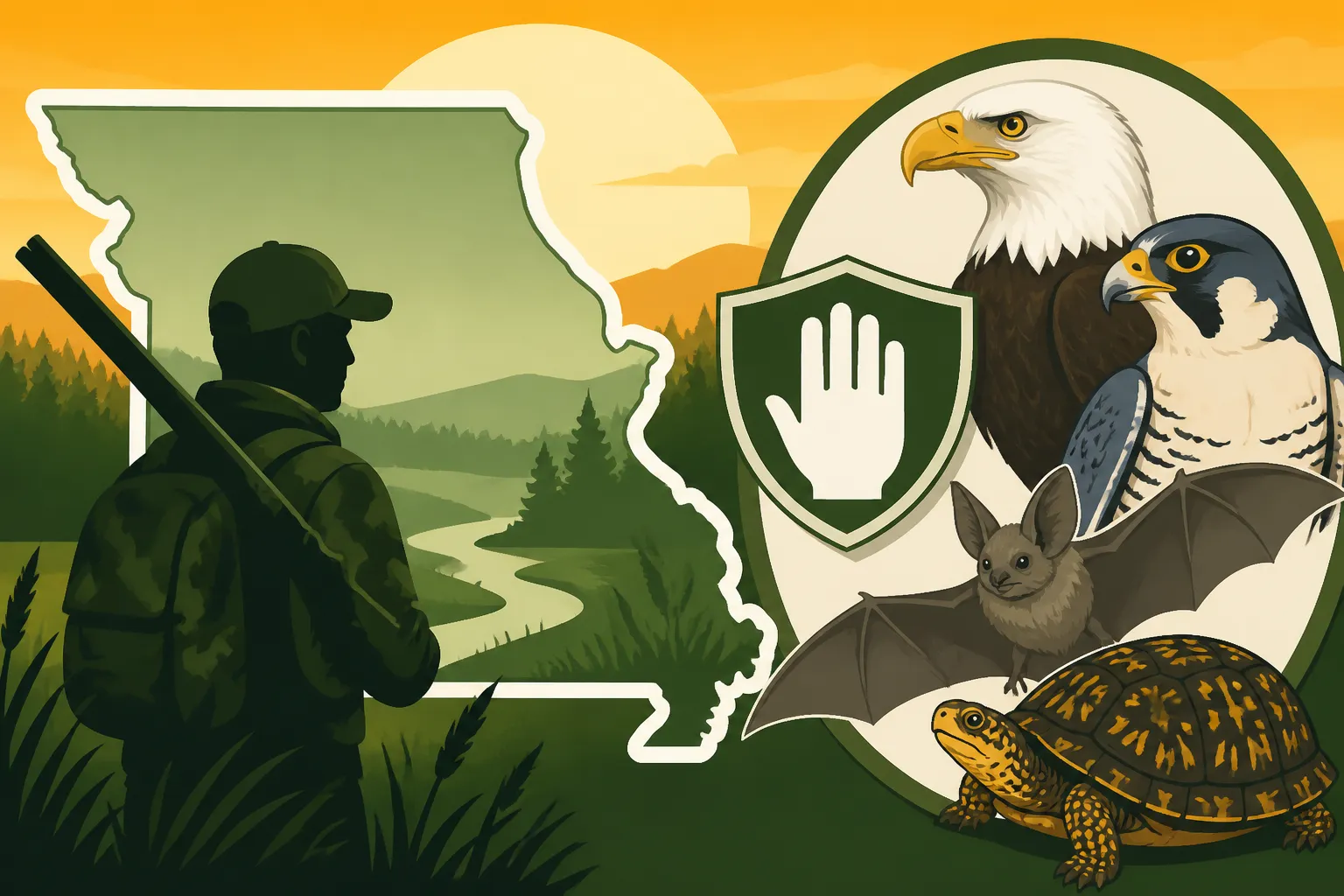
Protected Species Hunters Should Know
There's nothing quite like the thrill of being out in the Missouri woods or fields, knowing a beautiful buck or a plump gobbler could step into your sights at any moment. But with that excitement comes a tremendous responsibility: knowing precisely what you're allowed to harvest and, just as crucially, what you absolutely cannot. It's a common fear for many hunters, especially newer ones, to accidentally misidentify an animal, and the consequences can be serious. This guide is here to walk you through the key protected species in Missouri that every hunter needs to be aware of, helping you confidently identify your target and avoid any costly mistakes.
Why Knowing Protected Species Matters for Every Missouri Hunter
It's easy to get tunnel vision when you're focused on game animals, but a truly ethical and successful hunter understands the broader ecosystem. Knowing the rules isn't just about avoiding a ticket; it's about being a good steward of the land and its wildlife, ensuring hunting traditions continue for generations. Misidentification can happen to anyone, but armed with the right knowledge, you can mitigate that risk significantly.
The Ethical Hunter's Responsibility
Hunting isn't just a pastime; it's a deep connection to nature and a profound responsibility. When we choose to pursue game, we're also agreeing to be guardians of the wild. This means understanding the roles different species play in the environment and respecting those that are protected by law. Think about it: our hunting heritage relies on public perception, and nothing damages that perception faster than news of a protected animal being mistakenly taken. It’s on each of us to uphold the highest standards of ethics and demonstrate our commitment to conservation. This commitment extends beyond our immediate hunt; it influences how the public views all hunters and our efforts in wildlife management.
Legal Consequences of Misidentification
Let's not mince words: making a mistake can be incredibly costly. The Missouri Department of Conservation (MDC) takes violations concerning protected species very seriously. Depending on the species and the circumstances, you could be looking at hefty fines, the loss of your hunting privileges for years, or even criminal charges. Imagine having your hunting license revoked, unable to participate in the seasons you look forward to all year, all because you didn't take an extra second to confirm your target. It's a devastating blow that can be entirely avoided with due diligence. Enforcement agents are out there, and they're diligent. Don't let a moment of uncertainty turn into years of regret.
Beyond Game Animals
When we think "hunting," our minds naturally go to deer, turkeys, ducks, and rabbits. But the Missouri landscape is teeming with other incredible creatures that, while perhaps not traditional game, are vital to the ecosystem and deserve our respect and protection. Many species are protected under state and federal laws, not because they are endangered (though some are), but because they are simply not designated as huntable game. This includes everything from songbirds to certain furbearers, and birds of prey. It's not just about what's illegal to shoot; it's about what shouldn't be shot. A big part of the hunting experience is observing all wildlife, not just the species we carry tags for.
Common Protected Species Hunters Might Encounter
Missouri is incredibly diverse, and that means a wide array of wildlife, some of which can be tricky to distinguish from game animals, especially in low light or dense cover. Knowing what to look for can prevent a serious mistake.
Birds of Prey and Waterfowl Look-alikes
This is a category where misidentification can happen quickly, often due to excitement or poor lighting conditions.
- Birds of Prey: Think about hawks and owls. Missouri is home to many species, and all birds of prey are federally protected. You absolutely cannot hunt them. Sometimes, especially in thick timber, a turkey hunter might glimpse a large bird swooping through the trees and mistakenly assume it's a gobbler. Raptors often have broad wings, powerful flight, and can appear quite large. While their general shape might, for a fleeting moment, resemble a turkey, their flight pattern, feathering, and often hooked beaks are dead giveaways. Take that extra second to really look. A great horned owl sitting on a limb at dusk might look like a dark, bulky target, but their silent flight and distinct hoot are not turkey sounds.
- Waterfowl: While Missouri offers fantastic duck and goose hunting, thanks to the Missouri Waterfowl Seasons and Duck Zones, there are many species of non-game waterfowl and migratory birds that are protected. For instance, coots are often found alongside ducks, but they have a distinct bill and behavior, and bag limits are typically separate or very specific. Swans, particularly Trumpeter Swans, are majestic birds that are federally protected. They are much larger than any goose you'd typically hunt and have pure white plumage. Even within huntable species, there are daily bag limits and species-specific restrictions (e.g., specific limits on mallards within the overall Missouri Duck Daily Bag Limit), so accurate identification of all birds in a flock is paramount. Don't assume every brown bird flushing from the marsh is a duck you can shoot. Invest in a good waterfowl identification guide, and spend time studying before the season, perhaps even using a mapping tool like GoHunt to scout wetland areas and understand the common species present.
Missouri's Returning Large Carnivores
This is perhaps one of the most exciting, and sometimes unnerving, developments in Missouri wildlife: the return of larger, protected predators.
- Black Bears: Yes, Black Bears Returning to Missouri is a real thing, and their population is growing. While a limited hunting season exists in some states, in Missouri, black bears are a protected species. They are generally shy and reclusive, but encounters are becoming more common, particularly in the Ozarks. A hunter sitting in a deer stand might see a dark shape moving through the underbrush and, in their excitement, mistake it for a feral hog, especially if it's a smaller bear. However, bears have a very distinct lumbering gait, a different head shape, and often a shoulder hump. Feral hogs are typically more lean, have a longer snout, and their movements are different. If you see a black bear, enjoy the rare sighting, but absolutely do not shoot.
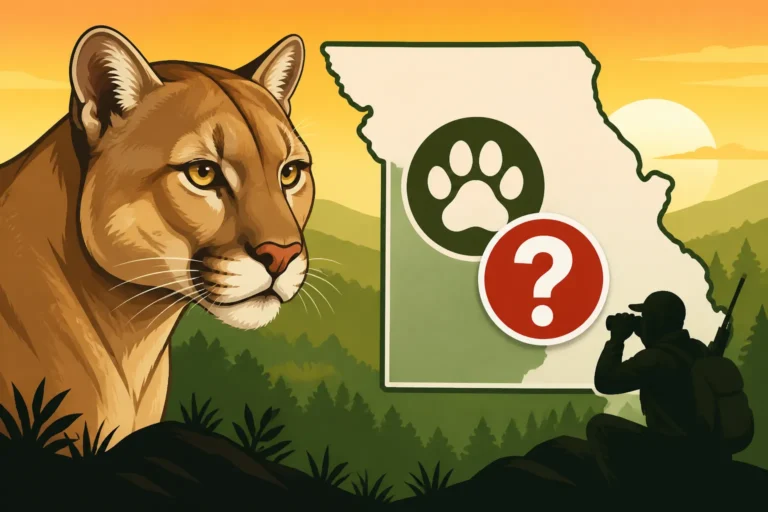
- Mountain Lions: While there is no evidence of a breeding population, Missouri Mountain Lion Confirmations do occur occasionally, usually young males dispersing from western states. Mountain lions are federally protected wherever they exist. Seeing one is an extremely rare privilege. There is virtually no chance of mistaking a mountain lion for a game animal. Their sleek, muscular bodies, long tails, and tawny color are unmistakable. If you are fortunate enough to see one, remember it is not a target.
Other Mammals and Small Game
Even among smaller animals, careful identification is critical.
- Bobcats: Missouri does have a bobcat trapping and hunting season for furbearers, but it's specific and requires permits and immediate tagging. They are not game animals in the same vein as deer or turkeys. Their secretive nature means they are rarely seen, but a glimpse could lead to confusion. They are much larger than a housecat, with a short, "bobbed" tail. If you encounter one during a deer hunt, understand it's a highly regulated species, and without the proper permits and specific season, it's off-limits.
- River Otters: Missouri's river otter population has made a remarkable comeback, a true conservation success story. They are beautiful, playful animals, but they are also a regulated furbearer, primarily managed through trapping seasons. You won't typically encounter them in a deer stand, but if you're hunting along waterways, it's worth knowing that they are not a general small game target.
- Squirrels and Rabbits: While Squirrel and Rabbit Hunting in Missouri are popular, there are certain species that might be confused or are protected. For example, endangered Indiana bats or gray bats often roost in caves and can be mistaken for other small mammals if you're not paying attention in specific habitats. More broadly, there are numerous non-game rodent and small mammal species that are never legal to hunt. Always be sure of your target and that it's a legal game species before pulling the trigger.
How to Positively Identify Your Target (and Avoid Mistakes)
Avoiding mistakes isn't about luck; it's about preparation, careful observation, and a commitment to ethical hunting practices. You've got the power to ensure every hunt is responsible and enjoyable.
Study the Regulations and Field Guides
Your absolute first line of defense is knowledge. Before every season, even if you’ve hunted for decades, you must read the current Missouri hunting regulations. These aren't just dry legal documents; they are your guide to what's legal, what's not, and the specific seasons, limits, and methods for each species. Pay close attention to the species-specific rules and any changes from previous years. The MDC's online resources and printed booklets are invaluable.
Beyond the regulations, invest in high-quality field guides for birds, mammals, and even reptiles and amphibians found in Missouri. Spend time flipping through them, looking at the distinguishing features, and understanding habitat preferences. The more familiar you are with all the wildlife in your hunting area, the less likely you are to make a misidentification. Many hunters rely on digital apps, but a physical guide can be a great backup when cell service is spotty in the Ozarks.
"When in Doubt, Don't Shoot"
This is perhaps the single most important rule in ethical hunting, and it applies to every situation, every animal, every time. If you have even a flicker of doubt about what you're seeing—whether it's the species, the gender, the antler size, or even the background—do not take the shot. No trophy, no amount of venison, is worth violating the law or, more importantly, violating your own ethical code.
Take a deep breath. Lower your weapon. Grab your Binocular Choice for Missouri Whitetails and get a better look. Wait for clearer light. Wait for the animal to move into a position where you can confirm every detail. Often, that extra minute of patience will clarify the situation, either confirming your target or revealing it to be a protected species or an illegal harvest. This discipline is a hallmark of a truly skilled hunter.
Utilizing Technology and Resources
We live in an age where technology can be a fantastic aid to responsible hunting. Don't be afraid to use it.
- Mapping Apps: Tools like GoHunt or similar mapping apps can be incredibly useful. They often have layers that show public land boundaries, habitat types, and even species distribution maps. While they won't identify an animal in real-time, they can help you understand what species are likely to be in a given area based on its geography and cover. For example, knowing you're in an area prone to bear sightings might make you extra cautious.
- The Missouri Conservation Atlas: The Missouri Conservation Atlas is a powerful resource for scouting and understanding specific areas. It provides detailed maps and information about public lands, which can help you anticipate the wildlife you might encounter.
- Online Resources and Forums: The MDC website is a treasure trove of information, including species identification guides, conservation area rules, and annual harvest reports. Participate in online hunting forums (reputable ones, of course) where experienced hunters share insights and answer questions. Sometimes, seeing a photograph or hearing a description from another hunter can help solidify your identification skills.
- Hunter Education: For newer hunters, or those needing a refresher, Missouri's hunter education courses are designed to teach safe and responsible hunting practices, including species identification. Even if you're exempt from the Missouri Hunter Education Requirements, it's a valuable resource. Understanding these basics ensures you are prepared for almost any scenario in the field.
| Species Category | Game Examples | Protected Examples (or highly regulated) | Key Identification Tip |
|---|---|---|---|
| Birds of Prey | N/A (Always Protected) | Eagles, Hawks, Owls, Vultures | Distinct hooked beaks, talons, specific flight patterns. |
| Waterfowl | Mallards, Canada Geese | Trumpeter Swans, specific shorebirds | Swans are pure white, much larger than geese. Study specific bag limits on ducks and geese. |
| Large Carnivores | N/A (Always Protected in MO) | Black Bears, Mountain Lions | Bears have distinct gait and head shape; mountain lions have long tails and tawny coats. |
| Furbearers/Small Mammals | Cottontail Rabbit, Fox Squirrel | River Otter, Bobcat (highly regulated) | Otters are sleek, aquatic; bobcats have a "bobbed" tail and spotted fur. |
| Ungulates | White-tailed Deer | Elk (lottery only, very specific season) | Elk are significantly larger than deer with different antler structure. |
Always remember, the goal is not just to harvest game, but to do so responsibly and ethically, respecting all of Missouri's incredible wildlife. The more you know, the better hunter you become.
Disclaimer
This article is for general informational purposes only and does not constitute professional advice. Laws, prices and regulations vary by location and change over time. Consult a qualified professional for guidance on your specific situation.