Fogged Optics in Missouri Humidity
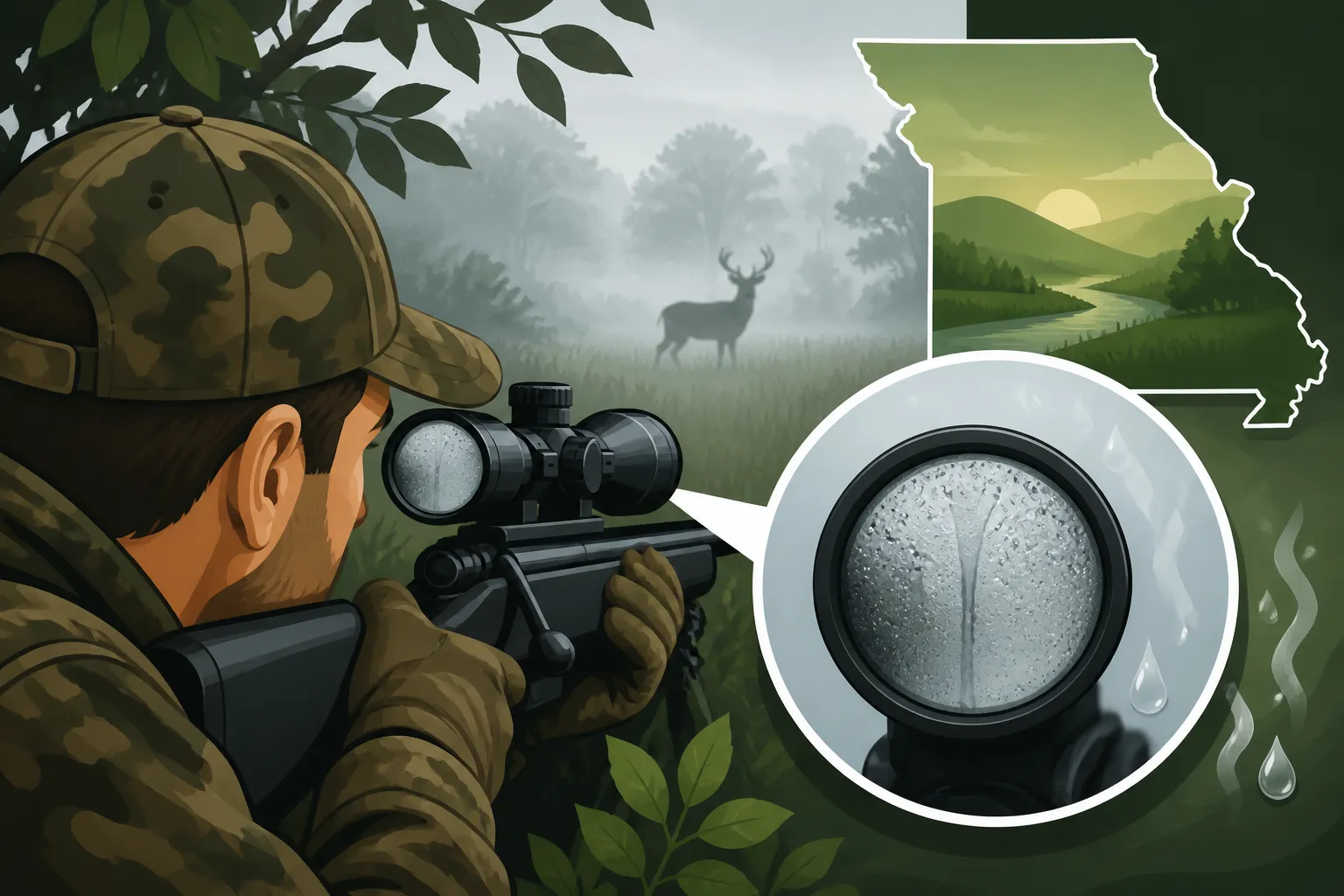
There's nothing quite as frustrating as climbing into your stand well before dawn, settling in, and then, just as legal light breaks and you try to pick out that buck ghosting through the timber, your binoculars or scope immediately fog over. In Missouri, where our seasons often swing wildly from crisp, cool mornings to surprisingly humid, warm afternoons – sometimes all in the same day – fogged optics aren't just an annoyance; they can truly ruin a shot opportunity and throw off your entire hunt. This guide will dive deep into why this happens, how to prevent it, and what to do when your view turns cloudy in the crucial moments.
The Science Behind the Steam: Why Optics Fog Up in Missouri
Let's face it, Missouri's weather can be a real character. One minute it's feeling like deep winter, the next it's mild and damp. This fickle nature is the primary culprit behind those infuriatingly fogged lenses, and understanding the science behind it is the first step to beating it.
Understanding Condensation and the Dew Point
At its core, fogging is simple condensation. It happens when warm, moist air comes into contact with a cold surface. Think about a cold glass of sweet tea on a hot summer day – the outside of the glass gets covered in water droplets. Your optics are doing the same thing. The air around us always holds a certain amount of invisible water vapor. The "dew point" is the temperature at which that air, for a given amount of moisture, becomes saturated and the water vapor starts to condense into liquid water.
In Missouri, especially during our transitional hunting seasons like early archery or late season muzzleloader hunts that might turn mild, we frequently encounter conditions where the temperature of your optics drops below the dew point of the ambient air. You carry your binoculars out in the cool night air, they get cold, and then as the sun rises or you move into a warmer, more sheltered area, the air temperature around them increases, but the optics themselves are still cold. Boom: instant fog.
Temperature Swings and Humidity: Missouri's Perfect Storm
Our state's geographic location means we often sit right in the path of clashing air masses. We get cold, dry air from the north, and warm, moist air from the Gulf of Mexico. When these mix, especially over our abundant timber, rivers, and farm fields, the humidity can become significant, even when it doesn't feel overtly "muggy." This is particularly true in our river bottoms and low-lying areas. You might be walking a ridge in the Ozarks that feels dry, but then drop down into a creek bottom where the air is noticeably heavier with moisture. This creates microclimates that are ripe for fogging.
Consider a typical November morning during Missouri's Eleven-Day November Firearms Deer Season. You leave the truck when it's 28 degrees Fahrenheit, and your rifle scope is just as cold. You walk a half-mile to your stand, getting your blood pumping, and as you settle in, the thermometer might actually start to creep up a few degrees, or perhaps a warm front is pushing in. The critical factor isn't just the overall temperature, but the differential between your cold glass and the surrounding humid air. A sudden gust of wind carrying moist air over a super-cooled lens is all it takes. This is also why it's so common during the early archery season, where mornings can be quite cool, but the overall atmospheric humidity is still high from summer. Knowing this, when you're Scouting Missouri Public Land Before Season, it’s wise to pay attention to these environmental shifts, especially if you're using a mapping tool like GoHunt to study topographical changes and potential thermal sinks.
Preventative Power: Preparing Your Optics Before the Hunt
The best defense against fogged optics is a good offense. Taking a few proactive steps before you even leave for the hunt can dramatically reduce your chances of a frustrating, vision-obscuring encounter in the field.
Chemical Treatments and Coatings: What Works, What Doesn't
There's a whole world of anti-fog products out there, from wipes to sprays to lens coatings. Many modern, high-quality optics come with proprietary anti-fog coatings from the factory, which are excellent at repelling water and preventing condensation. However, even these can be overwhelmed in extreme conditions or if they're not properly maintained.
For external surfaces, temporary anti-fog treatments can be a lifesaver. These usually work by creating a hydrophobic (water-repelling) layer on the lens, which either prevents condensation from forming as droplets or causes it to spread out evenly into a thin, transparent film rather than obscuring your view. Think about Rain-X on your windshield; it doesn't stop rain, but it helps it bead up and run off.
- Sprays and Wipes: Many hunters carry small bottles of anti-fog spray or individually wrapped anti-fog wipes in their packs. These need to be applied to clean lenses and allowed to dry or buffed lightly according to instructions. The key is to apply them before you go into the cold, damp environment. Reapplication might be necessary, especially if you handle the lenses or they get wet.
- Homemade Solutions: Some hunters swear by things like a tiny dab of dish soap or even saliva, buffed until clear. While these can offer a quick fix in a pinch, they can also leave streaks, attract dust, and potentially damage optical coatings over time. It's generally best to stick with products specifically designed for optics.
- The GoHunt Advantage: While GoHunt itself isn't an optics company, utilizing its detailed mapping to understand terrain and predict areas of high humidity (like creek bottoms or north-facing slopes that hold moisture longer) can help you anticipate where fogging is most likely, prompting you to apply your anti-fog treatment more diligently.
A quick note on interior fogging: if your optics are fogging inside the lens assembly, no external treatment will help. This usually indicates a compromised seal, and the unit will need professional service. More on that later.
Environmental Acclimation: The Slow and Steady Approach
One of the most effective, yet often overlooked, preventative measures is simply allowing your optics to slowly acclimate to the ambient temperature. This minimizes the sudden temperature differential that causes condensation.
- The Cold Car Trick: If you plan to hunt in cold weather, leave your binoculars and scope in your vehicle overnight, provided it's safely locked and protected. This allows them to gradually cool down with the vehicle, rather than going from a warm house to freezing outdoor air in moments.
- The Warm Jacket: Conversely, if you're heading out from a warm camp into a cold, damp environment, keep your binoculars tucked inside your jacket or pack until you get to your stand. The goal is to keep them as close to your body temperature as possible, slowly allowing them to cool rather than shocking them with frigid air. You might be bundled up for a Cold Weather Sitting Strategy, and keeping your optics close to your body heat will benefit them too.
- The Porch/Garage: For overnight acclimation, leaving your gear in a cooler garage or on a screened porch can work wonders. This allows the temperature of the optics to equalize with the outdoor air gradually, preventing that drastic temperature swing.
Proper Storage: Keeping Them Dry and Ready
Humidity doesn't just cause immediate fogging; it can also contribute to long-term issues like mold or mildew inside your optics if they're stored improperly.
- Dessicants: Consider storing your optics with desiccant packs (like those small silica gel packets that come with new shoes or electronics). These absorb moisture from the air within a sealed container, keeping your optics dry and ready for use. Replace them periodically or "recharge" them by baking them at a low temperature if they're reusable.
- Airtight Containers: For long-term storage, an airtight container with desiccant can protect against ambient humidity. However, be careful not to create a sealed environment if the optics are already cold and moist, as this can trap condensation.
- Avoid Drastic Changes: After a hunt in the rain or heavy dew, allow your optics to dry naturally in a stable, room-temperature environment before putting them away in an airtight case. Don't immediately bring them into a super-heated house if they've been soaking wet and cold. Let them stabilize. This kind of attention to detail is just as important as choosing the right Rain Gear for an Ozark Downpour to keep yourself dry.
On-the-Fly Fixes: When the Fog Hits in the Field
Despite your best efforts, sometimes fogging happens. When that happens in the heat of the moment, you need to react quickly and effectively without scaring off your target.
Quick Wipes and Breathing Techniques: Temporary Relief
These are your immediate, go-to solutions for external lens fog.
- Lens Cloths: Always carry a clean, soft microfiber lens cloth. Breathe gently onto the lens, and then wipe quickly and carefully to remove the condensation. The breath warms the lens slightly, and the cloth removes the moisture. Avoid using your shirt sleeve, tissue, or anything abrasive, as this can scratch delicate lens coatings.
- Anti-Fog Cloths: Some specialized lens cloths are impregnated with anti-fogging agents. These can be very effective for a quick clear-up and can leave behind a temporary preventative layer.
- The No-Breath Approach: If the fog is light, sometimes simply aiming the optics away from your face for a few seconds can allow the moisture to evaporate naturally as the lens temperature begins to equalize with the air, especially if there's a slight breeze. This is preferable if you can manage it, as any wiping can introduce dust or streaks.
| Method | Pros | Cons | Best Use Case |
|---|---|---|---|
| Anti-Fog Spray | Creates durable, clear film | Requires pre-application, can streak if rushed | Proactive, pre-hunt application for external lenses |
| Lens Cloth | Quick, easy, removes existing fog | Doesn't prevent future fogging, can introduce dust | Immediate in-field clearing of external fog |
| Acclimation | Prevents fogging from occurring at all | Requires planning, not always feasible | Long-term prevention for major temperature swings |
| Desiccant Pack | Keeps optics dry in storage | Not for in-field use, only storage | Protection against long-term moisture damage |
Strategic Positioning: Using Nature to Your Advantage
Sometimes, the best solution isn't a product, but a change in your own position or strategy.
- Elevate and Ventilate: If you're in a low-lying, damp area where the air is heavy, consider if you can subtly shift your position to slightly higher ground or a spot with more airflow. Even a few feet can make a difference in moving out of a pocket of dense, humid air.
- Tree/Cover Protection: If you're sitting in a treestand, the branches above you can offer some protection from dew or light rain, which can exacerbate fogging. Similarly, if you're hunting out of a ground blind, ensure good ventilation to prevent moisture build-up inside the blind itself, which can fog your Ground Blinds on Crop Field Edges in a hurry.
- Body Heat: As mentioned before, keeping your binoculars or rangefinder tucked inside your jacket or chest harness when not actively using them can transfer some of your body heat, keeping them warmer and closer to the ambient air temperature, reducing the likelihood of a sudden fog-up. This is particularly important when considering things like how Missouri Hunter Orange Square Inches might be incorporated into your layering system, as the outer layer protects your core and, by extension, your gear.
Dealing with Interior Fogging: The Worst-Case Scenario
This is the kind of fogging that makes you want to throw your optics across the field. If you look through your scope or binoculars and see a hazy, cloudy film inside the lens system, you have a serious problem.
- Cause: Interior fogging means the seals of your optic have been compromised, allowing moisture to get inside. This can happen due to impact, extreme temperature changes causing seals to contract and expand, or simply age and wear. Most quality optics today are "nitrogen purged" or "argon purged" and O-ring sealed specifically to prevent this, as inert gases don't contain moisture.
- No Quick Fix: Unfortunately, there is no field-expedient way to fix interior fogging. Do not attempt to take your optics apart, as this will almost certainly void your warranty and likely cause more damage.
- Professional Repair: Your only real solution is to send the optic back to the manufacturer for repair. Reputable brands usually have excellent warranty programs for this exact issue. This is why investing in quality, nitrogen-purged optics is so crucial for hunting in a diverse climate like Missouri's.
Optics Selection and Maintenance: Long-Term Solutions
The choices you make when buying optics, and how you care for them, play a huge role in preventing fogging issues throughout your hunting career.
Nitrogen Purging and O-Ring Seals: What to Look For
These two features are non-negotiables for reliable hunting optics, especially in a place like Missouri.
- Nitrogen or Argon Purging: Manufacturers fill the optical tubes with inert gases like nitrogen or argon, which are completely devoid of moisture. This prevents any internal condensation from forming. As you research different options for Binocular Choice for Missouri Whitetails or consider Low-Light Performance in a Scope, always check for this feature.
- O-Ring Sealing: The optical elements are then sealed with O-rings, which create a waterproof and airtight barrier. This keeps the inert gas in and moisture, dust, and debris out. These seals are critical for maintaining the integrity of the purging.
- Waterproof and Fogproof Ratings: Look for optics explicitly advertised as "waterproof" and "fogproof." These terms indicate that the manufacturer has used both purging and sealing to protect the internal components. It's often worth paying a little more for these features, as they guarantee reliability when you need it most. Imagine you're out Hunting the Peak Rut Week in Missouri and that dream buck steps out, but your view is completely obscured internally – it's a terrible feeling that could have been avoided.
Lens Care and Cleaning: Avoiding Damage While Clearing Fog
Proper lens care is crucial not just for clear viewing, but also for maintaining the integrity of any anti-fog coatings and preventing future issues.
- Cleanliness is Key: Dust, dirt, and oil on your lenses can trap moisture and make fogging worse. Always start with clean lenses. Use a soft lens brush or compressed air to remove loose particles before wiping.
- Proper Wiping Technique: When wiping, use a dedicated microfiber lens cloth. Start in the center and work your way out in a circular motion. If you have a particularly stubborn smudge, a single drop of lens cleaning fluid specifically designed for optics can help, but always apply it to the cloth first, not directly to the lens.
- Protective Covers: Keep your lens caps or objective covers on your optics whenever they're not in immediate use. This protects them from dust, scratches, and also helps to slow down temperature changes. Some hunters even use neoprene covers for their scopes for added insulation.
Beyond the Glass: Other Gear that Helps with Fog Management
It's not just about the optics themselves. Other pieces of gear can indirectly help you manage moisture and prevent fogging.
- Chest Harnesses: A good binocular chest harness keeps your binoculars secure and close to your body. This not only makes them easily accessible but also allows them to stay warmer, closer to your core temperature, reducing the likelihood of a sudden temperature shock when you pull them out.
- Lens Pens and Cleaning Kits: Carrying a small lens pen or a compact cleaning kit in your pack is a smart move. These typically include a brush, a micro-fiber tip, and sometimes a small bottle of cleaning fluid. They take up minimal space but can be invaluable for quickly clearing a lens.
- Weather Awareness: Pay attention to the forecast, especially the dew point, not just the temperature. High humidity combined with dropping temperatures is your enemy. If you're using an app like GoHunt for planning, you can often cross-reference it with a detailed weather app to get a better understanding of how moisture will behave in your specific hunting area. Understanding the Wind and Thermals in Ozark Hills is just as important for scent control as it is for predicting where pockets of humid air might settle.
- Ventilation in Blinds: If hunting from an enclosed ground blind, make sure to ventilate it well. Your own breath and body heat can quickly raise the humidity inside the blind, turning it into a fog chamber for your optics. Open windows or vents if possible.
Taking the time to understand the challenges Missouri's climate presents, preparing your gear appropriately, and knowing how to react in the field will keep your view crystal clear when that trophy buck or gobbler finally steps into your sights.
Disclaimer
This article is for general informational purposes only and does not constitute professional advice. Laws, prices and regulations vary by location and change over time. Consult a qualified professional for guidance on your specific situation.