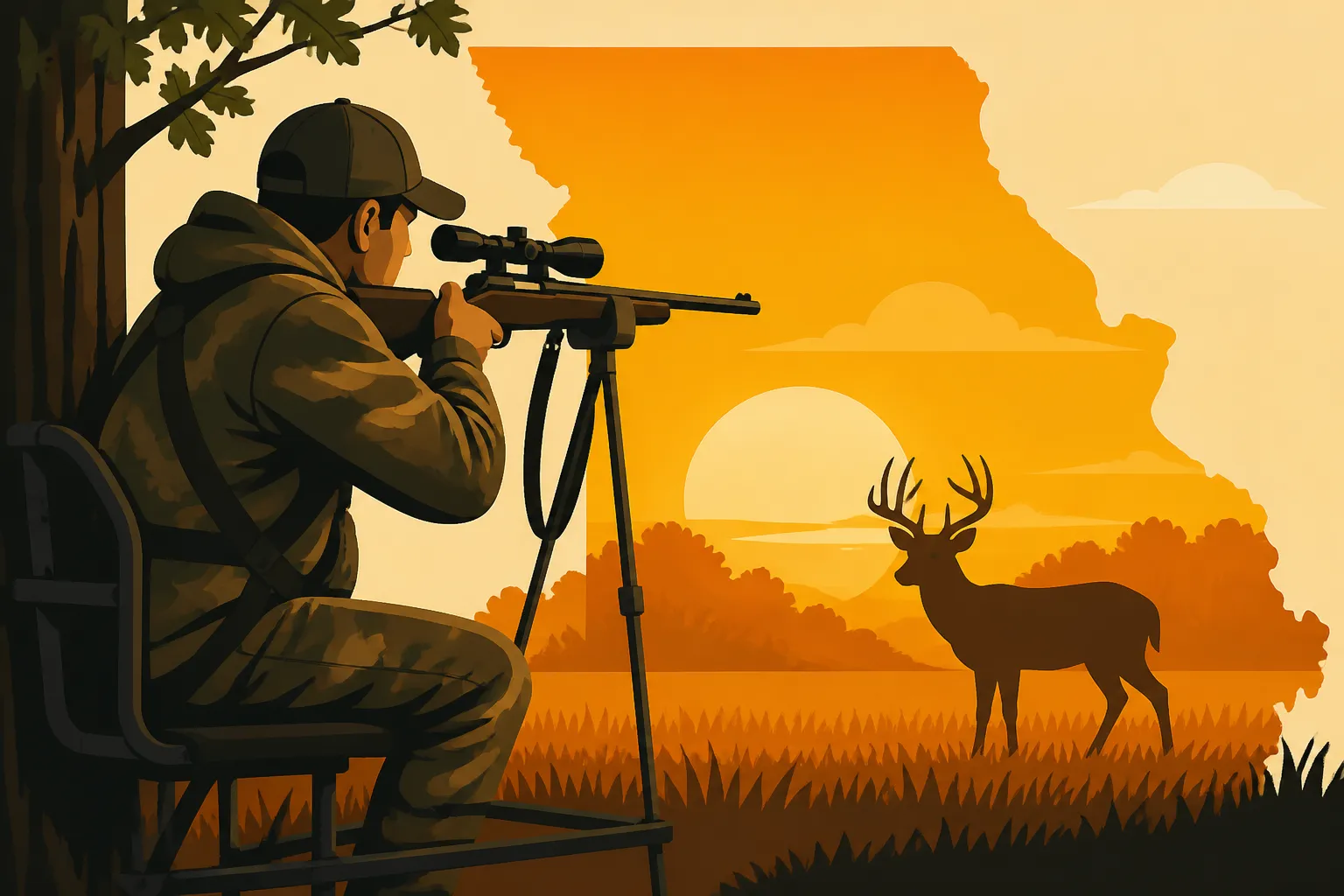
Shooting Sticks in a Stand
One of the most frustrating things for a deer hunter sitting in a stand, whether it's a trusty ladder stand overlooking a soybean field or a lightweight hang-on tucked deep in the Ozarks, is when that perfect buck steps out, and you suddenly realize you don't have a stable shooting rest. All that scouting, all that patience, and the shot feels wobbly, leaving you questioning your accuracy. This guide is all about how to use shooting sticks effectively from a stand, giving you the rock-solid stability you need for an ethical, confident shot when it matters most in the Missouri woods.
The Challenge of Stability from a Stand
Hunting from an elevated position offers a unique advantage, providing a wider view and often putting you above a deer's primary line of sight. However, it also introduces its own set of challenges, especially when it comes to maintaining a steady aim. Many hunters underestimate how much motion can occur when trying to make a precise shot from what feels like a solid platform.
Why Stand Stability Matters and Often Lacks
Let's be real, even the most expensive, well-built treestand has some give. A lightweight hang-on stand, which many of us rely on for public land hunts when we're moving around a lot, can sway with every subtle shift of weight, especially if the tree isn't perfectly straight or the ground is uneven. Ladder stands, while generally more stable, can still transmit movement if you shift your feet or adjust your position too quickly. Factor in the adrenaline surge when a mature buck finally steps into your shooting lane, and suddenly that small wobble feels like an earthquake. This inherent instability is a major reason why shots can go awry, and it’s something every hunter grapples with. In Missouri's diverse terrain, from the rolling hills of northern farm country to the steep, rocky hollows of the Ozarks, you might be shooting across a wide-open bean field one day and through a dense cedar thicket the next, requiring different levels of precision and stability.
Moreover, our bodies, especially when perched in a tree, are naturally prone to subtle tremors. Holding a rifle or crossbow steady for an extended period, perhaps waiting for a deer to clear brush or turn broadside, is incredibly difficult. Without a solid rest, even a slight shake can result in a significant shift in point of impact downrange. This isn't just about hitting the target; it's about making a clean, ethical kill shot. Whether you're a seasoned veteran with decades of Missouri's November Firearms Portion hunts under your belt or someone just starting their deer hunting journey, an unstable shooting platform can undermine your confidence and your accuracy.
Common Stand Shooting Positions and Their Pitfalls
Over the years, we've all tried various ways to get steady in a stand, and most come with their own drawbacks. The simplest, and often riskiest, is the freehand shot. It's great for speed, necessary for those truly unexpected, fleeting opportunities, but it sacrifices precision. Unless the deer is practically under your stand and completely unaware, a freehand shot at anything beyond close range is a gamble, especially with a nervous system pumping adrenaline.
Then there's bracing against the tree itself. This can offer decent stability, but it severely limits your range of motion. If the deer isn't exactly where the tree allows you to brace, you're forced to make awkward adjustments, which often result in noise or unnatural movement. It can also be uncomfortable, leading to fatigue and further instability. Similarly, many stands have shooting rails, which seem like a perfect solution. However, these rails are often at an inconvenient height, forcing you to scrunch down or stretch up, creating an unnatural posture. They can also be incredibly noisy if your rifle's forend slides across metal, sending a jarring sound through the quiet woods.
All these common methods often force hunters to compromise on either accuracy, comfort, or stealth. They can lead to rushed shots, missed opportunities, or, worse, poorly placed shots that result in a lost animal. Imagine being set up for Hunting a Missouri Fencerow Between Fields and realizing the only steady rest is a noisy metal rail that's too high for a comfortable shot. This is where dedicated shooting sticks truly shine, eliminating these common pitfalls and providing a reliable solution.
Why Shooting Sticks Are a Game-Changer in Your Stand
When you introduce shooting sticks to your treestand setup, you’re not just adding another piece of gear; you’re fundamentally transforming your ability to make precise, ethical shots. They provide a level of stability that most hunters simply can't achieve consistently with improvisational rests or freehand shooting, making them an invaluable tool for Missouri's diverse hunting seasons.
Enhanced Accuracy and Confidence
The primary benefit of shooting sticks is the dramatic improvement in accuracy they offer. By creating a stable, repeatable point of contact for your firearm, they virtually eliminate vertical and horizontal movement that plagues unassisted shots. Think about it: when your rifle or crossbow is resting securely in the cradle of the sticks, the only variable left is your trigger control and breath. This translates directly to tighter shot groups, which is crucial for making those clean, humane kills. For hunters using rifles during Missouri's November Firearms Portion or even crossbows during Alternative Methods Deer Hunting in Missouri, the ability to steady your shot can extend your effective range with confidence, especially in those low-light conditions when a deer might step out just as legal shooting hours begin or end.
The psychological boost is just as significant. Knowing you have a solid rest available instills a deep sense of confidence. When that big buck finally emerges from the timber, instead of a wave of panic about unsteady hands, you feel prepared. This confidence helps manage the adrenaline, allows for calmer breathing, and leads to a smoother trigger squeeze, all contributing to a better shot. It’s not about taking reckless long shots, but about maximizing your precision on ethical shots you might have otherwise questioned. When you're spending hours on stand, patiently waiting, this peace of mind is invaluable.
Adaptability to Diverse Shooting Scenarios
Missouri’s hunting landscape is incredibly varied, and so are the shot opportunities it presents. One moment you might be looking at a deer at 20 yards in dense timber, and the next you might need to take a shot at 100 yards across a field. Shooting sticks, particularly adjustable models, are designed to adapt to these fluid situations with ease. They can be quickly adjusted to suit your height, whether you're sitting in a cramped hang-on stand or standing tall in a ladder stand. This adjustability means you can maintain a comfortable, stable shooting position regardless of your stand's design or the specific angle of the shot.
Consider a scenario where you're Hunting a Timbered Draw in Row-Crop Country. A deer might appear on the far side of a cut cornfield, requiring a longer shot, or it might materialize directly below your stand as it follows the contours of the draw. With adjustable sticks, you can easily shift from a seated position to standing, and quickly modify the height to accommodate shooting downward into the draw or out across the field. This adaptability is particularly useful during the rut, when deer movement can be unpredictable and fast, requiring quick adjustments to shot angles. For hunters using a brand like GoHunt, known for their adjustable and versatile hunting accessories, these types of dynamic situations are precisely what their gear is built for.
Choosing and Using Shooting Sticks in a Stand
Selecting the right shooting sticks and integrating them seamlessly into your stand setup is key to unlocking their full potential. It's not a one-size-fits-all situation; different sticks excel in different scenarios, and your personal hunting style and stand preference will play a big role in what works best for you.
Types of Sticks and Their Stand Suitability
When it comes to shooting sticks, you essentially have three main configurations: monopods, bipods, and tripods. Each has its pros and cons, especially when used from an elevated stand.
- Monopods: These are single-leg sticks, offering the least amount of stability but the most portability and speed. They're excellent for quick, upright shots where you need a little extra support but still want the flexibility to swing your weapon freely. From a stand, a monopod is best for situations where you might need to stand up and shoot quickly, providing a modest improvement over freehand without being cumbersome. They don't offer the rock-solid stability for very long shots, but for those closer, fast-moving deer, they can be a real asset.
- Bipods: Featuring two legs, bipods provide significantly more stability than monopods. They come in various forms: some attach directly to your rifle's sling swivel or forend (like a Harris-style bipod), while others are free-standing units with a V-rest at the top. For stand hunting, a free-standing bipod that can be quickly deployed and adjusted is often preferable. An attached bipod can be awkward in the tight confines of a treestand, potentially getting snagged or limiting your movement. Free-standing bipods offer a good balance of stability and maneuverability, making them a popular choice for many stand hunters. They reduce most of the vertical movement and some horizontal sway, making those 50-100 yard shots much more manageable.
- Tripods: These three-legged systems offer the ultimate in stability, virtually eliminating all weapon movement. They are ideal for longer-range shooting or when you need to hold your aim steady for an extended period, such as waiting for a deer to pause or clear obstructions. However, their bulk and potential for noise make them the most challenging to use in a typical treestand. They're often better suited for Ground Blinds on Crop Field Edges where you have more space. If you do opt for a tripod in a stand, choose a compact, lightweight model with legs that can be quickly folded and secured. Brands like
GoHuntoften have versatile tripod systems that are designed to be as portable and quiet as possible, but you'll still need a spacious stand to make them practical. Materials also play a role: aluminum is sturdy but heavier, while carbon fiber is lighter and quieter but comes with a higher price tag.
Integrating Sticks into Your Stand Setup
Once you've chosen your sticks, the next step is to integrate them smoothly into your hunting routine. The goal is to make them an extension of your setup, not an afterthought you fumble with when a deer appears.
First, pre-set your height. Before the season, or even on a scouting trip, take your sticks to your stand and practice deploying them. Sit or stand in your typical hunting position and adjust the sticks so they're at the perfect height for a comfortable shot. Mark that height, or if they have quick-adjust levers, remember the setting. This prevents you from making noisy adjustments when a deer is nearby. Think about how you’ve optimized your Treestand Setups in Hardwood Timber; your shooting sticks should be part of that optimization.
Second, focus on quiet deployment. Practice taking your sticks out of your pack or off your stand and setting them up without making a sound. Many sticks come with rubberized feet or foam grips to minimize noise. If yours are metal-on-metal, consider adding some athletic tape or camo wrap to silence them. You might also want to practice different approaches for quiet deployment. Maybe they rest against the tree, ready to be picked up, or perhaps they stay strapped to the side of your pack until needed.
Finally, consider placement. Where will you position your sticks for your most likely shot lanes? Will they be to your left, right, or directly in front? Think about your dominant hand and how you naturally swing your weapon. Position them so you can quickly and silently get into a shooting position without having to make large, sweeping movements. You don't want them impeding your entry into the stand or blocking your view.
Practice Makes Perfect: Drills for Stand & Stick Use
Just owning shooting sticks isn't enough; you need to practice with them. Integrating them into your training routine will build muscle memory and confidence, making their use second nature when it counts.
One of the best drills is dry-firing practice from your actual stand, or at least a simulated stand setup at home. Set up your sticks, get into your hunting position, and practice acquiring a target, raising your weapon, settling it into the rest, aiming, and squeezing the trigger (on an unloaded weapon, of course!). Do this repeatedly, visualizing a deer appearing at different angles and distances. This helps you identify any awkward movements or noises before you're in the field.
Next, vary your shot angles. Practice shooting slightly downhill, uphill (if your stand allows), and across level ground. Many hunters get comfortable shooting on flat ranges, but Missouri’s terrain is rarely flat. Simulating these angles with your sticks will highlight how different heights and body positions affect stability. This is particularly useful if you're Hunting Missouri Ridge Saddles and Benches, where angles can change dramatically.
Finally, implement quick deployment drills. Set a timer and practice going from a relaxed, waiting-in-the-stand position to a ready-to-shoot position with your sticks deployed and your weapon shouldered. The faster and quieter you can do this, the more prepared you'll be for those fleeting opportunities. Remember, the goal is to make using the sticks as natural as shouldering your rifle. If you're doing some pre-season Scouting Missouri Public Land Before Season, bring your sticks and practice right there in the timber.
Maximizing Performance: Tips and Tricks
Getting the most out of your shooting sticks from a treestand goes beyond just selecting the right type and practicing. It involves refining your technique, maintaining your gear, and always keeping ethical hunting at the forefront.
Stability Beyond the Sticks
While shooting sticks provide a fantastic foundation for stability, they are not a magic bullet. Your own body mechanics still play a crucial role in maximizing accuracy. Proper body positioning is paramount. Whether sitting or standing, ensure your core is engaged, and you have a stable base. Avoid leaning too far out or twisting your body awkwardly. Breathe naturally, and as you prepare for the shot, control your breathing, taking a slow inhale and exhaling halfway before settling your crosshairs and squeezing the trigger. Even with sticks, a calm, steady body enhances the entire system.
Weight distribution also matters. Try to keep your weight centered and balanced in the stand. If you're using a monopod or bipod, make sure your body is providing the necessary counter-support. For instance, lean slightly into the sticks with your shoulder, creating a more rigid triangle of support. Don't rely on just the sticks to hold everything; become part of the support system.
Finally, don't forget to utilize natural cover or stand structure where it makes sense. Even if you're using shooting sticks, gently resting your elbow against the tree trunk or your shoulder against a sturdy part of the stand can add another layer of stability, especially for those longer holds or in windy conditions. Just be mindful of noise, particularly with metal stands. You’re building multiple points of contact, making your shooting platform as solid as possible. A good sling also helps manage your rifle when it's not on the sticks, keeping it secure and ready for quick deployment.
Maintenance and Considerations
Like any piece of hunting gear, shooting sticks require a little care to perform optimally. Regular checks are essential. Before and after each season, inspect all joints, locks, and rubber feet. Ensure everything is tight and functional. Worn rubber feet can slip on slick surfaces, and loose joints can introduce wobble exactly where you want stability.
Quiet operation is a non-negotiable for hunting. If your sticks develop any squeaks or rattles, address them immediately. A little lubricant on pivot points (if appropriate for the material) or some electrical tape around noisy sections can make a huge difference. Brands like GoHunt often incorporate features specifically designed for quiet use, such as rubber coatings or silent cam locks, but even the best gear needs occasional attention.
Consider weatherproofing. While most modern shooting sticks are built to withstand the elements, it’s a good practice to wipe them down after a wet hunt. Moisture can get into joints and mechanisms, potentially causing corrosion or stiffness over time. Properly dry them before storing.
Lastly, think about transport. How will you carry your sticks to and from your stand silently? Many attach easily to a backpack, while others come with their own carrying case. Practice this as well, ensuring they don't clang against other gear or tree branches as you walk through the woods. You might find a spot to clip them directly to your stand while you ascend and descend, then move them to a more convenient spot once you're seated.
Ethical Considerations and Limitations
Shooting sticks are a powerful tool, but they are not a substitute for ethical hunting practices or knowing your limitations. They enhance your ability to take a steady shot, but they don't magically extend your effective range beyond what you or your equipment are capable of. It’s crucial to know your personal and equipment's limitations. Just because you can hit a target at 200 yards from a bench rest with sticks doesn't mean you should attempt that shot from a swaying treestand in low light on a live animal.
Always prioritize ethical shot selection. Aim for the vital zone, and only take a shot when you are 100% confident it will be a clean, humane kill. Shooting sticks help build that confidence, but they can't make up for a poor angle, an obstructed view, or an animal that is too far away. This is especially true during portions like the Missouri Late Antlerless Portion, where deer might be moving through thicker cover.
Finally, remember to still practice without them occasionally. While sticks are fantastic for stability, sometimes a deer will appear so suddenly that you won't have time to deploy them. Being proficient in both assisted and unassisted shooting positions ensures you're prepared for any scenario the Missouri woods throw at you. Also, always be aware of the Missouri Legal Shooting Hours, as sticks won't make a shot legal if it's too dark.
| Shooting Stick Type | Stability (1-5) | Portability | Stand Suitability | Noise Potential | Best Use Cases in Stand |
|---|---|---|---|---|---|
| Monopod | 2 | Excellent | Quick, light stands | Low | Fast, close-range shots, standing |
| Bipod | 4 | Good | Versatile for most stands | Medium | Mid-range shots, sitting/standing |
| Tripod | 5 | Fair | Spacious, stable stands | High (can be mitigated) | Longer range, extended hold, minimal movement |
Disclaimer
This article is for general informational purposes only and does not constitute professional advice. Laws, prices and regulations vary by location and change over time. Consult a qualified professional for guidance on your specific situation.