Rifle Cases for Travel to Missouri
Traveling to Missouri for a hunting trip with your rifle can feel like navigating a minefield of regulations, not to mention the constant worry about your valuable firearm getting damaged in transit. Whether you’re driving across state lines, flying into Lambert Field in St. Louis, or just heading from your home in Springfield to a deer camp down in the Ozarks, the question of how to properly and legally transport your rifle is always a big one. This guide is here to cut through the confusion and give you the real-world advice you need to choose the right rifle case and handle your firearm transport with confidence, keeping both your gear safe and you on the right side of the law.
Understanding Missouri's Legal Landscape for Firearm Transport
Before you even think about what kind of case to buy, you absolutely have to know the rules of the road – and the skies – when it comes to firearms. Missouri has its own set of laws, and while generally friendly to gun owners, there are specifics to keep in mind, especially if you're traveling from another state or through a maze of jurisdictions.
General Firearm Transport Laws in Missouri
In Missouri, the general philosophy for transporting firearms in a vehicle leans towards safety and avoiding any appearance of intent to use the firearm inappropriately. This means that while Missouri is an open-carry state and also allows concealed carry with a permit, when you're specifically transporting a rifle for hunting, the best practice is usually to have it unloaded and secured.
For rifles and shotguns, this generally means the firearm should not have a round in the chamber or magazine attached to the firearm itself. Keeping ammunition separate from the firearm, such as in a glove compartment, console, or separate bag, is always a good idea. While not always legally mandated for long guns in a private vehicle, it's a "belt and suspenders" approach that can save you a lot of headaches if you're ever stopped. Think about the common sense of it: an unloaded, cased rifle is clearly being transported, not immediately ready for use. This distinction is important in how an officer might perceive the situation.
The goal is to avoid any reasonable suspicion that you're carrying a weapon for offensive purposes rather than for a legitimate activity like hunting. When you've got your hunting clothes on, your Missouri Deer Permits and How to Buy One in your wallet, and a properly cased, unloaded rifle, you're clearly demonstrating a lawful purpose.
Interstate Travel Considerations
This is where things can get particularly tricky. If you're coming into Missouri from another state, or simply passing through to another destination, federal law provides some protection under the Firearms Owners' Protection Act (FOPA). This law allows for the interstate transport of unloaded firearms, provided they are not readily accessible and are secured in a locked container. Crucially, ammunition must be stored separately.
However, FOPA only protects you while in transit. It doesn't mean you can stop, spend a few days, and then be exempt from local laws. When you arrive in Missouri, you're subject to Missouri's laws. The trick is to know that while FOPA might cover your drive through states with stricter laws, once you're actively hunting or engaging in activities within Missouri, you adhere to Missouri's specific hunting and firearm transport rules. Always, and I mean always, check the laws of every state you will be driving through or stopping in. A quick check of each state's Attorney General website or reputable legal resource before you leave can save you from a major legal mess. This article is for general information, not legal advice, so if you have doubts, speak to a legal professional.
Choosing the Right Rifle Case for Your Missouri Hunting Trip
Now that we’ve covered the legal groundwork, let’s talk about the actual cases. This isn't just about compliance; it's about protecting your investment. A good rifle case is an essential piece of gear, just like your Rifle Setups for Missouri Timber and Fields or your Optics for Missouri Deer Hunting.
Hard Cases for Maximum Protection
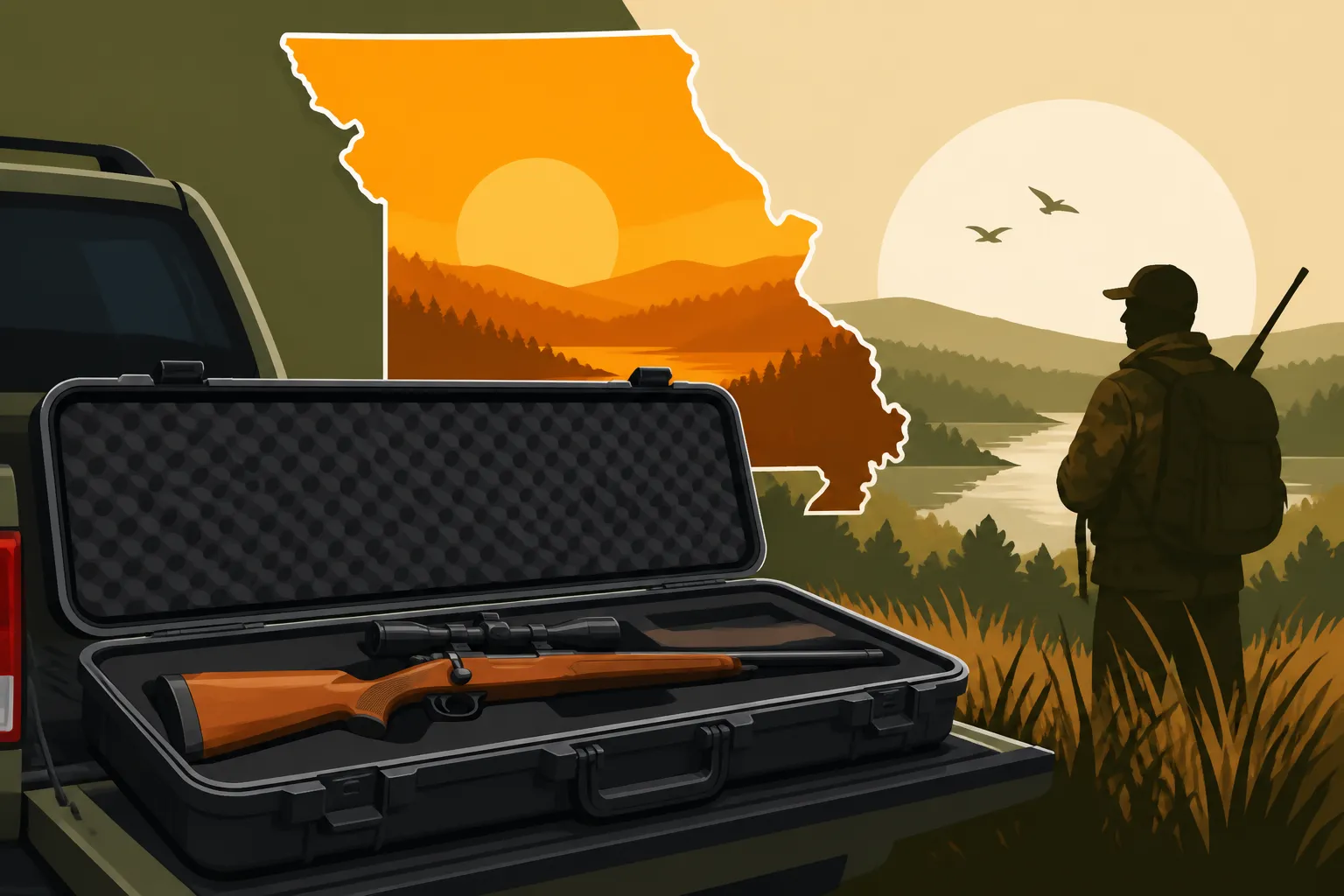
When absolute protection is your priority, a hard case is the undisputed champion. These cases are built to take a beating, which is exactly what you need when you're trusting your rifle to airline baggage handlers or bouncing it around in the back of a truck on a rough gravel road leading to a remote public land access point.
Most hard cases are made from durable polymers or sometimes aluminum. They feature robust latches, often with padlock points, making them ideal for meeting TSA requirements for airline travel. The interior is usually lined with dense foam, which can be either "pluck foam" that you customize yourself, or custom-cut foam specifically fitted for your rifle.
Benefits:
- Superior Protection: Hard cases offer excellent resistance against impact, crushing, dust, and often water. If your rifle is going to be out of your direct control for any length of time, a hard case is the way to go.
- Security: Multiple locking points make them highly secure against unauthorized access and comply with federal regulations for airline transport.
- Airline Compliant: Generally, these are the only types of cases allowed for checked firearms on commercial flights.
- Longevity: A quality hard case can last for decades, protecting countless firearms.
Drawbacks:
- Bulk and Weight: They are heavier and bulkier than soft cases, which can be a hassle to carry, especially if you're hoofing it far from your vehicle.
- Cost: Quality hard cases represent a significant investment, but it's often a small price to pay to protect a valuable rifle and scope.
Scenarios:
- Airline Travel: Non-negotiable if you’re flying into Missouri from out of state. You’ll check your rifle in the locked hard case at the counter.
- Long-Distance Vehicle Travel: For extended drives where your rifle might shift or encounter rough roads, a hard case keeps it secure.
- Storage: If you’re leaving your rifle at a deer camp for a few days, a locked hard case adds a layer of security.
Some top brands like Pelican and SKB are known for their incredibly tough, often waterproof and dustproof hard cases, many of which come with wheels for easier transport through airports or parking lots. Features like pressure equalization valves are great for preventing vacuum locks after flying.
Soft Cases for Convenience and Local Travel
Soft cases, made from materials like heavy-duty nylon, canvas, or Cordura, offer a completely different set of advantages. They prioritize ease of carry and convenience over ultimate crush protection.
These cases typically have a padded interior to protect against minor bumps and scratches, and a zipper closure. Many also feature exterior pockets for accessories like ammunition, cleaning supplies, or even a small game call.
Benefits:
- Lightweight and Less Bulky: Easy to carry, stash in a vehicle, or hang in a closet.
- Affordable: Generally much less expensive than hard cases.
- Convenient: Quick to open and close, making them good for grabbing your rifle and going.
- Maneuverability: Easier to handle in tight spaces like a truck cab or side-by-side.
Drawbacks:
- Limited Protection: While padded, they won't protect your rifle from heavy impacts, crushing, or extreme weather conditions. They are not airline compliant for checked firearms.
- Less Secure: Typically only have a single zipper, often with small loops for a tiny padlock, offering minimal theft deterrence.
Scenarios:
- Local Driving: Ideal for driving from home to your hunting property, or from camp to your Treestand Setups in Hardwood Timber.
- Carrying to a Stand: If you prefer to carry your rifle cased to your hunting spot (always unload it before casing for safety), a soft case is much more manageable than a hard case.
- Storage at Home: For daily storage in a gun safe or closet, they offer basic protection from dust and dings.
Hybrid and Specialized Cases
A growing category includes hybrid cases that try to blend the best of both worlds. These might feature a semi-rigid exterior with heavy padding, or even a hard outer shell that collapses for storage. You also see specialized soft cases for specific hunting weapons, like those designed for crossbows Crossbow Hunting Under Missouri Rules or breakdown rifles. These often feature internal straps, extra padding for optics, and thoughtful pocket placements.
For instance, a soft case might have a heavier denier fabric with extra internal stiffeners to protect against bending or twisting, making it a step up from a basic padded sleeve, but still far more portable than a full hard case. Some even integrate backpack straps for hands-free transport, which can be handy when you’re walking a long way on public land, especially if you're carrying other gear.
Here's a quick comparison of the main types:
| Feature | Hard Case | Soft Case |
|---|---|---|
| Protection | Excellent (crush, impact, water, dust) | Good (scratches, minor bumps, light rain) |
| Security | High (multiple padlock points, robust) | Low (single zipper, minimal lock points) |
| Airline Travel | Yes (required for checked firearms) | No |
| Weight | Heavy | Light |
| Bulk | Bulky, rigid | Flexible, less bulky |
| Cost | Higher | Lower |
| Convenience | Less convenient for quick access/carry | High for quick access/carry |
| Best Use | Air travel, rough transport, long-term | Local vehicle transport, field carry |
Practical Tips for Secure and Hassle-Free Rifle Transport
Beyond the case itself, how you pack and handle your rifle during travel makes a huge difference. These practices ensure both safety and compliance.
Packing Your Rifle Case Like a Pro
Properly packing your rifle case isn't just about cramming it in; it's about making sure your firearm is protected and stable.
- Unload First: This should go without saying, but always confirm your rifle is unloaded before placing it in the case. Double-check the chamber and magazine.
- Secure the Rifle: In a hard case, ensure the foam cradles the rifle snugly. If using pluck foam, take your time to get a tight fit. For soft cases, use any internal straps to prevent the rifle from sliding around. Many hunters, especially those concerned with impact, will remove their scope for airline travel and pack it separately in a padded pouch. If your scope stays on, ensure it’s not pressing against the case walls or other hard objects.
- Protect Exposed Parts: Consider adding muzzle and bolt covers, especially for delicate finishes or if the rifle has exposed parts that could snag.
- Ammunition Separation: Always store ammunition separately from the rifle. For airline travel, ammunition must be in its original manufacturer's packaging or a secure container designed for ammo, placed within your checked baggage (not in the rifle case itself) and with a weight limit. For vehicle travel, a separate locked container or even just a glove box for ammo is smart. GoHunt resources can often provide checklists for comprehensive trip planning, reminding you of these critical details.
Vehicle and Airline Travel Best Practices
How you’re getting to Missouri impacts your case choice and packing strategy.
-
Vehicle Travel:
- Keep it Out of Sight: A rifle case, especially a hard one, can be a tempting target for thieves. Keep it in the trunk, under a tonneau cover in a truck bed, or otherwise out of view.
- Lock it Up: Even in your own vehicle, locking the case adds a layer of security against casual theft or unauthorized access.
- Secure from Movement: Use straps, blankets, or other gear to prevent the case from sliding or bouncing around. This is especially important on logging roads or bumpy trails leading to remote hunting spots in Deer Hunting the Missouri Ozarks.
- Ammo Separate: As mentioned, keep ammunition separate from the rifle and locked.
- Know Your Destination: If you’re driving directly to private land or a trusted camp, your considerations might be slightly different than if you plan to stop at hotels along the way.
-
Airline Travel:
- Check TSA Regulations: These can change, so always visit the TSA website directly before your trip. Firearms must be declared at check-in, unloaded, and in a locked hard-sided container. You, and only you, should retain the keys or combination to the lock.
- Airline Specific Rules: Beyond TSA, each airline has its own policies regarding firearms and ammunition. Check with your specific carrier about their requirements, declaration processes, and any fees for oversized or specialty baggage. This is a great area where a tool like GoHunt can help you cross-reference travel requirements with your hunting plans.
- Arrival Procedures: Be prepared for potential delays at your destination airport. Sometimes, firearms are retrieved at a special counter rather than the regular baggage carousel.
Security and Storage While in Missouri
Once you've made it to Missouri, the responsibility for your firearm continues.
- At Camp or Hotel: If staying in a lodge or hotel, keep your rifle locked in its case and ideally out of sight in your room or vehicle. Never leave firearms unsecured in an unattended vehicle, especially in a public parking lot.
- Private Land: If you're Hunting Small Private Tracts in Missouri, discuss storage with the landowner if you're not keeping it in your own vehicle. Respect their property and ensure your firearm is secured to their satisfaction.
- Public Land: When hunting Scouting Missouri Public Land Before Season areas, you’ll typically be taking your rifle directly to your stand or hunting spot. When it's not in your hands, ensure it's unloaded and secured. Never leave a firearm unattended, even for a short period. Using cable locks or trigger locks in your case can add an extra layer of peace of mind.
Understanding Permit Requirements and "Show Me Your Papers" Scenarios
It's natural to feel a bit anxious when traveling with firearms, especially when you think about potential interactions with law enforcement. Understanding what's expected can greatly reduce that stress.
Missouri Hunting Permits and Hunter Education
First and foremost, make sure all your hunting ducks are in a row. Having your current and valid hunting permits, appropriate tags (like for Missouri's November Firearms Portion), and proof of hunter education is crucial. Missouri law requires most hunters born on or after January 1, 1967, to complete a hunter education course. You'll need to carry proof of this with you while hunting, which could be your permit itself if it notes completion, or a separate card. For any hunter, resident or nonresident, having all your documentation in order is the best defense against issues. Ensure you understand the Missouri Hunter Education Requirements before your trip.
If a conservation agent or law enforcement officer stops you, their primary interest will be to ensure you are hunting legally, ethically, and safely. If your firearm is properly transported, unloaded, and cased, and you can readily present your hunting permits and identification, you’re already in a great position.
What to Do If Stopped While Transporting
While rare for hunters properly transporting firearms, being stopped can be unsettling. Here’s a basic approach:
- Remain Calm and Courteous: This is the most important step. A calm and respectful demeanor goes a long way.
- Inform the Officer: As soon as you are asked for your license and registration, you should calmly and clearly inform the officer that you have firearms in the vehicle and that they are unloaded and secured in a case for transport. Do not reach for your firearm or its case. State its location (e.g., "Officer, I have an unloaded rifle in a locked case in the trunk/back seat").
- Follow Instructions: Do exactly what the officer instructs you to do. If they ask to see the firearm, explain how you will access it. Only retrieve it when instructed, and always do so slowly and deliberately.
- Have Your Papers Ready: Have your driver's license, vehicle registration, insurance, and hunting permits (including proof of hunter education) easily accessible.
- Answer Questions Honestly: Be truthful and concise in your answers.
- Avoid Argument: If you disagree with something, calmly state your position, but do not argue or escalate the situation. You can always address legal concerns later with an attorney.
In most scenarios, if you're obviously heading to or from a hunting trip, your firearms are properly cased and unloaded, and your permits are in order, a brief interaction will confirm your lawful activity, and you'll be on your way. Tools like GoHunt can help you keep track of all these documents in a single digital place, making it easier to retrieve them if needed.
Having the right rifle case for your travel to Missouri is more than just a purchase; it’s an investment in the safety of your valuable gear and your peace of mind. By understanding the laws, choosing the appropriate case, and practicing smart transport habits, you can focus on what really matters: enjoying your hunt in the beautiful Missouri outdoors.
Disclaimer
This article is for general informational purposes only and does not constitute professional advice. Laws, prices and regulations vary by location and change over time. Consult a qualified professional for guidance on your specific situation.