Locator Calls for Missouri Gobblers
There’s nothing quite as frustrating as stepping into the Missouri spring woods, the air crisp with promise, only to be met with dead silence. You might have tried a few soft yelps or purrs, hoping to tempt a lonesome gobbler, but sometimes, those old boys just aren't interested in a hen until they know where she is. That's where locator calls come into play, offering a secret weapon to shock those tight-lipped turkeys into giving up their position, saving you precious hunting time and guiding you straight to the action. This guide will walk you through everything you need to know about using locator calls effectively to pinpoint Missouri gobblers, no matter how stubbornly quiet they might seem.
The Power of the Shock Gobble: What are Locator Calls?
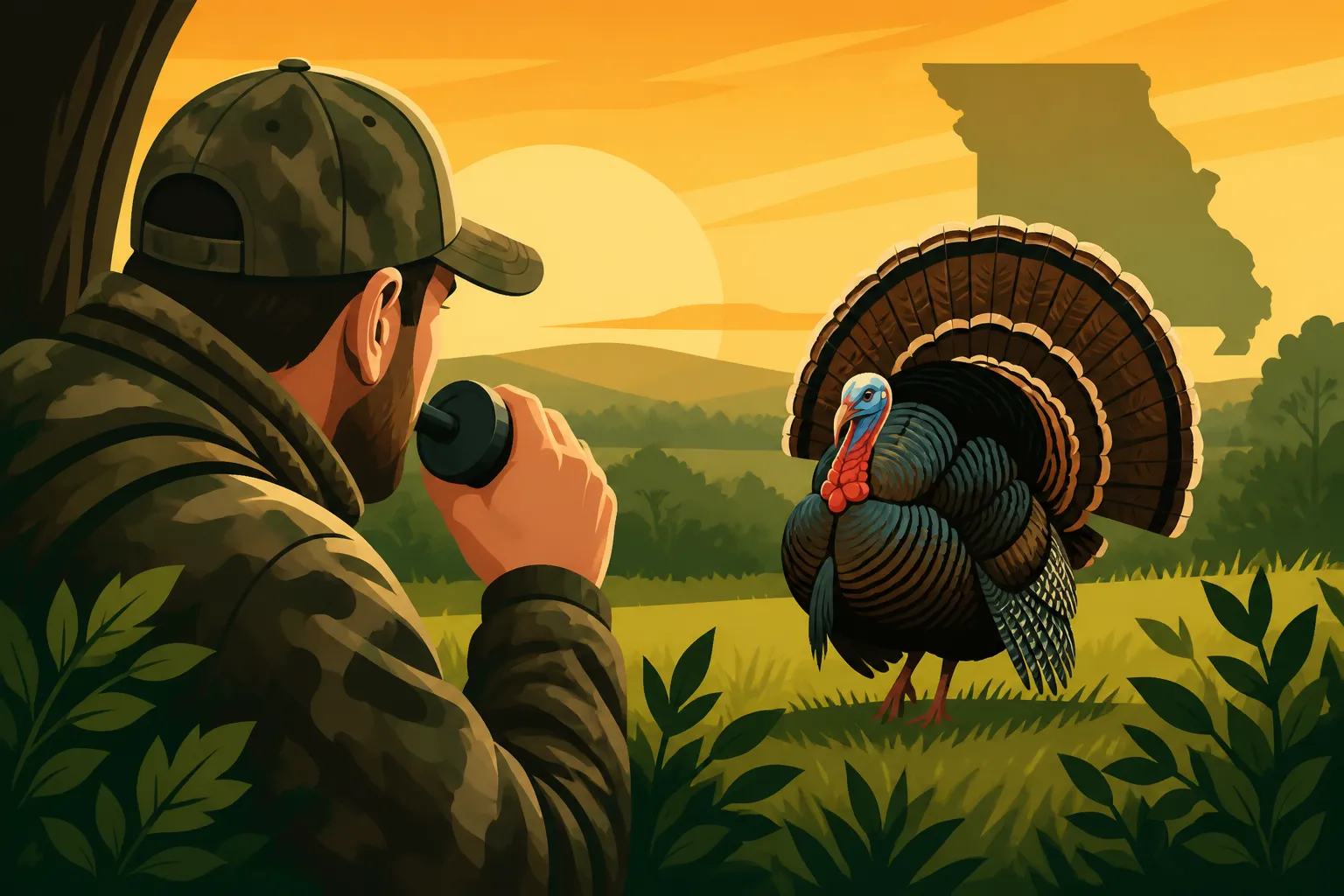
Imagine you're a big, strutting gobbler, puffed up and feeling mighty, ready to proclaim your dominance. Then, out of nowhere, you hear a loud, unexpected sound – a hooting owl, a cawing crow, or even the piercing shriek of a hawk. Your natural instinct is often to respond, to gobble back and let everyone know you're still the boss. That sudden, involuntary response is what we call a "shock gobble," and it's the entire premise behind using locator calls.
Locator calls aren't designed to sound like a hen; they're designed to elicit a reaction without necessarily sounding like a threat or a meal. They exploit the turkey's territorial nature and their competitive spirit. You're essentially asking, "Who's there?" in a language a gobbler can't ignore, often forcing a response even when they're "henned up" or just plain quiet. This can be a game-changer, especially in areas where turkeys are heavily pressured or when conditions make them wary of typical calling. The ability to get a tom to gobble on his own terms, rather than yours, gives you a huge advantage, allowing you to quickly determine his location and make a move. Spring Turkey Calling in Missouri Timber can be a great next step once you've pinpointed his location.
Why Gobblers Respond to Non-Turkey Sounds
It might seem counterintuitive to use sounds that aren't turkey-related to hunt turkeys, but it makes perfect sense when you consider the social dynamics and instincts of a wild gobbler. Turkeys are creatures of habit and territorial. When they hear a loud, unfamiliar, but non-threatening sound, especially one that carries well through the woods, it's like a challenge to their airspace. They gobble to assert their presence, to say, "I'm here, this is my turf!" It's a primal reaction, often bypassing their wariness.
Think about how often you hear a flock of crows raising a ruckus or an owl hooting in the pre-dawn hours. Gobblers are accustomed to these ambient sounds of the woods. A sharp, distinct non-turkey sound triggers a "gobble reflex" without putting them on edge in the same way an immediate hen call might. If they're with hens, they might be hesitant to gobble to a hen call for fear of drawing other gobblers into their harem, but a locator call doesn't pose that same immediate threat. It simply triggers a proclamation of presence.
The Terrain Factor: Ozarks vs. Farm Country
Missouri's diverse landscape plays a huge role in how effective locator calls can be, and which ones work best. In the rugged, timber-filled Ozarks, sound can travel and bounce in unpredictable ways. Deep hollows and steep ridges can muffle calls or, conversely, carry them much farther than you'd expect. A loud, sharp crow call might echo beautifully across a clear-cut ridge, but a more subdued owl hoot might get lost in the thick canopy of a hollow. Hunters working Hunting Turkeys in Ozark Hollows often find that sharp, high-pitched calls cut through the timber better.
Conversely, in the rolling farm country of North Missouri, where timber blocks are often smaller and interspersed with vast crop fields, sound generally travels much farther and with fewer obstructions. A coyote howl or a distant train whistle can carry for miles across open fields. Here, you might need to be more strategic with your volume to avoid spooking birds that are farther away but still within earshot. Understanding the topography and how sound moves through it is crucial for maximizing your locator call's reach and getting those birds to gobble.
Choosing Your Weapon: Types of Locator Calls and Their Best Uses
Not all locator calls are created equal, and the best one to use often depends on the time of day, the specific terrain, and even the mood of the gobblers. Having a few different types in your vest can give you an edge, allowing you to switch things up if one isn't working or if you need a specific sound for a specific situation.
| Call Type | Primary Sound | Best Use Time | Advantages | Disadvantages |
|---|---|---|---|---|
| Owl Hooter | Owl hoot | Pre-dawn, Dawn | Excellent for roosted birds, carries well. | Less effective later in the day. |
| Crow Call | Crow caw | Late morning, Midday | Natural woods sound, often triggers response. | Can be overused, some birds ignore it. |
| Coyote Howler | Coyote howl | Dawn, Dusk, Midday | Loud, aggressive, carries far, good shock. | Can sound unnatural if done poorly. |
| Hawk Screech | Hawk cry | Midday, Afternoon | Sharp, piercing, good for tight-lipped birds. | Requires good technique, less natural. |
| Pileated Woodpecker | Pileated call | Anytime | Natural, unique, less common, good surprise. | Can be difficult to master. |
The Classic Owl Hooter: Roosted Birds and Early Morning
The owl hooter is arguably the most traditional and often most effective locator call, especially in the pre-dawn hours. There's just something about a distant barred owl hooting that seems to stir a gobbler into a response while he's still on the roost. The "Who cooks for you? Who cooks for you all?" cadence is instantly recognizable to turkeys and often triggers an immediate gobble.
I always carry an owl hooter, and it's the first call I pull out before the sun even thinks about showing its face. As the woods begin to lighten, I'll let out a series of hoots, listening intently. If a gobbler responds, you've just gained invaluable information – you know exactly where he's roosted, and you can strategize your approach to get into position before he flies down. Just remember to be patient and listen closely; sometimes their gobble can be soft at first. Using a mapping app like GoHunt before the season can help identify potential roosting areas, making your owl hooting even more targeted. Roost Hunting Missouri Gobblers is all about getting those birds to give up their early morning position.
The Versatile Crow Call: Mid-Morning to Midday
Once gobblers have flown down from the roost, and the initial morning frenzy might have died down, a crow call becomes your next best friend. Crows are a constant presence in the Missouri woods, and their caws are a sound turkeys are completely accustomed to. A sharp series of caws, not too aggressive but loud enough to carry, can often get a gobbler to shock gobble in the late morning when he's no longer responding to owl hoots.
I've had countless experiences where I'm working a timber edge or a Hunting a Missouri Fencerow Between Fields and think the woods are empty, only to let out a few sharp crow caws and instantly hear a gobbler respond from a hidden draw or thicket. It’s particularly effective when you're still-hunting or trying to cover ground, as you can continuously check for birds as you move. Don't overdo it; a few distinct caws are usually enough to get a reaction.
The Aggressive Coyote Howler: Long-Range and Aggressive Birds
When you need to cover a lot of ground, or if you suspect gobblers are really spread out or just plain stubborn, a coyote howler can be incredibly effective. The long, piercing howl of a coyote carries a tremendous distance, especially across open fields or wide river bottoms. It's a more aggressive, attention-grabbing sound that can sometimes shock a gobbler into responding when other, more subtle calls fail.
I’ve used a coyote howler in big ag fields up north and in the more open timber of the Ozarks. It’s a great choice when you're trying to locate birds from a distance before committing to a long walk. Be mindful of your surroundings; if you're in an area with a lot of real coyotes, you might get an actual response! The key is to make it sound realistic, with a good mix of yelps and howls.
Hawk Screech, Pileated Woodpecker, and Other Novelties
Beyond the mainstays, there are other locator calls that can be surprisingly effective, especially on highly pressured birds that have heard every crow and owl call imaginable. A hawk screech, for example, is a sharp, distinct sound that can cut through the air and get a reaction. Similarly, the loud, almost maniacal call of a pileated woodpecker is a natural sound of the Missouri woods that can sometimes trigger a gobble.
Some hunters even use less conventional methods: a sharp clap of the hands, a truck door slamming, or even an air horn (use sparingly!). The idea is to create an unexpected, loud, and non-threatening noise. The novelty of these sounds can sometimes be just what it takes to get that old tom to break his silence. Experimenting with different sounds, especially on public land where birds are wary, can be a game-changer. Just be sure to always prioritize safety and avoid anything that could be mistaken for a gunshot.
Mastering the Art: Techniques for Effective Locator Calling
Simply blowing into a call isn't enough; there's an art to using locator calls effectively. It involves understanding timing, volume, cadence, and most importantly, listening intently. It's a conversation you're trying to start, and you need to be prepared to hear the response.
Timing is Everything: Pre-Dawn, Midday, and Mid-Afternoon
The time of day significantly impacts which locator calls are most effective.
- Pre-Dawn and Dawn: This is prime time for owl hoots. Gobblers are still on the roost, and they're often more vocal, especially if they haven't been pressured yet. I typically start calling about 30-45 minutes before first light, giving myself time to listen and then move into position if a bird responds.
- Late Morning to Midday: Once birds are on the ground, they tend to gobble less frequently unless provoked. This is where crow calls shine. They're natural, less startling than an owl hoot during daylight, and can often get a gobbler to respond as he's moving or feeding. This is also a good time to try coyote howls for long-range locating.
- Mid-Afternoon: Gobblers often become quiet again in the mid-afternoon, but they might gobble intermittently as they begin to think about heading back to roost. A hawk screech or another sharp, unique sound can sometimes catch them off guard and get a late-day response. If you're looking for Hunting Gobblers in the Afternoon, locator calls can be key to finding where they're setting up for the night.
Volume and Cadence: Finding the Sweet Spot
When using locator calls, volume and cadence are crucial. You want the call to be loud enough to carry through the woods and be heard by a distant gobbler, but not so loud that it sounds unnatural or spooks a nearby bird.
- Volume: Start with a moderate volume and gradually increase it if you don't get a response. In dense timber, you'll need more power. In open fields, less. Always consider how far your sound will travel.
- Cadence: For owl hoots, mimic the natural rhythm of a barred owl. For crow calls, vary your caws – some short, some longer, some in a series. Coyotes have a distinct howl and yelp sequence. Practice listening to real animals to perfect your cadence. A realistic sound is always more likely to get a response.
Listen, Wait, and Move: The Patient Hunter's Approach
This is perhaps the most important technique: after every call, listen intently. Don't immediately call again. Give the gobbler time to respond. Sometimes, their gobble can be faint, distant, or delayed. Cup your ears, turn your head, and focus on every sound.
If you don't hear anything after a minute or two, try another series of calls. If still nothing, move a few hundred yards and try again. This "run-and-gun" approach, especially in vast public lands like the Ozarks, is often the most effective way to cover ground and find silent birds. As you move, consult your GoHunt app or other mapping tools to track your progress and mark potential response locations. Run-and-Gun Turkey Tactics in the Missouri Ozarks relies heavily on this strategy.
Common Mistakes and Troubleshooting Silent Woods
Even with the best calls and techniques, there will be days when Missouri gobblers are just plain tight-lipped. It happens to the best of us! But often, those silent days can be overcome by avoiding common pitfalls and adjusting your strategy.
Overcalling and Under-Listening
One of the biggest mistakes hunters make with locator calls is overcalling. They blow their call too frequently or too loudly, overwhelming the woods and potentially making gobblers wary. A gobbler might hear your first call, decide he's not interested in responding, and then your subsequent, constant calling just reinforces his decision to stay quiet.
Instead, focus on quality over quantity. Make a good, clear series of calls, then stop and listen. Give it a full minute or two. If you hear nothing, try again. The woods are full of subtle sounds, and you need to be able to pick out a distant gobble from the rustle of leaves or the chirping of songbirds. Many times, the gobble is much softer than you anticipate, especially if the bird is far away or tucked into a hollow.
Wrong Call, Wrong Time, Wrong Place
Sometimes, the issue isn't your technique, but your choice of call or when and where you're using it.
- Wrong Call: Trying an owl hooter at high noon might not be as effective as a crow call. Conversely, a crow call right at dawn might not get the roosted bird to gobble as readily as an owl. Match your call to the typical activity patterns of the birds.
- Wrong Time: If birds have just flown down and are still getting organized with their hens, they might be less inclined to gobble to any locator call. Give them a little time, then try again.
- Wrong Place: Calling from a thick draw where sound won't carry, or from a spot where you can't hear a distant response, limits your effectiveness. Try to position yourself where sound will travel well, like on a ridge top or an open field edge, and where you have good acoustics for listening.
The Impact of Weather and Pressure
Missouri weather can have a significant impact on turkey behavior and vocalization. Cold, windy, or rainy days often mean quieter birds. Don't get discouraged on these days; simply adjust your expectations and persistence. You might need to call more frequently or move more aggressively to find a responsive bird.
Hunting pressure also makes a huge difference. On public lands, especially after opening weekend, birds might become incredibly wary of any call. This is when novelty calls – or just being patient and persistent with the more subtle ones – can really pay off. Sometimes, a very soft, natural call like a pileated woodpecker is enough to elicit a "courtesy gobble" from a pressured bird that wouldn't respond to anything else. In these situations, knowing Hunting Pressure on Missouri Public Ground is key, and adapting your strategy is essential.
Integrating Locator Calls with Your Hunting Strategy
Locator calls aren't just a fancy accessory; they're an integral part of a comprehensive turkey hunting strategy, especially when coupled with other tactics.
From Locating to Closing the Distance
Once you get that shock gobble, the real work begins. Your locator call has done its job by revealing the bird's general direction and distance. Now, you need to transition into a strategic approach to close the distance and set up for a shot. This might mean hustling quietly to a favorable position, using the terrain to hide your movement, and then switching to more subtle hen calls or even a decoy setup.
For example, if you're Calling a Missouri Gobbler Off the Roost and he gobbles to your owl hoot, your next move isn't another owl hoot. It's about getting to a strategic setup before he flies down, perhaps calling softly with hen sounds as you move to reassure him. Your GoHunt map can be invaluable here, helping you quickly identify terrain features to use for concealment on your approach.
Using Locator Calls for Scouting
Don't limit locator calls to just hunting season. They are fantastic tools for scouting too. Before the season opens, you can walk public or private lands, using various locator calls at different times of the day to identify areas where turkeys are roosting or frequently moving. This preseason intel can save you countless hours during the actual hunt.
Imagine using a crow call in late winter or early spring to pinpoint where gobblers are congregating. You can mark these locations on your map, giving you a serious advantage when opening day arrives. Understanding Missouri Turkey Population Trends and which areas generally hold more birds can further refine your scouting efforts.
Beyond Gobblers: Identifying Jakes and Other Turkeys
While the primary goal of locator calls is to get a shock gobble from a mature tom, you'll often hear jakes respond as well. Don't be disappointed! A jake response still tells you there are turkeys in the area, and sometimes, a mature gobbler might be silently lurking nearby, listening to the commotion. Similarly, you might hear hens clucking or yelping in response to a locator call. This is valuable information, as hens often lead gobblers, and knowing their location can help you anticipate where the tom will be.
Ultimately, locator calls are about gaining information. Every sound, every response (or lack thereof), tells you something about the turkeys in your area. They are a powerful addition to any Missouri turkey hunter's arsenal, allowing you to turn silent woods into a thrilling encounter, time and time again.
Disclaimer
This article is for general informational purposes only and does not constitute professional advice. Laws, prices and regulations vary by location and change over time. Consult a qualified professional for guidance on your specific situation.