Turkey Decoys That Work on Pressured Birds
It's happened to all of us: you've scouted your spot, perfected your calls, and you're set up perfectly, only for that old Missouri gobbler to strut right up to 60 yards, stare down your beautiful decoy spread, and then either circle wide or just flat-out bolt. Pressured turkeys in Missouri, especially on public land or heavily hunted private ground, develop a sixth sense for anything that feels "off," and that often includes our decoys. This guide is all about understanding what makes those wary birds tick and how to adjust your decoy tactics to consistently bring them into range.
Understanding the Wary Gobbler's Mindset
When you're dealing with a turkey that's been called at, shot at, and seen more fake birds than he can count, you need to think like him. These aren't the naive longbeards of opening morning on private land where nobody else hunts. These are the survivors, the ones that have learned to be suspicious. Their caution isn't a fluke; it's a learned behavior, an ingrained instinct reinforced by close calls and bad experiences.
Signs of Decoy Aversion
How do you know if you're dealing with a decoy-shy bird? It's not always obvious. Sometimes they'll just hang up, gobbling their heads off but refusing to commit those last few crucial yards. They might strut, fan, and even come halfway, but then stop abruptly, craning their neck, looking for something that isn't quite right. Other times, they'll simply skirt your position entirely, often moving silently after their initial gobbles, or even flat-out turn and run at the first sight of your setup. If you notice birds consistently doing a wide circle around your decoys, or approaching only to freeze and refuse to come closer, especially on areas with higher Hunting Pressure on Missouri Public Ground, it’s a strong sign you need to re-evaluate your decoy strategy. They've seen this movie before, and they know how it ends if they walk right into the trap.
The Pressure Factor
Missouri's turkey season can see a lot of hunters out in the woods, particularly during the early weeks. This consistent human presence, combined with the sheer number of calls and decoys birds encounter, quickly teaches turkeys to be wary. Imagine a gobbler that's already had three close calls with hunters hiding behind a decoy spread. He's going to be hyper-sensitive to anything that seems too perfect, too static, or just not quite natural. This is why a "perfect" setup that worked flawlessly on opening day might be completely ignored or actively avoided a week later. They associate certain visual cues, like a perfectly still, unmoving decoy, with danger. Hunters who consistently use a certain style of decoy or setup in a given area inadvertently "educate" the birds there, making those specific tactics less effective over time. Using detailed mapping tools like those offered by GoHunt can sometimes help identify less pressured pockets of land where birds might be more naive, but even then, smart birds learn quickly.
Decoy Strategies for Wary Gobblers
When faced with a seasoned, wise old longbeard, your goal should be to create a scene that is so utterly convincing, so subtly natural, that it overcomes his ingrained suspicion. This often means less flash and more finesse. It's about blending in, not standing out.
Less is More Approach
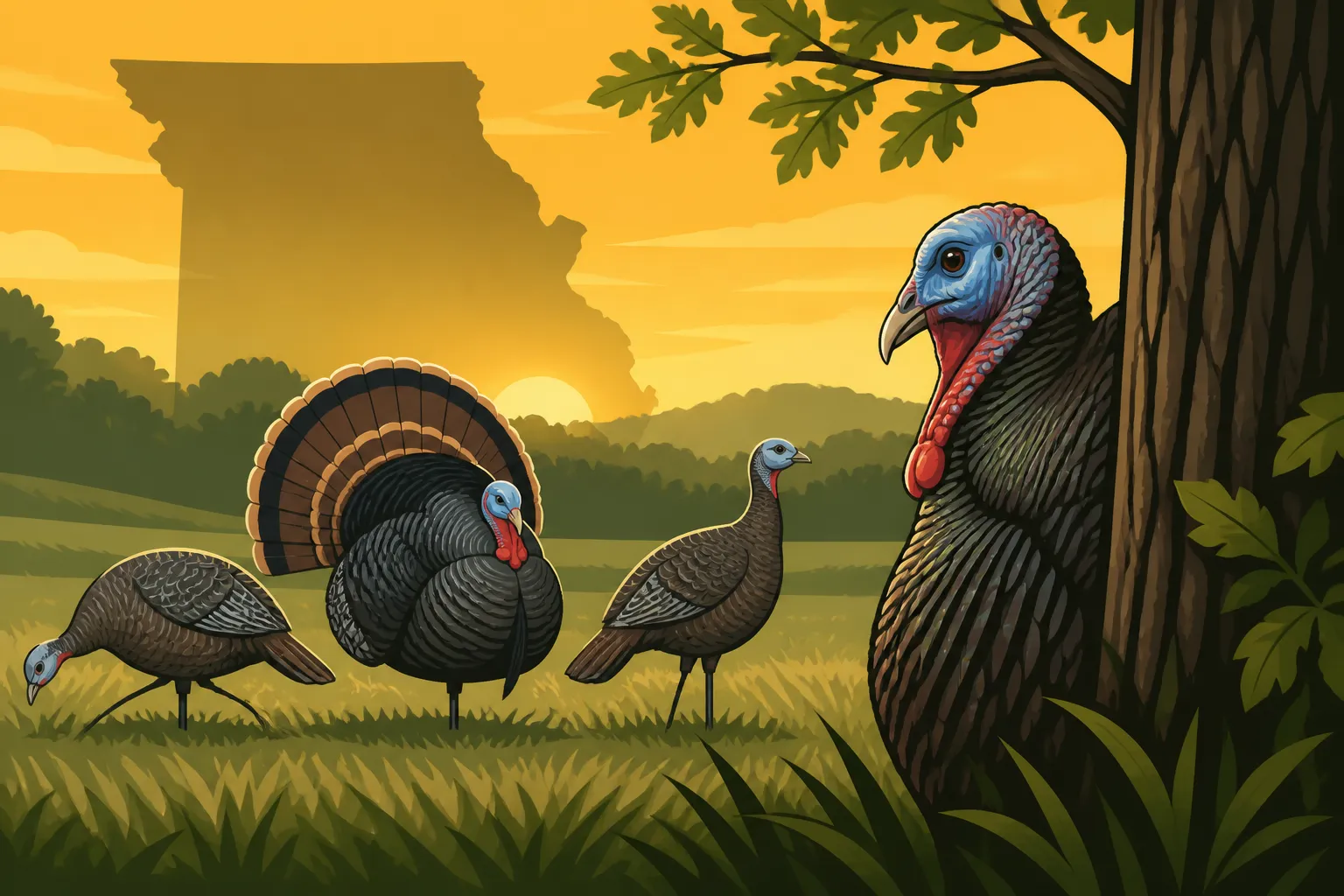
For pressured birds, often the best decoy strategy is a minimalist one. Forget the massive spreads with multiple gobblers and half a dozen hens. That looks like a convention, not a natural gathering, and it screams "trap" to an educated bird. Instead, focus on a single, submissive hen decoy, or perhaps a jake and a single hen. A lone hen appears non-threatening and inviting, mimicking a bird simply going about her day. A jake and a hen can sometimes spark a jealous reaction from a dominant gobbler, making him throw caution to the wind, but it's a riskier play on truly pressured birds. The key is subtlety.
Consider placing your single hen in a receptive, feeding, or breeding pose. Avoid aggressive poses, especially those involving full strut gobbler decoys, unless you are absolutely sure of the bird's temperament and know you're dealing with a highly dominant bird that can't resist a challenge. More often than not, a dominant gobbler will just hang up at a distance and expect the challenging bird to come to him, especially if he's seen that trick before. Simplicity helps eliminate variables that could trigger a red flag for a wary bird. Sometimes, no decoy at all is the right answer if you're Run-and-Gun Turkey Tactics in the Missouri Ozarks where birds are constantly on the move and very sensitive to static objects.
Realistic Poses and Positioning
Realism isn't just about how a decoy looks; it's about how it behaves in the environment. A turkey doesn't just stand perfectly still for long periods. They feed, preen, look around, and move. While a static decoy can't move on its own, its pose needs to convey a natural, relaxed demeanor. A feeding hen, for instance, has her head down, showing no alarm. This signals to an approaching gobbler that the area is safe. A breeding hen, lower to the ground, can be an irresistible temptation that bypasses a gobbler's usual caution.
Pay attention to where you place your decoy. Avoid putting it out in the middle of a perfectly manicured field where it looks exposed and out of place. Turkeys often travel along field edges, timber lines, or within sparse cover. Position your decoy in a way that suggests it’s naturally occurring—perhaps just inside a brush line, at the edge of a food plot, or near a prominent tree like a Setting Up Against a White Oak. Think about the bird's line of sight. If he crests a ridge, what will he see first? You want him to see a natural, inviting scene, not a suspicious lump.
Adjusting to Terrain
The Missouri landscape offers varied terrain, from the rolling hills and timber of the Ozarks to the flat crop country of the north. Your decoy setup needs to adapt. In thick timber, decoys might be less effective because visibility is limited. Here, a well-placed decoy at a natural pinch point or a visible clearing can work wonders, especially if you're targeting birds coming off the roost. Consider where turkeys typically feed or gather in that specific habitat. In more open areas, like Turkey Tactics for Crop Country, you might have longer sight lines, but birds also have more space to circle wide.
You'll also need to consider elevation changes. Placing a decoy on top of a rise might make it visible, but it could also expose you or make it look unnatural. Conversely, a decoy tucked into a slight depression might be too hard to see. Always put yourself in the turkey's position. What would you notice? What would look out of place? Terrain features like logging roads, old fencerows, or small clearings are often natural travel corridors and excellent spots for decoy placement. The key is to make the decoy part of the natural landscape, not an addition to it. GoHunt's detailed topographical maps can be incredibly useful for pinpointing these natural travel corridors and advantageous setup locations.
Types of Decoys That Fool Pressured Birds
Not all decoys are created equal, especially when you're hunting educated birds. The level of realism, portability, and even the subtle movement capabilities can make a huge difference in whether a gobbler commits or hangs up.
Full-Bodied Fakes vs. Collapsible Decoys
For ultimate realism, full-bodied decoys are often considered the gold standard. They replicate the exact size, shape, and feather detail of a real turkey, often down to the subtle iridescence of the feathers. These are fantastic for luring in wary birds because they offer a visual fidelity that’s hard to beat. However, their bulk can be a real pain, especially if you're Run-and-Gun Turkey Tactics in the Missouri Ozarks and covering a lot of ground. Carrying one or two full-bodied decoys can add significant weight and make a noticeable silhouette as you move.
Collapsible or panel decoys, on the other hand, sacrifice some of that three-dimensional realism for portability. They fold down flat or roll up, making them easy to stash in a vest. While they may not look as lifelike up close, they can be highly effective for pressured birds, particularly if you are using them in situations where the bird's attention is focused on your calling first, and the decoy is merely a confirmation. A good flat decoy, used correctly, can still fool a gobbler at the moment of truth. The trick is to ensure the image presented is clear and distinct, and that it doesn't appear two-dimensional at crucial angles. For a mobile hunter, the ease of packing a collapsible decoy might outweigh the slight loss in realism, especially if you're constantly changing locations based on the bird's response.
Here's a quick comparison of popular decoy types:
| Decoy Type | Realism (Wary Birds) | Portability | Ideal Use Cases | Considerations for Pressured Birds |
|---|---|---|---|---|
| Full-Body Foam | Excellent | Moderate | Static setups, field edges, where realism is paramount | Best if set up early and discreetly; avoid unnecessary movement |
| Full-Body Inflatable | Good | Excellent | Run-and-gun, changing locations frequently | Can look "plasticky" if not set up well; can deflate slowly |
| Collapsible Panel | Good | Excellent | Mobile hunting, tight cover, quick setups | Ensure proper orientation to present a full profile; less depth |
| Silhouette/Fan | Fair | Exceptional | Reaping/fanning (check local regulations), close quarters | Best for aggressive, committed birds or very specific tactics |
Motion Decoys and Their Place
Motion is a powerful attractant. It adds a dynamic element that static decoys simply cannot replicate. A slight breeze making a decoy's fan or head bob, or even a tail feather twitching, can be the final trigger that brings a wary gobbler those last few yards. There are various types of motion decoys: some use springs for subtle movement, others allow you to manually create motion with strings or remote controls.
However, motion decoys are a double-edged sword with pressured birds. While natural, subtle movement can be incredibly effective, unnatural or excessive movement will scream "fake" louder than anything else. A decoy spinning wildly in the wind, or a head bobbing erratically, can spook a cautious bird immediately. If you use a motion decoy, ensure the movement is minimal, fluid, and mimics the natural actions of a turkey. A gentle head bob, a slow tail fan rotation, or even a subtle preening motion can be incredibly effective. Consider remote-controlled motion for situations where you can control the movement to respond to the bird's approach, activating it only when he's looking, and then letting it rest. This prevents constant, potentially unnatural motion.
Decoy Size and Species Accuracy
When it comes to size, generally sticking to natural hen or jake sizes is best. Oversized decoys might seem like they'd be more visible, but they can also look unnatural and cartoonish to a discerning gobbler. Accuracy in species is also vital. While most hunters use standard wild turkey decoys, ensuring the feather patterns and coloration are accurate can make a difference. Some decoys attempt to mimic specific subspecies, but for Missouri, a general Eastern wild turkey hen or jake is what you're aiming for. Avoid mixing and matching if possible; a realistic scene is paramount. The better the detail and species accuracy, the more likely it is to fool a bird that has seen countless less-realistic fakes.
Setting Up Your Decoys for Success
It's not just about what decoys you use, but how you position them. The setup is critical for drawing in pressured turkeys and giving you the best shot opportunity without spooking them.
Proximity to Roost/Strut Zones
Understanding where birds roost and where they like to strut is fundamental, and tools like GoHunt can help you mark these locations after scouting. When setting up decoys for pressured birds, you might want to consider placing them a bit further from the immediate roost tree than you would for a naive bird. A bird flying off the roost, especially if he's heard a lot of Calling a Missouri Gobbler Off the Roost, might be looking for any sign of danger. If your decoys are too close, he might spot them too early and change his plans before even hitting the ground.
Instead, identify a natural strut zone or gathering point slightly removed from the roost. This could be a small clearing, a field edge, or a logging road where birds naturally congregate after they fly down. Place your decoys there, making the scene appear like a natural gathering. This allows the bird to land and observe for a moment before deciding to commit, and if the scene looks natural, he's more likely to approach confidently. Always consider the bird's travel path once he hits the ground.
Angles and Cover
Your decoy placement relative to your position and the expected approach of the gobbler is crucial. Always set your decoys up so that an approaching gobbler will present a broadside shot at your preferred range. This means placing the decoys slightly past your shooting lane, so the gobbler walks by them, exposing his vitals. If your decoys are too close to you, the bird might face them head-on, offering a less-than-ideal shot angle.
Moreover, ensure you have adequate cover behind your decoys to hide yourself. A wary gobbler will scan the area intently before committing. If he sees your decoys but also catches a glimpse of your blind, treestand, or an unnatural outline, he's gone. Using natural cover, or a well-brushed-in ground blind, is essential. For example, if you're in open timber, make sure you're Setting Up Against a White Oak or a cluster of smaller trees that break up your outline. Remember that turkeys have incredible eyesight, and they've learned what human forms look like, even if partially obscured.
Wind and Sun Considerations
Don't underestimate the impact of wind and sun on your decoy setup. While turkeys don't rely on scent like deer, the wind can affect how they hear your calls and how they approach your decoys. Generally, positioning your decoys so they face into the wind can make them appear more natural, as real birds often face into the wind to avoid having their feathers ruffled. It can also help the subtle movement of motion decoys appear more lifelike.
The sun's position is equally important. Avoid placing your decoys directly in front of the rising or setting sun, as this can create a silhouette or a glare that makes them look artificial. Instead, try to position your decoys so the sun illuminates them naturally, making their colors pop and appear more lifelike. Conversely, consider positioning yourself with the sun at your back, making it harder for the gobbler to pick out your position in the glare. This also ensures your decoys are well-lit and visible from a distance, drawing the bird's eye. Thinking about these environmental factors helps eliminate any visual cues that a pressured bird might use to identify a fake setup. If you're hunting during Missouri Spring Turkey Season Structure, these details become even more critical as the season progresses and birds get smarter.
Final Thoughts on Decoys for Wary Birds
Hunting pressured turkeys in Missouri requires patience, observation, and a willingness to adapt. The tactics that worked on naive birds early in the season or on unpressured private land simply won't cut it when you're dealing with a longbeard that has earned his caution. By simplifying your decoy spread, focusing on hyper-realistic poses and placement, understanding how terrain affects the setup, and paying attention to subtle environmental factors like wind and sun, you significantly increase your chances of fooling even the wariest gobblers. Remember, the goal isn't just to put a decoy out; it's to create an illusion so convincing that a turkey forgets everything he's learned and commits to the setup.
Disclaimer
This article is for general informational purposes only and does not constitute professional advice. Laws, prices and regulations vary by location and change over time. Consult a qualified professional for guidance on your specific situation.