How Big Mark Twain National Forest Is
It's incredibly frustrating when you're trying to plan a hunting trip to a vast public land area like Mark Twain National Forest, and every piece of information you find seems to dance around the actual size and what that means for your hunt. You just want to know how big the place really is so you can properly envision your adventure and tackle the challenges. This guide is here to cut through the vagueness and give you a clear picture of Mark Twain's immense scale and what that entails for deer, turkey, and small game hunting across its diverse landscapes.
Understanding the Scope of Mark Twain National Forest
When you hear "national forest," you probably picture a huge tract of woods. And you wouldn't be wrong, especially when it comes to Mark Twain National Forest. But the reality of its size is often more complex than a single number, and understanding that complexity is key to unlocking its hunting potential. This isn't just one contiguous block of timber; it's a tapestry woven across a good chunk of southern and central Missouri, making it a unique challenge and opportunity for us hunters.
Breaking Down the Acreage Numbers
Let's get down to brass tacks: Mark Twain National Forest is immense. We're talking about roughly 1.5 million acres that are managed by the U.S. Forest Service. Now, that number alone can be a bit overwhelming. To put it into perspective, that's more than double the size of Rhode Island! It's an area that could easily swallow up several smaller states, and it's all right here in Missouri, providing an incredible amount of public hunting access. This vastness contributes to why it's such a popular destination, especially for those looking to get away from crowded areas found closer to major cities.
However, it's important to understand that this 1.5 million acres isn't one giant, unbroken wilderness. It's spread out, often interspersed with private land, state conservation areas, and even small towns. This patchwork quilt of ownership means that while the total acreage is staggering, you'll rarely find yourself on a single, continuous block of 1.5 million acres without encountering private property lines or roads. This characteristic is precisely what makes scouting and understanding land boundaries so critical when you’re planning your hunts, whether you're chasing whitetails or spring gobblers.
Why "How Big" Isn't a Simple Answer
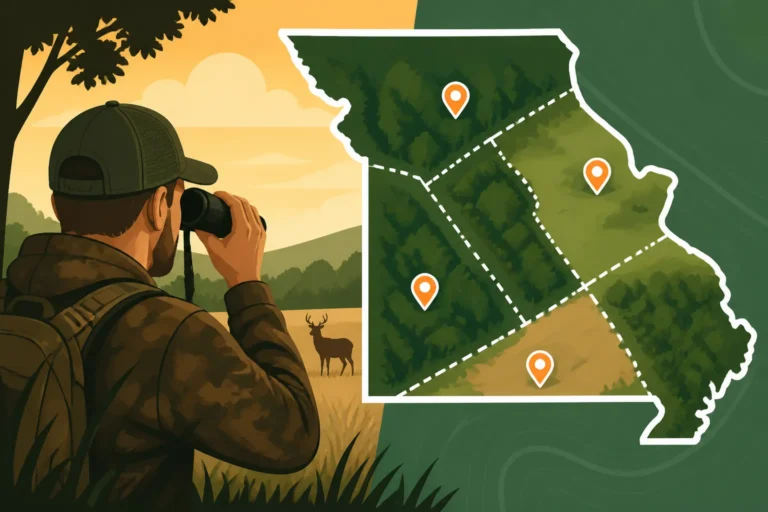
The challenge of defining "how big" Mark Twain National Forest truly is, lies in its fragmented nature. While the total acreage is impressive, the forest is divided into ten ranger districts, which are themselves not always solid blocks of federal land. Imagine looking at a map and seeing federal land shaded in green; on Mark Twain, that green is often interrupted by white sections of private land. This can be a real head-scratcher, especially for folks who are used to hunting large, continuous state forests or conservation areas.
The reason for this fragmentation goes back to the forest's history, often involving land purchases over many decades. It's a collection of parcels rather than a single, original grant of land. This means that while you might be hunting federal land, a short walk could lead you onto private property if you're not paying attention. This isn't necessarily a bad thing, as it can create diverse habitat edges and funnel points for game. But it absolutely requires a hunter to be diligent with their maps and aware of their surroundings. You need to know that when you're asking "How big is Mark Twain National Forest?", the answer needs to come with the caveat that it's a huge collection of public lands, not a single monolithic entity. This distinction is vital for safety, legality, and ultimately, your hunting success.
Navigating Mark Twain's Vastness for Hunting
Hunting Mark Twain National Forest isn't like hunting a small, familiar farm. Its sheer scale demands a different approach to scouting and strategy. You can't just walk in hoping to bump into game; you need to understand its structure and leverage the tools available to you. This is where those 1.5 million acres start to make sense in a practical hunting context.
Regional Districts and Their Characteristics
The Mark Twain National Forest is strategically divided into several ranger districts, each with its own unique characteristics in terms of terrain, vegetation, and access. Understanding these districts can help you narrow down your focus when planning a hunt. For instance, districts in the southern parts of the forest, like those around the Current and Eleven Point Rivers, often feature steeper, rockier terrain, dense oak-hickory timber, and remote hollows that can hold mature deer and turkeys. Hunting these areas might involve challenging climbs and long walks, but they offer incredible solitude. You can find more specific details by looking into Mark Twain Ranger Districts for Hunters.
In contrast, other districts might have flatter, more accessible areas, perhaps with a mix of pine plantations, old fields, or clearcuts from previous timber operations. These areas might offer different hunting opportunities, perhaps for small game or a different style of deer hunting. The key is that "Mark Twain" isn't a uniform landscape. It's a mosaic, and each district, and even smaller sections within them, can present entirely different hunting scenarios. This is one of the beauties of such a large public land resource; you can essentially "choose your adventure" based on what kind of hunting experience you're seeking, from deep wilderness to more accessible timber tracts.
Utilizing Tools for Area-Specific Information
Given the fragmented and diverse nature of Mark Twain National Forest, relying on general knowledge or outdated paper maps just won't cut it. Modern technology is your best friend when it comes to navigating these vast lands. This is where tools like onX Hunt become invaluable. With an app like onX Hunt on your phone, you can instantly see property boundaries, topo lines, access roads, and even recent satellite imagery, allowing you to clearly differentiate federal land from private parcels. This isn't just about avoiding trespassing; it's about efficiently finding potential hunting spots, identifying pinch points, and understanding travel corridors for game.
Another great resource, though perhaps more for initial research than in-field navigation, is the Missouri Conservation Atlas. While it covers all public lands in Missouri, it can help you get a broader overview of areas adjacent to Mark Twain and understand access points. For serious hunters, especially those traveling from out of state, platforms like GoHunt can provide detailed data analytics, mapping overlays, and even harvest reports that, when cross-referenced with your chosen district within Mark Twain, can help you hone in on high-potential zones. These digital tools have revolutionized how we approach hunting large tracts of public land, turning what was once a daunting challenge into a manageable, data-driven endeavor. They allow you to virtually scout from your couch, saving precious time and effort once you're on the ground.
What This Means for Missouri Hunters
The sheer scale of Mark Twain National Forest presents both incredible opportunities and significant challenges for Missouri hunters. It's not a place you just show up to; it demands respect, preparation, and a deep understanding of its character.
Opportunities and Challenges on Such a Large Scale
The primary opportunity offered by Mark Twain's vast acreage is access. We're talking about a massive amount of public ground that's open to hunters. This means less competition than on smaller, more easily accessible conservation areas, especially if you're willing to walk a bit further from the road. You can find pockets of true solitude, places where you might not see another hunter all day, even during the busy firearms season. For deer hunters, this means the potential for older, wiser bucks that haven't been pressured as much as their counterparts on private land or smaller public tracts. For turkey hunters, it means vast timber where gobblers can roam and you can employ Run-and-Gun Turkey Tactics in the Missouri Ozarks.
However, this scale also brings challenges. The most immediate is simply finding game. A deer or turkey in 1.5 million acres can feel like a needle in a haystack. You can't just blanket-scout an area this big. It requires focused effort, understanding habitat preferences, and using maps to identify promising terrain features like Hunting Missouri Ridge Saddles and Benches or drainages. Another challenge is navigation. Getting lost is a real possibility, especially in the rugged Ozark sections where topography can be confusing and cell service spotty. Finally, game recovery can be a beast. If you harvest a deer deep in a hollow, getting it out can be a monumental task, often requiring multiple trips or a carefully planned retrieval strategy.
| Factor | Opportunities | Challenges |
|---|---|---|
| Access | Abundant public land, less crowded off-road | Fragmented parcels, private land interspersing |
| Game Quality | Potential for less pressured, mature animals | Finding animals in vast landscape, "needle in haystack" |
| Solitude | True wilderness experience, quiet hunts | Easy to get lost, limited cell service |
| Strategy | Diverse habitats, varied hunting styles possible | Demands extensive scouting, detailed planning |
| Logistics | Camping available, extended trips possible | Difficult game recovery, long walks into rugged terrain |
Planning Your Hunt in Mark Twain
Effective planning is paramount for a successful hunt in Mark Twain National Forest. It starts long before you ever set foot in the woods. Begin by identifying the specific ranger district or even smaller areas within it that align with the type of hunting you want to do and the game you're after. Are you looking for big woods bucks in the Ozark hills, or perhaps more open timber for squirrel hunting? The scale of Mark Twain means you can find a bit of everything, but you need to pinpoint your desired zone. Hunting the Missouri Ozarks provides a great starting point for those looking at the southern sections.
Next, dive deep into mapping tools. Utilize digital maps like those from onX Hunt or GoHunt to analyze topography, identify potential bedding areas, food sources (like oak flats for acorns), and water features. Look for subtle changes in elevation, ridge lines, and creek bottoms that might funnel deer. Pay close attention to roads and trails, but be prepared to leave them behind to find less pressured game. Don't forget to check the specific regulations for the area you plan to hunt. Some parts of the Mark Twain might have unique rules or restrictions that differ from statewide regulations. Finally, consider logistics: where will you park? Where will you camp? What's your plan for Getting a Deer Out of a Hollow Alone? Having these details ironed out beforehand can save you a lot of headache and greatly increase your chances of a successful and enjoyable trip.
Beyond Just Size: What to Expect When Hunting Mark Twain
While the size of Mark Twain National Forest is a defining characteristic, it's the quality and variety of that acreage that truly makes it special for hunters. It's not just a big block of trees; it's a living, breathing ecosystem that changes with the seasons and across its various geographical areas.
Habitat Variation Across the Forest
The sheer size of Mark Twain means an incredible diversity of habitats, which in turn supports a wide array of game species. You'll find expansive oak-hickory forests, which are prime habitat for deer, turkey, and squirrels due to the abundance of mast crops. These hardwood forests dominate much of the Ozark landscape, providing critical food and cover. As you move through the forest, you might also encounter shortleaf pine plantations, which offer dense bedding cover for deer and different challenges for a hunter trying to move quietly.
In some areas, particularly along river bottoms and creek drainages, you'll find stands of sycamore, river birch, and cottonwood, creating different ecosystems that attract specific wildlife. There are also old fields and glades that have been managed or allowed to revert, offering crucial early successional habitat for species like Northern Bobwhite Quail in Missouri and rabbits. This habitat mosaic is one of the forest's greatest strengths, allowing for diverse hunting opportunities. Understanding these habitat types and their distribution is a major factor in scouting and predicting where game might be, as it will influence everything from how deer move in Wind and Thermals in Ozark Hills to where turkeys will roost.
Understanding Hunting Pressure and Seclusion
It's a common misconception that all public land is heavily pressured. While the easily accessible areas of Mark Twain National Forest, especially those close to main roads or popular trailheads, can certainly see their share of hunters, the vast majority of its 1.5 million acres offer ample opportunity for solitude. This is particularly true if you're willing to put in some serious legwork. Hunting Pressure on Missouri Public Ground is a real thing, but you can escape it.
The secret to finding seclusion and less pressured game often lies in walking past the easy access. Don't be afraid to lace up your Boots for Walking Ozark Rock and hike a mile or two, or even more, into the timber. The further you get from a paved road or parking area, the less likely you are to encounter other hunters. This is where those vast, remote hollows and ridges truly shine. While many hunters might stick to the first ridge or two, the deer and turkeys often gravitate to the deeper, quieter reaches of the forest. By leveraging your mapping tools to identify these harder-to-reach spots, you can find untouched ground, offering a more challenging but often more rewarding hunting experience. The size of Mark Twain isn't just a number; it's an invitation to explore, to push deeper, and to find your own secluded slice of Missouri wilderness.
Disclaimer
This article is for general informational purposes only and does not constitute professional advice. Laws, prices and regulations vary by location and change over time. Consult a qualified professional for guidance on your specific situation.