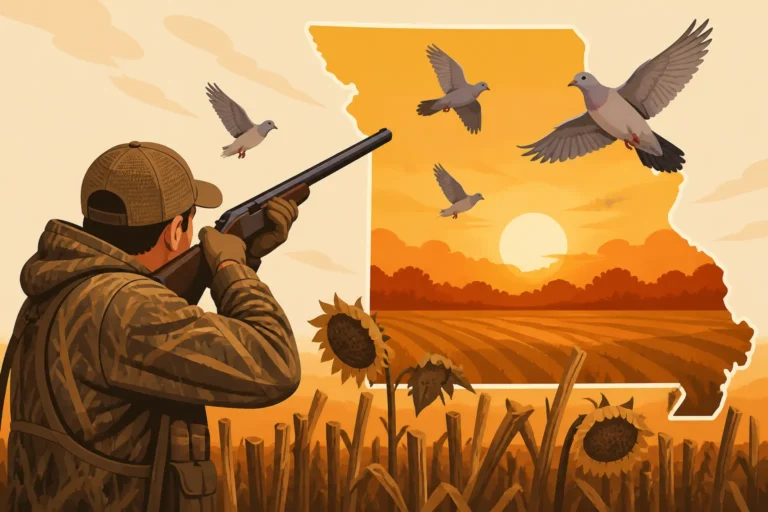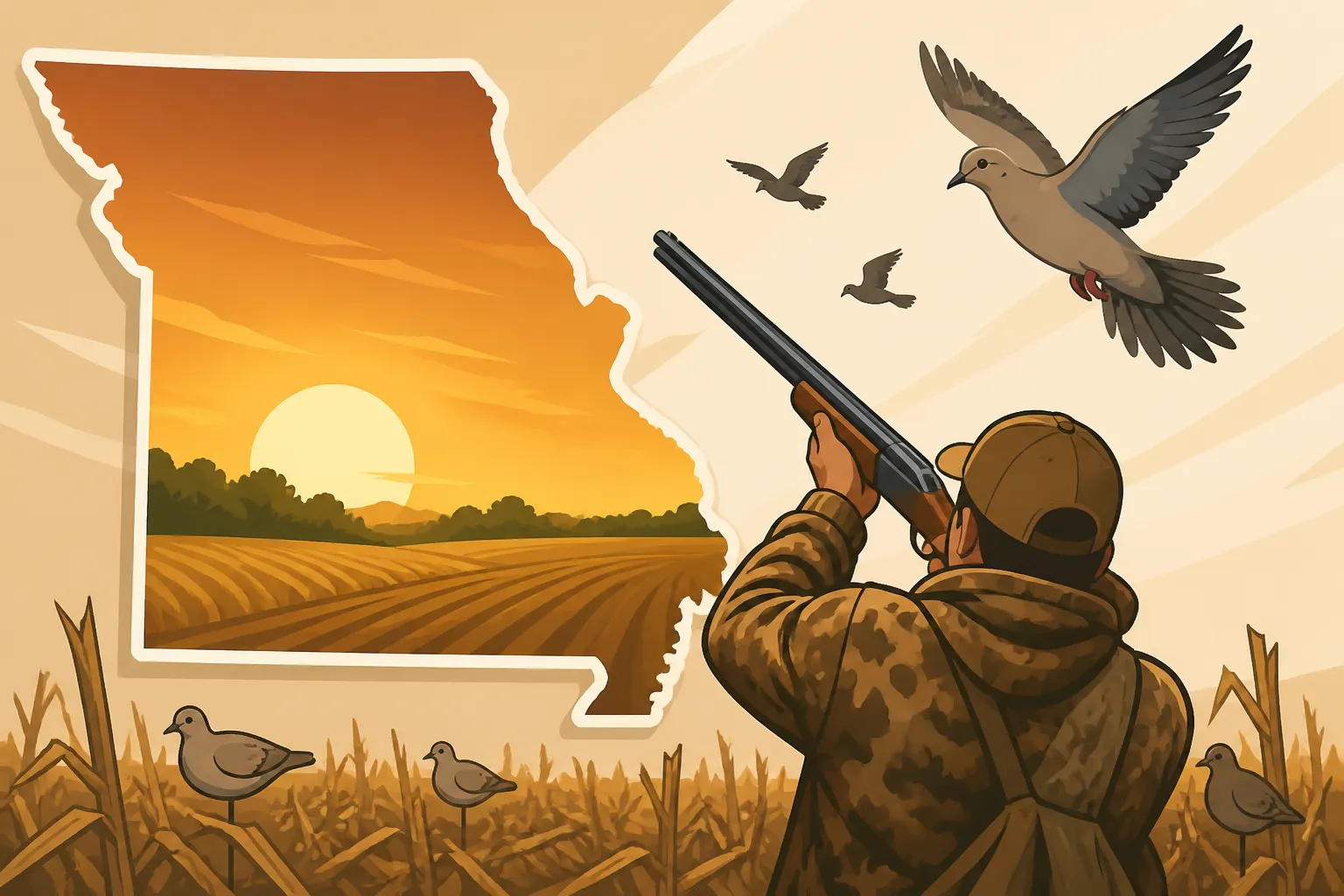
Hunting Missouri Dove Fields on Opening Day
There’s nothing quite like the anticipation of Missouri’s dove season opener. After a long summer, it’s that first real chance to get back in the field, shoulder a shotgun, and enjoy the camaraderie of fellow hunters. But let’s be honest, opening day can also be a chaotic mess, with crowded fields, unpredictable bird patterns, and the challenge of hitting those elusive, darting targets. This comprehensive guide is here to help you cut through the confusion and put you in the best position for a successful, enjoyable hunt.
Understanding Missouri's Dove Season Opener
Missouri’s dove season traditionally kicks off on September 1st, marking the unofficial start of fall hunting for many. It's a day steeped in tradition, often bringing families and friends together for a fast-paced shooting experience. But to make the most of it, you really need to understand the nuances of this specific day, from regulations to the sheer volume of hunters you'll likely encounter.
Key Dates and Regulations
The Missouri Department of Conservation (MDC) sets the dove season dates annually, and while September 1st is almost always the opener, it's crucial to double-check the current year's regulations. The season typically runs for about 60-70 days, often splitting into two portions. For opening day, you're primarily concerned with the daily bag limit and possession limit. Historically, Missouri’s daily bag limit for doves has been 15 birds, with a possession limit of 45. This applies to mourning doves, white-winged doves, and Eurasian collared doves combined, though Eurasian collared doves have a more liberal limit outside the regular season. Shooting hours are usually from one-half hour before sunrise to sunset, giving you a full day, or at least a full morning and evening, to chase birds. Always remember to consult the most current MDC regulations booklet or their website before heading out, as rules can occasionally change.
Beyond the bag limits, there are other important rules to keep in mind. Unlike deer or turkey hunting, baiting is strictly prohibited for migratory birds, including doves. This means you cannot hunt over areas where grain or other food has been intentionally scattered or placed to attract birds. Hunting over a normally harvested agricultural field, however, is perfectly legal. Understanding this distinction is critical to avoid violations. Also, ensure your shotgun is plugged to limit its capacity to three shells: one in the chamber and two in the magazine. These small details can make a huge difference in having a legal and enjoyable hunt.
Permit Requirements and HIP Registration
Before you even think about setting foot in a dove field, you need the proper permits. For Missouri residents, a Small Game Hunting Permit is generally all that's required to hunt doves. Nonresidents will need a Nonresident Small Game Permit. However, there's another crucial step many hunters overlook: the Harvest Information Program, or HIP registration. This free, annual registration is mandatory for anyone hunting migratory birds in Missouri, including doves, even if you are otherwise permit-exempt (like some landowners). It's a federal requirement that helps wildlife agencies gather data on migratory bird harvests. You can usually complete your HIP registration when you purchase your permit online or at a vendor. Without it, your dove hunting is technically illegal. If you're wondering about other specific permit costs, you can find more information on Missouri Fall Turkey and Small Game Permits or Missouri Resident Small Game Permit Cost.
The beauty of Missouri's permit system is its accessibility. You can purchase your permits and complete your HIP registration online through the MDC website, via their MO Hunting app, or at any vendor that sells hunting and fishing licenses. I personally find the app incredibly convenient, especially if I'm making a last-minute decision to hit the field. Just make sure everything is sorted well in advance of September 1st. There’s nothing worse than showing up to a promising field, only to realize you’re missing a critical piece of paperwork and have to waste valuable hunting time sorting it out.
Why Opening Day is Different
Opening day for dove season is truly a unique experience compared to other hunting seasons. For one, it's often still hot, muggy, and very much summer in Missouri, which brings its own challenges. You're likely to see more hunters in the field than any other day of the season, especially on public lands or well-known private spots. This high hunter density means increased competition for prime shooting positions and can also alter bird behavior, making doves warier and more erratic in their flight patterns. The birds themselves might be less educated, having not been pressured yet, but they’ll quickly learn to avoid areas with heavy shooting.
The festive atmosphere of opening day is another distinguishing factor. Many hunters treat it as a social event, a chance to gather with friends and family, often complete with grills, coolers, and plenty of storytelling. While this camaraderie is part of the appeal, it also means you need to be extra mindful of safety and etiquette. Keeping a keen eye on where other hunters are positioned, knowing your shooting lanes, and being courteous goes a long way. The sheer volume of shots fired can also mean more wounded birds that need to be diligently recovered, emphasizing the importance of a good retriever or careful marking of falls.
Scouting and Selecting Your Dove Field
Finding a productive dove field isn't just about luck; it's about preparation. Doves are creatures of habit, driven by food, water, and roosting cover. Understanding these needs and knowing how to scout for them can make all the difference between a frustrating day of watching empty skies and a memorable shoot.
What Makes a Good Dove Field
Doves are primarily seed-eaters, so an ideal dove field will be an agricultural area with ample food sources. Key crops that attract doves include sunflowers, wheat, milo (grain sorghum), millet, and corn. These fields, especially after harvest, provide abundant scattered seeds that doves love to feed on. A well-managed sunflower field, particularly one that has been mowed or disked a few weeks before the season, is often a magnet for birds. The exposed seeds are easy for doves to find. If you're looking for prime spots, specifically check out Sunflower Fields on Missouri Conservation Areas, as these are often intentionally managed for dove hunting.
Beyond food, doves need water and roosting cover. A field adjacent to a pond, creek, or river can be incredibly productive, as doves will fly to water sources, especially in the afternoon heat. Look for exposed mud flats or shallow edges where they can land and drink. Roosting cover, such as a patch of tall timber, a fencerow with mature trees, or even a power line, provides a safe place for doves to rest and survey the surroundings. The best fields often combine all three: an attractive food source, accessible water, and nearby roosting or loafing trees. A field with gravel or sand patches can also be a bonus, as doves ingest grit to help with digestion.
Using Maps and Technology for Scouting
In today's hunting world, digital mapping tools are indispensable for scouting, especially for something as widespread as dove fields. Platforms like GoHunt, OnX Hunt, or even Google Earth can be incredibly powerful. Before you even set foot in the field, use these tools to identify potential hotspots. Look for large agricultural areas, particularly those with the preferred crops we just discussed. Pay attention to fields with irregular shapes, treelines, or areas bordering water. GoHunt, for instance, allows you to overlay different satellite imagery, which can reveal subtle changes in crop types or harvest activity that might not be visible from the road. You can also use public land layers to pinpoint accessible conservation areas.
Once you’ve identified a few promising spots virtually, it’s time for some real-world reconnaissance. Drive or walk around the perimeter of these fields a week or two before the season. Look for actual dove sign: whitewash on power lines, fence posts, or bare branches, which indicates regular perching. Watch for birds flying into or out of fields, especially in the early morning or late afternoon. Pay attention to flight paths and where they seem to be landing. This pre-season intel is invaluable. Knowing where birds are actively using a field, rather than just guessing, will dramatically increase your chances on opening day.
The Importance of Water and Roosting Areas
I can't stress enough how vital water sources are for dove hunting, especially on opening day when it’s still warm. Doves are thirsty birds, often making multiple trips to water throughout the day, particularly after feeding. A small pond, a shallow creek, or even a large puddle on a dirt road can concentrate birds. When scouting, pay close attention to the approach and departure routes doves take to and from these water sources. These flight corridors are often excellent places to set up.
Similarly, nearby roosting and loafing trees are magnets for doves. They'll often spend mid-day hours perched in a stand of dead trees, a tall oak grove, or even power lines, digesting their morning meal and scanning for predators. Observing these areas can give you clues about where birds are coming from and where they’re headed. Positioning yourself between a preferred food source and a key water or roosting area is a classic, highly effective dove hunting tactic. Think of it as intercepting traffic – you want to be on the highway, not just in the parking lot. This strategic placement, aided by the detailed mapping provided by tools like GoHunt, is what separates a truly successful hunt from simply "hoping for the best."
Essential Gear and Setup for Success
Dove hunting, while relatively simple, benefits greatly from having the right gear and a smart setup. Unlike deer hunting where silence is golden, dove hunting often involves quick reactions and a lot of shooting. Being prepared with the right shotgun, ammunition, and comfort items will ensure you can stay focused on the fast-flying action.
Shotguns, Ammunition, and Chokes
For dove hunting, a 12-gauge or 20-gauge shotgun is most common, with semi-automatics or over/unders being popular choices for their quick follow-up shots. You want a gun that you can swing smoothly and shoulder quickly. When it comes to ammunition, light target loads are the standard. Look for 7 ½ or 8 shot in a 2 ¾ dram equivalent or slightly faster. These smaller shot sizes throw a dense pattern, which is ideal for the relatively small body of a dove, and their lighter recoil allows for more comfortable shooting throughout a high-volume day. Make sure you bring plenty – it's not uncommon to shoot several boxes of shells on a good opening day! You can learn more about suitable firearms in the Shotguns and Loads for Missouri Birds article.
Choke selection is also crucial. Many hunters prefer an Improved Cylinder or Modified choke for doves. These chokes provide a wider pattern, which is forgiving for fast-moving birds at closer ranges (typically 20-35 yards). A Full choke might be too tight, leading to missed shots or excessively mangled birds at close range, while a Cylinder choke might be too open for consistent hits at moderate distances. If you have an interchangeable choke system, experiment before the season to see what works best for you and your shotgun.
Decoys, Blinds, and Comfort Items
While not strictly necessary, dove decoys can significantly increase your success. Spinner decoys, which simulate a dove landing, are particularly effective. Stationary decoys placed on dead branches, fences, or even scattered on the ground can also help draw birds in and get them to commit to your area. A small, portable ground blind or simply setting up against a natural backdrop like a fencerow or a patch of taller weeds can help you break up your silhouette and remain concealed from incoming birds. Doves have excellent eyesight, and anything you can do to blend in will help.
Comfort items are often overlooked but are vital for an enjoyable opening day, especially in the Missouri heat. A comfortable, portable chair is a must, as you’ll be doing a lot of sitting between flurries. Hydration is critical, so bring a cooler packed with plenty of water and sports drinks. Sunscreen, insect repellent, and a wide-brimmed hat or cap will protect you from the elements. Don't forget a bird vest or game bag to carry your shells and harvested birds, and a pair of good gloves can save your hands from getting scraped up retrieving birds in thick cover.
Safety and Etiquette in a Crowded Field
Opening day fields, particularly on public land, can get crowded. This makes safety paramount. Always be aware of where other hunters are and never swing your gun past them. Establish clear shooting lanes and only take shots at birds that are safely in your zone of fire. Remember the basic rules of firearm safety: treat every gun as loaded, never point your muzzle at anything you're not willing to destroy, keep your finger off the trigger until ready to shoot, and be sure of your target and what’s beyond it. These fundamentals are even more critical when multiple hunters are present. If you need a refresher, check out Missouri Hunter Education and Orange Rules.
Beyond safety, practicing good etiquette goes a long way. Don't crowd other hunters. Give everyone ample space. If someone is already set up in a prime spot, move on to another area. Avoid sky-busting – taking extremely long shots that often result in wounded birds or misses, which can also disrupt the flight patterns for others. Be courteous when retrieving birds; ask permission if you need to cross into another hunter’s established area. A dog is a fantastic asset for retrieving doves, but keep it under control and respectful of others. A little common sense and courtesy ensure everyone has a positive experience.
Opening Day Tactics for Missouri Doves
Once you're in the field, having a solid strategy will help you connect with more birds. Doves are fast and agile, making them challenging targets, but with a bit of tactical thinking and practice, you can improve your odds.
Positioning for Flight Paths
The key to successful dove hunting is positioning yourself directly under or near a primary flight path. Doves will typically fly along treelines, fencerows, over low saddles in the terrain, or directly between feeding, watering, and roosting areas. Observe these patterns early in the morning or during a lull in the shooting. Watch for how birds are entering and exiting the field. If you notice a consistent flight line, set up 20-40 yards down that path. Don't be afraid to move if your initial spot isn't producing. Sometimes, a slight adjustment of 50-100 yards can put you right in the traffic. Consider where the sun is – you generally want it at your back, making it harder for doves to spot you and easier for you to see them.
Also, think about what doves are doing after they are shot at. If birds are coming into a field and getting shot at from one side, they will often veer away and try a different approach. Being on that "new" approach, or setting up to intercept birds leaving the field after being spooked, can be highly effective. This adaptive strategy is something you can only learn by being present and keenly observing your surroundings. If you're on public land, platforms like GoHunt can help you identify these natural travel corridors and open areas with minimal effort, allowing you to quickly shift your setup as bird movement dictates.
Shooting Smart and Ethical Recovery
Dove hunting is often about volume, but it's important to shoot smart. Don't get caught up in the frenzy and start emptying your gun at every bird that flies by, regardless of range. Focus on taking ethical shots within your effective range, which for most hunters is within 40 yards. Practice your swing and lead before the season. Doves are incredibly fast, and underestimating their speed is a common mistake. You’ll need to lead them significantly, especially on crossing shots. A good rule of thumb is to focus on the bird’s beak and swing through, pulling the trigger as you pass the bird, and continuing your swing.
Ethical recovery is just as important as the shot itself. Wounded birds can travel a surprising distance, and it’s our responsibility as hunters to ensure every bird hit is found. If you don't have a bird dog, mark the fall zone carefully. Pick a landmark – a distinct tree, a clump of weeds, a post – and walk directly to it. Scan the area thoroughly. If the field has thick cover, you might need to get down on your hands and knees. A good retriever is an absolute game-changer for dove hunting, saving countless birds and preventing unnecessary frustration. Training your dog specifically for Walking Missouri Quail Cover With a Dog can also translate well to dove fields, especially when retrieving from thicker areas.
Adapting to Changing Conditions
Missouri weather, especially in early September, can be unpredictable. You might start the day in cool, dewy conditions and end up sweltering in the afternoon sun. Doves are sensitive to weather changes. Hot, dry conditions often mean more frequent trips to water. A sudden cool front or rain shower can drastically alter their feeding and flight patterns. Be prepared to adapt. If the birds are flying high, you might need to adjust your choke or pass on shots that are too far. If they’re working low, a tighter setup might be beneficial.
The presence of other hunters also changes throughout the day. Opening morning is often the busiest, with activity sometimes slowing down mid-day as hunters leave. The evening flight, as birds head back to roost or water, can be another hot window of opportunity. Pay attention to how the birds are reacting to pressure. If they’re flaring hard from a specific part of the field, shift your position. Doves are smart and will learn quickly where the danger zones are. Flexibility and observation are your best friends on opening day.
Disclaimer
Please be aware that hunting regulations can change. Always consult the most current Missouri Department of Conservation (MDC) regulations before engaging in any hunting activities. This guide is for informational purposes only and does not supersede official regulations. Stay safe and hunt ethically.