What Counts as a Missouri Conservation Area
For any hunter new to Missouri, or even those who've been around a while but haven't quite delved into the intricacies of public land, the term "Conservation Area" can sometimes feel a bit generic, lumped in with state parks, national forests, and other accessible lands. However, understanding what truly counts as a Missouri Conservation Area, how they came to be, and what makes them unique is absolutely crucial for planning your hunts and making the most of the incredible opportunities this state offers. This guide will peel back the layers, giving you a deep dive into these vital public lands, helping you navigate their diverse offerings and specific regulations with confidence.
What Exactly Is a Missouri Conservation Area?
When we talk about public hunting land in Missouri, the Missouri Conservation Areas, or CAs as they're often called, stand out as a distinct and incredibly valuable category. They aren't just any parcel of state-owned ground; they are lands specifically acquired and managed by the Missouri Department of Conservation (MDC) with a clear mission: to sustain the state's fish, forest, and wildlife resources and to provide opportunities for all citizens to use and enjoy those resources. This distinction is important because it shapes how these lands are managed, funded, and ultimately, how you can interact with them as a hunter.
Born from the Conservation Sales Tax
The very existence and incredible success of Missouri's Conservation Areas are deeply rooted in a groundbreaking initiative from decades ago: the one-eighth-cent conservation sales tax. This isn't just a dry historical fact; it's the lifeblood of the MDC and directly impacts the vast network of CAs we enjoy today. Voters approved this dedicated sales tax, understanding that robust conservation efforts require stable, long-term funding. Unlike many other state agencies that rely heavily on general revenue or fluctuating federal grants, the MDC has a constitutionally dedicated funding source that is tied directly to the state's economy, not annual political whims.
This stable funding allows the MDC to strategically acquire land, often targeting key habitats, critical migratory corridors, or areas that provide public access in regions where it's otherwise scarce. It means that when you buy a permit or even just groceries, a tiny fraction of that money directly supports the habitat work, land management, and enforcement efforts on CAs. It's a testament to Missourians' long-standing commitment to conservation, and it’s why our state boasts such an impressive amount of public land for hunting. You can learn more about What the Conservation Sales Tax Bought and how it directly benefits hunters.
A Distinct Approach to Land Management
What truly sets CAs apart from, say, federal lands like the Mark Twain National Forest, is the MDC's integrated, intensive management approach. While national forests have their own important mandates, CAs are managed with a very specific Missouri-centric conservation philosophy. This often involves active habitat manipulation, such as prescribed burns to restore glades and prairies, timber stand improvement to enhance mast production for deer and turkeys, or careful water level management on wetland areas to benefit waterfowl.
These management practices are designed to maximize biodiversity and wildlife populations, which in turn creates better hunting, fishing, and wildlife viewing opportunities. This hands-on management contrasts with some larger federal holdings, where management might be broader or less intensely focused on specific game species habitat at a finer scale. On a CA, you might see signs of recent habitat work, from new food plots to thinned timber, all evidence of the MDC's ongoing efforts to create optimal conditions for wildlife and, by extension, for hunters.
Beyond State Parks: The MDC Difference
It’s easy to confuse Conservation Areas with Missouri State Parks, as both are state-owned public lands that offer outdoor recreation. However, their primary missions and management strategies differ significantly, particularly from a hunter's perspective. Missouri State Parks are generally focused on recreation, historical preservation, and often have more developed facilities like campgrounds, picnic areas, and interpretive centers. Hunting is typically very restricted, or not allowed at all, within state park boundaries, with only a handful of specific managed hunts occurring.
Conservation Areas, on the other hand, are explicitly managed for wildlife and forest resources, with hunting, fishing, and trapping as core, fundamental uses. While many CAs offer hiking, bird watching, and other passive recreation, these activities are often secondary to the primary goal of wildlife management and public harvest. This means you're far more likely to find robust hunting opportunities on a CA, from deer and turkey to small game and waterfowl, than on almost any Missouri State Park. Understanding this difference will save you a lot of frustration when looking for legal hunting ground.
The Breadth of Conservation Areas: More Than Just Timber
One of the most remarkable aspects of Missouri Conservation Areas is their incredible diversity. If you think "public land" means only vast tracts of Ozark timber, you're missing out on a huge variety of ecosystems managed by the MDC. From rolling prairies in the north to bottomland hardwood forests along major rivers, and from intensively managed wetlands to rugged Ozark hillsides, CAs truly offer a slice of every habitat type Missouri has to offer. This diversity means that no matter your preferred game species or hunting style, there's likely a Conservation Area that fits the bill.
Forests, Fields, and Floodplains: Diverse Habitats
Across the state, CAs encompass a wide array of landscapes. In northern Missouri, you'll find areas that are a mosaic of timber blocks, crop fields (often managed or leased for wildlife food sources), and brushy draws – prime habitat for deer, turkeys, and small game. These areas might be adjacent to working farms, providing excellent edge habitat. Down in the Ozarks, CAs often feature expansive tracts of oak-hickory forest, rocky glades, and spring-fed creeks, offering challenging but rewarding opportunities for still-hunting or finding those elusive ridge saddles where big bucks travel.
Then there are the critically important floodplain CAs along the Missouri and Mississippi Rivers, or their major tributaries. These areas are characterized by bottomland hardwoods, oxbow lakes, and sloughs, providing crucial habitat for migratory waterfowl, squirrels, and river-bottom deer. The habitat management here might involve encouraging water-tolerant tree species or creating shallow water impoundments. The sheer variety ensures that whether you're looking for squirrels in a hickory grove or a buck working a fencerow, there's a CA designed for it.
Special Use Areas: From Wetlands to Prairies
Beyond the general forest and field CAs, the MDC also manages a number of highly specialized Conservation Areas. Wetland CAs, like Grand Pass, Eagle Bluffs, or Duck Creek, are intensively managed specifically for migratory waterfowl. These areas feature complex systems of levees, pumps, and water control structures to create ideal conditions for ducks and geese, often involving seasonal flooding of crop fields or natural marshland. Hunting on these areas typically requires special rules, draws, and often specific types of gear like waders and decoys, but the rewards can be incredible. Missouri Flooded Timber Duck Tactics can give you a deeper look into hunting these unique areas.
Similarly, prairie CAs preserve and restore Missouri's rapidly diminishing native grasslands, providing vital habitat for species like northern bobwhite quail and various grassland birds. These areas are often managed with frequent prescribed burns and invasive species removal. While they might not be everyone's first thought for deer hunting, they offer unique experiences for upland bird hunters and are critical for preserving a piece of Missouri's natural heritage. Understanding these distinct types helps you choose the right area for your specific hunting interest.
Fishing Access and Recreation: A Multi-Use Mission
While hunting is a primary focus for many Conservation Areas, it’s important to remember that they are truly multi-use lands designed for all citizens to enjoy. Many CAs include fishing lakes, river access points, or miles of stream frontage, providing opportunities for anglers. Hiking trails are common, offering quiet walks for nature enthusiasts, bird watchers, and shed hunters looking for Shed Hunting on Missouri Public Land. In fact, many CAs feature designated primitive camping areas, allowing you to immerse yourself in the natural environment for extended periods.
This multi-use aspect means that hunters will sometimes share the land with hikers, birders, or anglers. It’s a gentle reminder for us to always be aware of other users, practice courtesy, and uphold the highest standards of safety. While hunting is a privileged use on these lands, we are all part of the larger outdoor community enjoying the resources that Missouri’s Conservation Areas provide. Respect for fellow users is just as important as respect for the game we pursue.
| CA Type | Primary Habitat Examples | Main Hunting Opportunities | Other Key Uses | Management Focus |
|---|---|---|---|---|
| Forest/Timber CAs | Oak-hickory, pine, mixed hardwoods | Deer, Turkey, Squirrel | Hiking, primitive camping, birding | Timber Stand Improvement, wildlife food plots |
| Field/Farm CAs | Crop fields, old fields, brushy draws | Deer, Turkey, Rabbit, Quail | Birding, wildlife viewing | Crop rotation, prescribed burns, edge habitat |
| Wetland CAs | Bottomland timber, impoundments, marshes | Ducks, Geese, River Bottom Deer | Birding, photography | Water level management, moist soil units |
| Prairie CAs | Native grasslands, glades | Quail, Rabbit | Birding, native plant viewing | Prescribed burns, invasive species control |
| River/Stream Access CAs | Riparian corridors, sandbars, bluffs | Waterfowl, Deer, Small Game | Fishing, boating, kayaking | Erosion control, bank stabilization, public access |
Navigating Conservation Area Rules and Regulations
Stepping onto a Missouri Conservation Area means you're entering a managed landscape with specific rules designed to ensure safety, fairness, and the long-term health of the resource. While there are overarching statewide regulations that apply to all hunting in Missouri, CAs often have additional, area-specific rules that hunters must be aware of. Ignoring these can lead to fines, loss of privileges, and can negatively impact the perception of hunters as a whole.
Understanding Area-Specific Brochures
This is perhaps the single most important piece of advice for hunting any Conservation Area: always, always check the individual area's brochure. Every official Missouri Conservation Area has a dedicated brochure, usually available for download on the MDC website, and often found in kiosks at the area's parking lots. These brochures are your gospel for that particular piece of ground. They detail specific regulations that might differ from statewide rules, such as:
- Allowed methods of take: While firearms might be allowed statewide for deer during the November portion, a specific CA might be archery-only, or only allow muzzleloaders during certain times.
- Permit requirements: Some managed hunts on CAs require special draw permits in addition to your regular hunting permits.
- Vehicle access: Which roads are open, if any, to vehicles, ATVs, or UTVs.
- Blinds and stands: Rules about erecting permanent stands, using screw-in steps, or when stands must be removed.
- Camping: Whether primitive camping is allowed, and in what specific areas.
- Other restrictions: Things like dog training zones, target shooting areas, or times when portions of the area are closed for specific management activities.
It’s not enough to just glance at the map; read the text. Those small details can make or break your hunt and keep you on the right side of the law. Remember, area rules can change, so even if you've hunted a place for years, it's wise to review the current brochure before each season.
Common Regulations for Hunters
Beyond the area-specific rules, there are several common regulations that apply to hunting on most Missouri Conservation Areas, often mirroring statewide public land rules. These include:
- Hunter Orange: During firearms portions of deer and turkey seasons, specific hunter orange requirements are in effect. While Orange Requirements for Missouri Archers might differ, during most firearms seasons, you’ll need to wear a minimum of 400 square inches of hunter orange visible from all directions. This is a critical safety measure, especially on popular public lands.
- Tree Stands and Blinds: Generally, portable tree stands and ground blinds are allowed, but they must be clearly marked with your full name and address or conservation number. They usually cannot be left unattended for more than a specified period (often 10-14 days) and must be removed by a certain date after the season closes. No permanent stands are allowed, and you typically cannot damage trees (e.g., using screw-in steps or cutting limbs). Be sure to check Blinds and Stands on Missouri Public Land for more details.
- Baiting and Feeding: The statewide ban on baiting and feeding deer applies to all Conservation Areas, with no exceptions. You cannot use attractants like corn, minerals, or other food items to draw deer to your hunting spot. This rule is particularly important for managing deer health and behavior.
- Vehicle Use: Vehicle access on CAs is typically restricted to designated parking areas and gravel roads. Off-road vehicle use is generally prohibited to prevent habitat damage and maintain quiet areas for wildlife. Always consult the map and brochure for allowed routes.
These regulations are in place to ensure fair chase, promote safety, and protect the resource for future generations. Adherence isn't just about avoiding a ticket; it's about being a responsible conservationist.
Permits and Telechecking on CAs
Hunting on a Conservation Area is still hunting in Missouri, which means you'll need the appropriate permits for the game you're pursuing. Whether it's a Missouri Resident Firearms Deer Permit Cost or a Missouri Resident Spring Turkey Permit Cost, you'll need to purchase these either online, through the MO Hunting app, or from a licensed vendor before you head afield. There are often special circumstances, like specific managed hunts on certain CAs that require applying for and drawing a separate permit, so always check the MDC website for details well in advance of the season.
After a successful harvest on a CA, the statewide Telecheck process is mandatory. You must Telecheck your deer or turkey by 10 p.m. on the day of harvest before you move it from the area you harvested it in. This critical step provides the MDC with vital harvest data, which informs management decisions, population estimates, and future hunting regulations. Failing to Telecheck your animal is a serious violation. The MO Hunting App makes this process incredibly easy, allowing you to complete it right from your hunting spot with your phone. Telechecking a Missouri Deer covers this process in more detail.
Finding Your Next Hunting Spot on a CA
One of the biggest challenges, and joys, of hunting public land is finding those hidden gems – areas that might get less pressure, or pockets of habitat that funnel game. With hundreds of Conservation Areas across Missouri, the task might seem daunting, but with the right tools and strategies, you can significantly increase your odds of success.
Leveraging the Missouri Conservation Atlas and Digital Tools
The best place to start your research for any Conservation Area is the official The Missouri Conservation Atlas. This invaluable resource, available both online and in print, provides detailed maps, boundary information, and primary use descriptions for every CA. It's your initial overview to understand the size, general habitat, and designated uses of an area. You can even access and print Downloading Missouri Area Maps for specific CAs directly from the MDC website. These maps often show parking areas, trails, and sometimes even specific habitat features.
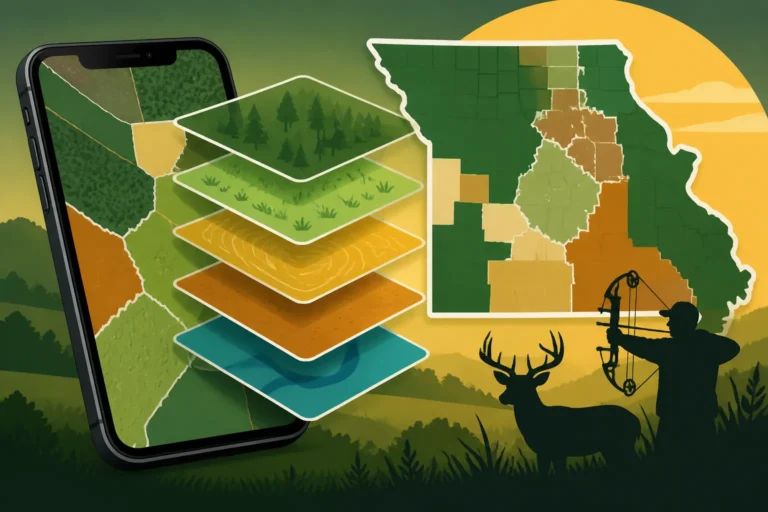
Once you have a handle on the basics, modern digital mapping apps become incredibly powerful. Tools like onX Hunt or GoHunt allow you to overlay property boundaries onto satellite imagery, making it incredibly clear where public land begins and ends. This is crucial for navigating mixed public/private land boundaries and ensuring you stay legal. With onX Hunt, for example, you can see not only the CA boundaries but also different habitat types, topography, and even identify potential pinch points or travel corridors from the comfort of your home. You can drop pins, measure distances, and plan your routes with precision, saving you valuable time in the field.
Scouting Smart: Boots on the Ground and Digital Tools
Effective scouting is a blend of digital reconnaissance and physical boots-on-the-ground exploration. Begin your scouting by studying aerial maps. Look for changes in elevation, creek bottoms, ridge lines, and transitions between different habitat types (e.g., timber to open fields). Identify potential bedding areas, feeding locations, and the travel routes that connect them. Pay close attention to features that might funnel deer or provide ambush points, like saddles on ridges, creek crossings, or thickets bordering crop fields. The Reading Aerial Photos for Ozark Deer can be a great resource for understanding how to interpret these maps in rougher terrain.
Once you've identified promising spots on your map, it's time for physical scouting. Visit the CA well before hunting season, preferably in late winter or early spring when vegetation is sparse. Look for actual deer trails, rub lines, old scrapes, and fresh sign. Pay attention to natural food sources like acorns or persimmon trees. Walk the proposed entry and exit routes to check for obstacles and understand how wind and thermals will affect your scent. Many hunters underestimate the value of off-season scouting; it’s when you learn the intimate details of an area that can make all the difference come opening day.
Identifying Hunting Pressure and Less-Traveled Spots
Public land, by its very nature, can attract significant hunting pressure, especially during popular portions like the November firearms season. Learning to identify areas of high pressure and seeking out less-traveled spots can give you a significant advantage. Obvious signs of pressure include numerous boot tracks near parking areas, old stands, or heavily used trails right off the main access points. Game animals, especially mature bucks, quickly learn to avoid these areas during hunting season.
To find quieter spots, be willing to walk further than most. Consult your maps for remote corners of the CA, or areas that require crossing difficult terrain like steep bluffs or swamps. Oftentimes, simply walking an extra half-mile or navigating a tricky creek can put you into pockets of woods that see significantly less human disturbance. Look for features that create natural barriers to human movement. Consider hunting weekdays instead of weekends, or during less popular seasons like the early archery or late antlerless portions. Even on heavily hunted CAs, there are often overlooked corners where wary deer can find refuge. This strategy is key to Finding Ground Others Walk Past.
The Hunter's Impact and Responsibility on CAs
Hunting on Missouri Conservation Areas isn't just a right; it's a privilege that comes with significant responsibility. The health and future accessibility of these lands depend heavily on how hunters conduct themselves. Our actions reflect not only on us individually but on the entire hunting community and its relationship with the broader public and conservation efforts.
Ethical Considerations and Leave No Trace
Adhering to ethical hunting practices is paramount on Conservation Areas. This means more than just following the letter of the law; it means respecting the land, the wildlife, and other users. Practice strict "Leave No Trace" principles: pack out everything you pack in, including spent shell casings, food wrappers, and anything else. Do not litter, and if you see trash left by others, consider picking it up.
It also means making ethical shot choices, ensuring quick, humane harvests, and diligently tracking every animal. Blood Trailing After Dark in Missouri details important steps if you find yourself in a difficult trailing situation. Recovering your game is a fundamental responsibility. Avoid disturbing wildlife or other hunters unnecessarily, and always be mindful of boundary lines with private property. Maintaining a good public image of hunters ensures continued support for public land hunting and conservation initiatives.
Supporting Conservation Through Participation
Every time you purchase a hunting permit, you are directly contributing to the funding of the Missouri Department of Conservation and, by extension, the management of Conservation Areas. This direct financial support, combined with the dedicated sales tax, is a powerful engine for conservation in the state. Beyond permits, consider participating in MDC surveys, reporting wildlife observations (like a Bowhunter Observation Survey), or even volunteering for habitat improvement projects on local CAs.
By being an active participant, you’re not just taking from the resource; you’re contributing to its health and longevity. Hunters have historically been the backbone of conservation in North America, and maintaining this legacy is crucial. Your involvement, however small, helps reinforce the importance of these public lands and the programs that sustain them.
The Future of CAs and Hunter Involvement
The future of Missouri Conservation Areas, and the hunting opportunities they provide, is intrinsically linked to ongoing support from hunters and the public. As population centers grow and land use changes, the pressure on existing public lands will only increase. By being responsible, ethical, and engaged stewards of these areas, hunters help ensure that future generations will have the same, if not better, opportunities to experience Missouri’s incredible wildlife resources.
Advocate for conservation, teach new hunters the importance of ethical conduct and respect for the land, and continue to support the MDC’s mission. These Conservation Areas are a treasure, a testament to forward-thinking conservation, and they represent some of the very best public hunting ground available. By understanding what they are, how they work, and our role in their preservation, we can all contribute to keeping Missouri wild for years to come.
Disclaimer
This article is for general informational purposes only and does not constitute professional advice. Laws, prices and regulations vary by location and change over time. Consult a qualified professional for guidance on your specific situation.