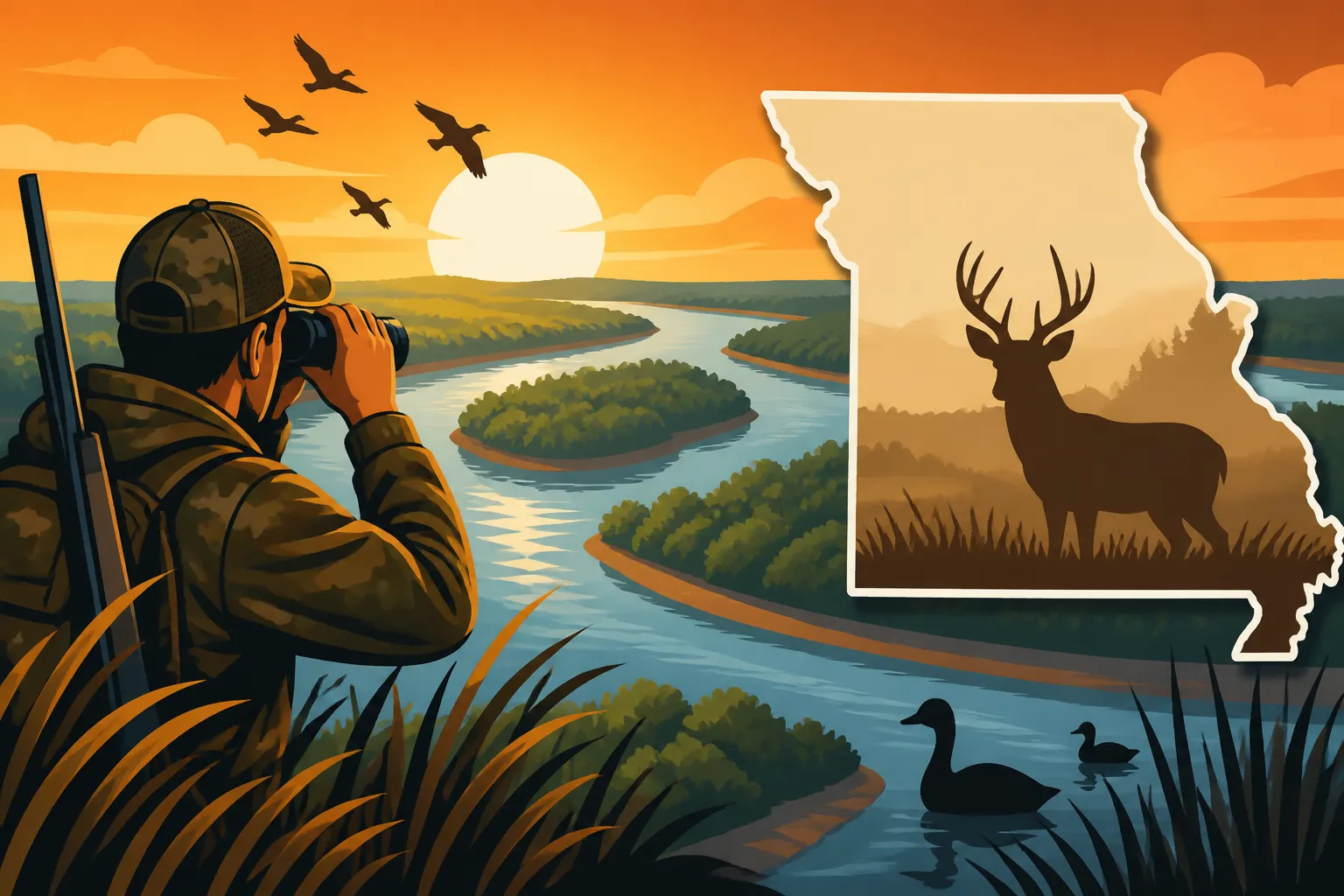
Mississippi River Island Hunting
Hunting the islands of the mighty Mississippi River in Missouri often feels like stepping into a forgotten world, a mosaic of timber, sandbars, and backwaters that can be incredibly productive yet incredibly challenging. Many hunters, myself included, have stood on the main banks, binoculars pressed to our eyes, wondering about the secrets those islands hold, but hesitant to brave the unpredictable currents and complex access. This guide is dedicated to demystifying Mississippi River island hunting in Missouri, offering practical insights into navigation, regulations, and effective strategies so you can confidently explore these unique hunting grounds.
Understanding the Unique Landscape of Mississippi River Islands
The Mississippi River isn't just a boundary; it's a living, breathing ecosystem that constantly reshapes itself. The islands within its flow are a testament to this dynamic nature, offering a blend of raw wilderness and surprising bounty for those willing to learn its rhythms. This isn't your typical Missouri timber block or rolling farm ground. This is a special beast, and understanding its quirks is your first step to success.
The Dynamic Nature of River Islands
One of the most defining characteristics of Mississippi River islands is their ever-changing form. These aren't static landmasses; they are sculpted by the powerful forces of water, constantly eroding on one side and accreting new sand and silt on another. What was a deep channel last year might be a shallow sandbar this year, and a dense thicket could be partially submerged or completely washed away after a major flood. This means that scouting isn't a one-and-done affair. You need to be prepared for conditions to literally shift under your feet. The river bottom, including what makes up these islands, is often sandy and silty, which means unstable footing, especially in low-lying areas. It's a place where adaptability isn't just a good idea; it's a survival trait. High water events can completely transform an island, washing out trails, creating new sloughs, and depositing debris that alters game movement. Conversely, periods of low water can expose vast new sandbars and gravel beds, offering new access points or creating barriers you didn't anticipate.
Habitat and Game Species on River Islands
Despite their volatile nature, Mississippi River islands are incredibly rich in wildlife habitat. The combination of water, emergent vegetation, young timber, and established hardwoods creates a diverse environment. For deer hunters, these islands can be surprisingly good. The dense cover often found on islands provides excellent bedding areas, and the surrounding water acts as a natural barrier against human intrusion, offering deer a sense of security. You’ll find a mix of brushy thickets, willow stands, cottonwoods, and occasionally some scattered oaks or pecans in the more stable sections. Deer will often cross channels, especially during the rut, using these islands as travel corridors or escape routes.
Waterfowl hunting is another major draw. The sloughs, backwaters, and smaller side channels around these islands are magnets for ducks and geese, particularly during migration. Missouri Flooded Timber Duck Tactics can certainly apply here, but you'll also find opportunities in more open water or along the edges of larger islands. Beyond deer and ducks, small game like squirrels and rabbits can thrive in the dense cover, offering additional hunting opportunities. Trappers often find success here with furbearers like raccoons, beavers, and muskrats, which are naturally drawn to the river environment. Predators like coyotes also frequent the islands, especially when deer are abundant, so calling for them can be effective.
Navigating Access and Ownership on Mississippi River Islands
One of the biggest hurdles, and frankly, frustrations, when it comes to Mississippi River island hunting is figuring out who owns what and how to legally get there. It’s not as straightforward as walking onto a typical Missouri Conservation Area. You're dealing with a patchwork of federal, state, and sometimes private ownership, all complicated by the ever-shifting river.
Public vs. Private Islands
The Mississippi River is unique in that a significant portion of its islands and shoreline is managed by federal agencies, primarily the U.S. Army Corps of Engineers (USACE). These areas are often open to public hunting under federal regulations, which often align with state regulations but can have their own specific quirks. However, some islands, or portions of islands, are privately owned. This is where it gets tricky. The exact boundaries can be fluid due to erosion and accretion, making it difficult to definitively know if you're on public or private ground without good mapping tools.
This is precisely where modern technology like onX Hunt or GoHunt really shines. These apps allow you to see property lines overlaid on satellite imagery, often identifying USACE land, state conservation areas, or private parcels. Before you even think about loading your boat, pull out one of these mapping tools and spend some serious time scouting digitally. Look for the "public" green shading to ensure you're on legal ground. If an island or a portion of it is private, you absolutely need permission from the landowner. Trespassing on a river island, even if you thought it was public, carries the same penalties as trespassing anywhere else. Always err on the side of caution. Remember, just because it's surrounded by water doesn't automatically make it public property.
River Access Points and Boat Considerations
Getting to these islands usually requires a boat, and not just any boat will do. The Mississippi is a powerful river with strong currents, commercial barge traffic, and often shallow, debris-laden waters, especially near the islands themselves. You'll need a reliable boat that can handle these conditions. A jon boat with a shallow-running jet motor or a propeller-driven outboard with a jack plate is a common choice, allowing you to navigate shallower backwaters and avoid prop damage. Kayaks and canoes can work for very close-in islands during calm conditions, but are generally not recommended for crossing major channels due to the current and boat traffic.
Finding suitable boat ramps can also be a challenge. While there are public ramps along the main stem, they might be several miles from the islands you want to hunt. Scout these ramps beforehand, checking water levels and accessibility. Parking can be an issue, especially on busy weekends. Once you're on the river, safety is paramount. Always wear a life jacket, especially when alone, and inform someone of your float plan. Be aware of wing dams, submerged logs, and constantly shifting sandbars that can suddenly appear. It’s a very different environment than launching on a quiet lake, and respect for the river's power is non-negotiable.
Regulations and Safety for River Island Hunting in Missouri
Hunting on Mississippi River islands requires a deep understanding of layered regulations and a strong commitment to safety. You're not just dealing with Missouri state rules; you're often operating under federal guidelines, and the river itself presents unique hazards.
Missouri Department of Conservation Rules
When hunting any game in Missouri, your primary reference will always be the Missouri Department of Conservation (MDC) regulations. This includes needing the correct Missouri Deer Permits and How to Buy One or Missouri Fall Turkey and Small Game Permits, depending on what you're after. All standard season dates, bag limits, and methods of take apply. For example, if you're bowhunting, the rules for Bowhunting Missouri's Four-Month Archery Season are in effect. If you're using a firearm during the Missouri's Eleven-Day November Firearms Deer Season, then those rules are paramount.
One key area to pay attention to is specific regulations for public lands. Even if a federal agency owns the land, Missouri hunting regulations generally apply. Always check the MDC's online atlas or area brochures for any site-specific rules that might override general state regulations, such as restrictions on ATVs, camping, or the use of certain weapons. The MDC also outlines rules for Missouri Hunter Education and Orange Rules, which are crucial, especially during firearms seasons when other hunters might be present. Always remember to Telechecking a Missouri Deer or turkey after harvest, regardless of where you killed it.
US Army Corps of Engineers and Other Federal Oversight
Many of the islands in the Mississippi River are under the jurisdiction of the U.S. Army Corps of Engineers (USACE). While the USACE typically defers to state wildlife agencies for hunting seasons and bag limits, they often have their own set of access and land-use rules. These might include restrictions on motorized vehicles, limits on primitive camping, or specific rules regarding permanent blinds or tree stands. It's not uncommon for federal lands to have different rules about Blinds and Stands on Missouri Public Land than state areas.
You’ll want to consult the specific USACE district's regulations (e.g., St. Louis District, Rock Island District) for the stretch of river you plan to hunt. These can usually be found on their websites. Sometimes, portions of these federal lands might be designated as wildlife refuges or other special management areas, which could have further restrictions or even closures to hunting. For instance, Missouri National Wildlife Refuges often have very specific rules. It's a bit of homework, but knowing these rules is crucial to avoid a citation and ensure a safe, legal hunt.
Critical Safety Considerations on the River
Hunting river islands presents a unique set of safety challenges that go beyond typical woods hunting. The number one rule is to respect the river. Strong currents, especially during high water, can quickly become dangerous. Always check river levels and forecasts before you go. A calm morning can turn into a treacherous afternoon with a sudden storm or increased current from dam releases upstream.
- Boat Safety: Beyond wearing a life jacket, ensure your boat is well-maintained, has all required safety gear (throw cushion, anchor, lights if operating near dawn/dusk, working motor), and enough fuel for your trip. Tell someone exactly where you're going and when you expect to return.
- Weather: Sudden thunderstorms can whip up dangerous waves on the main channel. Fog can roll in quickly, making navigation impossible. Be prepared for rapid changes.
- Isolation: Many islands are remote. If you have an emergency – a fall, an injury, a broken-down boat – help might be a long way off. Carry a fully charged cell phone (though service can be spotty), a first-aid kit, and enough supplies (water, snacks, extra layers) to spend an unplanned night out. A satellite messenger device, like those offered by Garmin inReach or Zoleo, can be a literal lifesaver in these situations where cell service is unreliable.
- Changing Landscape: Be aware that sandbars and channels can change quickly. What was deep enough to motor through yesterday might be shallow today. Always navigate cautiously.
- Other River Users: The Mississippi is a working river. Be vigilant for commercial barges, towboats, and other recreational boaters. Never assume they see you.
Tactics for Successful Hunting on Mississippi River Islands
Once you've navigated the access and regulations, it's time to talk hunting. The unique environment of Mississippi River islands calls for tailored strategies. These aren't your typical ridge saddles or field edges; they require a different approach.
Deer Hunting Strategies
Deer on river islands behave somewhat differently than their mainland counterparts. They are often less pressured, but their movement patterns are heavily influenced by the water and the linear nature of the islands.
- Scouting is Paramount: Before you even consider hunting, extensive scouting is crucial. Look for natural funnels where an island narrows or where thick cover meets a more open edge. Search for tracks on exposed sandbars indicating where deer are crossing sloughs or the main channel. Reading Aerial Photos for Ozark Deer is a great start, but pair it with on-the-ground (or on-the-water) recon. Pay attention to rub lines and scrape lines, especially along the interior edges of the island or where trails parallel the water. Deer will often stick to the highest, driest ground during periods of higher water, so identify those areas.
- Entry and Exit Routes: Your approach needs to be stealthy. Since you’re likely coming in by boat, consider how your entry affects the deer. Can you motor up a quiet backwater, or do you need to anchor far away and paddle or wade in? Wind is critical, as always, but thermals can be tricky over water. Early morning thermals might pull scent down towards the water, and evening thermals might carry it up off the water. Consider setting up where the water acts as a barrier, preventing deer from circling downwind of you.
- Stand Placement: Look for stands that offer good visibility into dense bedding areas, or overlook trails that parallel water edges. A portable tree stand or saddle can be invaluable for accessing these spots, especially on public land where you can't leave stands up year-round. Given the dense vegetation, shots are often close-range, so practice your quick, quiet drawing for archery or aiming for shotgun slugs.
- Timing: The rut can be fantastic on these islands. Bucks will actively cruise for does, and the relatively confined space of an island can concentrate their movements. Also, consider hunting immediately after a flood when deer might be pushed to higher ground on the islands, or during severe cold spells when they seek thermal cover.
Waterfowl and Small Game Opportunities
River islands are natural magnets for migratory birds and small game, offering diverse hunting experiences.
- Duck and Goose Tactics: For ducks, focus on the sloughs, backwaters, and smaller channels adjacent to the islands. These areas offer calmer water and often abundant natural foods. Missouri Flooded Timber Duck Tactics can be adapted here, even if it's not strictly timber. Look for areas with dense aquatic vegetation or flooded timber. Setting out a modest spread of decoys, perhaps a jerk rig for motion, and using effective calling can be highly productive. Knowing your Missouri Duck Daily Bag Limit and species identification is crucial. For geese, larger sandbars or agricultural fields adjacent to the river are key. Lay out blinds or natural blinds brushed into cover are often necessary. Hunting Missouri River Sandbars for Ducks applies directly here, as often these hunters are also focused on geese.
- Scouting for Waterfowl: Pre-season scouting by boat can help you identify key roosting and feeding areas. Look for concentrations of birds, natural food sources, and protected water. Early morning glassing from a distance can reveal where ducks are pitching in.
- Small Game Potential: Don't overlook the small game on these islands. Squirrels will be found in areas with mature nut-bearing trees like oaks and pecans, if they exist on the more stable parts of the island. Rabbits will hold tight in dense brush piles, briar thickets, and willow stands. Walking these areas slowly with a shotgun can yield a surprising amount of action. A good bird dog can be invaluable for flushing rabbits from thick cover.
- Concealment is Key: Whether for deer, ducks, or small game, concealment is critical. The dense, often featureless cover on many islands means you need to become part of the landscape. Natural blinds built from driftwood and vegetation, or a portable pop-up blind, can be highly effective. The key is to blend in completely with the chaotic natural setting of the river island.
Here's a quick overview of some considerations for public vs. private access on these unique hunting grounds:
| Feature | Public River Island Hunting (e.g., USACE Land) | Private River Island Hunting (with Permission) |
|---|---|---|
| Access | Generally open, but often boat-only | Requires explicit permission from landowner |
| Regulations | Missouri state laws + federal (USACE) rules | Missouri state laws; landowner may add restrictions |
| Hunting Pressure | Can be high near ramps, but decreases with remoteness | Varies by landowner; often lower |
| Scouting | Essential for finding unpressured zones | Easier to establish long-term strategies |
| Mapping Tools | onX Hunt, GoHunt crucial for boundaries | Useful for terrain, but permission is primary |
| Stand Placement | Portable stands/saddles often required | Permanent stands may be allowed by landowner |
| Ethical Considerations | Respect other public users, pack in/out | Maintain good relations with landowner, pack in/out |
Hunting Mississippi River islands offers a truly unique challenge and reward. It demands adaptability, careful planning, and a deep respect for the river. But for those willing to put in the effort, these wild places can provide some of Missouri's most memorable hunting experiences.
Disclaimer
This article is for general informational purposes only and does not constitute professional advice. Laws, prices and regulations vary by location and change over time. Consult a qualified professional for guidance on your specific situation.