Best Missouri Counties for Public Land Deer
It's no secret that finding good deer hunting on public land in Missouri can feel like searching for a needle in a haystack. With so much ground to cover and varying deer densities and hunting pressure, it's easy to get overwhelmed trying to pick a spot. This guide is here to help you cut through the guesswork by highlighting some of Missouri's best counties for public land deer hunting, along with practical advice for making the most of these opportunities.
What Makes a County Good for Public Land Deer?
When we talk about "best" counties for public land deer, it’s not just about raw deer numbers or even the most giant bucks taken statewide. For public land hunters, it’s a nuanced balance. You're looking for counties that consistently offer reasonable deer populations, access to decent habitat on public ground, and where the hunting pressure, while present, doesn't completely shut down deer movement. It’s about opportunity and the potential for a rewarding hunt, not just a high-fence experience.
Balancing Deer Density and Hunter Pressure
Imagine heading into a beautiful chunk of public timber, only to find orange vests every 100 yards. High deer density is fantastic, but if every hunter in the state has the same idea for the same small piece of ground, your chances dwindle. The "best" counties often manage to strike a balance, either through sheer size of public holdings or through a landscape that naturally disperses hunters. A county might have lower overall deer density than a highly managed private farm country, but if its public land is vast and challenging, you might find pockets where deer feel less pressured. It really boils down to finding areas where you can put in the work and be rewarded.
Key Habitat Types on Public Land
Missouri offers a diverse range of landscapes, and each has its own appeal for deer. In the northern and central parts of the state, you'll find a lot of agricultural ground interspersed with timber blocks. These areas provide abundant food sources like corn and soybeans, which can grow some impressive deer. However, public access to these food-rich areas can be limited, often relegated to timbered draws or creek bottoms adjacent to private fields. Hunting a Timbered Draw in Row-Crop Country is a tactic worth learning for these areas.
Contrast that with the Ozarks, where vast expanses of oak-hickory forest dominate. Here, deer rely more on natural forage, acorns, and browse. The public land tends to be more contiguous, offering long walks and a different style of hunting. Both types of habitat can be excellent, but they require different strategies. Knowing what kind of terrain and food sources you're likely to encounter helps in narrowing down your target counties and preparing your hunt.
Public Land Acreage and Accessibility
Another critical factor is the sheer amount of public land available. A county might have great deer genetics, but if only a few hundred acres are open to hunting, it’s going to be a tough draw. We’re looking for counties with significant public acreage, whether that’s through numerous Conservation Areas (CAs), large tracts of Mark Twain National Forest, or other public access points. More land usually means more room for hunters to spread out and for deer to find sanctuary. Accessibility is also key; is it easy to get into these areas, or will you be fighting through thick brush just to reach your starting point? Using tools like onX Hunt can be a game-changer for identifying property lines and access points on unfamiliar public ground, helping you strategize your entry and exit routes.
North Missouri's Top Public Land Deer Counties
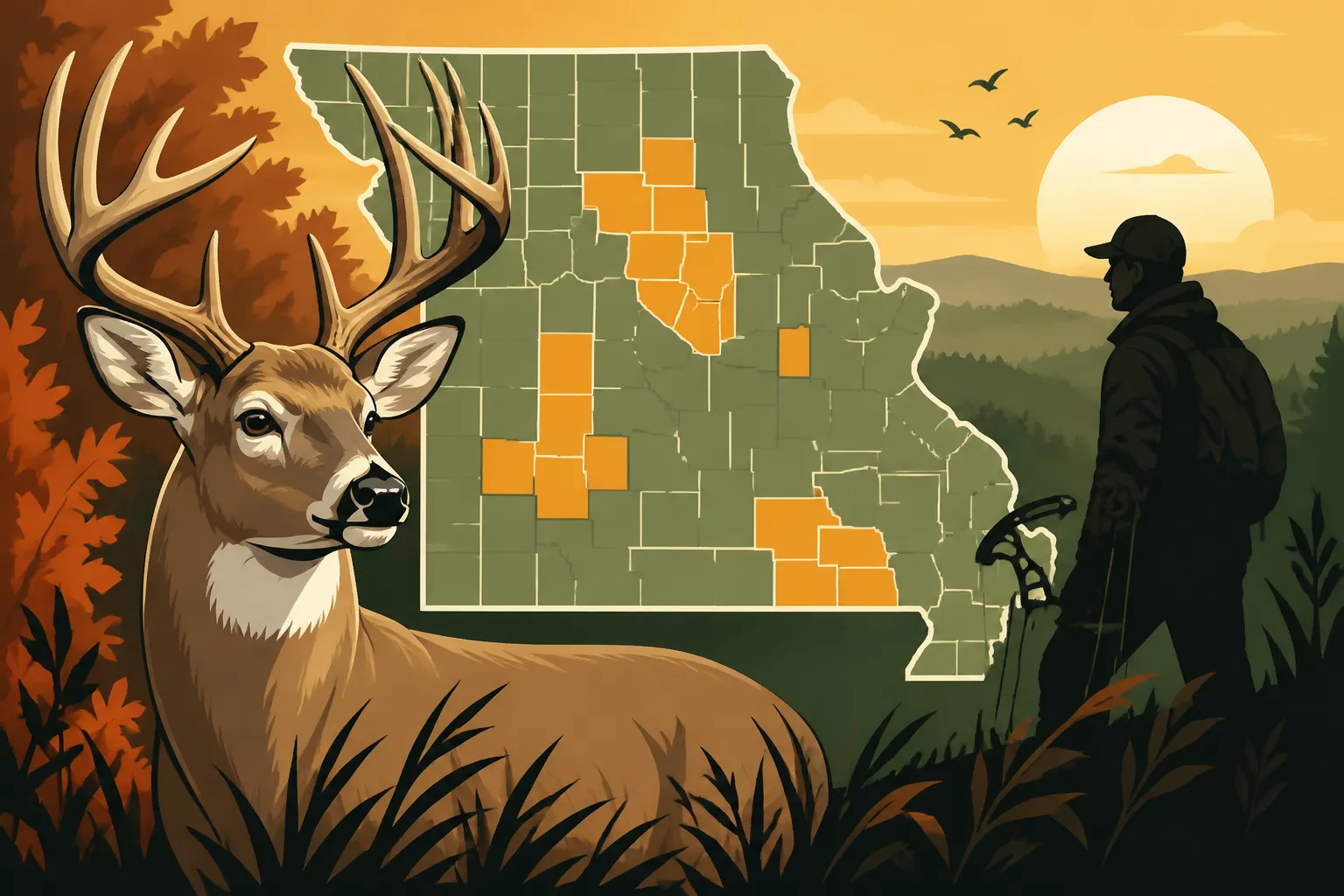
North Missouri is famous for its big deer, and while much of that reputation comes from private land, there are still excellent public land opportunities if you know where to look. These counties often feature a mix of agriculture and timber, with deer leveraging both for food and cover.
Adair County and Schuyler County: Timbered Blocks and Crop Edges
When you think of northern Missouri, you often picture endless corn and bean fields, and while that’s true, counties like Adair and Schuyler offer some hidden gems. These counties hold significant blocks of timber, often along major creek and river drainages, or within dedicated conservation areas that are big enough to absorb hunter pressure. Deer here benefit from the rich agricultural diet, allowing them to grow larger and healthier.
Hunting in these areas often involves focusing on the timbered edges adjacent to crop fields, or finding funnels and pinch points within the larger timber blocks. Look for areas where fields narrow into strips of woods or where draws lead down to water sources. These are natural travel corridors for deer. You might also find good success scouting Hunting a Missouri Fencerow Between Fields. The challenge is navigating the patchwork of public and private ground, which is where a reliable mapping app like onX Hunt truly shines, helping you stay on the right side of the fence.
Knox County and Lewis County: River Breaks and Remote Pockets
Further east in North Missouri, Knox and Lewis counties also present compelling public land options. These areas are characterized by the rolling hills and river breaks that dissect the agricultural plains, creating significant elevation changes and dense cover that deer love. The proximity to the Mississippi River also means rich bottomland habitat in some areas.
Finding success here means being willing to walk a bit further than the next guy. Focus on areas that are harder to access, perhaps requiring a longer hike in or crossing some rougher terrain. Deer in these counties are used to human activity, but they will retreat to the densest cover when pressured. Look for overlooked pockets of timber, steep creek banks, and thickets that offer thermal cover in colder weather. Persistence and good boots are your best friends in these parts.
Ozark Region Public Land Deer Hotspots
The Ozarks offer a different beast entirely when it comes to deer hunting. Less agriculture, more vast timber, and a lot more hills. Here, success on public land often comes down to understanding topography, thermals, and deer movement patterns in big woods.
Phelps County and Gasconade County: Mark Twain and River Bluffs
Phelps and Gasconade counties are excellent examples of Ozark deer hunting. They feature significant portions of Mark Twain National Forest, providing thousands of acres of contiguous public land. These areas are characterized by steep ridges, deep hollows, and hardwood forests. Deer here rely heavily on acorn crops, browse, and natural clearings for food.
Hunting the Ozarks demands a different mindset. You'll want to focus on terrain features like ridge saddles, benches, and creek bottoms. Deer often use these features to navigate the steep terrain, providing predictable travel routes. Setting Up on a Bench Above a Creek or Hanging a Stand on a Ridge Saddle can be highly effective strategies. Understanding Wind and Thermals in Ozark Hills is absolutely crucial, as deer will use them to their advantage. Expect to put in some serious legwork, as the best spots are rarely near the road.
Howell County and Shannon County: Deep Woods and River Drainages
Even deeper into the Ozarks, Howell and Shannon counties offer vast, wilder hunting experiences. These counties also boast large tracts of Mark Twain National Forest, as well as several large Conservation Areas that can feel incredibly remote. This is true big woods hunting, where deer numbers might not be as high as in farm country, but the deer tend to be less pressured and often older.
Here, you're hunting for a mature buck that has lived his life dodging hunters in dense timber. Focus on finding subtle sign, like rubs and scrapes, far from main trails. Look for transitions in timber types, thick bedding areas on south-facing slopes for warmth, and natural travel corridors along drainages or benches. Still-Hunting a Missouri Ozark Hollow is a classic tactic that works well in these rugged areas. Be prepared for long walks, challenging terrain, and the need for excellent navigation skills. Carrying a fully charged phone with a detailed map like those found on onX Hunt, or even a dedicated GPS unit, is highly recommended when venturing deep into these sprawling landscapes.
Public Land Deer Hunting: North Missouri vs. Ozarks
To help visualize the differences and choose what might suit your hunting style best, here's a quick comparison of general characteristics for public land deer hunting in North Missouri versus the Ozarks.
| Feature | North Missouri Public Land | Ozark Public Land |
|---|---|---|
| Primary Habitat | Timbered blocks, draws, creek bottoms; adjacent to agriculture | Vast oak-hickory forests, steep ridges, hollows, river drainages |
| Food Sources | Corn, soybeans (private), acorns, browse, natural forage | Acorns, browse, natural clearings, mast crops |
| Terrain | Rolling hills, often flatter with timber blocks breaking up fields | Steep, rugged, significant elevation changes, rocky |
| Deer Density | Generally higher due to agriculture, but can be pressured | Moderate to lower, but often less pressured deer |
| Hunter Pressure | Can be high in smaller, accessible timber blocks | Dispersed over larger areas, but concentrated in accessible spots |
| Typical Challenge | Navigating public/private boundaries, finding unpressured pockets | Long walks, rugged terrain, understanding thermals, finding deer in vastness |
| Scouting Focus | Field edges, pinch points, funnels, transition zones | Ridge saddles, benches, creek bottoms, bedding areas, subtle sign |
Strategies for Hunting These Public Land Counties
Just knowing where to go isn't enough; you also need a solid plan for how to hunt these challenging public lands. Success often hinges on doing things differently than the masses.
Deep Scouting and Understanding Topography
Before you ever set foot in a stand, deep scouting is paramount. This isn't just a quick walk-through; it involves serious map study, often with topographical maps and aerial imagery. Using digital mapping apps like onX Hunt allows you to analyze terrain features, identify potential funnels, bedding areas, and travel corridors from the comfort of your home. Look for hidden pockets, changes in elevation that might create thermal hubs, or thickets that are just far enough from the main access points to deter other hunters.
Once you’ve identified potential spots on the map, make a physical scouting trip. This helps you verify what you saw digitally, check for fresh sign, and understand prevailing wind patterns and entry/exit routes. Pay attention to water sources, especially during early archery season when Field Dressing and Cooling in Early-Season Heat is critical. A good understanding of the land before you hunt it drastically increases your odds.
Hunting the Edges and Beyond the Crowds
Regardless of whether you're in North Missouri farm country or the deep Ozarks, a golden rule of public land hunting is to get away from the crowds. Most hunters won't venture too far from easily accessible trails or parking lots. That means the best opportunities often lie a mile or more in, or in areas that require extra effort to reach, like crossing a creek or navigating dense thickets.
In North Missouri, this might mean finding smaller, overlooked timbered draws that connect larger blocks, or focusing on the least-traveled side of a large Conservation Area. In the Ozarks, it means embracing the long walk, tackling steep ascents, and venturing into the vastness of the national forest. Hunting Pressure on Missouri Public Ground is a real factor, so learning to identify and avoid it is key. Don't be afraid to put in the miles; it's often the difference between seeing a few does and encountering that elusive public land buck.
Adapting to Conditions and Deer Behavior
Deer are creatures of habit, but they are also incredibly adaptable, especially when pressured. Your success on public land will depend on your ability to adapt your tactics to changing conditions and deer behavior. If the pressure is high, consider switching to still-hunting or trying small, two-person drives on smaller tracts of timber. Two-Person Drives on Small Timber Tracts can be surprisingly effective.
If the weather changes, deer patterns will change too. A cold front might push them to thick thermal cover, while a late-season snow can concentrate them on specific food sources. Be flexible with your stand locations and willing to move if the sign isn't fresh or if you're not seeing deer. The more time you spend in the woods, the more you'll learn about the local deer and how they react to different situations.
Disclaimer
This article is for general informational purposes only and does not constitute professional advice. Laws, prices and regulations vary by location and change over time. Consult a qualified professional for guidance on your specific situation.