Hunting Missouri Road Right-of-Way
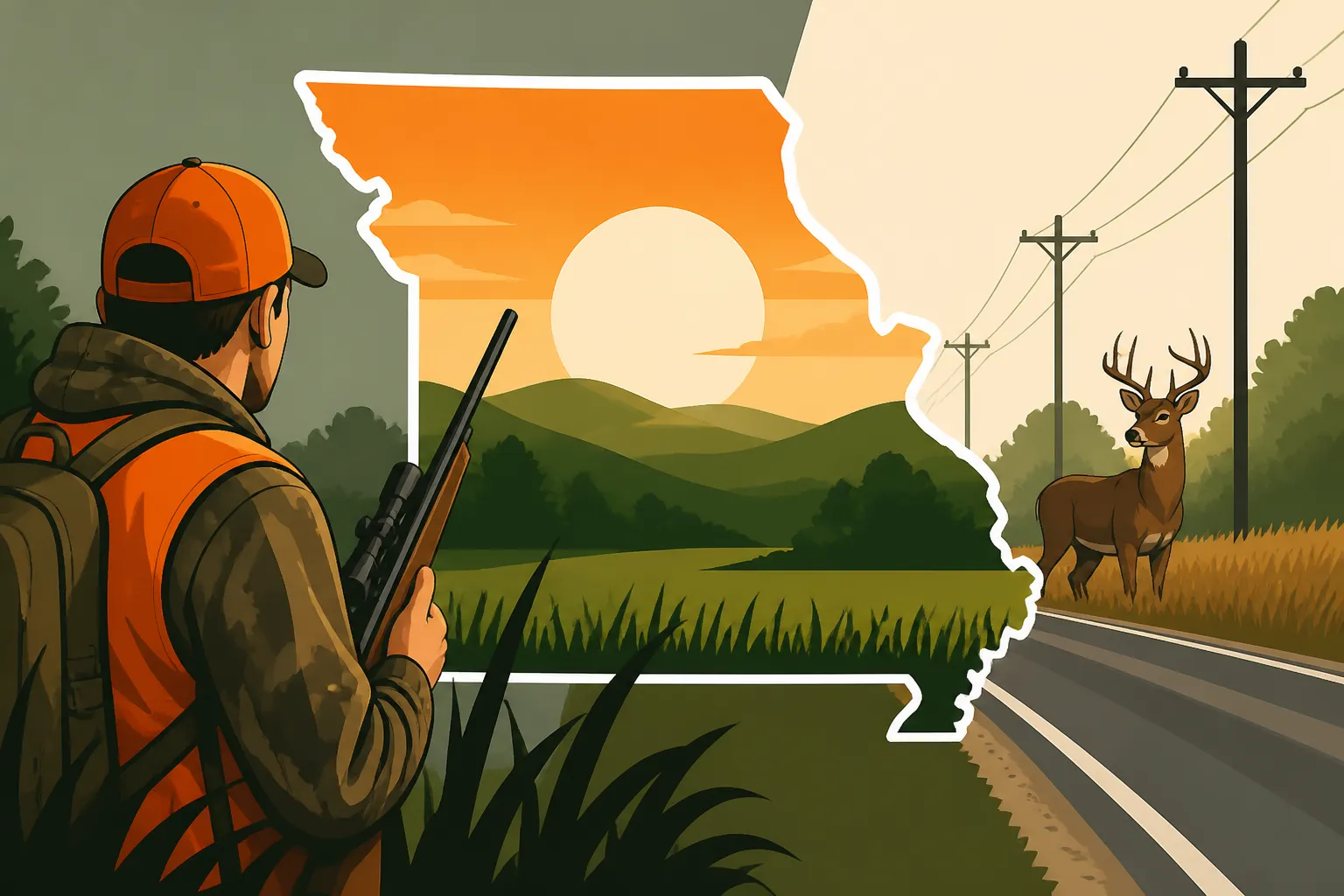
It's a familiar scenario for any hunter in Missouri: you're driving down a county road, maybe heading to your stand or just scouting, and suddenly, there it is – a magnificent buck feeding just off the blacktop, or a strutting gobbler putting on a show right on the edge of a field. Your heart races, your mind starts spinning, and then the questions hit: can I even hunt there? What exactly are the rules about hunting Missouri road right-of-way? This guide is here to untangle that knot of confusion, helping you understand the legalities and ethical considerations so you can make informed, safe, and lawful decisions when game pops up near a public road.
Defining the "Right-of-Way" in Missouri Hunting Context
Before we can even talk about hunting, we need to clarify what "road right-of-way" actually means in Missouri, because it's often misunderstood. Many folks think if they're on a gravel road or a public county road, anything beyond the asphalt or gravel is fair game, or at least falls under some public access umbrella. That's a dangerous assumption to make, and it can land you in serious trouble.
Understanding Legal Easements and Property Lines
In Missouri, a road right-of-way is essentially a legal easement that allows the public (and government entities) to use a strip of land for transportation. It's the area where the road, ditches, and often a bit of shoulder and verge are located. However, the critical part often overlooked is that the underlying land is almost always still privately owned. The county or state simply has an easement for the road itself. This means that while you can typically drive or walk on that right-of-way without trespassing, your right to hunt on it is severely restricted, not just by safety rules, but by the fact that you're still essentially on private property. The property lines of the adjacent landowner usually extend underneath the road right-of-way. Tools like onX Hunt are invaluable here, as they often layer property boundaries over aerial maps, allowing you to see exactly where private land begins and the technical public right-of-way ends, and even more importantly, where the private land owner's boundary truly lies.
Think of it like this: the electric company has a right-of-way to run power lines across your back forty, but that doesn't mean anyone can wander onto your land and start target shooting under those lines. The same principle applies to roads. The public has a right to pass through the road right-of-way, but not necessarily to engage in activities like hunting, which might interfere with the property owner's rights or public safety. The gray area often causes headaches for hunters, and local law enforcement officers sometimes have different interpretations too, which is why understanding the letter of the law is so important.
Differentiating Public Roads, Private Roads, and Public Land Access
It's also crucial to distinguish between different types of roads in Missouri, as the rules can vary. A public county road, maintained by the county, is different from a private drive leading to a farmhouse, and both are distinctly different from a service road that might cut through a public conservation area. On a true public road, the right-of-way is governed by specific state and county regulations. On a private road, you have no right to be there without explicit permission from the landowner. Meanwhile, on a road within a designated public hunting area, like a Conservation Area or National Forest land, the rules for hunting from or near the road are typically outlined in the specific area's regulations, which you should always check. Missouri Conservation Area Rules are often quite specific about where you can hunt in relation to roads and parking areas.
The key takeaway here is that just because a road is public doesn't mean the ground immediately beside it is public hunting ground. Most often, that ground is private property where the landowner has granted an easement for the road. This distinction is paramount, and failing to grasp it is the first step towards an unwelcome encounter with a landowner or conservation agent. Always err on the side of caution and assume that the land alongside a public road is private unless you have explicit knowledge or a detailed map like those provided by GoHunt's mapping features showing otherwise.
What's Strictly Prohibited: Hunting from and Across Roadways
Missouri law is quite clear about what you cannot do when it comes to hunting near roads. These prohibitions are in place for public safety, ethical hunting, and to respect private property rights. Ignoring them can lead to significant penalties, loss of hunting privileges, and even civil lawsuits.
Shooting from or Across a Public Roadway
This is probably the most fundamental and universally misunderstood rule. In Missouri, it is illegal to shoot a firearm or archery device from a public roadway or across a public roadway. This isn't just about standing in the middle of the blacktop. The "roadway" includes the ditch, shoulder, and even the right-of-way itself. Basically, if you're standing within that defined public easement, you cannot shoot. Why? Because bullets and arrows travel. They can go through vehicles, homes, or, worst of all, strike another person. The risk of accidental injury or death is simply too high when projectiles are flying across areas frequented by the public.
Consider a scenario: you spot a deer in a CRP field from the county road. You pull over, step out of your truck, and walk five feet into the ditch. You're still within the road right-of-way, and shooting from that position, even if the deer is on private land where you do have permission, would be illegal. The law prioritizes the safety of anyone using or adjacent to that road. This means that if you want to hunt that deer, you must first get entirely off the road right-of-way and onto land where you have permission, and then ensure your shot does not cross the roadway. This takes careful planning and often means abandoning the shot if the geometry isn't right. It's a frustrating reality sometimes, but a necessary one for safety.
Safety Zones and Proximity to Dwellings
Beyond the immediate road, Missouri also has laws concerning "safety zones," particularly around occupied dwellings. You cannot discharge a firearm within a certain distance of an occupied building without permission. While this isn't exclusively a "road hunting" rule, it often comes into play when hunting near roads that pass through populated areas or near rural homes. If you're near a road with houses dotting the landscape, even if you manage to get off the right-of-way and have permission, you still need to be acutely aware of these safety zone distances. Discharging a firearm too close to someone's home, even if you're not aiming at it, is a serious offense. This is another reason why comprehensive scouting and knowing your boundaries is so critical. Always assume occupied buildings are present and maintain safe distances, or secure explicit permission from the property owner if you're in a marginal area.
| Activity Description | Legality in Missouri (General) | Key Considerations |
|---|---|---|
| Shooting from a public road/right-of-way | Illegal | Applies to all firearms & archery devices. |
| Shooting across a public road/right-of-way | Illegal | Projectiles must not cross the public travel way. |
| Hunting on private land with permission, shot does not cross road | Legal | Requires landowner permission; maintain safety zones. |
| Retrieving game from public road right-of-way | Legal (no weapon) | Remove animal quickly, without obstructing traffic. |
| Retrieving game from adjacent private land without permission | Illegal (trespassing) | Always secure permission first for retrieval. |
The Nuance of Adjacent Private Land and Permission
Here's where it gets really tricky, and where a lot of misunderstandings lead to conflict. Just because a deer is standing on private land right next to the public road, even if you have permission to hunt that private land, doesn't automatically mean you can take the shot from any position.
The Absolute Necessity of Landowner Permission
If you intend to hunt any land adjacent to a public road, even if it's only a few feet from the right-of-way, you absolutely must have permission from the landowner. This is non-negotiable in Missouri. Missouri Trespass and Permission Law is clear on this. Seeing a deer on private land from a public road is a wonderful opportunity, but only if you have prior consent from the person who owns that property. Without it, you are trespassing, plain and simple, and if you take a shot, you are hunting without permission, which carries severe penalties.
This is where the difference between walking the road right-of-way and hunting from it becomes stark. While you might legally be able to walk down the shoulder of a county road, you cannot step off that shoulder onto the adjacent private field to set up for a shot unless you've had that conversation with the landowner beforehand. Many experienced hunters will tell you that Asking a Missouri Farmer for Permission is an art form, built on trust and respect. Don't let the excitement of a roadside sighting override that fundamental principle.
Setting Up Legally When Hunting Private Land Near a Road
Let's say you've done your homework. You have explicit permission to hunt a parcel of land that borders a county road. Now, how do you set up legally and safely?
First, you must be entirely off the road right-of-way before you shoot. This means you need to know exactly where that boundary lies. A GPS unit with property line overlays, like what you find in onX Hunt, is invaluable for this. You'll often find that the actual private property line starts much closer to the center of the road than you might assume, sometimes right at the edge of the ditch, or even where the road maintenance crew stops mowing. Once you're certain you're on the private land where you have permission, then you need to consider the trajectory of your shot. Your shot cannot pass across the public roadway. This means if you're hunting parallel to the road, and your shot would enter one side of the road right-of-way and exit the other, it's illegal. Your shot needs to stay entirely within the private property boundaries. This often means you need to be set up far enough off the road, or at an angle, where the animal is entirely contained within the private land and your bullet or arrow will impact the ground safely on that same private land without ever crossing the public domain.
It also means that if a deer is standing on the far side of the road from you, on land you have permission to hunt, you still cannot take the shot if it would cross the road. You would need to physically move to the other side of the road, get off the right-of-way, and then take the shot if it's safe and legal. Always err on the side of extreme caution and safety, even if it means letting a prime opportunity pass. There will always be another deer, but a regretful accident can last a lifetime.
Practical Tips for Navigating Roadside Hunting Scenarios
The bottom line is that hunting directly from or across a public road in Missouri is almost universally prohibited and extremely dangerous. However, hunters will inevitably encounter game near roads, and knowing how to respond legally and ethically is paramount.
Leveraging Mapping and Scouting Tools
Modern technology has revolutionized how we understand land boundaries. Mapping applications like onX Hunt are an absolute game-changer. They provide detailed property ownership information and boundary lines, often color-coded for public or private land, even showing public easements. This is critical for understanding where the road right-of-way truly ends and where private property begins. Before you ever head out, especially if you're exploring new areas or hunting near roads, spend time digitally scouting. Identify property lines, note any potential safety zones around dwellings, and use the aerial imagery to understand the terrain adjacent to roads. This proactive approach can prevent accidental trespassing and help you identify legal, safe access points to private land you have permission for. Furthermore, resources like Scouting With the Missouri Conservation Atlas can provide detailed information on public lands that do allow hunting, often clarifying rules regarding roads within those areas.
While GoHunt is often associated with Western big game, its mapping capabilities are robust and can also be used to dissect land ownership, parcel data, and identify potential access issues around roads and private tracts in Missouri. Using these tools to define your hunting area and understand all adjacent boundaries is no longer a luxury; it's a necessity for responsible hunting.
Communicating with Landowners and Building Trust
Since most land adjacent to roads in Missouri is private, building relationships with landowners is your golden ticket. It's not just about getting permission; it's about showing respect and ensuring you're a good steward of their property. If you frequently hunt an area, make an effort to connect with the landowners whose property borders the roads you use. Let them know your intentions, ask where they prefer you park, and clarify any concerns they might have. This upfront communication can save a lot of headaches later.
For example, if you wound an animal that crosses a road onto property where you don't have permission, attempting retrieval without consent is still trespassing. Having established a relationship with that landowner before the season even starts can make all the difference in a recovery scenario. They might be much more willing to grant immediate permission if they know you and trust you. This practice aligns with ethical hunting principles and helps foster a positive image for all hunters. Remember, a good hunter respects the land and its owners, even when dealing with the complexities of road rights-of-way.
Prioritizing Safety and Ethical Conduct
Ultimately, the rules regarding hunting near roads boil down to safety and ethics. Even in situations where a shot might be technically legal, if there's any doubt about its safety—for other people, livestock, or property—then it's best to pass. The potential consequences of a mistake are simply too high. Always have a clear backdrop for your shot. Be absolutely certain of your target and what lies beyond it. Missouri Legal Shooting Hours provide some guardrails, but ambient light and visibility can vary wildly, making precise target identification difficult at dawn or dusk, especially near roads.
Responsible hunters understand that the privilege of hunting comes with a profound responsibility to conduct themselves safely, legally, and ethically. This means being intimately familiar with Missouri's regulations, using all available resources like mapping tools, and always acting with respect for landowners and the general public who also use our roads. There will always be another opportunity to harvest game, but protecting human lives and maintaining a positive public perception of hunting are far more important.
Disclaimer
This article is for general informational purposes only and does not constitute professional advice. Laws, prices and regulations vary by location and change over time. Consult a qualified professional for guidance on your specific situation.