Saddle Hunting in Missouri Oaks
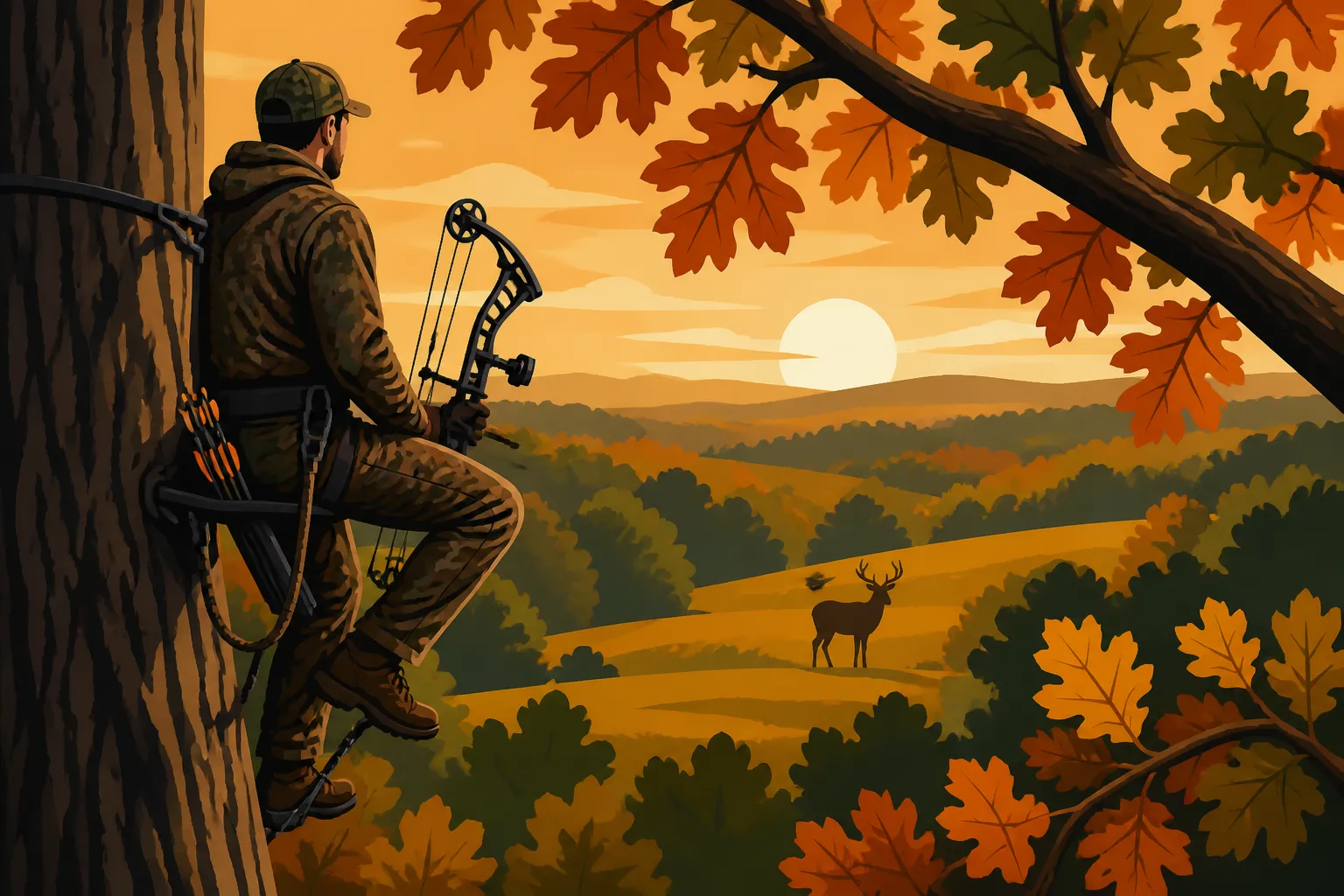
There's nothing quite like the allure of Missouri's oak timber when the leaves start to turn and acorns rain down. But let's be honest, trying to maneuver a bulky hang-on stand or a creaky climber into the perfect setup on a gnarled, crooked oak tree can be an absolute nightmare. We've all been there, struggling with ropes and straps, making enough noise to alert every deer in the county. This guide is here to shed some light on saddle hunting, a stealthier, more versatile approach that's practically tailor-made for navigating the unique challenges and opportunities that Missouri's oak forests present.
Why Saddle Hunt in Missouri's Oak Timber?
Saddle hunting has really taken off in recent years, and for good reason, especially here in Missouri where our timber can be so varied. If you've ever found yourself staring at a perfect-looking oak, loaded with acorns, but just knew your traditional stand wouldn't safely attach to its angled trunk or low-hanging limbs, you know the frustration. That's where the saddle shines. It's not just a trend; it's a strategic shift that lets you hunt trees you'd never dream of with a traditional setup.
The Adaptability of a Saddle in Diverse Oak Stands
Missouri's oak timber isn't always neat and tidy with perfectly straight, limb-free trunks like a pine plantation. We have old growth, new growth, gnarly white oaks, towering red oaks, and pin oaks that might have limbs starting just a few feet off the ground. A traditional treestand, whether it's a hang-on or a climber, requires a fairly straight, clean section of trunk. If that perfect ambush tree has a big knot, a crooked lean, or low limbs blocking your ascent, you're out of luck.
This is where a hunting saddle truly excels. Because you're essentially tethered to the tree and leaning back into the saddle, you don't need a perfectly flat section of trunk for a platform. You can climb past, or even around, obstacles that would stop a traditional stand dead in its tracks. Imagine finding a massive, spreading white oak dripping with acorns on a ridge. With a hang-on, you might only find one or two decent attachment points, severely limiting your shooting lanes. With a saddle, you can simply adjust your tether and rotate around the tree, gaining a full 360-degree range of motion. This adaptability means you can utilize more trees, especially those hard-to-hunt mature oaks that deer love, giving you a distinct advantage.
Stealth and Mobility: Getting Deep and Quiet in the Woods
One of the biggest struggles we face in Missouri is hunting pressured deer. They hear everything, smell everything, and notice every little change in their environment. A bulky treestand, climbing sticks, and all the associated hardware can be a noisy affair to carry in and set up, especially if you're trying to get deep into public land timber or navigate a dense Ozark hollow.
Saddle hunting drastically reduces your profile and weight. Your entire climbing system and saddle can often fit into a smaller pack, making for a much quieter and faster entry into your hunting spot. Think about still-hunting into a promising oak flat; with a saddle and lightweight sticks, you're not dragging metal through the underbrush or clanking pieces together. This stealth factor is huge, allowing you to slip into an area undisturbed, set up quickly, and be ready before the deer even know you're there. When you’re Scouting Missouri Public Land Before Season, you’re often looking for those untouched pockets, and a saddle helps you get there undetected. The reduced bulk also means less fatigue on those long walks to remote stands, letting you cover more ground in search of that ideal oak.
Safety and Comfort for Longer Sits
Let's face it, sitting in a traditional treestand for hours can become uncomfortable, leading to fidgeting, stiff muscles, and ultimately, missed opportunities. And while all elevated hunting carries risks, the inherent design of a saddle offers some unique safety benefits. You are always tethered to the tree, from the moment your feet leave the ground until you're safely back down. There's no moment where you're detached from your life-saving rope.
The comfort aspect is also a game-changer. Instead of perching on a small seat, a saddle distributes your weight differently, often allowing for more dynamic movement and less pressure on specific points. You can stand, lean, sit, and shift your weight in ways that simply aren't possible in most fixed stands. This means you can stay more alert and comfortable for longer periods, which is essential when deer movement might be sporadic, or you're waiting for that specific buck. The 360-degree shooting capability also means you're less likely to be caught off guard by a deer approaching from an unexpected angle, reducing awkward twists and risky maneuvers that could compromise your shot or even your safety.
Essential Gear for Saddle Hunting in Missouri Oaks
Switching to saddle hunting isn't about buying less gear, but buying different gear. And like any hunting method, choosing the right tools for the job is crucial, especially when you consider the varied terrain and tree types you'll encounter in Missouri's oak forests. You'll want gear that is durable, quiet, and effective.
The Saddle Itself: Choosing Your Foundation
Your saddle is your command center, so choosing the right one is paramount. There are many excellent manufacturers out there, and each saddle will have slightly different features, materials, and comfort levels. When selecting a saddle for Missouri oaks, consider how much padding it offers for longer sits, how easily adjustable it is for different body types and clothing layers, and how quiet the buckles and straps are. Some saddles are minimalist and lightweight, perfect for those long hikes into deep timber where every ounce counts. Others offer more support and pockets for gear, which might be better if you're planning on spending an entire day up a tree.
Think about the time of year you'll be hunting. Early archery season can still be warm and humid, so a saddle with good ventilation is a plus. Later in the season, when you're bundled up for cold weather sitting strategy, you'll appreciate a saddle that accommodates bulky clothing without feeling restrictive. It's a personal choice, and often, the best way to find "the one" is to try a few on, perhaps even hang in one at home or a local hunting shop to get a feel for the different designs. Companies like GoHunt often have great resources for understanding the nuances of different gear types, which can be invaluable when making such a personal choice.
Climbing Systems: Sticks and Aiders for Oak Bark
Getting up the tree is half the battle, and your climbing system is just as important as your saddle. The vast majority of saddle hunters use climbing sticks, which are essentially small, stackable sections with steps that attach to the tree. For Missouri's oak timber, you'll want sticks that are lightweight, quiet, and have a reliable attachment method that grips bark effectively without damaging the tree. Some sticks use cam buckles, others use rope or strap systems.
Consider the length of your sticks and how many you'll need to reach your desired hunting height. Often, 3-4 sticks will get you into the 15-20 foot range, which is a sweet spot for deer hunting in timber. Many hunters also integrate aiders—small loops of rope or webbing attached to their sticks—to gain extra height per stick, reducing the number of sticks they need to carry. This is especially useful if you're climbing a large oak with thick, flaky bark that might be difficult to get a solid footing on with just a stick step. Practice with your climbing system at home. There’s a learning curve, and the last thing you want is to be fumbling with your gear in the dark or making excessive noise on opening morning.
Ropes, Lineman's Belts, and Tree Straps
Safety is non-negotiable, and your ropes, lineman's belt, and tree straps are your lifelines. A lineman's belt is a crucial piece of gear that allows you to safely secure yourself to the tree with both hands free while you ascend and descend, attaching climbing sticks. It wraps around the tree and clips to your saddle, providing stability and security. Look for one that's easily adjustable with one hand, especially when you're in a thick oak and need to work around a limb.
Once you're at hunting height, you'll deploy your tree tether. This is a rope or strap that wraps around the tree above you and attaches to your saddle, allowing you to lean back comfortably and safely. The length of your tether is adjustable, letting you position yourself optimally for shot angles. Some tethers use a Prusik knot for adjustability, while others have mechanical adjusters. Regardless of the system, make sure it's rated for climbing and always double-check your knots and connections. Regularly inspect your ropes and straps for wear and tear, as they are subjected to UV light, moisture, and friction in the woods. These components are just as important as your weapon when you're Saddle Hunting in Missouri Oaks.
Strategies for Success in Missouri Oak Forests
Saddle hunting isn't just about the gear; it's about adopting a different mindset and approach to how you interact with the timber. In Missouri's oak forests, deer patterns are often heavily influenced by food sources, terrain features, and pressure. Tailoring your saddle hunting strategy to these factors will significantly increase your odds of success.
Scouting and Tree Selection: Reading the Acorn Drop
Before you even think about climbing, you need to understand where the deer are and why. In oak timber, this means scouting for acorns. Different oak species drop acorns at different times, and deer will often key in on the freshest, most palatable nuts. White oaks are typically preferred by deer due to their lower tannin content, and their acorns usually drop earlier. Red oaks and pin oaks follow later. Pay attention to the "acorn rain"—when they're dropping and which trees are producing.
When scouting, look for fresh deer sign directly under or near productive oak trees: fresh droppings, tracks, and especially disturbed leaves where deer have been feeding. Consider the terrain around these oaks. Are they on a ridge saddle, a bench, or a timbered draw? Deer often use these features as travel corridors while browsing. Utilize tools like the Missouri Conservation Atlas or mapping apps like GoHunt to study aerial photos. Look for clusters of mature oak trees, transition lines where oaks meet other timber types, or pinch points that funnel deer towards those feeding areas.
Once you identify a hot area, your next step is specific tree selection. With a saddle, you have more options, but you still want the "right" tree. Look for a tree that offers good cover to break up your silhouette, allows for clear shooting lanes in multiple directions, and is relatively easy to climb without making excessive noise. A tree on the downwind side of a primary travel route is always ideal, keeping your scent out of the deer's path.
Mastering the Setup: Quiet Entry and Efficient Ascent
The beauty of saddle hunting is its potential for stealth, but that potential is only realized with disciplined execution. A quiet entry is critical. Approach your chosen tree with care, minimizing noise. Avoid snapping twigs or rustling leaves unnecessarily. If you're hunting public land, you'll appreciate the low profile of a saddle when others are tromping through the woods.
Once at the base of your tree, your ascent needs to be as efficient and quiet as possible. This means practicing your climbing system at home, knowing exactly how to attach your sticks and set your lineman's belt without fumbling. Pay attention to how your gear makes noise. Are your buckles clanking? Is your pack rubbing against your sticks? Use tape or silencing wraps on metal parts if needed. When climbing, move smoothly and deliberately. Pause if you hear a deer approaching. Remember, you're always connected to the tree via your lineman's belt, allowing you to work safely and methodically. Aim to get to your desired height and have your tree tether set up quickly, minimizing the time you're exposed during the climb. The quicker and quieter you are, the less likely you are to spook game.
Shot Angles and Movement: Maximizing Your Opportunity
One of the most significant advantages of saddle hunting is the incredible range of motion it provides for shot opportunities. Unlike a traditional stand where you're often limited to a narrow front-facing window, a saddle allows you to rotate 360 degrees around the tree. This is especially beneficial in Missouri's varied oak timber, where deer might pop out from any direction.
Practice drawing your bow or shouldering your firearm from various positions within your saddle. Learn how to quietly adjust your tether length to change your lean and maximize your comfort and stability for different shot angles. You can shoot off your strong side, weak side, or even lean around the tree. This versatility means you can adapt to where the deer presents itself, rather than forcing a risky or uncomfortable shot. It also means you can often keep the tree between you and the deer, using it as cover for movement. For example, if a deer approaches from your left, you can rotate around the tree using it as a shield while you draw your bow or get into position, rather than trying to twist awkwardly in a traditional stand. Being able to shoot from virtually any angle can be the difference between filling your tag and going home empty-handed. When Hunting the Pre-Rut in Late October, bucks are cruising, and you need to be ready for anything.
Common Challenges and Solutions in Missouri Oak Country
Missouri's diverse landscape offers incredible hunting opportunities, but it also presents its own set of challenges. Saddle hunting, while highly adaptable, isn't immune to these. Knowing what to expect and how to mitigate common issues can make your experience much more enjoyable and successful.
Dealing with Variable Oak Bark and Limbs
Missouri's oak trees come in all shapes and sizes, and their bark can be just as varied. From the smooth, almost slick bark of a young red oak to the deeply furrowed, flaky bark of an old white oak, each presents a slightly different climbing challenge. Low limbs are another common hurdle, especially in open-canopy oak stands where sunlight encourages branching closer to the ground.
- Slick Bark: On smoother bark, ensure your climbing stick attachments are secure. Some systems might slip more easily. Consider sticks with aggressive teeth or grippy coatings. Practice on similar trees to build confidence.
- Flaky Bark: Older white oaks have bark that can be brittle and noisy when climbed. Be extra gentle and deliberate with your steps. The deep furrows can sometimes make it harder for stick attachments to get a clean bite, so ensure everything is snug.
- Low Limbs: This is where a saddle truly shines. Instead of being blocked, you can often "limberman" or "branch out" around these obstacles. Use your lineman's belt to secure yourself above the limb, then re-attach higher up. With practice, you can navigate even dense lower canopies. Sometimes, a well-placed branch can even become a natural footrest or point of leverage.
- Crooked Trunks: Instead of rejecting a tree with a lean, embrace it. A saddle allows you to maintain a level position by adjusting your tether. You can even use the lean to your advantage for cover or unique shooting lanes.
Weathering Missouri's Unpredictable Conditions
Missouri weather is notoriously fickle, especially during hunting season. A crisp, sunny morning can quickly turn into a cold, driving rain, or a gusty wind can sweep through, making any elevated hunting challenging. Being prepared for these changes is crucial for comfort and safety.
- Rain: Good rain gear is essential. Choose lightweight, packable rain suits that can be easily donned and removed in the saddle. Look for quiet materials that won't rustle when you move. Keep your calls, optics, and phone in waterproof bags. While you're in the tree, you can use the tree itself for some protection by rotating to the leeward side.
- Wind: High winds can make any treestand uncomfortable and potentially unsafe. In a saddle, you're less of a sail than on a stand platform, but strong gusts can still be unsettling. Choose thicker trees that sway less. Consider hunting lower on extremely windy days, or even opting for a ground blind if the conditions are too severe. Always ensure your climbing sticks and tether are extra secure in windy conditions.
- Cold: Layering is key for Cold Weather Sitting Strategy in a saddle. Since you're not moving much, you'll get cold faster than if you were actively hiking. Wear moisture-wicking base layers, insulating mid-layers, and a windproof outer shell. Hand warmers, insulated boots, and a warm hat are non-negotiable. The ability to shift and move slightly in a saddle can help maintain circulation, but proper insulation is your best defense against the chill.
- Humidity: Early season archery hunts can be brutal with high humidity. It makes everything feel heavier and can make climbing more strenuous. Stay hydrated, and wear breathable clothing. Remember that your scent will travel further and stick around longer in humid air, so be extra vigilant about scent control.
Managing Gear Weight on Long Walks to Remote Oaks
One of the biggest draws of saddle hunting is its lightweight and compact nature, which makes those long walks into remote public land, or deep into private timber, much more manageable. However, you still have to be smart about what you carry. Every ounce adds up, especially if you're navigating rough terrain like the Ozark hills.
- Prioritize Lightness: When buying gear, always consider weight. Opt for lightweight climbing sticks, a minimalist saddle, and compact ropes. Every piece of gear has a lighter, albeit sometimes more expensive, alternative. Consider the overall weight of your setup and how it will impact your endurance on a long trek.
- Only Carry Essentials: Evaluate every item in your pack. Do you really need it for this specific hunt? A compact field dressing kit, a water bottle, a small first-aid kit, and your calls might be all you need. Leave unnecessary items in the truck.
- Efficient Packing: Learn how to pack your gear efficiently. Secure climbing sticks to the outside of your pack, or if they fit, inside, to keep them from clanking. Organize small items in pouches to avoid digging around and making noise. Consider using a backpack with a good suspension system to distribute weight comfortably, especially if you're using a brand like GoHunt that often focuses on high-performance outdoor gear.
- Hydration and Nutrition: Don't forget the fuel for your body. A lightweight water filter or hydration bladder is essential for longer hunts. Pack energy-dense snacks to keep you going, especially if you're in the woods all day. Remember, the goal is to be comfortable and alert, not exhausted before you even get up the tree.
| Feature | Saddle Hunting in Missouri Oaks | Traditional Treestand (Hang-on/Climber) in Missouri Oaks |
|---|---|---|
| Mobility | Highly mobile, lightweight pack-in, quick setup. Ideal for run-and-gun. | More cumbersome, heavier to pack, slower setup. Best for static setups. |
| Tree Selection | Extremely versatile; can hunt crooked, limby, or odd-shaped oaks. | Requires straighter, cleaner tree trunks; limited by branches/knots. |
| Stealth | Minimal noise during carry-in and setup. Low profile in the tree. | Can be noisy during carry-in and setup (metal clanks, larger profile). |
| Shooting Angles | Full 360-degree shooting capability; easy to pivot and adjust around the tree. | Limited shooting lanes (often forward-facing); awkward to shoot behind or extreme angles. |
| Comfort for Sits | Weight distributed across hips/back; dynamic movement, standing, leaning possible for longer sits. | Static sitting on a seat; can lead to discomfort and stiffness over time. |
| Safety | Always tethered from ground to ground; inherent fall prevention if used correctly. | Moments of detachment during setup/takedown; fall from stand is a risk without lifeline. |
| Pack Weight | Generally lighter, more compact setup. | Heavier, bulkier, especially with large platforms. |
| Learning Curve | Steeper initial learning curve for climbing methods and body positioning. | Generally easier for beginners to get started with basic stands. |
Disclaimer
This article is for general informational purposes only and does not constitute professional advice. Laws, prices and regulations vary by location and change over time. Consult a qualified professional for guidance on your specific situation.