Ground Blind Anchoring in Wind
There’s nothing quite as disheartening as hiking into your favorite hunting spot on a blustery Missouri morning, only to find your carefully placed ground blind crumpled like a discarded soda can, stakes ripped from the earth, and camouflage flapping wildly. The wind in Missouri, especially in open fields or on exposed ridges, can be brutal and unpredictable, turning your investment into a tangled mess and ruining your planned hunt. This guide is all about giving you the battle-tested strategies and practical tips to anchor your ground blind so securely that even the fiercest Show-Me State gusts won't stand a chance.
The Real Challenge of Missouri Wind and Ground Blinds
Hunting in Missouri offers incredible opportunities, from the sprawling crop fields of the north to the rugged timber of the Ozarks. But with that diverse landscape comes equally diverse and often challenging weather, especially when it comes to wind. A ground blind is a fantastic tool for concealment, warmth, and comfort, but it's essentially a large sail if not properly secured.
Why Missouri Winds Are a Special Problem
Missouri is known for its rapidly changing weather patterns. One moment, it's a calm, crisp fall day, perfect for a quiet sit. The next, a cold front rolls through, bringing with it swirling winds that seem to come from every direction. If you're hunting in an open bean field in North Missouri after the harvest, or tucked into a fencerow where the wind can whip through unhindered, your blind is directly in the path of these powerful gusts. Even in the timber, especially on exposed ridge saddles or along river bottoms, the wind can funnel and gust with surprising force, catching blinds off guard. It's not just sustained winds either; those sudden, violent microbursts that hit without warning are often the culprits, tearing cheap stakes from the ground and sending your blind tumbling. It's a frustrating experience that can quickly derail an otherwise promising hunting trip.
The Cost of a Blown-Away Blind
Beyond the sheer frustration, a ground blind succumbing to the wind carries several significant costs. The most obvious is the monetary investment in the blind itself. Even a budget-friendly blind can set you back a good chunk of change, and a high-quality one represents a substantial investment. Having it ripped, bent, or completely destroyed means you're out that money, possibly needing to buy a replacement mid-season.
But the costs go deeper. Imagine you've spent hours scouting, found the perfect pinch point, set up your blind just right, and Brushing In a Blind on a Field Edge to blend it into the surroundings. Then, a storm hits. When you return, your blind is gone or mangled. All that time and effort spent scouting, deploying, and brushing in is wasted. Even worse, if your blind gets blown around during a hunt, it could spook game for days, ruining the immediate opportunity and potentially making that location unproductive for a while. The mental toll of a ruined hunt, the lost anticipation, and the scramble to find an alternative spot are real and shouldn't be underestimated. This isn't just about a piece of gear; it's about protecting your hunting experience.
Essential Anchoring Techniques for Every Situation
So, how do we prevent this heartbreak? It all comes down to understanding the forces at play and using the right tools and techniques to counter them. You wouldn't trust a flimsy tent stake to hold up a heavy canvas tent in a gale, and you shouldn't trust the basic stakes that come with most ground blinds to hold against Missouri's sometimes unforgiving winds.
Simple Stakes and Tie-Downs
Let's be honest, those little shepherd's hook stakes that come with most blinds are fine for a perfectly calm day or keeping the blind from shifting slightly, but they are absolutely not built for real wind. They pull out of soft ground with minimal effort and bend under stress. You need an upgrade.
Start by investing in heavy-duty tent stakes – the kind made from sturdy aluminum or steel, often with a spiral design or a flat head for pounding. Better yet, consider picking up some short lengths of rebar, cut to about 12-18 inches, with one end ground to a point for easier driving. These can be driven deep into the ground at each corner and along the sides of your blind. Make sure you're using all the tie-down loops available on your blind. Don't just stake down the bottom skirt; look for loops higher up on the frame or fabric. Attach strong, reflective rope or bungee cords from these upper loops to your heavy-duty stakes. This distributes the stress and prevents the wind from getting underneath and lifting the blind. For extra security, cross-stake the corners, driving two stakes in at opposing angles for each tie-down point. This creates a much more secure anchor that resists uplift and lateral movement.
Adding Weight and Reinforcement
Even with robust stakes, sometimes you need extra security, especially in exposed locations. Adding weight is a simple yet effective strategy. Sandbags are fantastic for this. You can buy empty sandbags and fill them with local soil or sand, or even rocks. Place one inside each corner of your blind, against the hub or frame poles. If your blind has exterior skirts that can be weighted down, placing sandbags or even heavy logs on these can help seal the bottom edge, preventing wind from getting underneath and creating that "sail" effect.
Beyond internal weights, think about reinforcing the structure itself. Many modern ground blinds from brands like Primos, Barronett, or even the heavier-duty options you might find through a resource like GoHunt, often feature strong hubs and fiberglass poles. But you can enhance their wind resistance. If you're setting up for an extended period, consider running additional guy lines from the blind's upper frame points to separate, more deeply driven stakes further out from the blind's footprint. This creates a wider, more stable base, much like a well-pitched tent. You might even use small cam straps to secure certain frame poles to a nearby tree if you're in timbered cover, creating a direct, immovable anchor point. Remember, the goal is to make the blind an immovable object, not a kite.
Securing Blinds in Open Fields and High-Exposure Areas
Hunting those wide-open Missouri crop fields or expansive prairies can be incredibly productive, but they're also notorious for wind exposure. This is where your anchoring strategy needs to be next-level. The basic stakes and ropes are a starting point, but you'll need more.
One of the best natural defenses is to integrate your blind into existing cover. Don't just plop it in the middle of a field. Look for fencerows, standing corn, large brush piles, or the edges of a timbered draw. Even a slight depression in the ground can offer some windbreak. When you Hunting a Missouri Fencerow Between Fields, use the fencerow itself for natural anchoring. You can often tie directly to fence posts or use the dense brush as a buffer.
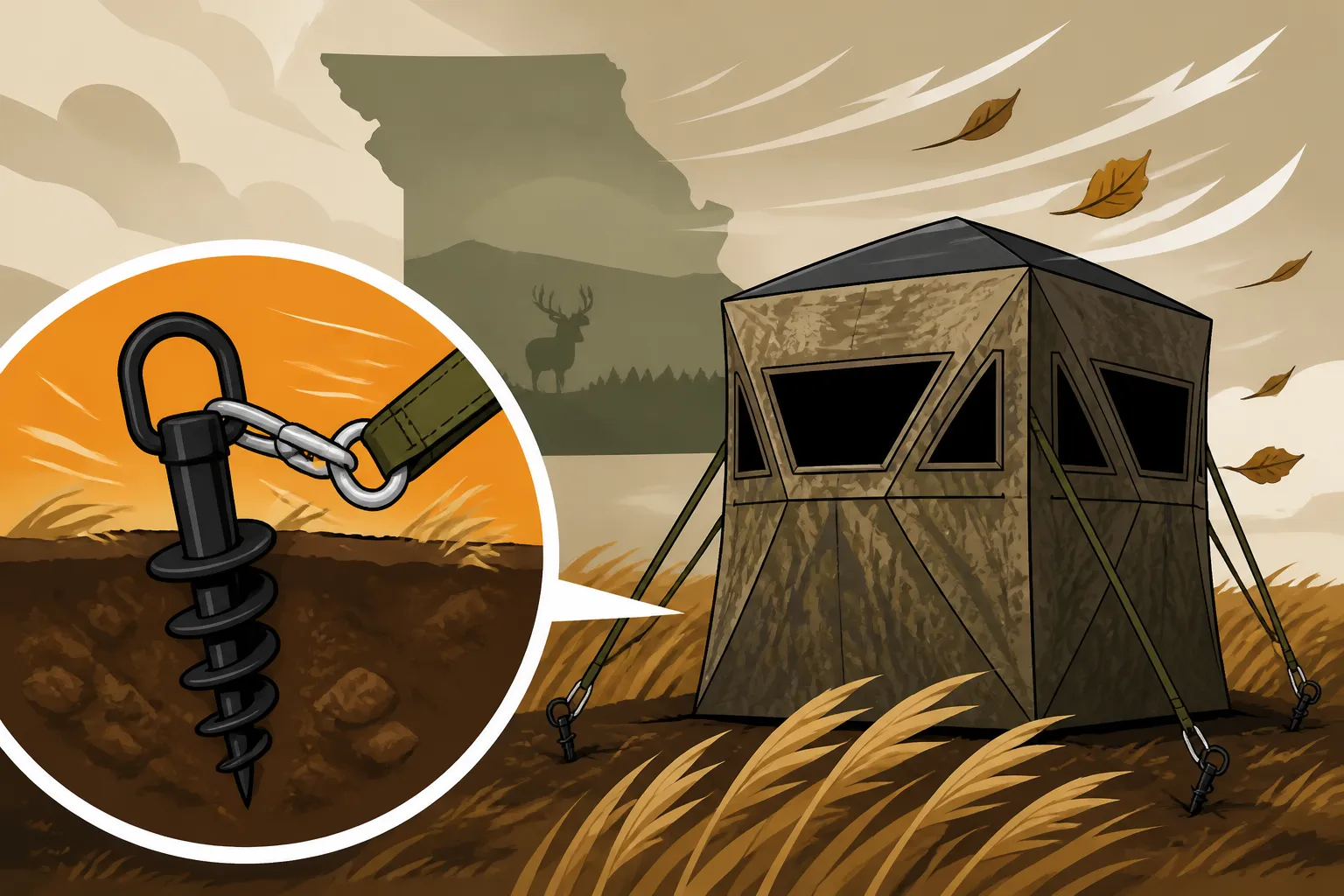
For blinds in truly open spots, consider auger-style ground anchors. These are heavy-duty metal corkscrews that you twist deep into the ground, providing exceptional holding power, especially in softer soil. Many options are designed for securing dog tie-outs or small sheds, but they work perfectly for ground blinds. Once secured, use heavy-duty ratcheting straps or thick rope to connect your blind's frame directly to these anchors. For a long-term setup, some hunters even take sections of rebar and pour a small concrete pad around them, creating a permanent, rock-solid anchor point that you can then chain or strap your blind to. The key here is not just to stake it down, but to essentially tie it down with an intensity that matches the potential wind force. Websites and gear companies focused on serious outdoor equipment, like GoHunt, often feature these more robust anchoring solutions, acknowledging the need for superior security in challenging conditions.
Advanced Anchoring and Long-Term Deployment Strategies
For many of us, a ground blind isn't just a day-use item; it's a long-term investment that we might deploy for weeks, or even a whole season. This commitment requires an even more robust anchoring strategy.
Semi-Permanent Setup Considerations
When you decide to leave a blind out for an extended period, you're not just battling a single storm; you're battling weeks or months of sun, rain, snow, and, yes, countless wind events. This means your anchoring needs to be bomb-proof. Beyond heavy-duty stakes and augers, think about how to reinforce the blind's entire perimeter.
One method is to use pieces of rebar or heavy T-posts driven deep into the ground just outside each corner, and then use strong, UV-resistant zip ties or even small chains to secure the blind's frame directly to these posts. This makes it incredibly difficult for the blind to lift or shift. If you have access to larger, heavier items, like railroad ties or concrete blocks, you can place these around the base of the blind, not just for weight, but to create a physical barrier against wind getting underneath.
Another crucial aspect of semi-permanent setups is maintaining camouflage and structural integrity. Hunting Standing Corn Before Harvest offers natural concealment and some wind protection, but once What Changes After the Beans Come Off, your blind might become exposed. Regularly check and refresh your brushing-in efforts. Over time, fabric can wear and tie-down points can fray, so periodic inspections are essential to ensure your blind remains anchored and effective throughout the season.
DIY Anchoring Solutions
Sometimes, the best solutions come from a little ingenuity and a trip to the hardware store. While dedicated hunting blind anchors exist, many effective options can be pieced together yourself.
- Rebar Stakes: As mentioned, 18-inch lengths of rebar, sharpened on one end, make incredible stakes. You can drill holes near the top to easily attach ropes or chains.
- Concrete Blocks: For serious long-term setups, especially on private land where you won't be moving the blind, you can use concrete blocks. Dig a small hole, place a block, and embed a U-bolt or eye-bolt into the concrete before it cures. Once hardened, you have an incredibly strong, permanent anchor point to secure your blind.
- Auger Anchors for Fences: If you're near a sturdy fence, heavy-duty fence post auger anchors (the kind used for corner posts) can be driven into the ground, offering immense holding power to which you can then strap your blind.
- T-Posts: These metal fence posts, often available at farm supply stores, can be driven several feet into the ground and provide excellent tie-off points. Just be mindful of how they look if visibility is a concern.
When creating DIY solutions, always prioritize strength and durability. Use high-quality rope, cables, or ratcheting straps. Overkill is often the right amount of "kill" when it comes to preventing wind damage.
Checking and Maintaining Your Anchored Blind
Anchoring your blind isn't a "set it and forget it" task, especially in Missouri's unpredictable weather. You need to periodically check on its status. This is particularly important after significant weather events like strong thunderstorms, heavy rain, or sustained high winds.
Make it a habit to stop by your blind every week or two, or certainly after any major weather system. Inspect all your tie-down points: are the stakes still firmly in the ground? Are the ropes or straps tight? Is there any fraying or wear on the material? Has the blind shifted at all? Sometimes, just a slight adjustment or re-tightening is all it takes to prevent a major failure. If the ground has become waterlogged and soft, stakes that were once firm might now be loose. In such cases, you might need to re-drive them deeper or add additional anchors. A quick inspection can save you the headache and expense of a completely ruined blind, and ensure that when it's time to Hunting the Peak Rut Week in Missouri, your setup is ready to go. Consider how resources like GoHunt emphasize preparedness and maintenance; these principles extend to your ground blind setup, too.
| Anchoring Method | Pros | Cons | Best Use Case |
|---|---|---|---|
| Standard Stakes | Lightweight, easy to deploy | Very weak, pull out easily | Minimal wind, temporary, calm scouting |
| Heavy-Duty Tent Stakes | Better holding power, still portable | Can still pull out in high winds, not for soft soil | Short-term, moderate wind, firmer ground |
| Rebar Stakes/T-Posts | Excellent holding, deep penetration, cheap | Heavier, requires driving tool, more permanent | Semi-permanent, high wind, varied soil types |
| Auger Anchors | Superior holding, especially in soft ground | Heavier, requires twisting in, more visible | High wind, open fields, long-term deployment |
| Sandbags/Weight | Easy to add, simple, internal stability | Can shift, not primary anchoring, can be bulky | Supplemental to stakes, internal stability, mild wind |
| Tie-Off to Natural Cover | Blends in, strong (if cover is strong) | Limited by available cover, might damage vegetation | Timber edges, fencerows, heavy brush, sheltered spots |
| Concrete Blocks (with U-bolts) | Extremely strong, permanent | Very heavy, labor-intensive, strictly permanent | Dedicated long-term private land setups, extreme wind |
Anchoring your ground blind properly is a crucial step that often gets overlooked, but it can make or break your hunting season. Don't let the fickle Missouri wind catch you unprepared. Take the time, invest in the right tools, and ensure your blind stays put, allowing you to focus on what really matters: the hunt.
Disclaimer
This article is for general informational purposes only and does not constitute professional advice. Laws, prices and regulations vary by location and change over time. Consult a qualified professional for guidance on your specific situation.