Ground Blinds on Missouri Field Edges
There's nothing quite as frustrating as watching deer feed peacefully in a Missouri field, just out of range, while you're either shivering exposed in a treestand or tucked into inadequate cover. Field edges can be prime hunting spots, but they demand superior concealment to fool wary whitetails. This guide dives deep into the world of ground blinds, showing you how to effectively deploy and utilize them for success along those crucial Missouri field edges.
Why Ground Blinds Shine on Field Edges
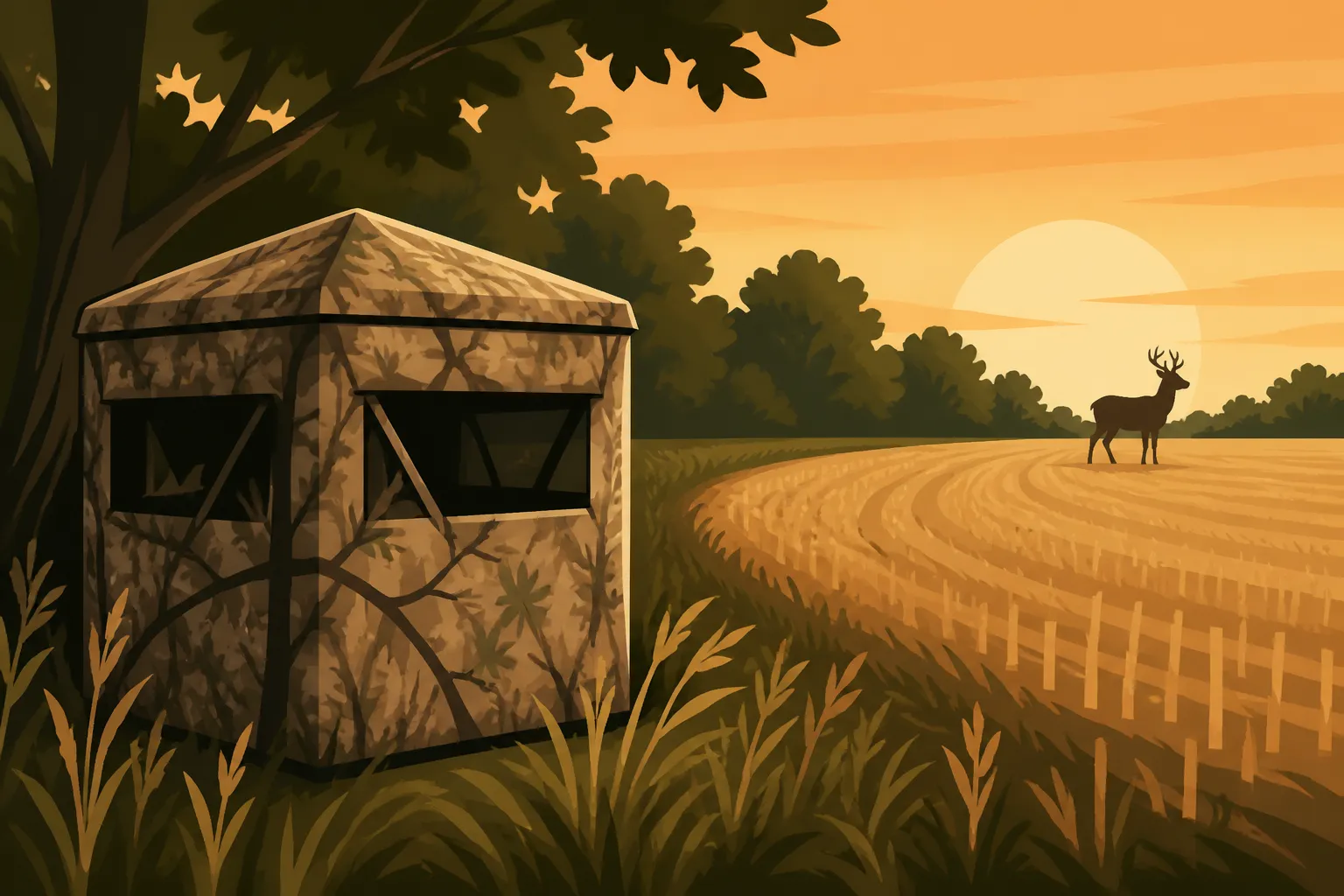
Hunting the edges of crop fields, food plots, or even overgrown pastures in Missouri offers incredible opportunities. Deer often frequent these areas for feeding, especially during those crucial morning and evening hours. However, the open nature of these environments also presents significant challenges for hunters trying to remain undetected. This is where a well-placed and properly managed ground blind becomes an absolute game-changer.
Unmatched Concealment Advantages
Unlike the elevated vantage point of a treestand, which relies on height and the deer's tendency to look horizontally, a ground blind offers full 360-degree concealment at eye level. This is paramount when hunting open field edges where a deer's gaze might sweep across the horizon. A quality ground blind, especially when properly brushed in, completely breaks up your silhouette, making you virtually invisible to approaching animals. You can shift, stretch, check your phone (discreetly, of course!), or even grab a snack without sending a twitching signal that alerts every deer within sight. This level of freedom is simply impossible in most treestand setups and gives you a significant edge, particularly when hunting pressured deer that have learned to look up. It also means you can often get away with more movement as a deer approaches, allowing you to fine-tune your shot setup or adjust to a changing wind.
Superior Weather Protection and Comfort
Let's be honest, Missouri weather can be fickle, especially during hunting season. A crisp October morning can turn into a cold, driving rain by afternoon, or a mild November day can give way to a sudden snowstorm. Sitting exposed in a treestand during inclement weather isn't just uncomfortable; it can be downright miserable and even dangerous. A sturdy ground blind provides a welcome sanctuary from the elements. It keeps you dry during rain, blocks the biting wind, and offers insulation against the cold. This comfort factor isn't just about your personal well-being; it directly impacts your ability to stay focused and alert for longer periods. When you're not shivering uncontrollably or constantly wiping rain from your face, you're better prepared to spot that subtle flick of an ear or the cautious step of a big buck entering the field. This increased endurance translates directly into more time in the woods and better odds of success.
Ideal for Family, Friends, and Mobility Challenges
One of the often-overlooked benefits of ground blinds is their inclusivity. Not everyone can climb a treestand, whether due to age, physical limitations, or a simple fear of heights. Ground blinds open up hunting opportunities for a much broader range of individuals. They are fantastic for introducing new hunters, especially kids, to the sport. The enclosed space allows for quiet conversation, whispered instructions, and even a quick game on a tablet (again, very discreetly!) without spooking game. It creates a comfortable, controlled environment where young hunters can learn patience and observation. Furthermore, if you like to hunt with a buddy or film your hunts, a spacious ground blind offers ample room for multiple people and camera equipment, making it a versatile option for group outings. Imagine sharing the excitement of a deer approaching with your child or a first-time hunter – that's an experience a ground blind makes possible.
Choosing the Right Ground Blind for Missouri
With so many ground blinds on the market, selecting the right one can feel a bit overwhelming. It's not just about picking the first one you see; it's about matching the blind's features to the specific demands of hunting Missouri's diverse field edges. Consider what you'll be doing inside, how often you'll move it, and the types of weather you expect to encounter.
Size, Space, and Functionality
When thinking about size, don't just consider how much you need. Will you be hunting alone, with a child, or with another adult? Will you be using a bow, a crossbow, or a rifle? Bowhunting from a ground blind requires significantly more internal space to draw your bow smoothly without hitting the walls or ceiling. A taller, wider blind is essential for archers. Rifle hunters have a bit more flexibility, but still appreciate room to maneuver. Also, think about your gear. Will you have a backpack, a cooler, a heater, or filming equipment? A blind that feels spacious in the store can quickly become cramped with all your hunting necessities. Look for features like silent-slide windows, adequate mesh, and internal pockets for organizing your gear. Some blinds even come with integrated shelves or shooting rests, which can be incredibly convenient. Check reviews and dimensions carefully; a small difference in width or height can make a huge impact on your comfort and ability to make a shot.
Material Durability and Camouflage Patterns
Missouri weather can be tough on gear, from scorching sun to freezing rain and heavy winds. The material of your ground blind needs to stand up to these conditions. Look for thick, durable fabrics like 300D or 600D polyester, reinforced corners, and strong stitching. Water-resistant coatings are a must. The framework should be robust, often fiberglass or carbon, with solid hubs that won't easily snap under pressure. When it comes to camouflage, choose a pattern that blends naturally with typical Missouri field edge vegetation. That often means a mix of browns, greens, and grays that mimic timber lines, brush, and dormant crops. Some blinds feature "3D" leaf patterns or brush loops that allow you to attach natural vegetation, further enhancing their ability to disappear into the landscape. Brands like Barronett Blinds are known for their sturdy construction, while Primos and Ameristep offer a range of options suitable for various budgets and conditions. Remember, a blind that tears or leaks after a single season is no bargain. Investing in a quality blind upfront will save you headaches and money in the long run.
Window Configurations and Shooting Options
The windows of your ground blind are your eyes to the hunting world, and their design can make or break your experience. Traditional blinds often have zippered windows, which can be noisy to open or close, especially on a frigid morning. Newer designs feature silent-slide mesh windows or magnetic closures that allow for much quieter adjustments. Consider the number, size, and placement of the windows. Do they offer a wide enough field of view for scouting and shot opportunities? Are there shooting ports at various heights to accommodate different hunting styles (sitting, kneeling, standing)? A blind with a continuous "panorama" window can be excellent for scouting large fields, but make sure it still provides sufficient concealment with the mesh closed. For bowhunting, dedicated horizontal shooting ports are critical to avoid limb contact. Evaluate whether the mesh is quiet and doesn't hinder your vision. Some blinds also offer different mesh densities, allowing for better concealment from the outside while maintaining visibility from within.
Optimal Placement and Brushing-In Techniques
Simply plopping a ground blind down on a field edge and hoping for the best is a recipe for failure. Whitetails are incredibly observant, and a dark blob that wasn't there yesterday will send them running. Strategic placement and thorough brushing-in are non-negotiable for success.
Scouting the Perfect Spot
Before you even think about setting up a blind, you need to scout, scout, scout! This isn't just about finding deer; it's about understanding their movements, prevailing winds, and natural cover. Look for pinch points, funnels, and natural travel corridors where deer enter and exit fields. Pay close attention to trails leading from bedding areas to feeding zones. Where do they feel safest entering the field? Is there a subtle dip in the terrain, a fencerow, or a small brushy patch they utilize? Use tools like the Missouri Conservation Atlas or a mapping app like GoHunt to analyze aerial photos and identify potential blind locations along tree lines, creek bottoms, or fence lines. Consider the sun's position throughout the day – you don't want to be staring directly into it during prime hunting hours, nor do you want your blind casting a long, dark shadow that spooks deer. Think about your entry and exit routes. Can you get to and from your blind without disturbing the area where deer are likely to be? Often, setting up a few yards back into the timber, rather than right on the edge, provides better cover and a more natural feel.
Blending with Natural Cover
Once you've identified a prime location, the real work begins: brushing in your blind. This is perhaps the most critical step. A brand-new, brightly camouflaged blind sticks out like a sore thumb. The goal is to make it disappear into the natural surroundings. Start by placing your blind tight against existing cover – a dense cedar tree, a thick multiflora rose bush, a large fallen log, or even a standing cornfield. Then, systematically gather natural materials from the immediate area: branches, tall grasses, corn stalks, dead leaves, and anything else that matches the local flora. If your blind has brush loops, use them! Otherwise, simply pile materials around and on top of the blind, breaking up its distinct outline. Don't create a perfect rectangle of brush; deer are smart. Vary the height and density of the natural materials, mimicking the natural clutter of the woods. You want the blind to look like it's been there forever, just another part of the landscape. For example, if you're hunting along a fencerow, incorporate elements of that fencerow directly onto your blind. For more insights, check out Brushing In a Blind on a Field Edge. The more effort you put into blending, the more confident deer will be approaching the area.
The "Long Sit" Test and Scent Control
After your blind is set up and thoroughly brushed in, it's wise to give it some time to "air out" and for the local wildlife to get accustomed to its presence. Ideally, set your blind up at least a week or two before you plan to hunt it, if possible. Deer are creatures of habit and notice changes. Over time, the human scent from your setup will dissipate, and the blind will become just another feature of their environment. This also gives you a chance to observe the blind from a distance, looking for any glaring flaws in your concealment. The "long sit" test doesn't necessarily mean you sitting in it, but rather letting it sit undisturbed.
When you do finally hunt it, however, diligent scent control is paramount. Even if the blind has aired out, your presence inside can still give you away. Always approach your blind using a scent-free regimen: clean clothes, scent-eliminating sprays, and rubber boots. Your entry and exit routes, discussed below, are critical here. Think about how your scent might travel from your path to the blind, and from the blind itself during your hunt. Even a small gust of wind carrying human odor can blow your entire hunt. Always try to hunt with the wind in your favor, blowing your scent away from where you expect deer to approach. For additional insights on deer movement and scent, consider Reading Aerial Photos for Ozark Deer.
Dealing with Wind, Scent, and Entry/Exit
Hunting a field edge from a ground blind presents unique challenges, especially concerning wind, scent, and how you approach and leave your setup without alerting every deer in the county. Ignoring these factors can lead to an empty freezer, no matter how perfectly you've brushed in your blind.
Playing the Wind on Field Edges
Understanding and using the wind is arguably the most critical factor when hunting deer, and it's especially true on field edges where deer often approach from predictable directions. Deer rely heavily on their sense of smell, and any human scent carried by the wind can quickly ruin your hunt. Before every sit, check the wind direction using a wind checker. Never hunt a blind if the wind is blowing your scent directly into the field or into a known deer travel corridor. Sometimes, even if you’ve set up a blind strategically for a particular wind, conditions can shift throughout the day. You might need to adjust your strategy or even pull out of the blind if the wind turns against you.
When choosing your blind location initially, try to find spots that offer flexibility for various wind directions. For instance, a blind placed on a field edge where two woodlines meet, forming a subtle corner, might allow for shots into the field while the prevailing wind carries your scent away from key entry points. For specific insights into environmental factors, Wind and Thermals in Ozark Hills offers valuable context, even if your field edge isn't deep in the Ozarks, as the principles of air movement remain relevant. Always position your blind so that your scent cone is blown into an area you don't expect deer to be, such as a road, a river, or open, unproductive terrain.
Scent Control Strategies for Close Encounters
Even with the wind in your favor, diligent scent control is essential, especially from a ground blind where you're at eye level with deer. Being completely enclosed in a blind can sometimes give a false sense of security regarding scent. However, every time you open a window or the door, scent can escape. Start with a rigorous scent control routine: wash hunting clothes in scent-free detergent, shower with scent-free soap, and store your clothes in an airtight container or bag. When heading to the blind, wear rubber boots to minimize scent transfer from your feet to the ground. Once inside, avoid opening windows more than necessary, and try to keep your movements to a minimum.
Consider using portable ozone generators within the blind, like those offered by Ozone products, which can neutralize odors. While opinions vary on their effectiveness, many hunters swear by them for containing and reducing human scent in confined spaces. Another practical tip is to chew scent-free gum or avoid bringing odorous food items into the blind. Even the smell of coffee can alert a deer. Remember, the goal isn't just to mask your scent, but to eliminate it as much as possible.
Stealthy Approaches and Exits
This is where many hunters blow their chances. Getting to and from your blind without alerting deer is just as important as the setup itself. Plan your entry and exit routes meticulously. These routes should take you through areas where deer are unlikely to be, or where human presence is common, minimizing disturbance to their core habitat. For example, if you're hunting a field edge adjacent to a road, use the road or a fence line as your approach, rather than walking through a bedding area.
Always approach and exit your blind under the cover of darkness, if possible. During morning hunts, get to your blind well before legal shooting light, ideally an hour or more, to allow the woods to settle down after your arrival. For evening hunts, stay in your blind until well after dark, allowing deer that have entered the field to feed undisturbed and disperse before you emerge. If you must exit while deer are still in the field, be prepared to wait a long time or plan an exit path that takes you away from their feeding area. Utilizing a map to plan your Entry Routes on Rolling Farm Ground or other terrain types can be invaluable. The key is to be as stealthy and unobtrusive as possible, treating the area around your blind as a sacred, undisturbed sanctuary for deer.
Seasonal Considerations for Field Edge Blinds
The effectiveness of a ground blind on a field edge can change dramatically throughout Missouri's hunting seasons. Understanding these shifts and adapting your strategy accordingly is crucial for consistent success.
Early Season Challenges and Opportunities
Missouri's early archery season, typically opening in mid-September, often brings warm temperatures and abundant natural forage. Deer aren't yet heavily reliant on agricultural fields, and natural browse is lush. During this time, hunting field edges can be a bit hit-or-miss. Deer may use fields primarily at night or during the cooler hours of dawn and dusk. One of the main challenges is the heat, which makes sitting in an enclosed blind for extended periods uncomfortable. Good ventilation is key, and you might consider lighter clothing layers.
However, early season also offers unique opportunities. Deer patterns can be predictable as they move between summer bedding areas and consistent food sources like soybeans, alfalfa, or even early mast crops dropping along the timber line. Placing a blind on a field edge adjacent to Hunting Standing Corn Before Harvest can be deadly, as the corn provides both cover and food. The tall, green vegetation surrounding fields can also make brushing in a blind much easier, as there's plenty of natural material available. Keep your hunts shorter and focused on prime feeding times, often the last two hours of daylight.
Mid-Season and the Rut
As fall progresses into late October and November, Missouri's deer behavior shifts dramatically. The pre-rut and peak rut are high-activity periods when bucks are constantly cruising for does, making them more visible during daylight hours. Field edges become even more critical as does will often feed there, attracting bucks looking to breed. During Hunting the Peak Rut Week in Missouri, a well-placed blind on a major field edge can provide an all-day sit opportunity, allowing you to intercept a cruising buck.
The challenge during this time is increased hunting pressure, especially once the firearms portion opens in mid-November. Bucks become warier. A blind that was effective in early season might need additional brushing in or a slightly adjusted placement to account for pressured deer. This is also when the weather turns colder, making the warmth and wind protection of a ground blind especially valuable for those long sits. Using locator calls, grunts, and rattling sequences from the blind can be highly effective during the rut, as the enclosed space helps contain sound and direct it where you want it. For more on rut behavior, check out Hunting the Pre-Rut in Late October.
Late Season Advantages
After the chaos of the firearms seasons, Missouri's deer often return to more predictable patterns, primarily focused on survival and food. Late season, from December through January, can be incredibly productive for ground blinds on field edges, particularly those with standing crop residues like corn, soybeans, or winter food plots. Natural forage is scarce, making agricultural fields irresistible. Deer will often congregate in these areas, especially during cold snaps, to fuel their bodies.
The key to late-season success is finding those crucial Late-Season Food Sources for Whitetails and setting up your blind nearby. Thermal cover, such as thick cedar thickets or dense regenerating timber, will also be adjacent to these food sources. The colder weather makes the warmth of a blind even more desirable. You can comfortably run a portable heater, something you can't easily do in a treestand. The lack of foliage also means deer can see further, so your brushing-in needs to be exceptional. However, the often-monochromatic landscape of winter makes a well-brushed blind truly disappear. This is also a great time to implement Cold Weather Sitting Strategy within your blind, allowing for long, comfortable waits for wary late-season deer.
Maintaining Your Blind and Off-Season Storage
A ground blind is an investment, and like any hunting gear, it needs proper care to ensure its longevity and effectiveness. Neglecting maintenance can lead to unexpected failures in the field and a shorter lifespan for your blind.
Pre-Season Setup and Inspection
Before the season kicks off, or even before your first hunt from the blind, it's essential to give it a thorough once-over. Pop it open in your backyard or a spacious area. Look for any tears or holes in the fabric, especially on the roof and around the windows, which can lead to leaks. Check all the zippers to ensure they open and close smoothly and quietly. Inspect the fiberglass poles and hubs for any cracks or damage – these are often the first points of failure. If you find small tears, patching kits are readily available and can extend the life of your blind significantly. Lubricate stiff zippers with a silicone spray. Ensure all the stakes and tie-downs are present and in good condition.
This pre-season setup also serves as a critical practice session. It allows you to familiarize yourself with the blind again, practice setting it up quickly and quietly, and determine which window configurations work best for your hunting style. If you plan to use it for Crossbow Hunting Under Missouri Rules, make sure there’s ample clearance for the limbs and scope. Don't wait until opening morning to discover a torn window or a broken pole; do your homework beforehand.
Post-Season Care and Cleaning
Once the hunting season wraps up, don't just toss your blind in the corner of the garage. Proper post-season care is crucial. First, give it a good cleaning. Remove all leaves, dirt, mud, and any debris that accumulated inside and out. You can often gently brush it off or use a damp cloth. Avoid harsh chemicals or detergents that could damage the fabric or camouflage pattern. If the blind is excessively dirty, a gentle rinse with a hose and mild, scent-free soap (like a hunting apparel wash) might be necessary, followed by a thorough air dry. Never pack away a wet or damp blind, as this will quickly lead to mildew, a foul smell, and fabric degradation.
Once clean and completely dry, fold it according to the manufacturer's instructions and store it in its carry bag. Keep it in a cool, dry place, away from direct sunlight, which can degrade camouflage patterns and fabric over time. Hanging it in a garage or shed where it's off the floor can prevent rodent damage. By taking these simple steps, you'll ensure your blind is ready for action year after year.
Securing Your Blind on Public Land
For many Missouri hunters, public land offers fantastic opportunities, but it also comes with specific rules and ethical considerations, especially when it comes to ground blinds. While many hunters place blinds for the season, leaving one out on public land for extended periods can be risky and, in some cases, against regulations. Always check the specific rules of the Conservation Area or National Forest you plan to hunt. For instance, Using a Ground Blind on Missouri Public Land typically means non-permanent blinds are allowed but must be removed within a certain timeframe (often 10-14 days after the close of the season, or even daily in some specific areas).
If you plan to leave a blind on public land for a few days, ensure it's securely staked down to prevent wind damage. While theft is always a concern, blending your blind in so well that it's practically invisible to other hunters can offer some protection. Avoid leaving valuable items inside. If a regulation requires daily removal, be prepared for the extra effort, or consider a highly portable blind that's easy to set up and take down. Ethics also play a role; don't leave a blind that could deter other hunters from accessing an area, and always leave the spot cleaner than you found it.
Here's a quick comparison of factors when choosing and using ground blinds:
| Feature | Early Season (Sept-Oct) | Mid-Season (Nov – Dec Early) | Late Season (Dec Late – Jan) |
|---|---|---|---|
| Deer Activity | Often nocturnal, focusing on natural browse & early crops | High activity (rut), cruising, concentrated feeding | Focused on persistent food sources, thermal cover |
| Weather | Warm, humid, occasional rain | Colder, wind, rain, snow likely | Cold, often bitter, snow, ice, strong winds |
| Vegetation | Lush green, tall crops (corn, beans, alfalfa) | Changing colors, falling leaves, some standing crops | Dormant, brown, harvested fields, evergreens stand out |
| Blind Placement | Near standing crops, shaded edges, close to bedding | Funnels, pinch points, doe feeding areas, all-day sits | Key food plots, crop residues, thermal pockets, sun exposure |
| Brushing In | Easy with abundant green material | Requires more effort, use fallen leaves, dead branches | Crucial for concealment against stark winter landscape |
| Comfort Needs | Ventilation, insect control | Wind/rain protection, moderate insulation, warmth | Max insulation, portable heater, thick layers |
| Scent Control | Critical in warm, humid air | Very important, especially with cruising bucks | Important, but deer may be less "jumpy" with colder temps |
Disclaimer
This article is for general informational purposes only and does not constitute professional advice. Laws, prices and regulations vary by location and change over time. Consult a qualified professional for guidance on your specific situation.