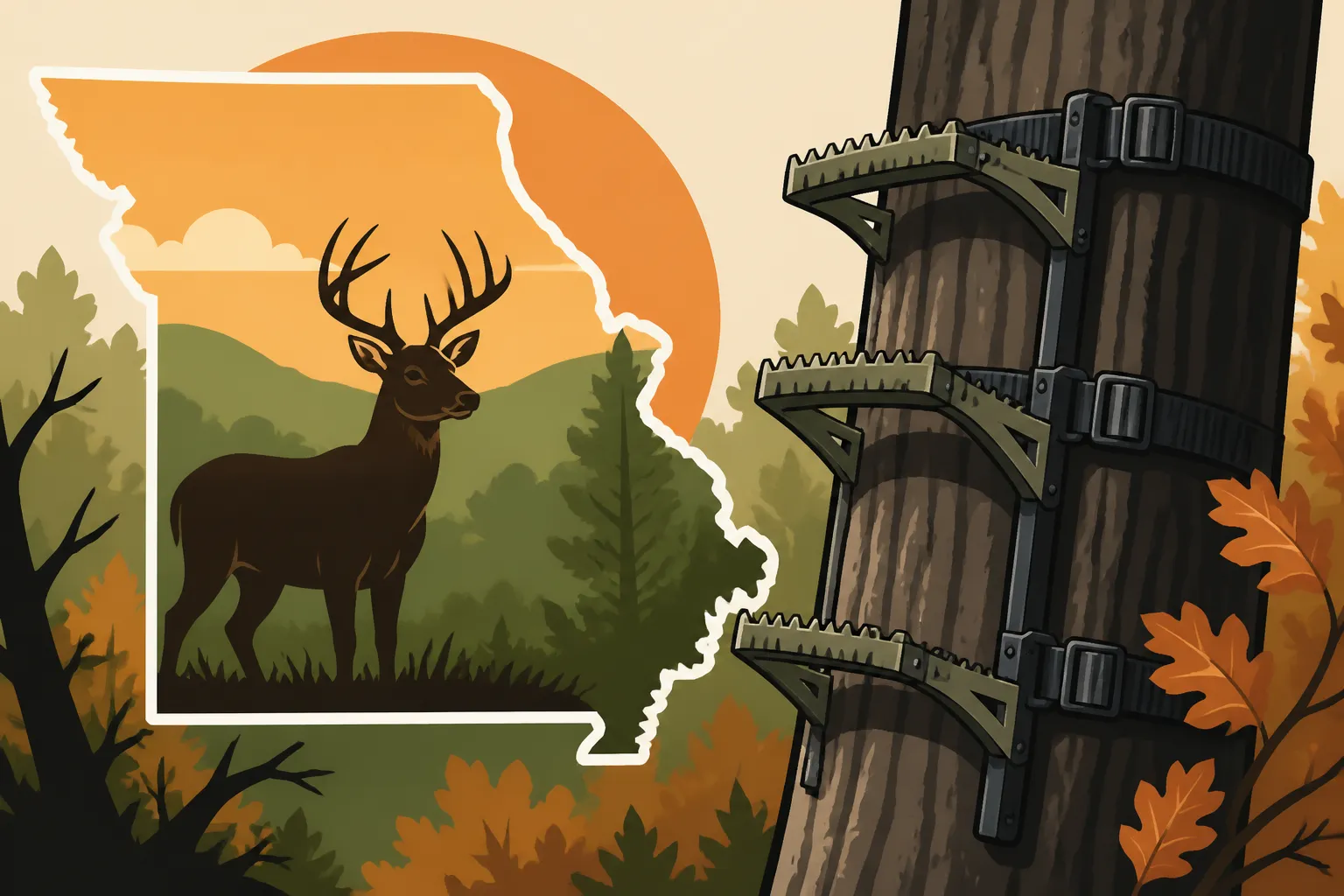
Climbing Sticks for Missouri Hardwoods
The struggle is real for deer hunters in Missouri who constantly face the challenge of finding the perfect tree for a stand, especially when dealing with the state's diverse and often gnarly hardwoods. Whether you're navigating the thick, rocky Ozarks or the more rolling timber of northern Missouri, getting into an elevated position quietly and efficiently can make or break a hunt. This guide is all about demystifying climbing sticks, showing you why they're not just a piece of gear, but a crucial tool for adapting to any tree and every hunting scenario Missouri throws your way.
Why Climbing Sticks Are a Game Changer in Missouri's Timber
When you talk about hunting in Missouri, particularly deer hunting, you quickly realize it's a game of adaptation. Our timber isn't always neat and tidy, especially the majestic hardwood forests that define so much of our deer habitat. This is where climbing sticks shine, offering a level of flexibility and stealth that traditional methods often can't match. They allow you to access hunting locations that might otherwise be unreachable, turning previously overlooked spots into prime hunting real estate.
The Challenges of Missouri Hardwoods for Tree Stands
Missouri's hardwoods, whether you're deep in the Hunting the Missouri Ozarks or tucked into a timbered draw in the north, present a unique set of challenges. You're rarely going to find a perfectly straight, limbless oak or hickory waiting for your stand. Instead, you'll encounter trees with low-hanging branches, gnarly knots, multiple trunks, or significant leans. Traditional ladder stands are cumbersome and often require specific tree types, while even some hang-on stands can be difficult to get into place on a crooked trunk without a reliable way to ascend. The sheer variety of tree shapes means that a "one-size-fits-all" approach to tree access just doesn't work here.
Beyond the trees themselves, the ground cover in Missouri can be incredibly thick. Dense briar patches, honeysuckle thickets, and regenerating timber make simply walking to a stand difficult, let alone carrying a bulky ladder stand through it. This forces hunters to carefully consider not just the tree, but the access route to it, and the ability to quietly maneuver gear through tough terrain becomes paramount. Many hunters also deal with public land, which often comes with strict rules against permanent stands or altering trees, making portable, non-invasive climbing solutions absolutely essential.
Portability and Adaptability for Mobile Hunting
This is where climbing sticks truly revolutionize the game, especially for the mobile hunter. Imagine being able to scout a fresh rub line or a sudden shift in deer movement and, within minutes, set up an effective elevated position. This isn't just a dream; it's the reality climbing sticks offer. Unlike heavy ladder stands that you might only move once or twice a season, or even a full climbing stand that requires a perfectly straight, limbless tree, sticks are designed for portability. They typically break down into sections that strap together, making them easy to carry on your pack for long walks through rough terrain.
The adaptability of climbing sticks means you’re not limited to a handful of "perfect" trees. They can be configured to navigate around branches, knots, and even leaners, opening up countless stand locations you might have previously ignored. This is particularly valuable when you're trying to Find Ground Others Walk Past on pressured public land or when deer patterns shift due to weather or crop harvest. Their quick setup and takedown also allow you to adjust your strategy on the fly, moving from an afternoon ambush spot to an early morning travel corridor with relative ease. This agility allows you to stay one step ahead of the deer and the competition.
Types of Climbing Sticks and What Works Best Here
Choosing the right climbing sticks isn't just about grabbing the first set you see; it's about understanding the subtle differences that can impact your hunt in Missouri. From the material they're made of to how they attach to the tree, each aspect plays a role in their performance, durability, and most importantly, your safety and success in the timber.
Aluminum vs. Steel Sticks: Weight, Durability, and Noise
When you're looking at climbing sticks, one of the first decisions you'll face is the material: aluminum or steel. Each has its distinct advantages and disadvantages. Steel sticks are generally more affordable and incredibly robust, often feeling more stable underfoot. However, that durability comes at a cost: weight. Hauling a set of steel sticks through a mile of briars and up an Ozark ridge is a workout, and the heavier material can also be noisier if sections clank together during transport or setup. They're often better suited for situations where you might leave them at a stand site for a few days, or if your walk-in is relatively short.
Aluminum sticks, on the other hand, are the darlings of the mobile hunting world. They are significantly lighter, making them a dream to carry deep into the woods. This reduced weight means less fatigue, allowing you to walk further and access more remote spots. While not quite as indestructible as steel, modern aluminum sticks are remarkably strong and durable for their weight. The primary trade-off is usually cost – they tend to be more expensive. They can also, sometimes, be a bit "clinkier" when bumped if not properly silenced with tape or wraps, but their quietness during the actual climb and descent is often superior due to less inherent flex and creaking. For the typical Missouri hunter who might walk a good distance on public land or carry sticks for multiple setups, aluminum is often the preferred choice.
Single-Piece vs. Sectional Sticks: Packability and Versatility
Another key differentiator in climbing stick design is whether they are single-piece units or break down into multiple sections. Single-piece sticks are just what they sound like: one solid piece per stick, often with multiple steps. They are incredibly sturdy and eliminate any potential weak points or noise from connections. However, their major drawback is their bulk. They are much harder to pack and carry, especially in dense brush or through tight timber, often requiring them to be carried in hand or strapped awkwardly to the outside of a pack. They're generally only practical for very short walks or if you're transporting them via ATV or boat.
Sectional sticks are the more common and versatile option, especially for hunters needing portability. These sticks break down into two, three, or even four smaller segments that nest together for transport. This modular design means they can be packed neatly on the side or back of a hunting pack, leaving your hands free for your bow, rifle, or other gear. The ability to choose how many sections you carry also offers versatility – you can take fewer sections for a lower setup or more for higher vantage points. Many reputable brands offer excellent sectional designs, and a quick search on hunting platforms like GoHunt can show you a wide array of options to fit your specific needs and budget. This design also allows for more creative setups around odd-shaped trees, as you can often adjust the angle of individual sections to work around branches or crooks.
Attachment Methods: Straps, Cams, and Quiet Operation
How your climbing sticks attach to the tree is paramount for both safety and stealth. The most common attachment methods involve a strap system, often with a cam buckle or a pull-tight cinching mechanism. The goal is to get the stick as tight and secure to the tree as possible, minimizing movement and noise during your climb. Simple cam buckles are quick to operate but require a good pull to ensure tightness. More advanced designs might use a single, continuous strap system that tightens with a leverage arm, or even rope-based systems that can be incredibly quiet.
No matter the method, quiet operation is non-negotiable in the Missouri woods. A noisy strap or a clanking buckle can spook deer from hundreds of yards away, especially in the still pre-dawn air. Look for systems that are designed for silent setup. Many hunters will wrap their buckles or any metal-on-metal parts with stealth tape or even electrical tape to prevent noise. Practice is key here: learning to attach your sticks efficiently and quietly in the dark is a skill that will pay dividends. A secure attachment also means less wobble, which builds confidence as you ascend and descend, especially when wearing heavy Layering for a Missouri Deer Stand in cold weather.
Essential Features to Look for in Missouri Hardwood Sticks
Beyond the basic types, the devil is in the details when it comes to climbing sticks. The specific features incorporated into their design can significantly impact your hunting experience, affecting everything from comfort and safety to your ability to remain undetected. Thinking about how these features interact with the Missouri environment will help you make the best choice.
Step Design and Spacing: Safety and Ease of Ascent
The steps on your climbing sticks are your direct interface with the tree, and their design heavily influences both safety and comfort. Look for steps that are wide enough to accommodate your boot, even with thick winter insulation. Narrow steps can be uncomfortable, slippery in wet conditions, and frankly, feel less secure when you're high off the ground. Grip is also critical: aggressive texture or a non-slip coating on the steps can prevent slips, especially when steps are wet, icy, or muddy.
Step spacing is another crucial factor. Most sticks offer a consistent spacing, often around 15-20 inches between steps. This allows for a natural climbing motion. However, some newer designs incorporate slightly varied spacing or offer adjustable steps, which can be useful for hunters of different heights or when trying to navigate a particularly tricky section of a tree. Too wide of a spacing can make climbing feel like a stretch, especially with a pack on, while too narrow can feel cramped. Consider practicing with different step configurations to find what feels most comfortable and efficient for your body type, and how you'll be carrying your gear.
Weight-to-Strength Ratio: Carrying Less, Trusting More
For mobile hunters in Missouri, the holy grail of climbing sticks is a high weight-to-strength ratio. You want sticks that are incredibly light for transport but uncompromisingly strong and stable once you're on them. This balance is critical because while a lightweight stick reduces the burden on your Boots and Packs for Ozark Country during a long walk, it needs to instill absolute confidence when you're 20 feet up a tree. You simply cannot afford to have a stick flex, creak, or feel unstable when you're trying to quietly climb into position before daylight.
Manufacturers achieve this balance through advanced material science and engineering. High-grade aluminum alloys, clever bracing, and reinforced step designs allow for maximum strength with minimal material. Always check the manufacturer's stated weight capacity and choose sticks that comfortably exceed your body weight plus the weight of your hunting gear. Remember, you're not just carrying a bow or rifle; you've got a pack, maybe extra layers, and potentially a full deer once you're done. Investing in sticks that offer superior strength without excessive weight is an investment in both your safety and your hunting efficiency.
Quietness and Camouflage: Blending into the Environment
In the woods, silence is golden, and climbing sticks can be a surprising source of noise if not designed or managed properly. Beyond the attachment method, consider the overall construction of the stick. Are there loose parts that can rattle? Do the steps fold in a way that creates noise? Many high-quality sticks feature padded components, rubberized coatings, or tight-fitting connections to minimize metallic clanking or plastic squeaks. Some hunters will even add their own stealth modifications, like tape or bungee cords, to further silence their sticks.
Camouflage and finish are also important. While a stick is mostly obscured by the tree once installed, the finish can impact its visibility during transport or if a part becomes exposed. Most sticks come in subdued colors like matte black, brown, or dark green, specifically designed to blend in. The goal is to reduce reflections and unnatural shapes that might catch a deer's eye. While a stick that perfectly matches the bark of every Missouri hardwood is impossible, choosing a non-reflective, natural tone is a smart move. Remember, even a subtle glint or an unnatural shape can draw unwanted attention, especially from sharp-eyed whitetails.
Setting Up Your Climbing Sticks Safely and Efficiently
Having the best climbing sticks in the world won't do you any good if you can't deploy them safely and effectively in the field. Proper setup is a skill that takes practice and a commitment to safety protocols. Rushing this step or taking shortcuts can lead to dangerous situations and, at the very least, a busted hunt.
Pre-Season Practice and Safety Harness Use
Let's be blunt: attempting to set up climbing sticks for the first time in the pre-dawn darkness, in the cold, while fumbling with your gear is a recipe for disaster. The single most important step you can take is ample pre-season practice. Set up your sticks in your backyard, on a variety of trees, multiple times. Practice in the dark with your headlamp. Practice with your full hunting pack on. Get intimately familiar with how each section attaches, how to cinch them tight, and how to ascend and descend smoothly and quietly. This builds muscle memory and confidence, which is invaluable when you're in the field under pressure.
Equally, if not more important, is the unwavering commitment to using a full-body safety harness and a lifeline from the moment your feet leave the ground. Falls from tree stands are among the leading causes of serious hunting injuries. Never, ever take a single step up a climbing stick without being tethered to the tree. This means using a climbing rope or lineman's belt to secure yourself while you install each stick, and then connecting to your tree stand's safety harness lifeline as soon as you reach your stand height. Don't let complacency or the rush of the hunt compromise your safety. Your life isn't worth a deer.
Strategic Placement for Optimal Ascent and Stand Integration
The art of placing your climbing sticks goes beyond simply getting them on the tree. You need to think about the entire setup: your entry and exit routes, your shooting lanes, and how the sticks integrate with your chosen stand. When ascending, try to position sticks on the opposite side of the tree from where you expect deer to approach, minimizing your silhouette and potential for being seen. Angle the sticks slightly around the tree to give you a more natural, comfortable climb, especially if your stand faces a particular direction.
Consider the height you want to achieve. For many Missouri hardwoods, 15-20 feet is a good starting point, getting you above the deer's primary line of sight and often allowing for better visibility over undergrowth. When you attach your hang-on stand or saddle platform, ensure the top stick is positioned to allow a seamless, quiet transition from the stick to your stand. You don't want to be fumbling or making noise as you make that final, critical move. Platforms like those offered by brands you might find on GoHunt are often designed to integrate well with various stick setups, allowing for a smooth and stable transition. Don't forget to consider how Wind and Thermals in Ozark Hills will affect your stand location and entry/exit routes.
Overcoming Tricky Trees and Obstacles
Missouri's hardwoods aren't always cooperative, and you'll inevitably encounter trees with low limbs, gnarly knots, or significant leans. Climbing sticks, with their modular design, are particularly adept at navigating these challenges. For low limbs, you might need to start your first stick a bit higher, or if the limb is small enough, you can sometimes angle a stick over it. Knots and bulges can be worked around by rotating the stick or adjusting its angle to find a secure purchase. For leaning trees, you'll want to place your sticks on the side of the lean that gives you the most upright climb, or even stagger them slightly to compensate.
Sometimes, a rope modification or a longer strap can be a lifesaver. If a tree is too large for your standard straps, a longer rope or a daisy chain of straps can extend your reach. Some hunters even use specific rope mods to allow for silent, single-hand attachment of sticks, which is excellent for stealth. Remember, the goal is to create a safe, stable, and quiet path to your stand, even on the most challenging trees. Adaptability is key, and with practice, you'll learn to "read" a tree and plan your stick placement before you even start climbing. This foresight, combined with skills honed by Scouting Missouri Public Land Before Season to find good trees, will significantly improve your success.
Maintenance and Longevity of Your Climbing Sticks
Your climbing sticks are an investment in your hunting success and, more importantly, your safety. Like any piece of critical gear, they require proper care and maintenance to ensure they perform reliably season after season. Neglecting them can lead to premature wear, potential failures, and even dangerous situations in the field.
Cleaning and Storage for Off-Season Care
Once the season wraps up, don't just toss your sticks in the corner of the garage. Take the time to properly clean them. Mud, dirt, tree sap, and moisture can accelerate wear and corrosion. A simple scrub with warm, soapy water, followed by a thorough rinse and air dry, is usually sufficient. Pay close attention to all moving parts, buckles, and attachment points. Check for any debris that might be lodged in hinges or strap channels.
After cleaning, ensure they are completely dry before storing them. Storing damp sticks, especially steel ones, can lead to rust. If you live in a humid environment (like Missouri!), consider a light coat of a rust preventative spray on any exposed metal parts – though be mindful of scents if you're concerned about deer detection. Store your sticks in a cool, dry place, ideally in a bag or case that protects them from dust and accidental damage. Keeping them organized and protected will not only extend their life but also make it much easier to grab them and go when next season rolls around.
Inspecting for Wear and Tear Before Each Season
Before every hunting season, and ideally before every major hunt, conduct a thorough inspection of your climbing sticks. This is a non-negotiable safety check. Start by examining the main structural components. Look for any bends, cracks, or deformities in the aluminum or steel sections. Pay close attention to welded joints or rivets, as these are potential stress points. Any signs of structural compromise mean the stick should be retired or repaired by a professional, not used.
Next, meticulously inspect all straps, buckles, and ropes. Look for frayed edges, cuts, nicks, or excessive stretching in the webbing. Check that buckles operate smoothly and securely, without sticking or slipping. Ensure that all cam mechanisms lock firmly. If any part of the attachment system shows significant wear, replace it. Many manufacturers sell replacement straps and parts, so you don't necessarily need to replace the entire set of sticks. Regularly performing these checks ensures that your sticks remain safe and reliable, giving you the confidence you need when you're high in a tree.
Pairing Climbing Sticks with Your Hunting Style
Climbing sticks aren't just a generic piece of gear; they're a versatile tool that can be specifically tailored and utilized to enhance various hunting styles. Understanding how they integrate with your preferred approach to hunting can truly unlock their full potential, especially when navigating the diverse landscapes of Missouri.
Mobile Hunter's Best Friend: Quick Relocation Tactics
For the truly mobile hunter, climbing sticks are indispensable. This style of hunting demands the ability to move swiftly and set up effectively wherever the deer sign dictates. Whether you're tracking a hot buck during the Hunting the Peak Rut Week in Missouri or adjusting to changing wind patterns, traditional fixed stands simply can't keep up. With a lightweight set of climbing sticks and a portable hang-on stand or saddle, you can be packed up and relocated to a new stand site in under an hour, sometimes even less.
This agility allows you to hunt specific, small pieces of cover that might only be productive for a day or two. Think about targeting a fresh scrape line found mid-morning, or setting up on a newly discovered pinch point that deer are using after a weather front. The ability to quickly climb, hunt, and then descend and move again means you're always putting yourself in the highest probability location, rather than being stuck with a stand that was "good" a week ago. This dynamic approach significantly increases your odds of encountering deer on their terms, not yours.
Public Land Considerations: Minimal Impact, Maximum Flexibility
Hunting Missouri's public lands, from Conservation Areas to the vast expanse of the Mark Twain National Forest, often comes with specific rules and increased hunting pressure. Climbing sticks are perfectly suited for this environment. Most public lands prohibit permanent stands or modifying trees with screws or nails, making portable climbing sticks an ideal, legal choice. They allow you to access good trees without leaving a trace, respecting the rules and the land. For a deeper dive into these regulations, check out Treestand Rules on Missouri Public Land.
Furthermore, public land often means navigating around other hunters. The ability to set up in areas that are harder to reach or where other hunters might not venture due to difficult access is a huge advantage. Sticks empower you to get deeper, or to simply access a better tree that's slightly off the beaten path. Their quiet setup also means you're less likely to disturb other hunters or alert deer to your presence in high-pressure areas. They embody the "leave no trace" ethos crucial for responsible public land hunting, ensuring these valuable resources remain pristine for everyone. The flexibility they offer in choosing a tree also helps avoid spots that might already have permanent stands (if allowed) or where other hunters have recently set up.
Combining Sticks with Saddle Hunting or Climber Stands
Climbing sticks are not just for hang-on stands; they also form the bedrock of other popular elevated hunting systems, particularly saddle hunting and can even complement traditional climber stands in certain situations. Saddle hunting, which involves a harness-style saddle and a small platform, relies entirely on climbing sticks to get you to hunting height. With a saddle, you're free to rotate 360 degrees around the tree, making stick placement for your ascent even more critical. Many hunters find that the combination of lightweight sticks and a saddle offers the ultimate in mobile hunting flexibility and comfort. Learn more about this versatile setup in Saddle Hunting in Missouri Oaks.
While traditional climbing stands are great for straight trees, Missouri's hardwoods often don't cooperate. In these scenarios, a hunter might use one or two climbing stick sections to get past a low limb or a crooked section of the trunk, then switch to their climber stand to finish the ascent. This hybrid approach allows you to leverage the best of both worlds, overcoming obstacles that would otherwise render a prime tree unusable. The versatility of climbing sticks makes them a foundational piece of gear that can integrate with and enhance almost any elevated hunting strategy you choose to employ in the Missouri timber.
| Stick Type | Material | Weight | Durability | Packability (General) | Noise (Setup) | Best For |
|---|---|---|---|---|---|---|
| Sectional | Aluminum | Very Light | High | Excellent | Low-Moderate | Mobile hunting, long walks, public land |
| Sectional | Steel | Moderate-Heavy | Very High | Good | Moderate-High | Semi-permanent setups, short walks |
| Single-Piece | Aluminum/Steel | Heavy | Very High | Poor | Low | Very short access, designated stand sites |
Disclaimer
This article is for general informational purposes only and does not constitute professional advice. Laws, prices and regulations vary by location and change over time. Consult a qualified professional for guidance on your specific situation.