Red Dots on a Turkey Shotgun
For years, many of us have struggled with the traditional bead sight on our turkey shotguns, especially when that big tom decides to pop up at an awkward angle in thick timber or when the light starts fading fast. It's frustrating to know you've done everything right—called him in perfectly, stayed still as a statue—only to doubt your aim in those critical seconds. This guide is all about exploring how adding a red dot sight to your turkey shotgun can dramatically improve your aiming precision and confidence, helping you make clean, ethical shots when it matters most in the Missouri woods.
Why Consider a Red Dot for Your Turkey Shotgun?
The traditional front bead sight has served turkey hunters for generations, and there's certainly a classic appeal to it. However, modern optics offer some significant advantages that can genuinely enhance your success and confidence in the field. Turkey hunting often presents unique challenges—birds appearing suddenly, shots needing to be placed precisely on a small target area (the head and neck), and varying light conditions. This is where a red dot sight truly shines, offering an aiming solution that can adapt to these demanding scenarios far better than a simple bead.
Precision Aiming in Tight Quarters
Imagine a big gobbler strutting at 30 yards, but he's partially obscured by brush or standing in deep shadow. With a traditional bead, you're trying to align a tiny point on the end of your barrel with an equally small, moving target, often against a busy background. It can be a real struggle to ensure that bead is exactly where it needs to be for a clean shot. That's a feeling many of us know well, and it can lead to second-guessing or, worse, a missed opportunity.
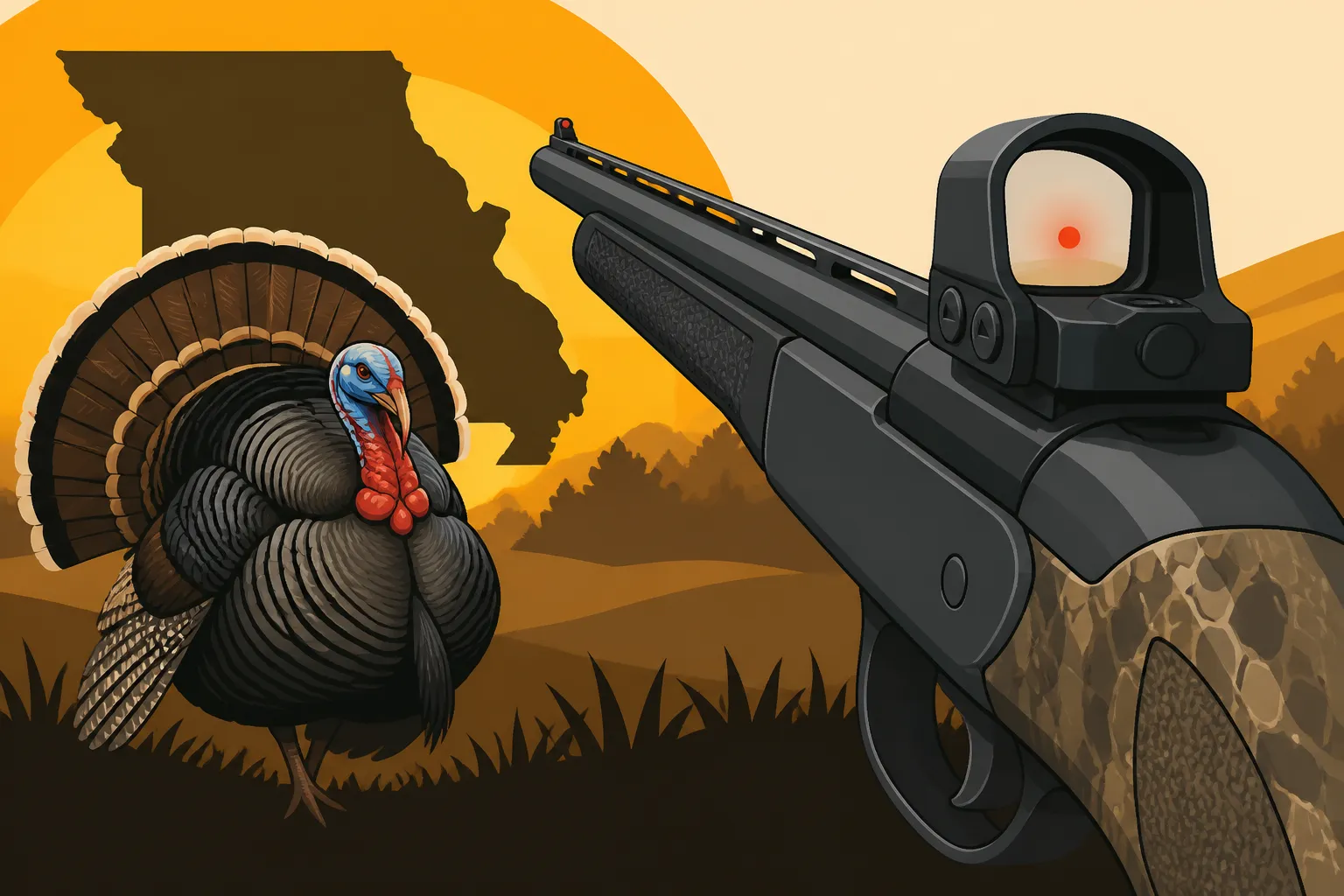
A red dot sight changes this dynamic entirely. Instead of aligning two points (your eye and the bead), you simply place a bright, illuminated reticle—a red dot, circle, or crosshair—directly onto your target. This single aiming point eliminates parallax, meaning that as long as the dot is on the turkey's head, your shot will go there, regardless of slight head position shifts. This is particularly valuable in the dense Missouri timber where Setting Up Against a White Oak might put you in a spot with less-than-ideal sight lines. The precision a red dot provides minimizes the margin for error, helping you confidently place those pellets right where they need to go for a quick, humane harvest.
Faster Target Acquisition and Wider Field of View
When a gobbler comes in silent and fast, sometimes appearing from an unexpected direction, every fraction of a second counts. Fumbling to find your sight picture with a traditional bead can eat up precious time, especially if the bird is quartering away or moving quickly through openings. The limited field of view of a standard shotgun barrel can also make it tough to keep track of a rapidly moving target, leading to frustration as the bird slips away.
Red dot sights are designed for speed. Because they are typically "open" sights (meaning you look through a lens with the reticle projected onto it, rather than through a tube), they offer an incredibly wide, unobstructed field of view. You can keep both eyes open, maintaining full peripheral vision while still focusing on the bright red dot. This allows for lightning-fast target acquisition; you simply raise the gun, place the dot, and squeeze. This can be a game-changer when you're Calling a Missouri Gobbler Off the Roost and he pitches down right in front of you, or if you're trying Run-and-Gun Turkey Tactics in the Missouri Ozarks and opportunities arise quickly. The ability to acquire your target faster means less fumbling and more focused shooting.
Overcoming Low Light Conditions
Missouri spring turkey season can be unpredictable, often starting before sunup, or seeing birds move during overcast days or in the fading light of late afternoon. Traditional iron sights or a simple bead can be incredibly difficult to see clearly in these dim conditions, especially against a dark background of timber or shadow. Trying to distinguish a black bead against a dark bird or dark trees can strain your eyes and erode your confidence, making those crucial early or late-day shots much harder than they need to be.
A red dot sight offers a significant advantage here because the reticle is illuminated. You can often adjust the brightness settings to match the ambient light, making the dot highly visible even in deep twilight or heavily shadowed areas. This means you’re not guessing where your bead is; you're seeing a clear, crisp aiming point exactly on target. This optical enhancement can extend your effective hunting time and reduce the chances of a poorly aimed shot due to poor visibility. It provides the clarity you need to perform under a wider range of conditions, making those marginal light situations far less stressful.
Understanding Red Dot Sight Features for Turkey Hunting
Not all red dot sights are created equal, and choosing the right one for your turkey shotgun involves considering several key features. It's not just about slapping any old optic on there; you need one that can stand up to the rigors of turkey hunting and enhance your shooting, not hinder it. Think about the conditions you'll face—the damp mornings, the long walks through brush, the occasional bump and scrape. Your optic needs to be as tough and reliable as the rest of your Turkey Gear for a Missouri Spring.
Reticle Options and Brightness Settings
One of the most appealing aspects of a red dot sight is the variety of reticle options available. While the classic "red dot" is common, many sights offer variations. You might find a simple 1, 2, or 3 MOA (Minute of Angle) dot, which is excellent for precise aiming. Some optics feature a larger circle-dot reticle, where a larger outer circle helps with quick target acquisition, while a smaller central dot provides a precise aiming point for the bird's head and neck. There are also models with crosshairs or even ballistic reticles, though these are less common for turkey hunting.
The key is to find a reticle that is both precise enough for the small target area of a turkey's head and neck, but also easy to pick up quickly. For instance, a 2-3 MOA dot is a popular choice, providing a good balance. Equally important are the brightness settings. You'll want a red dot that offers multiple illumination levels, allowing you to dial it down for low light conditions to avoid blooming (where the dot appears fuzzy or overly large) and crank it up for bright, sunny days. Some sights, like those you might find recommended on scouting platforms like GoHunt, even have automatic brightness adjustments or "night vision" settings, though the latter is overkill for spring turkeys. The ability to fine-tune the brightness is crucial for maintaining clear visibility of your aiming point regardless of the lighting conditions you encounter in the field.
Durability and Weather Resistance
Turkey hunting isn't always fair-weather recreation. A Missouri spring can throw everything at you: pouring rain, bone-chilling fog, heavy dew, or even a sudden thunderstorm. Your red dot sight needs to be able to shrug off these conditions without missing a beat. Look for optics that are explicitly rated as waterproof, fog-proof, and shockproof. Waterproofing typically means O-ring sealed and nitrogen purged to prevent internal fogging and water ingress, which is vital when you're Hunting Turkeys in Ozark Hollows where humidity can be high.
The shockproof rating is important because a shotgun delivers a significant recoil impulse, especially when firing heavy turkey loads. A cheap optic might not hold its zero or could fail entirely after a few rounds. Materials like aircraft-grade aluminum are common for housing, offering a robust but lightweight package. While researching options on a site like GoHunt, pay close attention to reviews regarding an optic's ability to withstand harsh conditions and repeated recoil. You don't want your sight failing when you have that trophy gobbler at 25 yards because a little moisture or a rough bump knocked it out of commission. Investing in a durable optic means it will last for many seasons to come, performing reliably when you need it most.
Mounting Solutions and Eye Relief
Getting your red dot mounted correctly and comfortably is paramount. Most red dots intended for shotguns will come with or be compatible with Weaver or Picatinny style bases. Many turkey shotguns now come drilled and tapped from the factory, making installation straightforward. If yours isn't, you might need a gunsmith to install a base or opt for a saddle mount that clamps onto the receiver. Ensure the mount is secure and doesn't interfere with the shotgun's ejection port or any other functional parts. A wobbly mount will quickly lose its zero, rendering the red dot useless.
One of the great advantages of red dot sights is their unlimited eye relief. Unlike magnified scopes, you don't need to position your eye at a specific distance from the optic to get a full sight picture. This flexibility is a huge benefit in turkey hunting scenarios where you might be contorted in a tight ground blind or trying to get a shot off quickly. You can shoulder your gun naturally, find the dot, and shoot. This adaptability means you can mount the sight further forward on the barrel if you prefer, or closer to the receiver, depending on your stock length and shooting style. When you’re spending hours practicing your setup, whether for Turkey Tactics for Crop Country or deep woods, having an optic that feels natural and forgiving in its eye relief makes a real difference in comfort and performance.
Practical Application and Setup
Having the best red dot sight in the world won't do you any good if it's not properly set up and you don't know how to use it effectively. Just like you spend time patterning your Turkey Shotguns and Chokes with different Turkey Loads for Missouri Birds, you need to dedicate time to integrating your new optic into your hunting system. This isn't just about zeroing; it's about understanding how the red dot interacts with your shotgun's pattern and how to apply it in real-world scenarios.
Patterning Your Turkey Gun with a Red Dot
Patterning is crucial for any turkey setup, and it's doubly important when adding a red dot. The goal isn't just to make sure the dot is hitting where your gun shoots, but also to confirm your choke and load are delivering a dense, consistent pattern in the head and neck region at your chosen maximum range. Start by bench resting your shotgun at a close range, say 10 or 15 yards, to get the dot generally on target. Then, move to your intended hunting distances, typically 20, 30, and 40 yards, using a turkey head target.
Shoot multiple patterns at each distance. Adjust the red dot's windage and elevation turrets until the center of your shot pattern aligns perfectly with the red dot. Remember, you're not just aiming for a bullseye; you're looking for where the densest part of your pellet swarm is consistently hitting. Once satisfied, mark your turrets or note the click adjustments. This process ensures that when you place that red dot on a gobbler's head at 35 yards, you know exactly where the core of your pattern will impact. It's a non-negotiable step that builds confidence and ensures ethical hunting.
| Reticle Type | Description | Primary Use Cases for Turkey Hunting | Pros | Cons |
|---|---|---|---|---|
| 1-3 MOA Dot | A small, precise illuminated dot. | Precision aiming at specific points | Very precise, minimal target obstruction | Can be harder to pick up quickly in busy backgrounds |
| Circle-Dot | A small dot surrounded by a larger illuminated circle. | Fast acquisition, precise aiming | Excellent for quick aiming, circle guides to target | Circle can obscure very small targets at long range |
| Crosshair Reticle | Illuminated crosshairs, sometimes with a central dot. | Rifle-like precision, range estimation | Familiar to rifle shooters, good for accuracy | Can be overly busy for fast, close-range shotgun work |
Field Considerations and Best Practices
Once your red dot is patterned and you're confident in your setup, it's time to think about how you'll use it in the field. First and foremost, always practice shouldering your shotgun and finding the dot quickly. This becomes second nature with practice. Understand that even with unlimited eye relief, consistency in how you mount the gun is still beneficial. You'll often be in awkward positions—sitting on a seat, against a tree, or even in a temporary ground blind. Practicing these scenarios at home will pay dividends.
Keep the lens caps on while moving to protect the optics from scratches and debris, especially if you're Walking Missouri Quail Cover With a Dog and then transition to turkey hunting. When you get into position, quietly remove them. Always check your battery before heading out, and carry a spare! Nothing is more frustrating than a dead battery when a gobbler is coming in. Some hunters prefer to keep the brightness setting low and only adjust it brighter if needed, to preserve battery life and avoid startlingly bright illumination. Platforms like GoHunt often feature discussions among hunters about these field tactics and helpful tips.
Battery Life and Maintenance Tips
The battery is the heart of your red dot sight, and without it, your advanced optic is just a fancy piece of glass. Most red dots use common coin-style lithium batteries, like CR2032 or CR1632. While modern red dots boast impressive battery life, often thousands of hours, it's still good practice to change the battery at the start of each turkey season. This small proactive step prevents potential failure in the field. Always carry a spare battery with you when hunting, perhaps in your Turkey Vests and Seat Choices, along with the small tool required to change it.
Beyond battery care, routine cleaning and maintenance are essential. After each hunt, especially if it was rainy or dusty, use a soft lens brush or compressed air to remove loose debris from the lenses. Then, use a quality lens cleaning cloth and solution (specifically designed for optics, not just glass cleaner) to gently wipe the lenses clean. Avoid harsh chemicals or abrasive materials that can damage coatings. Check the mounting screws periodically to ensure they are still tight, as recoil can sometimes loosen them over time. A well-maintained red dot will serve you reliably season after season, ensuring that its performance remains consistent and accurate.
Potential Downsides and Alternatives
While red dot sights offer compelling advantages for turkey hunting, they aren't without their considerations. It’s important to have a balanced perspective and understand that what works for one hunter might not be the ideal solution for another. Sometimes, the tried and true methods are preferred, or certain drawbacks might outweigh the benefits for individual hunting styles.
Cost and Learning Curve
Let's be realistic: adding a quality red dot sight is an additional expense on top of your shotgun, Turkey Loads for Missouri Birds, and other gear. While there are budget-friendly options, a truly durable and reliable red dot that will withstand shotgun recoil and harsh weather conditions will be an investment. This cost can be a barrier for some hunters, especially those just starting out or working with a tighter budget. It's important to research and weigh the value against the price tag, considering the longevity and performance you expect.
Beyond the monetary cost, there's a slight learning curve. While often touted for being intuitive, it still requires practice to consistently bring the gun up, find the dot, and make the shot smoothly. Some hunters, particularly those who've hunted for decades with a traditional bead, might find it initially awkward or unnecessary. The simplicity of a single bead might appeal more to those who prefer minimalist setups and don't want to rely on electronics. However, for many, the benefits of precision and speed quickly overcome this initial adjustment period.
Simplicity of Traditional Sights
For a good number of turkey hunters, the traditional front bead or a simple set of fiber optic sights is perfectly adequate and preferred. There’s a certain rugged simplicity to them – no batteries to die, no electronics to fail, and nothing to fog up or get damaged that isn’t easily fixed. They are always ready, always on. For hunters who consistently shoot turkeys at closer ranges, say 30 yards and in, and who have spent years honing their ability to aim with a bead, the perceived gains from a red dot might not be significant enough to warrant the change.
Moreover, some hunters simply prefer the aesthetic and feel of a traditional shotgun without modern optics. There’s a purist element to hunting, and for many, the charm of a spring turkey hunt lies in its age-old traditions, not necessarily in incorporating every technological advancement. While a red dot certainly improves precision, hunters often debate whether it changes the fundamental challenge or satisfaction of the hunt. Ultimately, the best sight is the one you are most comfortable and proficient with, allowing you to make ethical shots consistently.
Disclaimer
This article is for general informational purposes only and does not constitute professional advice. Laws, prices and regulations vary by location and change over time. Consult a qualified professional for guidance on your specific situation.