Base Layers for a Missouri November
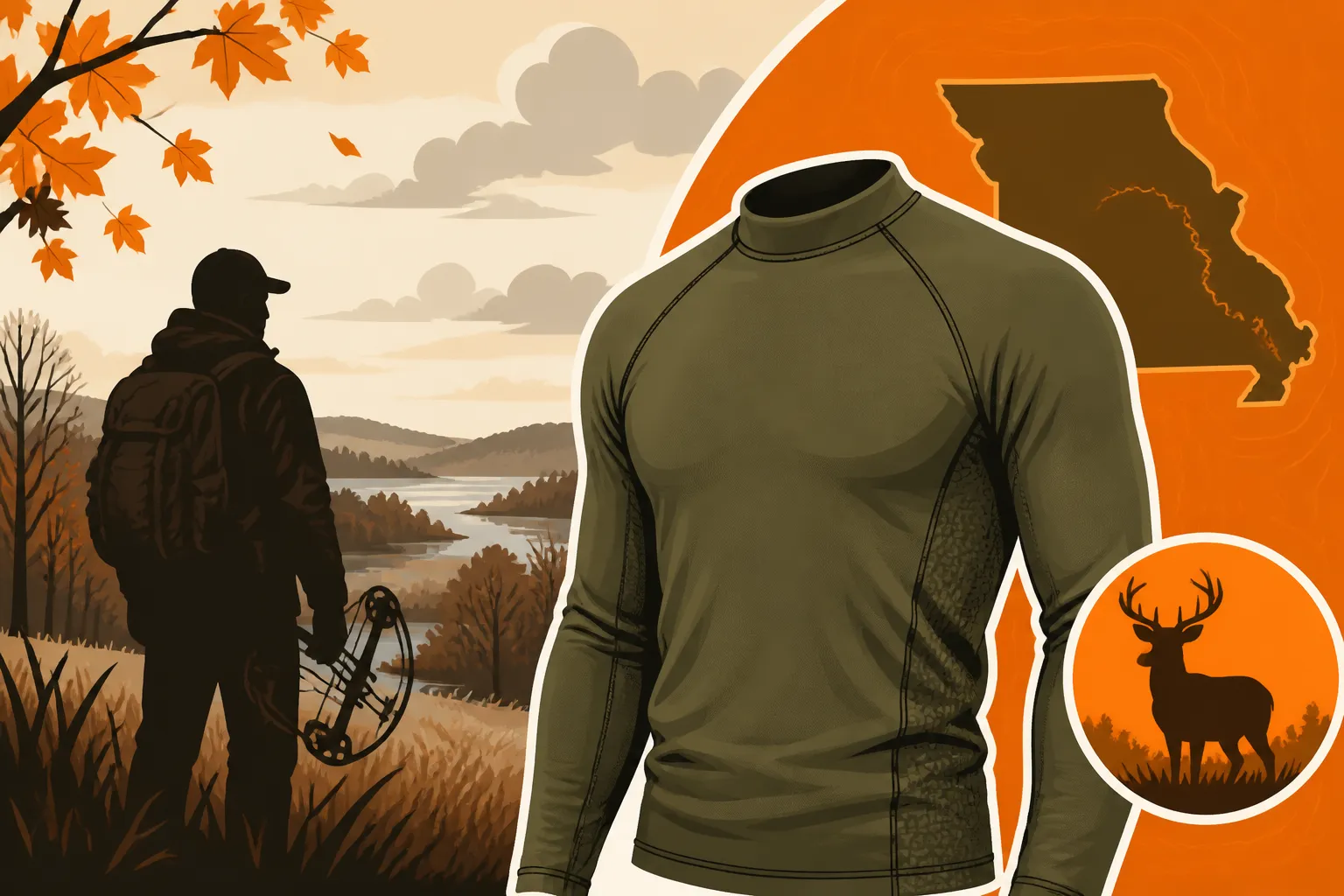
There’s nothing quite like a Missouri November. One day, you’re enjoying a crisp, cool morning in the deer woods, feeling perfectly comfortable in your light jacket. The next, a brutal cold front sweeps through, bringing biting winds and a chilling dampness that can turn even the most dedicated hunter into a shivering mess, contemplating an early trip back to the truck. This unpredictable, often extreme, weather rollercoaster is a reality for anyone chasing whitetails here, and it’s why understanding and utilizing the right base layers is absolutely crucial for staying warm, dry, and focused during your hunt. This guide is all about helping you conquer those temperamental conditions, so you can stay in the stand longer and hunt harder.
Understanding Missouri's November Weather Swings
Missouri in November is a land of meteorological contrasts, and honestly, it can be downright frustrating for hunters trying to plan their gear. We often experience an incredible range of temperatures within the same week, sometimes even within the same day. You might start your morning with frost on the pumpkins and the thermometer barely creeping above freezing, only for the afternoon to warm up significantly, especially if the sun breaks through. Then, a few days later, a true Arctic blast could descend, plummeting temperatures into the teens with an added wind chill that makes it feel even colder.
The Unpredictable Chill of Early November
The beginning of November often catches hunters off guard. Many remember those glorious late October days and underestimate just how quickly the switch can flip to genuinely cold weather. You might be gearing up for Missouri's November Firearms Portion, thinking it’ll be a typical crisp fall hunt, but then a cold rain moves in, dropping the "feels like" temperature dramatically. This isn't just about being uncomfortable; it's about being prepared for conditions that can rapidly turn from pleasant to downright dangerous if you're not adequately insulated. That early season chill, especially when combined with dampness, can penetrate right to your bones, making concentration difficult and shortening your time in the field.
It’s easy to get complacent when the forecast looks mild, but Missouri weather has a way of surprising us. One moment you're in a stand where the sun is beating down, and the next it ducks behind clouds, bringing an immediate drop in apparent temperature. This is where a good base layer starts to earn its keep, acting as your first line of defense against the sudden onset of cold, even before you consider your heavier outer layers. Failing to account for these swings can mean a miserable experience, sending you back to a warm truck much earlier than you'd planned.
The Importance of Moisture Management
Perhaps the biggest enemy of warmth in the field, especially during November, isn't just the cold itself, but moisture. Whether it's sweat from a strenuous walk into your stand, a sudden rain shower, or even just the humidity in the air, moisture dramatically reduces your body's ability to retain heat. Picture this: you've hiked a mile uphill in your full hunting gear to get to your favorite ridge saddle. By the time you get there, you're probably sweating, even if it's chilly out. If your base layer traps that moisture against your skin, it will quickly cool down once you stop moving, leading to a profound chill that can be incredibly hard to shake off.
This "chill from within" is a common trap for many hunters. They might have a heavy jacket, but if their innermost layer is saturated, all that insulation on the outside won't matter much. Effective moisture-wicking is the unsung hero of cold-weather comfort. It's the ability of your base layer to pull sweat away from your skin and transfer it to the outer layers, where it can evaporate. This keeps your skin dry, and dry skin means your body can regulate its temperature much more effectively. Without this crucial function, even a slight exertion can lead to clammy discomfort and eventually, dangerous cold.
Wind Chill and Long Sits
When you're out there, especially during Bowhunting Through the Missouri Firearms Portion or any other stationary hunt in late fall, the wind can be a brutal adversary. A 30-degree day with no wind might feel tolerable, but add a 15 mph breeze, and that "feels like" temperature plummets, making it feel like it's in the teens. This wind chill factor is a game-changer, sucking warmth directly from your body, particularly when you're sitting still for hours in a treestand or ground blind. Your base layer is the foundational element that helps create an insulating microclimate against your skin, and when combined with effective outer layers, it provides crucial protection against this relentless cold.
For those long, motionless hours in a stand, particularly when you're trying to execute a Cold Weather Sitting Strategy, every degree of retained body heat matters. The wind can find its way through even seemingly impenetrable outer shells, but a well-designed base layer acts as that crucial first barrier, slowing the transfer of heat away from your body. It's not about stopping the wind entirely – that's the job of your mid and outer layers – but it’s about providing that initial, essential thermal barrier right against your skin. Without it, the wind’s chilling effects become much more pronounced, making those marathon sits during the rut feel impossibly long.
Deciphering Base Layer Materials: Which One is Right for You?
The world of base layers can be a bit overwhelming with all the different materials and claims. However, when it comes to Missouri hunting in November, there are really two main contenders: merino wool and synthetics. Each has its strengths and weaknesses, and understanding them will help you make the best choice for your hunting style and the specific conditions you anticipate.
The Merino Wool Advantage
Ah, merino wool. It’s a favorite among serious outdoor enthusiasts for a reason, and for good measure. Unlike traditional, scratchy wool, merino is made from much finer fibers, making it incredibly soft against the skin – no itch here! Its primary advantage in a Missouri November hunting scenario is its exceptional warmth-to-weight ratio. It can keep you surprisingly warm even when wet, which is a huge benefit if you get caught in a light drizzle or work up a sweat on a long walk. This natural insulating property is hard to beat.
Beyond warmth, merino wool is a champion at moisture-wicking, pulling sweat away from your skin to the fabric's surface where it can evaporate, keeping you dry and comfortable. What really sets it apart for hunters, however, is its natural odor resistance. Merino fibers are naturally antimicrobial, meaning they resist the growth of bacteria that cause body odor. This is a game-changer for multi-day hunts or even just long sits in the stand where scent control is paramount. You can wear merino for days without it smelling funky, which is something synthetic layers often struggle with. The downside? It tends to be more expensive and can be less durable than some synthetics, especially against snags or abrasion, though modern blends are improving this.
Synthetic Powerhouse Layers
Synthetic base layers, typically made from polyester or polypropylene, are another excellent option, often at a more accessible price point. Their biggest strength lies in their ability to dry incredibly quickly. If you’re a hunter who expects to be on the move frequently, generating a lot of body heat and sweat, a synthetic layer will rapidly wick that moisture away and dry out, preventing that chilling effect once you stop. They are generally more durable than merino, standing up well to repeated washing and the general wear and tear of hunting in rough terrain.
Synthetics also come in a wide range of weights and constructions, offering options from ultra-light to heavy-duty thermal layers. While they might not offer the same natural odor resistance as merino, many modern synthetic base layers are treated with antimicrobial finishes to help combat scent. Brands like Under Armour and Sitka have invested heavily in developing advanced synthetic fabrics that perform exceptionally well in demanding conditions. For the hunter on a budget or one who prioritizes fast drying and ruggedness, synthetics are a fantastic choice, and their performance has steadily improved over the years.
Blends and Hybrid Options
Sometimes, the best solution is a combination of both worlds. Many manufacturers now offer base layers that blend merino wool with synthetic fibers. These hybrid fabrics aim to capture the best attributes of each material: the warmth, comfort, and odor resistance of merino, combined with the durability, quick-drying properties, and often lower cost of synthetics. This creates a versatile garment that can perform exceptionally well across a wider range of conditions and activity levels.
For instance, a blend might feature merino next to the skin for comfort and odor control, with a synthetic outer layer for increased durability and faster drying. These blends can be particularly appealing for the Missouri hunter who faces those drastic temperature swings and needs a layer that can handle both the exertion of a hike to the stand and the motionless chill of a long sit. When considering your overall gear system, including elements you might scope out on a platform like GoHunt, don't overlook these blended options as a smart compromise.
| Feature | Merino Wool | Synthetic (Polyester/Polypropylene) | Blends (Merino/Synthetic) |
|---|---|---|---|
| Warmth-to-Weight | Excellent, provides warmth even when damp | Good, but often less effective if saturated | Very Good, benefits from both |
| Moisture Wicking | Excellent, pulls sweat away and holds warmth | Excellent, dries very quickly | Excellent, combines rapid drying with warmth |
| Odor Resistance | Naturally superior due to antimicrobial properties | Can be poor without treatment, often needs treatment | Good, typically benefits from merino content |
| Drying Time | Slower than synthetics | Very fast | Moderate, often faster than pure merino |
| Comfort | Very soft, non-itchy | Generally smooth, can feel clammy if saturated | Very good, often soft against skin |
| Durability | Can be less durable, prone to snags | Very durable, withstands abrasion and washing | Improved over pure merino, good overall durability |
| Cost | Higher | Lower to moderate | Moderate to Higher |
Layering Strategies for Dynamic Missouri Hunting
A base layer isn't a standalone solution; it's the foundation of a complete layering system. Especially in Missouri's volatile November weather, knowing how to combine your base layer with other garments is the key to all-day comfort and success. Thinking of your clothing as a system allows you to adapt to changing conditions, activity levels, and even Wind and Thermals in Ozark Hills.
The Art of the Three-Layer System
The classic three-layer system is a concept every serious hunter should master:
- Base Layer: This is your "next-to-skin" layer. Its primary jobs are to wick moisture away from your body and provide a foundational layer of insulation. As we've discussed, whether it's merino, synthetic, or a blend, this layer is critical for staying dry and comfortable.
- Mid Layer: This is your insulating layer. It traps warm air close to your body. Think fleece jackets, puffy synthetic insulated vests or jackets, or heavier wool sweaters. This layer's thickness can vary depending on the expected temperatures. You might even carry an extra mid-layer in your pack to put on once you stop moving, especially for a long sit.
- Outer Layer: This is your protective shell. Its main functions are to shield you from wind and precipitation while still allowing moisture vapor from your inner layers to escape. It's your defense against that biting November wind and any unexpected rain or sleet. For deer hunters, this is often a quiet, camouflaged jacket and pants, ideally waterproof or highly water-resistant.
The beauty of this system is its versatility. You can shed or add mid and outer layers as conditions change, but your base layer remains constant, always working to manage moisture and provide fundamental warmth. Layering for a Missouri Deer Stand successfully depends on having these components work in harmony.
Adjusting for Activity Levels
One of the biggest challenges in cold weather hunting is managing your body temperature when your activity level fluctuates. Think about the difference between a strenuous hike in to your stand, a quiet half-mile still-hunt through a thicket, and then sitting motionless for three hours. If you dress too warmly for the hike, you'll sweat profusely, leading to a chilling effect later. If you don't dress warm enough for the sit, you'll freeze.
Your base layer plays a huge role here. For the active phase, a good wicking base layer will draw sweat away, helping to prevent saturation. Before you settle into your stand, take a moment to cool down and let any remaining moisture evaporate. This might involve removing a mid-layer for the walk in, then putting it back on once you're settled. Many hunters also carry a spare dry base layer for truly cold conditions or after a very sweaty hike. Planning your route and effort, perhaps by reviewing topography on a mapping tool you'd consult on GoHunt, can help anticipate how much exertion you'll face and thus how to manage your layers. This strategy allows your base layer to always perform its primary job – keeping your core dry and stable – while your outer layers provide the adjustable warmth and protection.
Scent Control and Field Longevity
Beyond just keeping you warm and dry, your choice of base layer can significantly impact your scent control efforts. As mentioned earlier, merino wool naturally resists odor-causing bacteria, making it an excellent choice for hunters who are serious about minimizing their human footprint in the woods. While no garment can make you truly scent-free, reducing the bacterial growth on your next-to-skin layer is a crucial step. This is especially true when you're targeting whitetails that rely heavily on their sense of smell.
Even with synthetic layers, many come treated with silver ions or other antimicrobial agents designed to suppress odor. While these treatments can be effective, they often require proper care and can diminish over time with repeated washing. For hunters who spend multiple days in the field without access to laundry facilities, or those who simply want every advantage, choosing an odor-resistant base layer means less worry about giving away your position and more focus on the hunt itself. This longevity in the field, staying "fresh" longer, contributes directly to your overall comfort and confidence, especially during prime time rut activity.
Choosing the Right Weight and Fit for Optimal Performance
Once you've decided on your preferred material, the next step is selecting the right weight and ensuring a proper fit. These factors are just as crucial as the material itself in determining how well your base layer performs in the field. A heavyweight base layer on a mild day will lead to overheating, while a lightweight one on a truly bitter morning will leave you shivering.
Light, Mid, and Heavyweight Options
Base layers typically come in three main weight categories:
- Lightweight: These are designed for mild to cool conditions, or for high-aerobic activities in colder weather where you'll be generating a lot of body heat. They excel at moisture-wicking and provide minimal insulation. In Missouri, you might use these for early November bowhunts if you’re moving a lot or if the daytime highs are still quite comfortable.
- Midweight: This is arguably the most versatile option for Missouri November hunting. Midweight base layers offer a good balance of warmth and breathability, making them suitable for a broad range of cool to cold temperatures and varying activity levels. They provide substantial insulation without being overly bulky, making them an excellent choice for most of Hunting the Missouri Rut in Early November.
- Heavyweight: When the mercury truly plummets, or when you anticipate prolonged periods of extreme cold and minimal activity, heavyweight base layers are your best friend. They offer maximum insulation and are designed for severe winter conditions. If you're planning a long, stationary sit on a particularly frigid day, especially after a fresh snow, this is the layer you want next to your skin.
Considering the specific day's forecast and your planned activity (e.g., active still-hunting versus sitting in a stand) should guide your choice of weight. Many hunters will even carry a different weight base layer in their pack, especially if they anticipate drastic temperature drops throughout the day.
Fit for Function and Comfort
The fit of your base layer is absolutely critical for its performance. It should be snug, but not constricting. The goal is for the fabric to be in constant contact with your skin across most of your body. This allows the material to efficiently wick moisture away and create a warm air pocket that your body heat can maintain. If a base layer is too loose, it won't be able to effectively pull sweat from your skin, and you'll end up feeling clammy and cold.
However, "snug" doesn't mean "tight." You still need a full range of motion for drawing a bow, shouldering a Legal Firearms for Missouri Deer, or just moving comfortably in your stand. Look for base layers with anatomical designs, flat seams, and stretch fabrics that move with your body without bunching or restricting. For example, a good pair of base layer bottoms should fit well under your hunting pants without feeling bulky or causing chafing during long walks or climbs into a stand. A properly fitted base layer is so comfortable, you'll barely notice it's there – which is exactly what you want when your focus needs to be on the hunt.
Practical Tips for Purchase and Care
When you’re ready to invest in base layers, consider a few practical tips. Firstly, always check the brand’s sizing chart carefully, as sizes can vary. Read reviews, especially from other hunters or outdoor enthusiasts, for insights into fit and performance. Don't be afraid to invest a little more in quality; a good base layer is the foundation of your entire warmth system and will last for many seasons if cared for properly. For resources on planning your gear setup, including Rifle Setups for Missouri Timber and Fields, checking community discussions on platforms like GoHunt can offer valuable peer experiences.
Once you have your base layers, proper care is essential to maintain their performance. For merino wool, follow the washing instructions carefully, usually cold water, gentle cycle, and lay flat to dry to prevent shrinking or damage. Avoid harsh detergents or fabric softeners, as these can clog the fibers and reduce wicking ability. For synthetics, cold water and air drying are also often recommended to prolong the life of any antimicrobial treatments and prevent heat damage to the fibers. By taking good care of your base layers, you’re ensuring they’ll continue to keep you warm, dry, and scent-conscious through many more challenging Missouri Novembers. After a successful hunt, remembering to prioritize Getting Deer Meat Cooled Quickly is key, but so is properly cleaning your hunting clothes to be ready for the next outing. And don't forget, diligent Scouting Missouri Public Land Before Season and learning to interpret Reading Aerial Photos for Ozark Deer will always be the most important steps in any hunt.
Disclaimer
This article is for general informational purposes only and does not constitute professional advice. Laws, prices and regulations vary by location and change over time. Consult a qualified professional for guidance on your specific situation.