Rain Gear for an Ozark Downpour
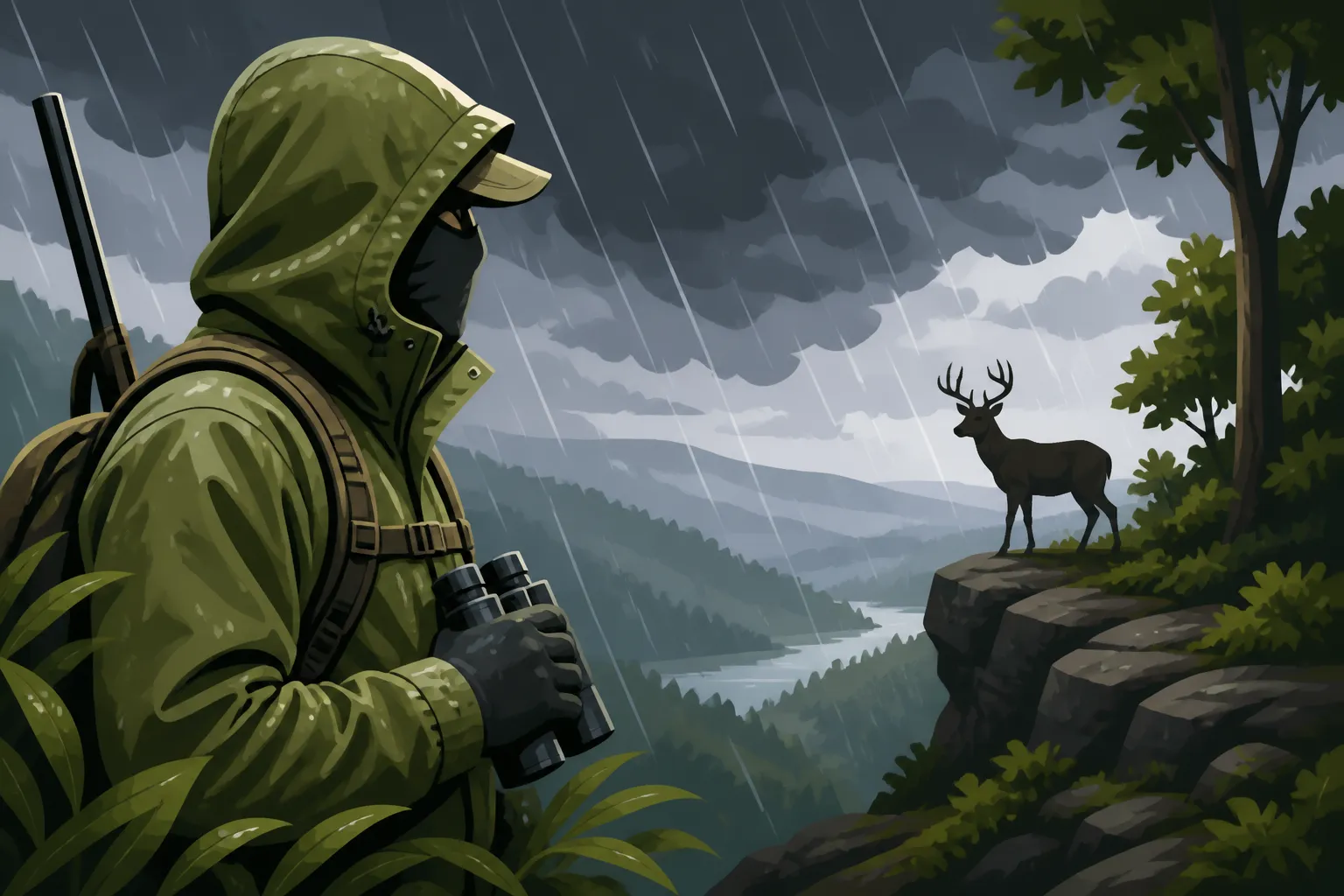
There's nothing quite like the feeling of stepping out into the crisp autumn air, ready for a hunt, only for the sky to open up and unleash an absolute deluge. In the Missouri Ozarks, a "downpour" isn't just a bit of sprinkles; it can be an all-encompassing, bone-soaking event that can turn an exciting day into a miserable, hypothermia-risking ordeal faster than you can say "wet socks." This guide will help you understand the unique challenges of Ozark rain and how to choose the right rain gear to keep you dry, comfortable, and focused on the hunt, no matter what the weather throws at you.
Why Ozark Rain is a Different Beast
Hunting in the Missouri Ozarks presents its own unique set of challenges, and rain is certainly one of them. It's not just the quantity of rain that matters, but its character, the surrounding environment, and how quickly conditions can change. Many hunters who've experienced an Ozark autumn know that a perfectly sunny morning can morph into a torrential downpour by lunchtime, followed by dropping temperatures.
The Humidity Factor and Quick Changes
One of the biggest culprits in making an Ozark downpour particularly nasty is the humidity. Even when it's raining, the air can be heavy and saturated. This means that if your rain gear isn't breathable, you're going to get just as wet from your own sweat as you would from the rain. Imagine still-hunting up a steep hollow, working your way through thick timber, only to find yourself steaming inside your waterproof shell. That internal moisture quickly turns cold once you stop moving, leading to a chilling discomfort that can drive even the most determined hunter back to the truck. This makes a strong argument for considering Staying Dry Through an Ozark Rain beyond just the outer layer.
Furthermore, the weather here is incredibly dynamic. Cold fronts sweep through, often bringing with them intense but relatively short-lived rain events. But sometimes, a warm front will linger, dumping a steady, soaking rain for hours on end, turning every leaf and branch into a dripping faucet. You might start your day with just a light drizzle, thinking a packable shell is all you need, only to be caught completely off guard by a sustained heavy rain that leaves you wishing for something more robust. It's this unpredictability that demands versatile and reliable gear.
Dense Timber and Rough Terrain Challenges
The Ozarks are defined by their rugged, heavily timbered hills. This dense forest cover, while beautiful and excellent for deer habitat, also means that every branch, every sapling, and every briar patch is eager to snag, tear, or rub against your expensive rain gear. A small tear in your waterproof membrane might seem insignificant, but after an hour in a steady rain, that tiny hole becomes a persistent drip, soaking through your layers and chilling you to the bone. You're not just walking across an open field; you're navigating steep slopes, crossing rocky creeks, and pushing through thick undergrowth, all of which puts immense strain on your clothing.
The combination of wet leaves, slick rocks, and mud also makes the already challenging terrain even more treacherous. Staying focused on your footing is paramount, but it’s hard to concentrate when you're shivering and soaked. Every step becomes an effort to avoid a slip or fall, which can not only injure you but also damage your gear. Having reliable Boots for Walking Ozark Rock is a start, but the protection needs to extend all the way up. The environment here really punishes gear, so durability isn't just a luxury; it's a necessity for safety and comfort.
Understanding Rain Gear Types and Technologies
When you start looking for rain gear, you'll quickly realize it's not a one-size-fits-all situation. There's a spectrum of protection and features available, each designed for different scenarios. Understanding the basic types and the technologies that make them work is crucial for making an informed decision for your Missouri hunts.
Shell Jackets and Pants
Shell rain gear is arguably the most common and versatile type of waterproof outerwear. These are typically lightweight, uninsulated jackets and pants designed to be worn over your existing layers. Their primary job is to create a barrier against water and wind while allowing moisture vapor (sweat) to escape. This breathable quality is paramount for active hunting, especially in the Ozarks where humidity can make you sweat even in cold temperatures.
High-quality shell gear utilizes advanced waterproof-breathable membranes like Gore-Tex, eVent, or various proprietary technologies developed by brands. These membranes have microscopic pores that are too small for liquid water droplets to pass through, but large enough for water vapor molecules to escape. This is the magic that keeps you dry from both the outside elements and your own exertion. When choosing a shell, you'll often see "waterproof ratings" and "breathability ratings." A higher waterproof rating (measured in millimeters, e.g., 20,000mm) indicates it can withstand more water pressure before leaking. A higher breathability rating (measured in grams/square meter/24 hours, e.g., 15,000g) means it can shed more internal moisture. For the Ozarks, aiming for a good balance is key, as you'll encounter both heavy rain and strenuous activity.
Insulated and Hybrid Rain Gear
While shell gear focuses solely on the waterproof-breathable barrier, insulated rain gear takes it a step further by adding a layer of warmth. This type of gear is fantastic for colder, wetter conditions, like those late-season hunts where temperatures hover near freezing, and the rain feels like ice. The insulation, often synthetic, is integrated directly into the waterproof shell, simplifying your layering system and providing instant warmth.
The trade-off, however, is often in bulk and breathability. While insulated rain gear will keep you incredibly warm and dry, it might be too much for active hunts or milder rainy days. It's also generally heavier and less packable than a pure shell. Hybrid options attempt to bridge this gap, perhaps by offering strategic insulation in key areas while maintaining lighter shell materials elsewhere, or by focusing on slightly lighter insulation. For those long, stationary sits in a treestand during a dreary, wet November firearms deer season, insulated rain gear can be a godsend. However, for active hunts like Still-Hunting a Missouri Ozark Hollow where you're constantly on the move, it might lead to overheating and excess sweat, negating some of its benefits.
Key Features to Look For in Hunting Rain Gear
Choosing the right rain gear for hunting isn't just about picking out the first waterproof jacket you see. There are specific features that elevate a piece of gear from "okay in a drizzle" to "reliable in an Ozark downpour." Pay close attention to these details, as they can make all the difference in your comfort and success.
Superior Waterproofing and Breathability
As we touched on earlier, a garment's ability to shed water while allowing sweat to escape is paramount. Look for trusted membrane technologies like Gore-Tex (various levels exist, from Paclite to Pro), eVent, or reputable proprietary systems from hunting brands. Don't be fooled by simply "water-resistant" claims; you need truly waterproof for extended exposure to Ozark rain. A fully seam-sealed garment is non-negotiable – if the seams aren't taped or welded, water will eventually find its way through those needle holes.
Beyond the membrane, a durable water repellent (DWR) coating on the outer fabric is critical. This coating causes water to bead up and roll off the surface, preventing the face fabric from becoming saturated and "wetting out." When the DWR fails, even the best membrane can struggle to breathe because the saturated outer fabric blocks vapor transmission. Many reputable brands will list their waterproof and breathability ratings, often expressed as two numbers (e.g., 20,000mm/20,000g). A higher number indicates better performance in both categories. Considering that you might be carrying a Packs for a Day on Public Land, you want the rain gear to protect everything inside, too.
Design Elements for Practical Hunting
Practicality in the field means looking at more than just the fabric. Pay close attention to the zippers. They should be waterproof or highly water-resistant, often with storm flaps or laminated designs. A leaky zipper is just as bad as a tear in the fabric. Cuffs should be adjustable, allowing you to cinch them tightly to prevent water from running down your arm when reaching or drawing a bow. Hoods are incredibly important for keeping rain off your face and neck. Look for hoods that are fully adjustable (depth, circumference) and designed to move with your head, not obstruct your vision, and ideally fit over a cap or even a light beanie.
Pockets are another key consideration. Are they strategically placed, easy to access even with a pack on, and do they have waterproof zippers or storm flaps to protect your phone, calls, or other essentials? Durability is also crucial, especially in the thick cover of the Ozarks. Reinforced stress points, tough face fabrics (while still aiming for quietness), and robust construction will help your gear stand up to briars and brush. Some hunters even look at platforms like GoHunt for user reviews specifically detailing how well different gear holds up to abuse in dense timber environments.
Layering Strategies Under Your Rain Gear
Your rain gear is the outer shell, the ultimate barrier against the elements. But what you wear underneath it is just as critical for staying comfortable and dry from the inside out. A well-thought-out layering system works in conjunction with your rain gear's breathability to manage moisture and regulate temperature effectively.
The Importance of a Wicking Base Layer
The first layer against your skin, often called the base layer, is arguably the most important component of your entire system, especially when dealing with the high humidity and variable temperatures of the Ozarks. Its primary job is to wick moisture (sweat) away from your skin, moving it to the outer layers where it can evaporate. If your base layer gets saturated with sweat, it will cling to your skin and chill you significantly once you stop moving, even if your rain gear is perfectly waterproof.
Materials like merino wool and synthetic fabrics (polyester, polypropylene) are excellent choices for base layers because they retain their insulating properties even when damp and excel at moisture transfer. Avoid cotton at all costs; it absorbs moisture, holds it against your skin, and takes forever to dry, making it a liability in wet, cool weather. Whether you're wearing lightweight Base Layers for a Missouri November or a heavier weight for colder days, ensuring it effectively wicks sweat is the foundation of staying dry and warm during an Ozark downpour.
Mid-Layers for Insulation and Versatility
The mid-layer provides the crucial insulation that keeps you warm. Depending on the temperature and your activity level, this could be a lightweight fleece, a heavier puffy jacket, or a wool sweater. The beauty of a layering system is its versatility: you can add or shed mid-layers as conditions change, allowing you to adapt to fluctuating temperatures and exertion levels. On a particularly cold and rainy day, you might need a substantial mid-layer under your shell, whereas on a warmer, rainy day, a light fleece might suffice.
When choosing mid-layers to wear under rain gear, consider materials that compress well and don't add excessive bulk, which could restrict movement or reduce the effectiveness of your rain shell. Again, synthetic insulation and merino wool are superior choices because they provide warmth even when slightly damp. Down insulation is fantastic for warmth-to-weight, but it loses much of its insulating power if it gets wet, which can be a concern if your rain gear unexpectedly fails or if you have to remove it temporarily. Your mid-layer works in tandem with your base layer to move moisture outward while trapping precious body heat. This also applies to your lower body, so consider Insulated Boots for Long Sits and proper sock layering for comprehensive protection.
Caring for Your Rain Gear to Ensure Longevity
Investing in high-quality rain gear for your Missouri hunting adventures is a smart move, but its effectiveness depends heavily on proper care. Just like your rifle needs cleaning or your calls need tuning, your rain gear requires maintenance to continue performing at its best. Neglecting it can lead to compromised waterproofing and breathability, leaving you cold and wet when you least expect it.
Cleaning and Restoring DWR
Over time, dirt, body oils, bug spray, and even natural wear can clog the pores of your waterproof-breathable membrane and degrade the Durable Water Repellent (DWR) coating on the outer fabric. When the DWR fails, water no longer beads up and rolls off; instead, it "wets out" the face fabric, making the garment feel heavy, clammy, and significantly reducing its breathability. This is often mistaken for the garment "leaking," when in fact, it's just struggling to shed internal moisture effectively.
The good news is that cleaning and restoring DWR is straightforward. Most high-performance rain gear can be machine washed using a technical wash specifically designed for waterproof fabrics (like Nikwax Tech Wash or Granger's Performance Wash). Avoid standard detergents, fabric softeners, and bleach, as these can strip the DWR and clog membranes. After washing, you can often reactivate the existing DWR by tumbling the garment on low heat in a dryer. If the DWR is significantly worn, you can apply a spray-on or wash-in DWR treatment after cleaning. Following the manufacturer's instructions for your specific garment is always the best approach. Proper care ensures your gear is ready when you need it most, whether you're hunting in Hunting the Missouri Ozarks or enduring a sudden downpour during Bowhunting Through the Missouri Firearms Portion.
Proper Storage and Inspection
How you store your rain gear between hunts is just as important as how you clean it. Always ensure your gear is completely dry before storing it. Folding or stuffing damp gear into a pack or closet is an open invitation for mildew, which can permanently damage the fabric and coatings. Hang your rain gear in a cool, dry place, away from direct sunlight or extreme heat, which can degrade the waterproof membranes and seam tapes over time. If your rain gear is primarily used for specific hunts like Deer Hunting the Missouri Ozarks, ensure it's ready before the season starts.
Before each hunting season, or even before a trip where rain is in the forecast, take a few minutes to inspect your rain gear. Look for any small tears, punctures, or signs of delamination (where the inner waterproof layer separates from the outer fabric). Pay close attention to high-wear areas like shoulders, elbows, and the seat of the pants. Small tears can often be repaired with specific waterproof patch kits, extending the life of your garment. Regularly checking your gear means you won't be caught off guard by a surprise leak when you're miles from the truck during an unexpected Ozark downpour.
| Feature / Type | Lightweight Shell Jacket & Pants | Insulated Rain Jacket & Pants | Rain Poncho/Emergency Gear |
|---|---|---|---|
| Primary Use | Active hunting, mild to cool temps | Cold, wet, stationary hunting | Emergency, short-term use |
| Waterproof Rating | High (20,000mm+) | High (20,000mm+) | Varies, often basic |
| Breathability | High (15,000g+) | Moderate to Low | Very Low to None |
| Insulation | None (relies on layering) | Integrated synthetic | None |
| Packability | Excellent, very compact | Moderate, bulkier | Excellent, very compact |
| Quietness | Varies, can be crinkly initially | Often softer, quieter | Can be noisy (plastic) |
| Durability | Moderate to High (fabric dependent) | High | Low (can tear easily) |
| Pros | Versatile, great for active hunts, good breathability | Warmth, simplified layering for cold | Cheap, highly packable, quick deploy |
| Cons | Requires layering for warmth, can be expensive | Less breathable, bulkier, less versatile | Limited breathability, noisy, poor durability, less coverage |
Disclaimer
This article is for general informational purposes only and does not constitute professional advice. Laws, prices and regulations vary by location and change over time. Consult a qualified professional for guidance on your specific situation.