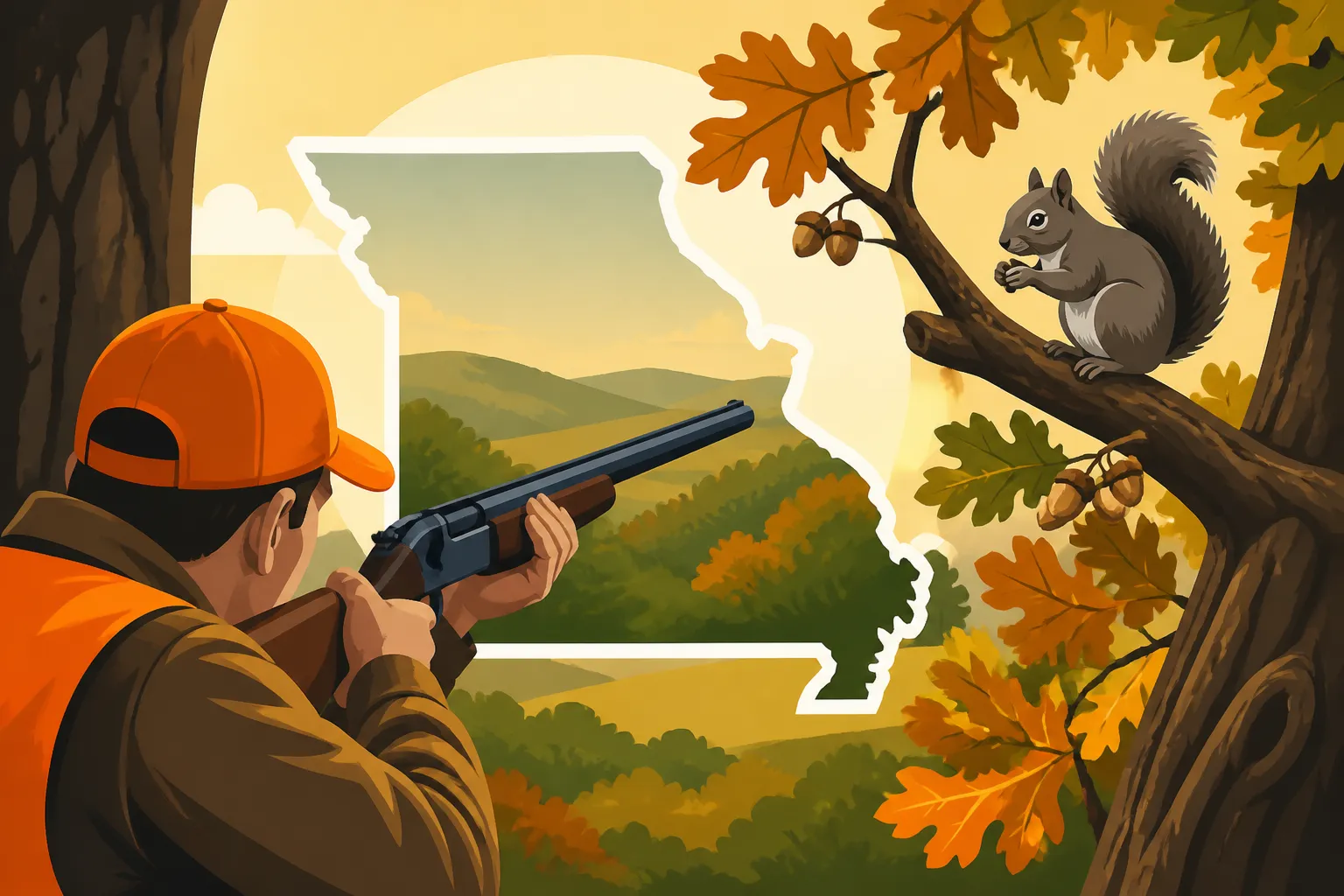
Squirrel Hunting in Oak Hickory Timber
For many folks in Missouri, the thought of squirrel hunting conjures up images of crisp autumn mornings, the rustle of leaves underfoot, and the challenge of spotting those quick, chattering critters high in the canopy. But let's be honest, finding consistent success isn't always easy, especially when you're navigating dense oak-hickory timber. This comprehensive guide will walk you through everything you need to know, from understanding squirrel behavior in these specific woods to the best tactics and gear for filling your game bag.
Understanding Missouri's Oak-Hickory Timber and Squirrel Behavior
Missouri is blessed with vast expanses of beautiful oak-hickory forests, a prime habitat for both fox and gray squirrels. These timberlands aren't just pretty to look at; they are a critical food source, offering the nuts and acorns that fuel squirrel populations throughout the year. To consistently find success, you need to understand the nuances of these woods and how squirrels interact with them.
Identifying Prime Oak and Hickory Species
Not all oaks and hickories are created equal in the eyes of a squirrel hunter. Different species produce mast at different times, and some are simply more preferred than others. For example, the white oak group, which includes species like white oak, swamp white oak, and chinkapin oak, typically drops its acorns earlier in the fall. These acorns are lower in tannins, making them sweeter and often preferred by squirrels (and deer!) when they first hit the ground. Learning to identify their rounded lobe leaves and lighter, flaky bark can give you a significant advantage in the early season.
On the other hand, the red oak group, encompassing species like northern red oak, black oak, and pin oak, tends to drop its acorns later in the season, often well into late fall and even early winter. These acorns have higher tannin content, giving them a more bitter taste, but they remain a vital food source when other options dwindle. Identifying these trees by their pointed leaf lobes and darker, ridged bark helps you predict where squirrels will be feeding as the season progresses. As for hickories, the shagbark hickory with its distinctive peeling bark is a consistent favorite due to its large, oily, and highly nutritious nuts. Pignut and mockernut hickories also contribute to the squirrel's diet. Knowing the subtle differences in these trees allows you to pinpoint prime feeding areas quickly. You can learn more about Squirrel Hunting in Hickories for targeted strategies on these trees.
Seasonal Squirrel Movement and Activity Patterns
Squirrel behavior isn't static; it shifts dramatically with the seasons, largely driven by food availability and weather. In the early archery season, typically late August and September, when the foliage is still thick and the humidity can be stifling, squirrels are often focused on the first drops of mast from white oaks. You'll find them actively foraging in the canopies, cutting acorns, and often staying high in the trees, making them a bit harder to spot. They're also active gathering other soft mast like berries or even corn from nearby fields.
As the weather cools and leaves begin to fall in October and November, squirrel activity ramps up significantly. This is the prime time for them to cache nuts for winter. You'll see more ground activity as they bury acorns and hickory nuts, and with the thinning canopy, spotting them becomes easier. Late season, from December through February, presents its own challenges. With the coldest temperatures and snow often on the ground, squirrels become less active overall, frequently staying holed up in their den trees. Your best bet during this period is to hunt on warmer, sunny days when they emerge to access their buried caches. Understanding these shifts helps you tailor your approach to the conditions, leading to more successful hunts, as outlined in Missouri's Long Squirrel Season Explained.
The Crucial Role of Mast Crops
The success or failure of your squirrel hunt in Missouri's oak-hickory timber is often dictated by the yearly mast crop. A "mast crop" refers to the abundance of nuts, acorns, and other tree fruits. A bumper crop year means squirrels are well-fed, often widely dispersed, and might be less desperate, making them slightly harder to pattern. They have ample choices, so finding a consistently productive spot might take more scouting.
Conversely, a poor mast year can concentrate squirrels in areas where food is still available. These years can lead to boom-or-bust hunting; if you find a good patch of producing trees, it can be phenomenal, but vast areas might be devoid of activity. This makes pre-season scouting incredibly important. Before you even head out with your rifle, take some time to walk the woods, looking for evidence of fallen acorns and nuts, or "cuttings" on logs, stumps, and limbs. Squirrels will gnaw on the nuts, leaving distinct fragments. Understanding this cycle helps you anticipate where to focus your efforts and can significantly impact your hunting strategy.
Essential Gear and Setup for Timber Squirrels
Successfully hunting squirrels in oak-hickory timber requires more than just a keen eye; it demands the right tools. From your choice of firearm to the clothes on your back, having the appropriate gear can make all the difference in comfort, accuracy, and ultimately, your harvest.
Firearms and Ammunition Choices
When it comes to squirrel hunting, simplicity and precision are key. The most popular choice for timber squirrels is undoubtedly the .22LR rifle. Its quiet report minimizes disturbance, allowing for multiple shots if needed or for hunting multiple squirrels without spooking the entire woods. Bolt-action .22s are known for their accuracy, while semi-automatics offer quick follow-up shots. For those who prefer a challenge or are hunting in areas where shots might be further, a magnum rimfire like a .17 HMR or .22 WMR can be effective, though usually overkill for squirrels.
Shotguns, typically a 20 gauge or .410, are also excellent choices, especially in dense woods where squirrels might be moving quickly or when you're hunting with a dog that trees them rapidly. They offer a wider pattern, making it easier to connect with a fast-moving target or a squirrel that's partially obscured. Use smaller shot sizes, such as #6 or #7.5, to minimize meat damage. Another increasingly popular option, particularly for those seeking a quieter experience or hunting near residential areas where firearm discharge might be restricted, are modern air rifles. Powerful air rifles (.22 or .25 caliber) offer surprising accuracy and knockdown power, mimicking the performance of a .22LR without the gunpowder report. Whatever your choice, practice ethical shot placement—aim for the head to preserve meat and ensure a quick, humane harvest.
Optics, Apparel, and Comfort
In the low light of dense Missouri timber, good optics can be a game-changer. A reliable rifle scope with a low magnification (e.g., 2-7x or 3-9x) on your .22LR allows for precise aiming at small targets, especially when squirrels are high in the canopy or partially concealed. For those using open sights or a shotgun, a good pair of compact binoculars (8x or 10x) can help you spot subtle movements in the leaves, identify a squirrel tucked against a limb, or confirm if that lump on the branch is indeed your quarry.
Your apparel needs to blend into the environment while keeping you comfortable. Camouflage patterns that mimic bark and natural foliage, rather than open country patterns, work best in the timber. Layering is crucial for Missouri's unpredictable fall and winter weather. You might start a morning hunt in chilly conditions only to have the sun warm things up considerably by midday. Waterproof boots are a must for dew-soaked leaves, creek crossings, and potential snow. Don't forget a comfortable game bag or a squirrel vest with large pockets to carry your harvest without bulk, and consider a small daypack for water, snacks, and any calls.
Calls, Traps, and Other Tools
While not as common as deer or turkey calls, squirrel calls can be surprisingly effective for timber hunting. Barking calls, which mimic the excited chatter of a squirrel, can often get a shy squirrel to reveal its position, especially if you're still-hunting and want to confirm if a tree is occupied. Distress calls can sometimes pique curiosity, drawing squirrels out of hiding, though they are generally less reliable than barking calls.
For hunting, we focus on calls and traditional methods rather than traps. Trapping squirrels is typically a separate endeavor governed by different regulations and permits, usually for nuisance control rather than sport hunting. Beyond calls, a sharp small game knife is essential for field dressing your squirrels quickly. Many hunters also carry a small piece of twine or a bungee cord to tie squirrels to their belt or vest, keeping them out of the way during the hunt. A basic first-aid kit is always a good idea, especially when walking through potentially rough Ozark terrain.
Proven Hunting Methods in Oak-Hickory Timber
Hunting squirrels in Missouri's varied oak-hickory timber offers a canvas for several effective methods. The best approach often depends on the season, the weather, and your personal preference, but mastering a few key techniques will significantly boost your success rate.
Still-Hunting and Stalking Techniques
Still-hunting is perhaps the most artful and rewarding way to pursue squirrels in the timber. It involves moving through the woods at an incredibly slow, deliberate pace, stopping frequently to observe and listen. Think of it as a moving ambush. The key is to blend in, using the terrain and cover to your advantage. Take three or four steps, then stop for several minutes, scanning the trees from the ground level to the highest branches, looking for movement, flicking tails, or even just the subtle outline of a squirrel against a tree trunk.
When stalking, pay close attention to the wind, trying to move into it so your scent doesn't carry ahead. Use the natural noise of the forest to mask your movements; a gust of wind, a distant bird call, or even a passing car can cover the sound of your footsteps. Walk with soft, heel-to-toe steps, constantly watching the ground for fallen leaves and twigs that might snap underfoot. If you spot a squirrel that's aware of you, freeze. Often, if you remain still, the squirrel will eventually relax and go back to its business, allowing you to get a shot. One of the best indicators of a productive area is finding "cuttings" – the chewed fragments of nuts and acorns – on logs, stumps, or under specific trees. If you find a fresh pile of cuttings, chances are there's a squirrel (or several) actively feeding nearby. Understanding how to interpret these signs is crucial, as highlighted in Reading Cuttings Under an Oak.
Sit-and-Wait Ambush Tactics
For those who prefer a more stationary approach, setting up an ambush point can be highly effective, especially during peak feeding times like early morning or late afternoon. This method involves finding a promising area, often near a concentration of productive mast trees or a well-used travel corridor between feeding and denning sites, and simply waiting. Look for a spot with good visibility that offers natural concealment, like the base of a large tree, a fallen log, or a thicket.
Once you've chosen your spot, settle in quietly and patiently. Avoid fidgeting and minimize noise. Your patience will often be rewarded as squirrels, unaware of your presence, go about their daily routines. This method is particularly useful in areas with abundant food where squirrels are spread out, or when targeting a specific grove of shagbark hickories that you've scouted. It's also a great way to introduce new hunters to the sport, as it allows for focused observation and less strenuous movement. For optimal success, consider using a comfortable seat cushion or a portable stool to maintain silence and comfort during your wait.
Leveraging Dogs for Timber Squirrels
Hunting squirrels with a dog is a cherished tradition for many Missouri hunters and offers a uniquely exciting experience. Cur and feist breeds are typically preferred for their keen sense of smell, endless energy, and natural ability to "tree" squirrels. The dog's role is to range ahead, locate squirrels by scent or sight, and then bark enthusiastically at the base of the tree where the squirrel has taken refuge. This "barking up" behavior alerts the hunter to the squirrel's location.
Once the dog has a squirrel treed, the hunter's job is to approach stealthily, locate the squirrel, and take a shot. The dog's persistent barking often keeps the squirrel focused on the dog, allowing the hunter to circle the tree for a clear shot. While a well-trained dog can greatly increase your chances of success, it also adds another layer of interaction and challenge to the hunt. Training a squirrel dog requires dedication, consistency, and plenty of time in the woods. It's a method that truly embodies the spirit of traditional small game hunting, providing companionship and an active, engaging hunt. More in-depth information on hunting with dogs can be found in resources like Running Hounds in Missouri.
Scouting, Locating, and Tracking Timber Squirrels
Before you even step foot in the woods with your firearm, and certainly once you're out there, effective scouting and sharp observational skills are paramount to squirrel hunting success. Finding the squirrels is often harder than hitting them.
Pre-Season Scouting for Sign and Activity
The secret to consistent squirrel hunting starts long before opening day. Pre-season scouting, ideally in late summer or early fall before the leaves drop too heavily, allows you to identify critical areas. Start by looking for active feeding areas. This means scanning the ground under oak and hickory trees for fresh cuttings – the small, tell-tale fragments of gnawed nuts. A pile of fresh cuttings indicates recent activity and a productive food source. Remember, good mast crops are key, so look for trees laden with acorns or hickory nuts. You can use mapping applications, like those offered by GoHunt, to identify areas of dense oak-hickory timber and pinpoint public land access points. This helps narrow down your search and maximize your time in the woods.
Beyond feeding signs, look for den trees. These are typically older, mature trees with visible holes or cavities that squirrels use for shelter, especially during colder months. While you generally don't shoot squirrels in their dens, locating these trees helps you understand where squirrels are bedding and where they might travel to and from feeding areas. You might also spot leaf nests high in the branches, which are used for summer and fall housing. Understanding these patterns helps you predict squirrel movement. Similar principles apply to scouting for deer, as discussed in Scouting Missouri Public Land Before Season, where mast production also plays a significant role.
In-Season Location and Observation
Once the season is open and you're in the woods, your senses become your primary scouting tools. Listen intently. Squirrels are noisy creatures. You'll hear their excited chattering, the distinct "bark" of a fox squirrel, the rustle of leaves as they scamper across the ground, or the unique sound of an acorn or nut being cut and dropped from high in the canopy. These sounds are your first clue to their presence.
When you hear activity, move slowly and deliberately towards the sound. As you get closer, start scanning the trees and ground for visual cues. Look for a twitching tail, a slight movement in the leaves, or the silhouette of a squirrel pressed tightly against a branch. If a squirrel spots you, it will often "tree" – flatten itself against the side of the tree trunk or hide behind a limb. This is where patience comes in. Circle the tree slowly, keeping the trunk between you and the squirrel, which often causes the squirrel to constantly reposition itself, eventually exposing a shot. Knowing their escape routes and how they utilize the timber is crucial for getting into position.
Tracking and Recovery in Dense Cover
Even with a well-placed shot, recovering a squirrel in dense oak-hickory timber can sometimes be a challenge. When you take a shot, try to mark the exact spot where the squirrel was when it fell, or where you last saw it. Pay attention to any distinctive features on the ground or in the immediate vicinity, like a brightly colored leaf, a unique rock, or a fallen branch. This mental marker can save you a lot of searching time.
If the squirrel doesn't drop immediately, quickly cycle another round and be ready for a follow-up shot. A wounded squirrel can run incredibly fast and disappear into thick cover in seconds. Once it hits the ground, approach cautiously. Sometimes, a squirrel that appears dead might just be stunned and could bolt. If it runs, look for movement in the undergrowth or listen for the rustle of leaves. If you're hunting with a dog, they will often quickly retrieve the downed game. When hunting in areas with thick briars or heavy brush, be prepared to do some crawling and searching to ensure a full recovery. Losing game is never desirable, and diligent tracking ensures an ethical harvest. This commitment to recovery extends to all game, big or small, as discussed in guides like Field Dressing and Cooling in Early-Season Heat for larger game.
Strategic Considerations for Success
Beyond understanding squirrel behavior and having the right gear, successful timber squirrel hunting involves strategic planning and adapting to various factors. From the whims of the weather to the pressure on public land, being prepared for these elements can make or break your hunt.
Weather's Impact on Squirrel Behavior
Weather plays a significant role in squirrel activity. Generally, cool, calm, and clear days, particularly after a cold front, are prime squirrel hunting conditions. Squirrels tend to be most active in the early morning and late afternoon on such days, busily foraging and storing nuts. Overcast days, especially in the middle of the season, can also be productive, as the muted light can make squirrels less wary and active throughout the day.
However, extreme weather can shut down activity quickly. High winds make it incredibly difficult to hear squirrels, and the constant movement of branches makes spotting them nearly impossible. Heavy rain will send squirrels scurrying to their dens. Very cold temperatures, especially combined with wind, will also keep them hunkered down. Your best bet on these truly miserable days is to wait for a break in the weather or focus on the warmest part of the day if you absolutely must hunt. Conversely, unusually warm spells in late fall or winter can actually kickstart activity, drawing squirrels out of their dens to feed. Paying attention to the forecast and planning your hunts accordingly is a smart move.
Public vs. Private Land Tactics
Missouri offers abundant public hunting opportunities, including numerous Conservation Areas and portions of Mark Twain National Forest. Hunting on public land often means navigating increased pressure from other hunters, not just for squirrels but also deer. This pressure can make squirrels more wary and less visible, especially near parking areas or well-traveled trails. On public land, you might need to walk further or delve deeper into the timber to find areas that experience less human disturbance. Using tools like GoHunt maps to identify less accessible sections or areas away from major trails can be a huge advantage. Often, simply walking an extra half-mile can put you in significantly more productive, undisturbed territory. For more insights, consider reading about Hunting Pressure on Missouri Public Ground and Finding Ground Others Walk Past.
Private land, assuming you have permission, often offers less pressure and potentially more consistent squirrel activity. On private ground, you might be able to implement tactics like establishing specific feeding plots (though less common for squirrels than deer) or focusing on known productive groves without competition. Always ensure you have explicit permission to hunt private land, and be a good steward of the land. Whether public or private, adapting your approach to the level of human activity is essential for a successful squirrel hunt. Even timbered draws in row-crop country can hold good numbers of squirrels if they have ample oak and hickory, as detailed in Hunting a Timbered Draw in Row-Crop Country.
Processing and Game Care in the Field
The moment of truth arrives when you've successfully harvested a squirrel. Proper field dressing and game care are crucial, especially during the warmer early season, to ensure the meat is of the highest quality. Squirrels should be field dressed as quickly as possible. This involves removing the internal organs to allow the carcass to cool down rapidly. There are several efficient methods for skinning and cleaning squirrels, many hunters preferring to do it in the field to reduce mess back home.
After field dressing, it's vital to keep the meat cool. If you're hunting on a warm early fall day, carry a small cooler with ice in your vehicle to immediately place your harvested squirrels. Game bags, while not strictly necessary for squirrels due to their smaller size, can help keep them clean. In colder weather, cooling is less of an immediate concern, but you should still get them processed and refrigerated as soon as you've finished your hunt. Taking these steps ensures that your hard-earned harvest is delicious and safe to eat, turning a successful hunt into a wonderful meal. For more general advice on handling game in early season heat, check out Field Dressing and Cooling in Early-Season Heat.
Disclaimer
Hunting is an inherently dangerous activity. Always prioritize safety, understand and follow all Missouri Department of Conservation regulations, and obtain appropriate permits. The information provided here is for educational purposes only and should not replace proper hunter education or professional guidance.