Sunflower Fields on Missouri Conservation Areas
For many Missouri hunters, the annual dove opener in September feels like a homecoming, a vibrant burst of action after the quiet summer months. But let's be honest, finding that perfect dove hunting spot, especially on public land, can feel like chasing a phantom. You hear stories of incredible shoots, but actually locating those honey holes where doves flock by the dozens? That's the real challenge. This guide is here to cut through the guesswork, diving deep into how Missouri Conservation Areas specifically manage and utilize sunflower fields to create prime dove habitat, and how you can successfully scout and hunt them.
Why Sunflower Fields are Dove Magnets and Hunter Hotspots
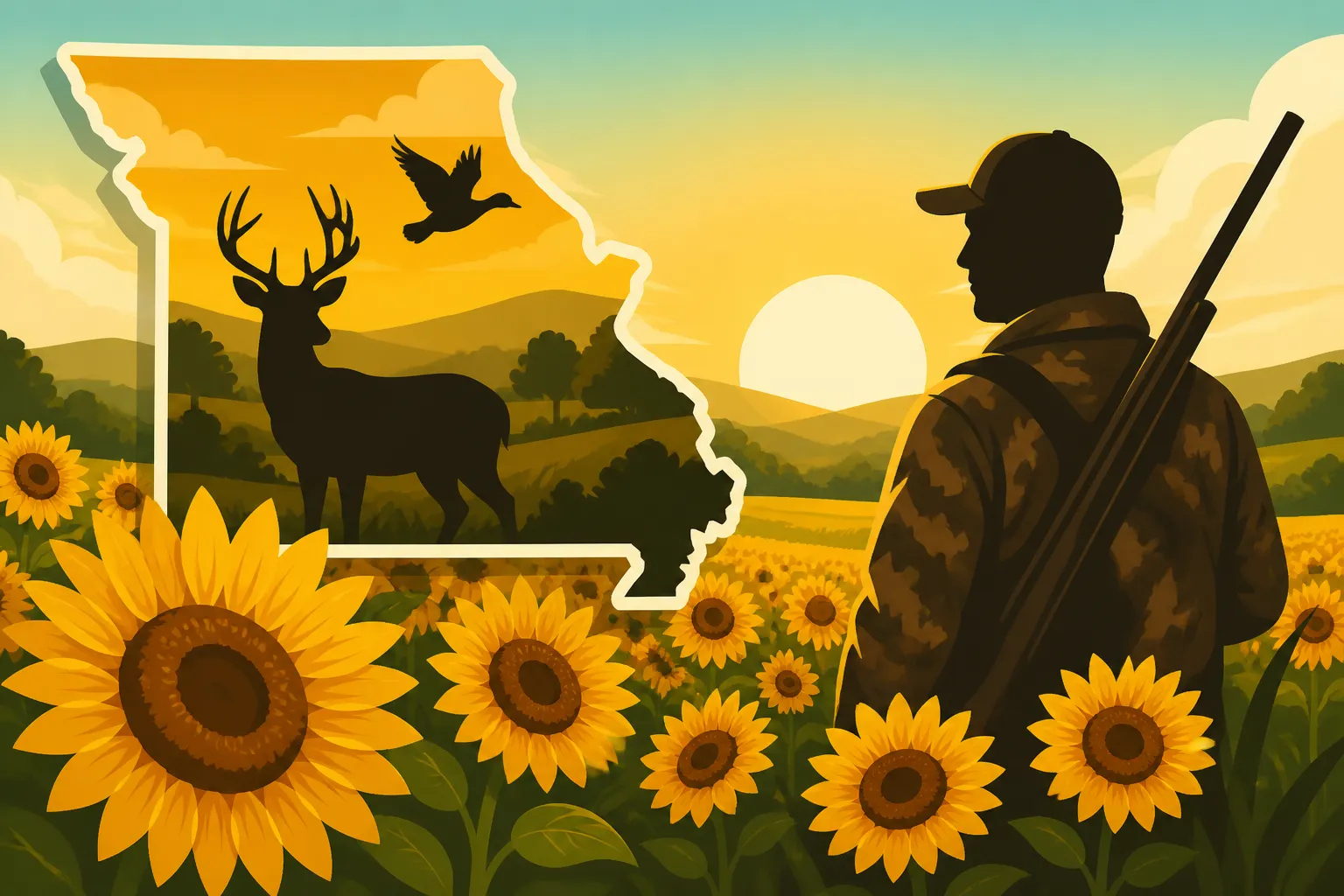
There's a reason sunflower fields are almost synonymous with dove hunting: doves absolutely adore them. It's not just a pretty picture; it's a critical food source that makes these areas incredibly attractive for hunting migratory birds. The Missouri Department of Conservation (MDC) understands this natural draw and strategically plants these fields to provide both habitat for wildlife and excellent public hunting opportunities.
The Biology of Dove Attraction
Mourning doves are primarily seed-eaters, and they have a particular fondness for seeds that are easily accessible on open ground. Sunflower seeds, especially when shattered or dropped after the plants mature, present a veritable buffet for them. The large, oily seeds are a high-energy food source, crucial for doves building up reserves for their migration south. What makes sunflower fields so potent is the sheer volume of feed available and the open nature of the fields, which allows doves to land, feed, and take flight without heavy obstruction. This combination of abundant, preferred food in an accessible environment is a biological magnet, drawing doves from miles around.
Beyond the seeds themselves, the structure of a sunflower field also plays a role. As the sunflowers dry and their heads droop, they create natural perching opportunities for doves to rest and survey the area. The open rows between the plants, or the bare ground after harvest, offer clear feeding lanes. This isn't just a casual preference; it's an evolutionary adaptation that makes these fields essential stopovers. The MDC often coordinates planting and mowing schedules to ensure that these fields are peaking in availability right around the Missouri Dove Season Opening Date in early September, maximizing their draw during the prime hunting window.
The MDC's Strategy for Hunters
The Missouri Department of Conservation doesn't just plant sunflowers; they manage these fields with hunters specifically in mind. Their goal is to create high-quality public access that provides consistent success. This often involves planting large acreages of sunflowers, sometimes interspersed with other dove-attracting crops like millet or wheat, on various Conservation Areas across the state. They'll also time the planting and eventual manipulation of these fields – typically by mowing, discing, or burning – to coincide with the opening of dove season. This disturbance spreads the seeds on the ground, making them even more available to feeding doves and signaling a prime feeding location.
These managed fields serve as critical public hunting destinations, especially around urban centers where private land access can be challenging. Conservation Areas like August A. Busch Memorial CA near St. Louis, Cooley Lake CA in the west, or Fountain Grove CA in northern Missouri are well-known for their managed dove fields. The MDC's thoughtful approach means that hunters willing to do a little scouting can often find productive spots. By concentrating doves in these specific areas, the MDC effectively creates predictable hot zones, simplifying the search for hunters looking for a fast-paced hunt. This strategy is part of a broader effort to provide diverse hunting opportunities across Public Hunting Land in Missouri.
Finding Sunflower Fields on Missouri Conservation Areas
Locating the specific sunflower fields managed for doves on public land requires a bit of detective work and leveraging the right resources. You can't just drive up to any Conservation Area and expect to find one; it takes some planning. The good news is the MDC provides excellent tools to help you pinpoint these spots, and with a little modern tech and old-fashioned legwork, you'll be well on your way to a successful hunt.
Leveraging the MDC Website and Apps
Your first and best resource for finding dove fields is the Missouri Department of Conservation's official website. They maintain a robust online presence, and typically, closer to late summer, they will publish specific details about managed dove fields on various Conservation Areas. You'll often find this information under "Migratory Bird Hunting" or specific press releases leading up to the season. The MDC's "Atlas" feature on their website is an invaluable tool for Using the Atlas to Find an Area, allowing you to search for specific Conservation Areas and often providing detailed maps or aerial imagery.
Many Conservation Areas also have individual area brochures available for Downloading Missouri Area Maps directly from the MDC website. These brochures are goldmines of information, detailing specific hunting regulations for that area, maps of trails, parking, and, crucially, often highlighting managed fields or specific hunt zones. Pay close attention to any notes about "intensive dove management" or "food plots for migratory birds." Furthermore, the MO Hunting app, available for smartphones, can provide real-time information and help you navigate once you're on the ground. It's an essential tool for any modern Missouri hunter.
Boots-on-the-Ground Scouting
While online resources are a fantastic starting point, nothing beats actual boots-on-the-ground scouting. About two to three weeks before the season opener, take a trip to any Conservation Area you've identified as having managed dove fields. Drive the accessible roads, walk the edges of fields, and look for those tell-tale tall, dried sunflower stalks. This pre-season reconnaissance is critical for several reasons. First, it confirms the presence and condition of the fields. Are they mowed? Are the seeds ripe and dropping? Second, it allows you to observe dove activity. Look for birds flying into or out of the fields, perching on power lines or dead trees nearby, or actively feeding on the ground.
During your scouting trip, you can also identify potential hunting locations within the field. Look for areas with sparse cover for a blind, good visibility of flight paths, and easy access. Pay attention to how the field is situated relative to roosting sites or water sources, as doves will often fly a predictable pattern between these locations. Using a mapping app like GoHunt can be incredibly helpful during this stage. Its aerial imagery and public/private land layers can help you visualize the field layout, identify pinch points, and ensure you're within public boundaries. GoHunt allows you to mark potential setup locations, track your walking path, and get a better understanding of the topography, saving you valuable time on opening morning. It’s an investment that pays off in scouting efficiency.
Tactics for Hunting Sunflower Fields Effectively
Hunting sunflower fields can be incredibly exciting, with fast-paced action and plenty of shooting opportunities. However, it's not simply a matter of showing up and shooting. Strategic thinking about your setup, understanding dove behavior, and practicing good gun handling can make all the difference between a frustrating day and a limit of birds.
Decoy Setups and Blind Considerations
Doves, like most birds, are highly visual creatures, and decoys can be incredibly effective in pulling them within range. Motion decoys, such as spinning-wing models, are particularly deadly. Their flashing wings catch a dove's eye from a great distance, making them irresistible. Position several motion decoys strategically around your setup, perhaps one on a tall pole to simulate a dove landing, and others lower to the ground. Static dove decoys, placed on the ground in feeding postures or clipped to fence lines and dead snags, further enhance the illusion of a safe feeding area. A common setup involves creating a "spread" where doves naturally want to land in the center, giving you clean shots.
Your blind setup is equally important. Doves have excellent eyesight, and they will flare if they spot a hunter in the open. Whether you're using a portable ground blind, brushing yourself into natural cover along a fencerow, or simply wearing good camouflage and sitting against a sunflower stalk, concealment is key. Portable blinds, like those from Final Approach or Ameristep, can be quick to set up and offer ample hiding space. If you're going minimalist, ensure your silhouette is broken up and you're not sky-lined. Consider the sun's position throughout the day; setting up with the sun at your back can blind incoming doves while illuminating them for your shot. Remember to practice your concealment during your pre-season scouting so you're not caught flat-footed on Hunting Missouri Dove Fields on Opening Day.
Understanding Flight Patterns and Shot Placement
Doves are notoriously fast and agile flyers, often presenting challenging shots. Observing their flight patterns during your scouting trip is crucial. Do they consistently come in from a particular direction, perhaps from a distant roost or a nearby water source? Do they follow a tree line or a fencerow into the field? Setting up along these established flight paths will put you in the best position. Often, doves will circle a field several times before committing to land, especially if they sense pressure. Learning to read these approaches and anticipating their movements will give you an edge.
When it comes to shooting, practice is paramount. Doves are small targets moving at high speeds, and judging lead can be tricky. Many experienced dove hunters use a modified or improved cylinder choke and 7 1/2 or 8 shot in their shotgun. This combination provides a good pattern for the typically close-to-medium range shots you'll encounter. Instead of aiming directly at the bird, you'll need to "swing through" or "lead" the bird, firing just ahead of it. Remember to keep your head down on the stock and follow through with your swing even after you pull the trigger. Always ensure you are aware of your background and fellow hunters, maintaining safe shooting lanes. The rapid-fire action of dove hunting means you'll burn through shells quickly, so come prepared with plenty of ammunition. You'll also want to make sure you've completed your Missouri HIP Registration for Migratory Birds before heading out.
Rules, Regulations, and Respecting the Resource
Hunting is a privilege, and nowhere is that more evident than on public lands like Missouri's Conservation Areas. Adhering to regulations, understanding permit requirements, and practicing ethical behavior are paramount to ensuring these resources remain available for everyone. When you're out in a sunflower field, you're a steward of the land and the sport.
Permit Requirements and Hunter Orange
Before you even step foot in a sunflower field, ensure you have all the necessary permits. For migratory bird hunting in Missouri, this typically includes a valid Small Game Hunting Permit, a Migratory Bird Hunting Permit, and a Federal Duck Stamp if you plan on hunting waterfowl concurrently (though not strictly necessary for doves alone, it's good to be aware if you also duck hunt). All these permits can be easily purchased online through the MDC website or app, or at authorized vendors. You'll also need to be HIP (Harvest Information Program) registered, which is a free, quick process when you buy your migratory bird permit. This data helps wildlife managers track harvest trends for species like doves.
While hunter orange is not strictly required for dove hunting in most situations, it's always a good idea to consider wearing a blaze orange cap or vest, especially if you're hunting with a group or in an area with high hunter traffic. It increases your visibility to other hunters, which is a common-sense safety practice. Some Conservation Areas might have specific local rules regarding hunter orange, so it’s always best to check the area's brochure or signage when you arrive. Furthermore, always be mindful of shooting hours; typically, hunting for doves opens half an hour before sunrise and extends until sunset.
Ethical Considerations and Cleanup
Ethical hunting goes beyond just following the law; it's about respecting the game, the land, and your fellow hunters. One of the most important ethical considerations in dove hunting is quickly recovering downed birds. Doves can fall far from where they were shot, and in dense vegetation, they can be surprisingly hard to find. Make a mental note of where the bird fell, mark it with your hat or a stick, and retrieve it immediately. A good bird dog can be an invaluable asset for this. Losing birds is wasteful and detracts from the integrity of the hunt.
Another critical aspect of respecting the resource is leaving no trace. This means packing out all your spent shotgun shells, food wrappers, and any other trash. Conservation Areas are public lands, enjoyed by hikers, birdwatchers, and other outdoor enthusiasts. Leaving a clean field ensures these areas remain pleasant for everyone and doesn't create negative impressions of hunters. Also, be considerate of other hunters in the field. Maintain a respectful distance, avoid "sky-busting" (shooting at birds outside of effective range, often scaring them away from other hunters), and communicate clearly, especially when setting up or moving. The community of Missouri hunters is strong, and upholding these principles helps keep it that way.
| Aspect | Key Consideration | Why It Matters |
|---|---|---|
| Scouting Time | 2-3 weeks before season opener | Confirms field condition, dove presence, identifies flight paths, allows for early setup planning. GoHunt can assist with aerial views and marking potential spots. |
| Permits Required | Small Game Hunting Permit, Migratory Bird Hunting Permit, HIP Registration (Federal Duck Stamp optional for doves alone) | Legal requirement for migratory bird hunting in Missouri. Failure to comply can result in fines. |
| Field Condition | Look for mowed/disced sections, abundant dropped seeds, and sunflower heads drying/drooping. | Doves prefer easily accessible seeds; MDC manipulates fields for optimal hunting during season. |
| Blind Setup | Portable ground blind, natural cover, or camouflaged seating; consider sun position. | Doves have excellent eyesight; concealment is crucial to avoid flaring birds. Sun behind you helps hide you and illuminate birds. |
| Decoy Strategy | Spinning-wing motion decoys, static ground decoys, decoys on poles or fence lines. | Visual attractants pull doves into effective shooting range, enhancing success rates. |
| Shotgun & Load | 12 or 20 gauge with modified or improved cylinder choke; 7 1/2 or 8 shot. Bring plenty of shells. | Optimal pattern density and pellet count for fast, agile doves at typical ranges. |
| Ethical Recovery | Mark downed birds and retrieve immediately. A good bird dog is highly recommended. | Minimizes wasted game and demonstrates respect for the resource and the hunt. |
| Leave No Trace | Pack out all spent shells, trash, and personal items. | Preserves the beauty and cleanliness of public land for all users, reflecting positively on hunters. |
Disclaimer
Always consult the latest Missouri Department of Conservation regulations before heading afield, as rules and seasons can change. This guide is for informational purposes only and should not replace official MDC guidance.