Woodcock Along Missouri River Bottoms
There's a quiet thrill to hunting woodcock in Missouri, a pursuit often overshadowed by our state's legendary deer and turkey seasons. But for those of us who appreciate the subtle beauty and challenging flight of a migratory bird, the dense, damp pockets of our river bottoms offer a unique and rewarding experience. This guide is all about peeling back the layers on this often-overlooked game bird, helping you discover the magic of pursuing woodcock in Missouri's incredible riparian habitats.
Understanding Missouri Woodcock and Their Habitat
Woodcock, often affectionately called "timberdoodles," are truly one-of-a-kind. They're a shorebird that thinks it's an upland bird, preferring dense, damp cover for feeding and roosting. And here in Missouri, our extensive river bottoms provide exactly the kind of unique habitat they crave. It's a migratory pursuit, one that demands a keen eye for subtle signs and a willingness to explore places others often overlook.
The Elusive Timberdoodle
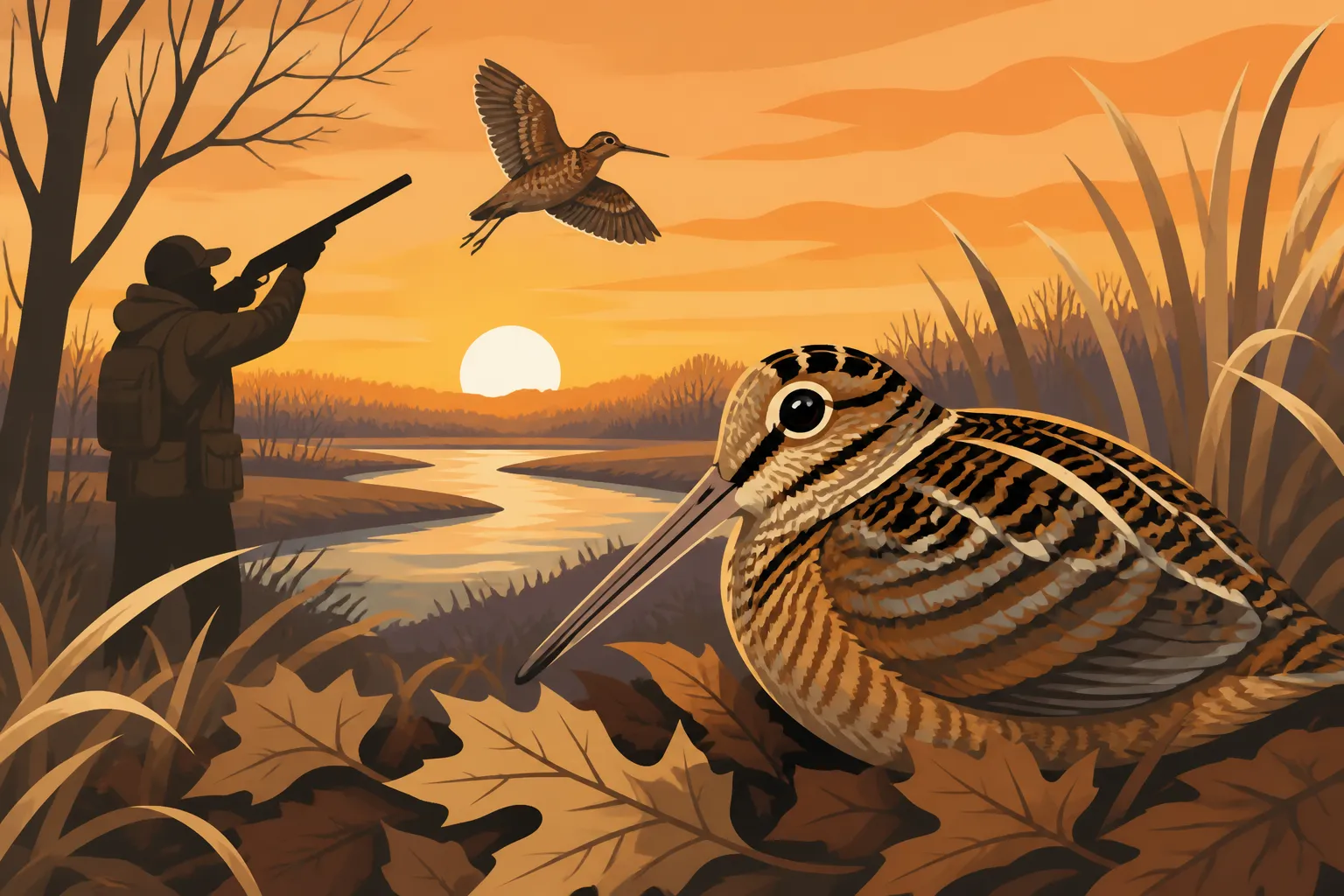
The American woodcock (Scolopax minor) is a fascinating creature, isn't it? With those comically large eyes set high on its head, perfectly adapted for nocturnal feeding, and that incredibly long, sensitive bill designed to probe soft earth for worms, it looks like it came straight out of a Dr. Seuss book. Their camouflage is so exceptional that they can virtually disappear against a backdrop of dead leaves and underbrush, making them incredibly difficult to spot until they burst into flight. This elusiveness is part of their charm and why dedicated hunters find them so captivating.
Unlike many game birds that rely on keen eyesight for predator detection, the woodcock's vision seems to prioritize its ground-probing lifestyle. They're not going to be seen strutting through open fields or skylining on a fence post. Instead, they’re masters of concealment, preferring to sit tight until almost stepped on. This is where the real challenge—and fun—of woodcock hunting begins, as it’s almost impossible without flushing them close.
Their distinctive, twittering flight, often described as a "whistle" as they rocket skyward, is another trademark. It’s a sound that quickens the pulse of any upland hunter, signaling the start of a fast and often unpredictable shot opportunity. These birds are built for short, explosive flights through tangled cover, not long-distance glides, which makes them incredibly challenging targets for even experienced wing-shooters.
Migration Patterns and Timing
Woodcock are migratory birds, passing through Missouri twice a year, but the fall migration is when hunters truly focus on them. While some woodcock might breed in the northern reaches of Missouri, the significant numbers we see are "migrants" passing through on their journey south to warmer wintering grounds. Their movement is highly dependent on weather patterns, particularly the onset of cold fronts. When the ground starts to freeze up north, making it harder for them to probe for worms, they'll push south.
Typically, the peak of woodcock migration in Missouri occurs from mid-October through November. Early in the season, you might find some resident birds, but the real action usually starts when those northern cold fronts sweep down. You'll want to pay close attention to the weather reports out of states like Minnesota, Wisconsin, and even northern Illinois. A good cold snap up there often means a fresh influx of birds will soon be moving into our river bottoms, staging for their next leg of the journey. For more specific details on their seasonal movements, check out information on Missouri Woodcock Migration Timing.
This window can be fleeting, sometimes only lasting a few weeks in prime spots, but if you hit it right, you can find incredible numbers of birds. It's not uncommon for hunters to find a dozen or more birds in a single productive patch of cover when the migration is in full swing. Keep in mind that a sudden, hard freeze in Missouri itself will often push the birds further south rapidly, so timing is truly everything when chasing these timberdoodles.
Preferred Habitat Along Rivers
When you're looking for woodcock along Missouri's vast river systems—think the Missouri River, Mississippi River, or even larger tributaries like the Grand River and Chariton River—you're specifically searching for young, moist, successional timber. They absolutely love areas that have recently been disturbed, perhaps by logging, flooding, or agricultural reversion, leading to a dense growth of young trees and shrubs.
Look for thickets of young willow, cottonwood, silver maple, green ash, or even alder in damper spots. The key is that the canopy isn't fully closed, allowing sunlight to reach the forest floor, which encourages understory growth and keeps the soil soft and moist for easy probing. These aren't deep, mature oak forests where you'd typically find deer, nor are they wide-open quail fields. Instead, they're often overlooked transitional zones, frequently found on the edges of agricultural fields where the land transitions to timber, or in low-lying areas prone to seasonal inundation.
The critical factor is soil moisture. Woodcock feed almost exclusively on earthworms, so they need soft, damp soil to plunge their long bills into. River bottoms, with their regular flooding and high water tables, often provide these ideal conditions. Pay close attention to oxbow lakes, old creek channels, and low areas that stay muddy or damp even when the surrounding ground is dry. These are the goldmines for woodcock. Knowing how to identify these features, perhaps by using scouting tools from GoHunt, can drastically cut down your search time. These areas are often prime locations to begin scouting, offering a different kind of challenge than Squirrel Hunting in Oak Hickory Timber, which tends to be higher and drier.
Scouting and Locating Woodcock in River Bottoms
Successfully hunting woodcock means you've got to be a good scout. These birds aren't evenly distributed; they concentrate in very specific types of cover. Without a solid understanding of what to look for and where, you'll spend more time walking through unproductive habitat than actually finding birds. The good news is, once you find a promising spot, it often holds birds year after year during migration.
Identifying Prime Locations
When you're trying to pinpoint those prime woodcock spots along river bottoms, start by looking at maps. Online aerial imagery or a good hunting app like the one offered by GoHunt can be invaluable. You're looking for signs of recent disturbance: clear-cuts, old logging roads, areas where flooding has scoured away older vegetation, or where marginal agricultural land has been abandoned and is growing up thick. The edges of agricultural fields that meet timber, especially if there's a drainage ditch or low spot, are also excellent candidates.
Focus on areas with a mix of young, dense cover—patches of waist-to-head-high saplings and brush that are almost impenetrable to walk through. These dense thickets provide perfect cover from predators and wind, and often indicate the kind of moist, loamy soil woodcock love. If you see areas that look like a tangled mess from above, those are worth exploring on the ground. Think about how difficult it would be for a hawk or an owl to navigate that canopy, and you're probably in the right neighborhood.
Don't overlook small, isolated pockets of this cover, even just a few acres. Woodcock often concentrate in these smaller "islands" of habitat, especially if they're surrounded by less suitable ground. These micro-habitats, particularly those with good Missouri River and Big Muddy Access, can be incredibly productive, often holding more birds per acre than larger, more uniform patches.
Looking for Woodcock Sign
Once you're on the ground in a promising area, your eyes need to be trained to spot woodcock sign. These birds aren't like pheasants leaving tracks in the snow; their signs are much more subtle, but distinct once you know what to look for. The primary indicators are "splashings" and "borings."
- Splashings: These are small, white, chalky droppings, often about the size of a dime or quarter, typically found on leaves or the ground. They're very noticeable against the brown and green of the forest floor, almost like someone dripped white paint. If you find one or two, slow down and look for more. Multiple splashings in an area are a sure sign that woodcock have been feeding and roosting there.
- Borings: These are small, pencil-sized holes in the soft, damp ground, left by the woodcock's long bill as it probes for earthworms. They're often found in clusters, particularly in areas where the soil is rich and moist. Finding borings alongside splashings is like hitting the jackpot; it confirms active feeding and consistent use of that specific spot.
Another less common but equally exciting sign is finding shed woodcock feathers. These are typically small, brownish, and mottled, blending in perfectly with the leaf litter. While finding a feather is less common than splashings or borings, it's another clear indicator that woodcock are present. You're looking for fresh sign, too. Older, faded splashings might mean birds were there, but aren't currently. Fresh, bright white splashings mean recent activity.
When and Where to Search
The best time to search for woodcock in these river bottom habitats is generally after a cold front has pushed through, especially if it brings some rain to soften the ground. They tend to move in waves with these weather changes. As mentioned, mid-October through November is prime. On any given day, woodcock are most active at dawn and dusk, but they'll sit tight in dense cover throughout the day. This makes them huntable anytime the season is open.
When you're walking, concentrate on the edges of the thickest cover, particularly where it transitions to slightly more open ground, or along logging roads and old trails within the dense bottomland. These edges offer easier access for you and your dog, but also provide a buffer for the birds before they flush into the impenetrable stuff. Don't be afraid to push into the thick stuff though; that's often where the birds are holding tight. Remember, these birds don't often run; they hold.
Weather also plays a huge role. A light rain can be beneficial, keeping the soil soft and encouraging earthworm activity. However, hard freezes will shut down the woodcock's food source and push them south rapidly. On colder days, look for them in the thickest, densest cover available, as it offers more thermal protection. On warmer days, they might be slightly more dispersed but still sticking to damp, shaded areas. It's a bit like Hunting Missouri Dove Fields in September, where weather and timing dictate bird presence.
Effective Hunting Tactics for River Bottom Woodcock
Chasing woodcock in Missouri's river bottoms is a unique experience. It's not a fast-paced hunt across open fields, but rather a slow, methodical push through dense cover, punctuated by explosive flushes. Having the right approach, the right gear, and ideally, a good companion, makes all the difference.
Walking the Cover
When you step into a woodcock cover, slow down. Way down. These birds hold incredibly tight, often letting you walk right past them if you're moving too quickly. A slow, methodical pace is crucial, almost a shuffle, with frequent pauses. Think of it like a human-powered deer drive, but for tiny timberdoodles. Zigzagging through the cover, especially in the densest patches, can help push birds that might be sitting just out of sight.
Work into the wind if possible. This isn't just good for scent control if you're hunting with a dog, but it also means flushed birds are more likely to fly into the wind, which can be slightly more predictable (or at least, less completely random) than if they're flying with it. Always be ready for a flush. The shot opportunities often come quickly and unexpectedly, demanding fast reflexes and quick decision-making in incredibly tight quarters.
You'll be pushing through thorns, briars, and tangled vines, so durable clothing is a must. Many seasoned upland hunters swear by quality brush pants and a tough Upland Vests and Quail Gear to protect themselves and carry essential items. Don't underestimate how quickly you can get turned around in dense river bottom cover, so keeping track of your direction, perhaps with a GPS app on your phone, is also a smart move.
The Role of a Good Bird Dog
Let me be absolutely clear: while it’s possible to hunt woodcock without a dog, it’s about a thousand times more effective, enjoyable, and frankly, ethical, with one. A good bird dog is not just an asset; it's practically a necessity for woodcock hunting in thick river bottom cover. These birds are masters of camouflage, and even when you know they're there, finding a downed bird in dense undergrowth is incredibly challenging.
A well-trained pointing dog, whether it's a Setter, Pointer, or even a versatile breed like a German Shorthair, is invaluable. They'll pinpoint birds you'd walk right past, and their ability to hold a point on a tight-sitting woodcock gives you precious moments to get into position for a shot. The dog's nose will also be crucial for retrieving downed birds that inevitably fall into the thickest tangles or even into water. A lost bird is a terrible shame, and a good retriever minimizes that risk.
Working with your dog in these dense conditions means close-range work. You won't be sending your dog on long casts in this cover. Instead, you'll want them working within 10-20 yards, quartering in front of you. This keeps both you and the dog safe and ensures you're close enough to capitalize on the typically short-range flushes. Regular training to ensure your dog stays close and is obedient in thick cover is vital before you head out.
Shotgun and Load Choices
Given the incredibly close-range flushes and dense cover, your shotgun and load choices for woodcock should reflect these conditions. You're not shooting long distances here; most shots will be within 15-25 yards, sometimes even closer.
- Gauge: A 20-gauge shotgun is often considered ideal, offering a good balance of light weight (which you'll appreciate during long walks) and sufficient payload. A 28-gauge is also a fantastic choice, especially for those who appreciate its nimble feel and reduced recoil. Even a 12-gauge can work, but can feel a bit bulky in tight spots.
- Choke: Open chokes are your friend. A Skeet or Improved Cylinder choke is usually perfect. Anything tighter will often result in blowing birds up at close range, or missing entirely due to too tight a pattern. The goal is to spread the shot quickly for fast-flushing birds.
- Shot Size: Small shot sizes are all you need for these relatively small, fragile birds. #8 or even #9 lead shot is highly effective. Remember, you're looking for dense patterns at close range, not individual pellet energy at distance. For an extensive guide on appropriate firearms, consult Shotguns and Loads for Missouri Birds.
Carrying enough shells for multiple flushes is wise, but you won't need a massive amount. Focus on quality over quantity, and make sure your shells are suited for quick, close-range shooting.
Dealing with Thick Cover and Fast Flushes
The defining characteristic of woodcock hunting in river bottoms is the thick cover and the speed of the flush. When a woodcock goes up, it goes up now. They typically burst straight up through the canopy, often twittering as they go, making a beeline for the densest part of the cover.
Your primary challenge will be quickly acquiring the bird, swinging your shotgun in tight quarters, and making a safe shot. It requires a lot of practice and discipline. Always know what's beyond your target. In these dense environments, it's easy to lose track of your hunting partners or where the land falls away. Safety is paramount, especially when working in a group.
Practice should focus on instinctive shooting. Forget long, deliberate swings; you need to shoulder the gun and point it where the bird is going, often in a fraction of a second. This is where a light, fast-handling shotgun really shines. Don't be discouraged by misses; woodcock are notoriously difficult targets. Every successful shot feels earned, a testament to quick reflexes and an understanding of the bird's unique flight path.
Overcoming Challenges and Maximizing Success
Hunting woodcock in Missouri's river bottoms is immensely rewarding, but it comes with its own set of challenges. From navigating the terrain to adapting to weather, a prepared hunter is a successful hunter.
Navigating River Bottom Terrain
Missouri's river bottoms are beautiful but can be tough going. Expect mud, especially in those damp, worm-rich areas woodcock love. You'll encounter dense tangles of briars, multiflora rose, and thorny shrubs that will try to snag your clothing and scratch your skin. Uneven ground, old logging ruts, and hidden stumps are common. And don't be surprised to encounter standing water in low-lying areas, especially after recent rains or during peak migration when water levels might still be elevated.
Good footwear is absolutely essential. Waterproof boots, preferably with good ankle support, are non-negotiable. Look for boots designed for tough, wet conditions. Many hunters opt for rubber boots to keep their feet dry, even when sloshing through shallow water or deep mud. Just as Boots for Walking Ozark Rock are vital in the hills, sturdy, waterproof options are key here. Consider investing in high-quality gaiters to keep mud and debris out of your boots and protect your lower legs from thorns.
Another critical item for navigation is a reliable GPS or mapping app. It's incredibly easy to get disoriented in thick, uniform river bottom cover. Marking your vehicle, establishing waypoints, and tracking your route are simple but effective ways to stay safe and avoid getting lost. This proactive approach to navigation is similar to how you might Reading Aerial Photos for Ozark Deer to find specific features.
Weather Considerations
As mentioned, weather dictates woodcock migration. But local weather also impacts your hunting experience.
- Cold Fronts: These are your best friend for bringing birds into the area. However, a hard freeze that locks up the ground will send them packing quickly.
- Rain: Light rain can be great, keeping the ground soft for feeding and potentially holding birds longer. Heavy downpours, however, can make hunting miserable and obscure scent for your dog.
- Wind: High winds can make woodcock more prone to flushing wildly or flying erratically, making shooting even tougher. On very windy days, focus on areas with dense, sheltered cover where birds might feel more secure.
- Temperature: Early season woodcock hunting can still be quite warm, especially in mid-October. Dress in layers that can be shed as you warm up from walking. Later in the season, you'll need warmer gear, but remember you'll be exerting yourself, so avoid over-dressing.
Always check the forecast before you go and dress appropriately. Being prepared for varying conditions will make your hunt much more comfortable and productive.
Ethical Considerations and Bag Limits
Woodcock are a federally regulated migratory game bird, which means specific rules apply. In Missouri, hunters need to have a valid small game hunting permit and a Missouri Migratory Bird Hunting Permit (which includes HIP registration). You'll also need a federal duck stamp if you're 16 or older, though many upland hunters purchase one anyway to support conservation. Always check the current year's Missouri Department of Conservation (MDC) regulations, as bag limits and season dates can change. As a general reference, information on Missouri Resident Small Game Permit Cost and other permits is readily available.
Typically, Missouri's daily bag limit for woodcock is three birds, with a possession limit of nine. This is a conservative limit, reflecting their migratory status and population dynamics. Respecting these limits is crucial for the long-term health of the species.
Remember the principles of ethical hunting:
- Only shoot at birds in safe directions: In dense cover, this means being extra vigilant about your shooting lane and knowing where your hunting partners (and dogs) are at all times.
- Identify your target: Ensure it's a woodcock before you shoot.
- Make every effort to recover downed birds: This is where a good dog is invaluable.
- Handle game respectfully: Field dress birds quickly and cool them properly, especially on warmer days.
By following these guidelines, you're not just enjoying a fantastic hunting experience; you're also contributing to the conservation of this unique and charming migratory bird for future generations to enjoy.
| Woodcock Habitat Feature | Why It's Important | What to Look For | Location Examples |
|---|---|---|---|
| Young, Dense Cover | Provides concealment from predators and wind protection. | Patches of 10-20 foot tall saplings (willow, cottonwood, green ash, multiflora rose). | Newly clear-cut areas, old field edges, disturbed river banks. |
| Moist, Soft Soil | Essential for probing with their long bills for earthworms. | Areas with standing water or saturated ground, especially after rain; dark, rich soil. | Oxbow lakes, old creek channels, drainage ditches, low spots in floodplains. |
| Good Understory | Offers food and cover at ground level. | Thick growth of shrubs, briars, and leafy vegetation beneath the young trees; shaded ground. | Areas where sunlight penetrates the canopy to promote ground cover. |
| Proximity to Water | River bottoms provide consistent moisture and food. | Directly adjacent to rivers, streams, sloughs, or other water sources; areas prone to seasonal flooding. | Along the Missouri River, Mississippi River, larger tributary systems. |
| Edge Habitat | Often used as travel lanes and feeding zones. | Where dense thickets meet slightly more open ground, old logging roads, agricultural field edges. | Transition zones between different cover types. |
Disclaimer
Always consult the current Missouri Department of Conservation (MDC) hunting regulations before heading afield. Seasons, bag limits, and specific rules can change annually.