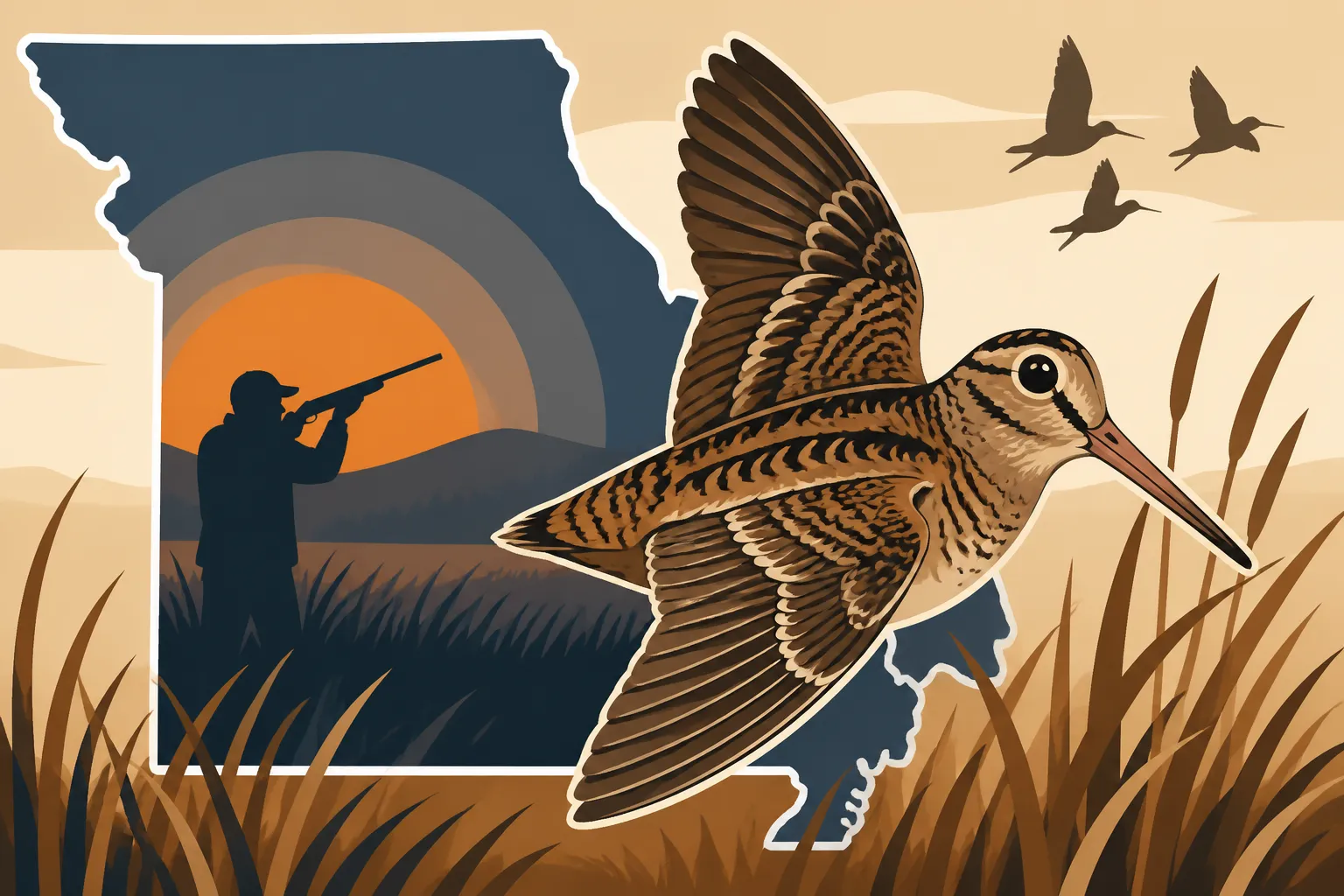
Missouri Woodcock Migration Timing
If you've ever spent time chasing the elusive timberdoodle, you know that pinning down their arrival and departure in Missouri can feel like trying to catch smoke. One day the woods are quiet, the next you're flushing birds every twenty yards, only for them to vanish just as quickly. This guide is here to shed some light on the mysterious patterns of woodcock migration through Missouri, helping you understand the rhythms of these fascinating birds so you can be in the right place at the right time.
Understanding the Elusive Timberdoodle's Journey
The American Woodcock, often affectionately called the timberdoodle, is one of those unique migratory game birds that really keeps you on your toes. Unlike ducks that follow obvious waterways or geese that fly in massive, noisy formations, woodcock are stealthy. They move largely under the cover of darkness, often just ahead of significant weather shifts, making their presence a fleeting whisper rather than a grand announcement. Understanding their journey is key to unlocking successful hunts in Missouri.
The Rhythms of Woodcock Migration
Woodcock are primarily forest-dwelling birds that breed in the northern states and Canadian provinces, from the Great Lakes region all the way up into the maritime provinces. As autumn turns into winter, freezing temperatures and dwindling food sources (primarily earthworms) push them south. Missouri sits smack in the middle of their migratory path, acting as a crucial stopover point for birds heading to warmer wintering grounds in the southern United States, particularly along the Gulf Coast.
Their migration isn't a single, unified wave. Instead, it's more like a series of pulses, with different cohorts of birds moving through at various times, influenced by weather systems and habitat conditions. This is why one week you might hear of a great flush in northern Missouri, and the next week, the reports shift to the central or southern parts of the state. These birds are literally hop-scotching their way south, often staying in an area for only a few days to a week before continuing their journey. For a hunter, this means you need to be prepared for those brief windows of opportunity.
Key Factors Influencing Arrival and Departure
Predicting the exact moment woodcock will show up, or when the bulk of the flight will be in your area, comes down to a few critical environmental cues. It’s not an exact science, but experienced hunters learn to read the signs.
The most significant factor is always weather. Cold fronts pushing down from the north are the primary trigger. A sudden, sustained drop in temperatures, especially if it brings freezing conditions to their northern breeding grounds, will send birds winging their way south. If those cold fronts are strong and widespread, you can expect a larger push of birds. Conversely, a mild autumn might delay their arrival, leading to a later and more drawn-out migration.
Food availability also plays a huge role. Woodcock rely almost exclusively on earthworms, which they probe for with their long, sensitive bills. When the ground freezes solid in the north, they can no longer access this food source, forcing them to move. Even in Missouri, a prolonged hard freeze can push birds further south quickly, as the ground becomes impenetrable. Conversely, soft, moist soil, especially after a good rain, can hold birds for a few days as they refuel. Staying Dry Through an Ozark Rain is a good read if you plan on being out during these conditions.
While less understood, some hunters believe moon phases can play a role, given that woodcock are largely nocturnal migrants. A bright moon might aid their travel, but ultimately, weather and food are the dominant forces. You might use a mapping application like GoHunt to track approaching cold fronts and monitor soil moisture conditions in areas you plan to hunt. This helps you get a jump on predicting movement.
What to Look for: Indicators of Woodcock Movement
Since woodcock are so subtle, you need to develop an eye for the less obvious indicators of their presence. It’s a bit like detective work.
First, keep a close watch on weather patterns north of Missouri. If states like Minnesota, Wisconsin, or Michigan are getting hammered with significant cold snaps and early snow, it’s a good bet birds are on the move. Pay attention to forecasts showing multiple days of freezing temperatures heading your way.
Locally, observe changes in insect activity and ground conditions. A sudden disappearance of ground-dwelling insects might signal a shift in conditions that impacts woodcock. After a period of dry weather, a good soaking rain that softens the soil can make an area much more attractive.
Finally, and perhaps most importantly, communication with other hunters and bird watchers can be invaluable. Birding groups often track migratory bird sightings, and while they might not specify a "flight" of woodcock, increased sightings of other migratory species could indicate broad movements. Keep an ear to the ground at your local coffee shop or sporting goods store. Even without formal reports, a friend mentioning they’ve seen more small brown birds darting across the road at dusk could be your cue. The "grapevine" is still one of the best tools for the woodcock hunter.
Peak Migration Windows in Missouri
While woodcock can be found in Missouri during various parts of their migration, there are definitely "sweet spots" when your chances of encountering significant numbers of birds are highest. These windows are closely tied to the state's geography and the prevailing weather patterns.
Early Season: September and October Movements
As soon as Missouri's woodcock season opens, you might find birds, but they are often the earliest, most ambitious migrants, or perhaps even local breeding birds. These early flights, typically in late September and throughout October, are often pushed by the very first significant cold fronts in the northern states. These fronts aren't usually severe enough to freeze the ground solid, but they signal the end of easy living up north.
During this period, the flights tend to be more scattered. You might jump a few birds here and there, but you're less likely to find large concentrations. They're still testing the waters, so to speak, stopping briefly in patches of suitable cover to feed before moving on. Hunting these early birds requires patience and persistence. You'll likely be working through dense cover that still has a good deal of foliage, so shooting windows can be tight. Don't be surprised if these birds are a bit wilder, flushing further out as they haven't faced much hunting pressure yet. Check Missouri Woodcock and Snipe Dates for the exact season opening each year.
The November Sweet Spot: The Bulk of the Flight
If there’s one month to really focus on woodcock in Missouri, it’s November. This is typically when the main body of the woodcock migration pushes through the state. By now, the truly harsh conditions have settled into the northern breeding grounds, forcing large numbers of birds southward. Sustained cold weather and widespread freezes up north are the primary drivers.
This period often coincides with the Missouri firearms deer season, which means less attention might be paid to woodcock, offering you a unique opportunity. The timing is usually ideal: the leaves are falling, which opens up shooting lanes in the dense cover they prefer. The ground is often moist from autumn rains, providing abundant earthworms. You’re more likely to encounter larger groups of birds, or at least a more consistent string of flushes in prime habitat. Woodcock Along Missouri River Bottoms are often key locations during this period, as the fertile, soft soils along these waterways provide exactly what the migrating birds need.
Think about scouting areas with young, regenerating timber, especially in low-lying areas near creeks and rivers. Use a tool like GoHunt to examine aerial maps for these habitat types, identifying transitional zones between dense cover and more open woods. The ability to see topography and vegetation types from above can save you a lot of boot leather. When these conditions align, and a strong northern cold front has pushed birds down, you might experience one of those magical days where flushes are constant, and your dog works tirelessly.
| Migration Phase | Typical Timing | Weather Conditions | Bird Numbers | Hunting Considerations |
|---|---|---|---|---|
| Early Season | Late September-October | First northern cold fronts, mild locally | Scattered, sporadic | Dense cover, wilder birds, scouting for first arrivals |
| Peak Migration | November | Consistent northern cold, local freezes | Concentrated, steady | Falling leaves, more predictable locations, high density |
| Late Season | December | Sustained freezes, potential snow | Declining, lingering | Seek unfrozen ground, sparse cover, southern areas |
Late Season: December Stragglers and Wintering Birds
As December rolls in, the woodcock migration generally tapers off. However, that doesn't mean the hunting is entirely over. You'll find two types of birds during this late season: the last stragglers making their way south, and a smaller number of birds attempting to winter in the milder southern parts of Missouri.
The challenge in December is finding unfrozen ground. A significant freeze in Missouri will quickly push any remaining birds out. However, if conditions remain relatively mild, especially in the Bootheel or the extreme southern Ozarks, birds might linger in areas where the soil stays soft. These late-season birds can be incredibly difficult to find. The cover is usually at its thinnest, meaning they have fewer places to hide, but also making them more conspicuous if you do find them.
Hunting in December demands a focus on very specific, protected microclimates. Look for dense, evergreen thickets, areas with heavy leaf litter, or south-facing slopes that get more sun exposure, keeping the ground thawed. While the numbers will be much lower, the reward of finding and flushing a late-season timberdoodle can be particularly satisfying. Remember to consult Missouri Doves and Migratory Birds for general information on other migratory species and their regulations, as rules for migratory birds are often grouped.
Scouting and Hunting Strategies for Migrating Woodcock
Hunting woodcock is a truly active pursuit, requiring a fair bit of walking, an understanding of subtle habitat cues, and ideally, a good bird dog. But even without a canine companion, smart scouting and tactics can lead to success.
Identifying Prime Woodcock Habitat
Woodcock have very specific habitat requirements, especially during migration. They need young, regenerating timber that offers dense overhead cover for protection from raptors, but also an open understory where they can walk easily. Crucially, the soil needs to be moist and soft, rich in earthworms.
Think about areas like:
- Young Forest Edges: Where clear-cuts or timber stand improvements have occurred, leaving behind dense saplings and brush.
- River Bottoms and Creek Drainages: These areas often have rich, moist soil, even during drier periods. The cover can be diverse, from willow thickets to young cottonwood and sycamore stands. This is where you’ll often find your best luck, as mentioned in Woodcock Along Missouri River Bottoms.
- Alders and Dogwood Thickets: These shrubby areas often indicate moist soil and provide the perfect density for woodcock.
- Upland Seeps and Springs: Even in higher ground, small areas where water seeps out of the hillside can create pockets of soft, worm-rich soil that attract birds.
When scouting, whether physically walking an area or using mapping software, look for these characteristics. Notice subtle changes in vegetation height and density. Fields that border young timber, especially those with some brushy edge cover, are also prime candidates. Scouting Missouri Public Land Before Season applies just as much to woodcock as it does to deer.
Leveraging Technology for Migration Tracking
In today's age, hunters have incredible tools at their fingertips. While nothing replaces time in the field, technology can certainly help you be more efficient.
Mapping applications like GoHunt are incredibly useful. You can use their satellite imagery to identify potential woodcock cover based on vegetation type, proximity to water, and logging activity. Look for the tell-tale patterns of clear-cuts or areas marked as "young growth" on public land maps. You can also layer in public land boundaries and even identify topographical features that might create those critical moist areas. GoHunt's weather forecasting tools can help you monitor those crucial cold fronts moving south, allowing you to anticipate new arrivals.
Beyond mapping, don't shy away from using broader information sources. Websites like eBird, where birdwatchers report sightings, can sometimes give you a general idea of woodcock presence in your region. While specific locations might not be shared for hunting purposes, a sudden uptick in woodcock reports in a particular county might indicate a new push of birds. Local conservation area offices sometimes offer general updates on migratory bird activity, too.
Hunter Tactics for Different Migration Phases
Your hunting tactics should adjust slightly depending on whether you’re chasing early, peak, or late-season birds.
Early Season (September/October): The cover is thick, and birds can be sporadic. You'll want to work areas thoroughly, but perhaps at a quicker pace, covering more ground to find those scattered birds. Since the leaves are still mostly on, visibility is reduced. Focusing on edges of cover or thinner patches might offer slightly better shooting. A good dog is invaluable here, as birds will often hold tight in the dense cover.
Peak Migration (November): This is when you can afford to slow down and really dissect prime habitat. With leaf fall, visibility improves, and birds are generally more concentrated. Work through promising cover systematically, giving your dog (if you have one) plenty of time to sniff out scent. Pay close attention to subtle habitat changes—a shift from dry oak woods to a moister, brushier bottomland can instantly turn up birds. Walking Missouri Quail Country shares many similarities with woodcock hunting in terms of movement and how you approach cover.
Late Season (December): The game becomes one of finding unfrozen ground. Target those thermal refuges and areas with heavy cover (like evergreen stands or dense briar thickets) that might retain moisture and warmth. You'll likely walk more between flushes, but the birds you find might be more inclined to hold tight. This is also a time when you might try working slightly more open cover if the dense stuff is frozen solid, as birds will be searching for any accessible food source. Remember your Upland Vests and Quail Gear for carrying shells, water, and perhaps a few snacks for these long walks.
Missouri's Regulatory Frame for Woodcock Hunting
Like all migratory game birds, woodcock fall under both federal and state regulations. Staying compliant is crucial, not just for legal reasons, but for ensuring the long-term health of the species.
Season Dates and Bag Limits
Woodcock season dates and bag limits are set annually, often falling within a federal framework. Missouri's specific dates typically open in late September or early October and run through December, with specific daily and possession limits. It's incredibly important to always check the current year's Missouri Department of Conservation (MDC) regulations before heading afield. These dates and limits can shift slightly from year to year based on population surveys and federal guidelines. Don't rely on last year's regulations or hearsay; get the official word.
Usually, the woodcock season runs concurrently with snipe, giving you a chance to hunt both species if you encounter them. This also means understanding the subtle differences in their preferred habitats and flight patterns.
Federal Requirements: HIP and Duck Stamp
Hunting migratory birds in Missouri means you're operating under federal regulations in addition to state ones. There are two primary federal requirements you absolutely cannot overlook:
- Migratory Bird Harvest Information Program (HIP) Registration: Every hunter of migratory game birds (including woodcock, doves, ducks, geese, and snipe) must register annually with the HIP program. This is a simple, free process usually done when you purchase your state hunting permit. It helps wildlife agencies gather crucial harvest data to manage populations effectively. Without it, you are not legally permitted to hunt woodcock. Missouri HIP Registration for Migratory Birds details this requirement further.
- Federal Migratory Bird Hunting and Conservation Stamp (Federal Duck Stamp): While woodcock are not ducks, they are migratory birds. This means that hunters 16 years of age and older are required to possess a current Federal Duck Stamp to hunt woodcock. This stamp is an investment in wetland conservation, with 98% of the purchase price going directly to acquire and protect wetland habitats for migratory birds and other wildlife. It's a small price to pay for such a vital resource.
Ethical Considerations and Conservation
Hunting woodcock, like any species, comes with a responsibility towards conservation. Woodcock populations have seen declines in some areas, highlighting the importance of ethical hunting practices.
- Responsible Harvest: Stick strictly to bag limits. Taking more than your fair share doesn't help the resource and is illegal.
- Shot Choice: While not federally mandated for woodcock, many hunters choose to use non-toxic shot, especially in sensitive wetland areas. It's a good practice to minimize lead exposure in the environment.
- Respect for the Resource: Appreciate these unique birds and their contribution to the ecosystem. Their unique habitat needs highlight the importance of active forest management, including clear-cutting and timber stand improvements that create the early successional forests they depend on.
By understanding their migration timing, learning to identify their preferred habitat, and adhering to all regulations, you can enjoy the rewarding challenge of hunting Missouri's elusive timberdoodles while contributing to their ongoing conservation.
Disclaimer
This article is for general informational purposes only and does not constitute professional advice. Laws, prices and regulations vary by location and change over time. Consult a qualified professional for guidance on your specific situation.