Missouri Woodcock and Snipe Dates
Trying to pin down the exact season dates for less common migratory birds like woodcock and snipe in Missouri can feel like a wild goose chase. These aren't your typical deer or turkey hunts with widely publicized dates, and it's easy to get confused about permits and specific regulations. This comprehensive guide is designed to cut through that confusion, providing you with all the up-to-date information on Missouri's woodcock and snipe seasons, necessary permits, prime hunting locations, and effective tactics to help you successfully pursue these unique upland birds.
Understanding Missouri's Migratory Bird Seasons
Hunting woodcock and snipe offers a distinct challenge and reward compared to larger game. These aren't resident birds; they follow migratory patterns, which means their season dates are often set in coordination with federal guidelines and can sometimes feel a bit different from other Missouri hunting opportunities. Being aware of these specific dates is crucial, as is understanding the nuances of their behavior and habitat.
The Elusive American Woodcock
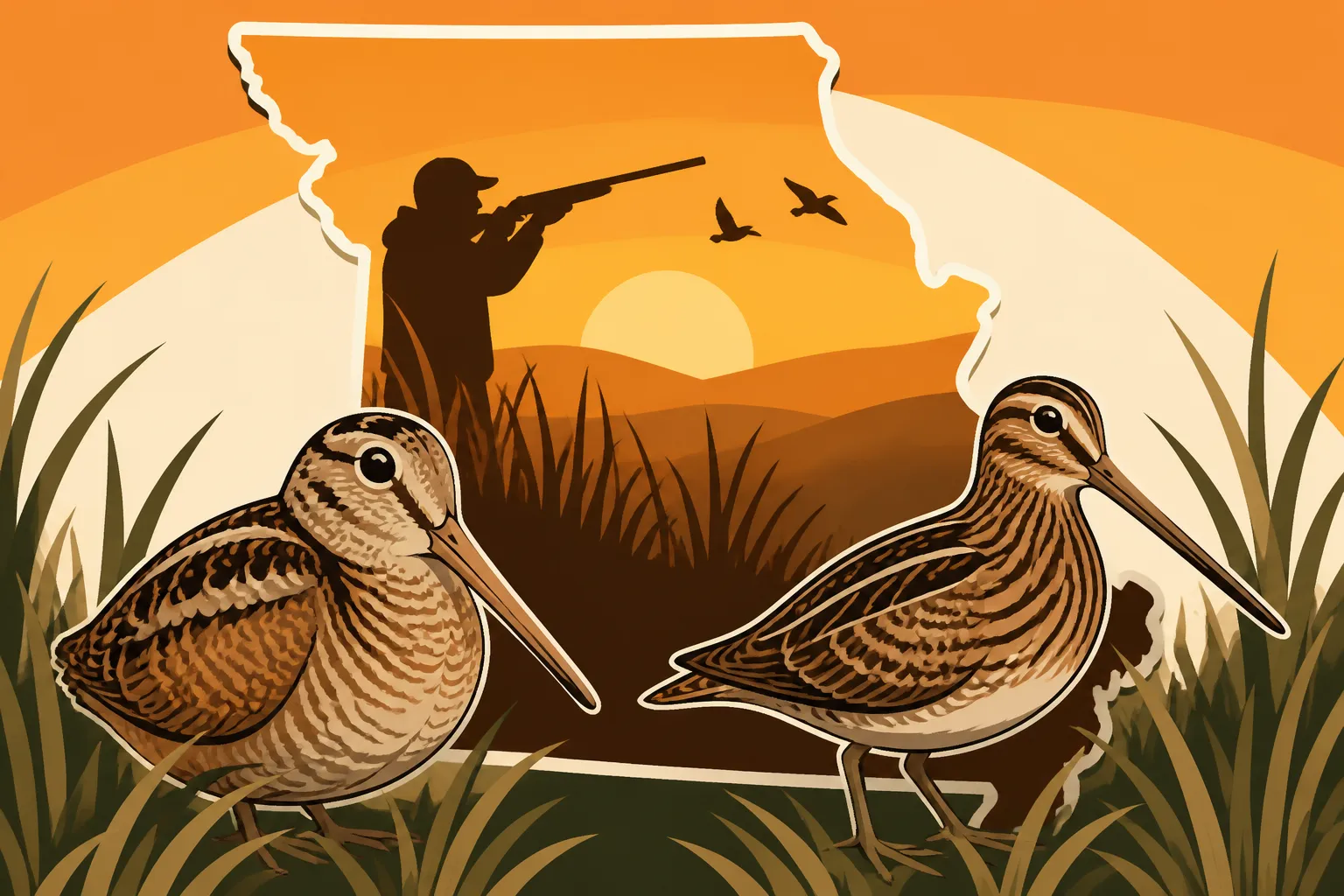
The American woodcock, often affectionately called "timberdoodle" or "bogsucker," is a truly unique bird. They're masters of camouflage, sporting mottled brown and black plumage that blends perfectly with forest floors. Their large eyes are set high on their heads, giving them excellent rearward vision – a handy adaptation for avoiding predators while probing for worms with their long, sensitive bills. These birds aren't known for blazing speed in flight, but their erratic, twisting ascent when flushed can make for a challenging shot in thick cover.
Missouri is part of their migratory route, and hunters look forward to their arrival in the fall. Generally, the season for American woodcock in Missouri begins in mid-October and runs through November, often extending into early December. For 2024, the Missouri Department of Conservation (MDC) has set the woodcock season to run from October 15 through November 28. The daily bag limit for woodcock is three birds, with a possession limit of nine. It's always a good idea to double-check these dates and limits just before the season opens, as things can occasionally shift. I've found that resources like the GoHunt app or website are incredibly useful for getting instant updates on these kinds of specific regulations right in the field.
The Whistling Wilson's Snipe
The Wilson's snipe, on the other hand, is a bird of open, wet environments. You'll find them darting across flooded fields, muddy pond edges, and wet meadows. Their flight is legendary for its unpredictable, zig-zagging pattern, often accompanied by a distinctive "scape" call as they burst from cover. Many hunters liken shooting a flushing snipe to trying to hit a thrown bottle rocket – it's fast, acrobatic, and demands quick reflexes.
Snipe tend to arrive in Missouri earlier than woodcock, and their season reflects this. The season for Wilson's snipe usually opens in early September and extends much longer, sometimes into January. For the 2024-2025 season, the snipe season in Missouri is slated for September 1 through December 16. The daily bag limit is eight birds, with a possession limit of 24. These generous limits reflect the snipe's healthy population and widespread distribution. Again, while these dates are generally consistent, a quick check on the GoHunt platform or the official MDC website will confirm the latest information, ensuring you're always hunting within the legal window.
Essential Permits and Regulations for Woodcock and Snipe
Don't let the smaller size of these birds fool you; hunting woodcock and snipe comes with just as many, if not more, permit and regulatory requirements than hunting deer or turkey, primarily because they are migratory game birds. Skipping any of these steps could land you in hot water, so it's critical to have all your ducks—or in this case, timberdoodles and snipe—in a row.
Federal and State Permit Requirements
First and foremost, any hunter pursuing woodcock or snipe in Missouri needs a Missouri Small Game Permit. This is your basic state hunting license that covers a variety of small game species. For residents, this permit is quite affordable, and for nonresidents, it's still a reasonable investment compared to big game permits. You can purchase this online, at most sporting goods stores, or through the MO Hunting app. If you're wondering about the specific costs, you might find valuable information in a guide like "Missouri Resident Small Game Permit Cost".
Beyond the state permit, because woodcock and snipe are migratory birds, federal regulations kick in. This means you also need a Federal Duck Stamp. Yes, even for birds that aren't ducks! This stamp is required for anyone 16 years of age or older who hunts migratory waterfowl and other migratory birds. The revenue from these stamps goes directly to conserving wetland habitats, which benefits countless species, including woodcock and snipe. You'll sign the stamp across the face and carry it with you. For a deeper dive into this requirement, check out "Missouri Federal Duck Stamp Requirement".
Finally, you must register with the Harvest Information Program (HIP) each year. This is a free, simple process that involves answering a few questions about your previous year's migratory bird hunting success. Your responses help wildlife agencies estimate harvest and participation, which is vital for managing migratory bird populations. You can usually do this when you purchase your small game permit or through the MDC website. Don't forget this step! It's super easy to overlook, but it's a federal requirement. Learn more about it with "Missouri HIP Registration for Migratory Birds".
Legal Shooting Hours and Equipment
Just like all other legal game in Missouri, there are specific shooting hours for woodcock and snipe. Generally, migratory bird shooting hours are from one-half hour before sunrise to sunset. This gives you ample time in the mornings and evenings, but always carry a reliable clock or use your phone to ensure you're within legal shooting times.
When it comes to equipment, a shotgun is the weapon of choice. For both woodcock and snipe, light loads and open chokes are usually preferred given the close-quarters flushing and erratic flight patterns. A 20-gauge or 12-gauge shotgun with improved cylinder or skeet chokes is a popular choice. As for ammunition, keep in mind that nontoxic shot is required when hunting migratory birds on most public lands, especially federal lands and many Missouri Conservation Areas, particularly those managed for waterfowl. Even if you're hunting private land, it's becoming more common to use nontoxic shot due to its environmental benefits. A deep dive into various options can be found in "Nontoxic Shot Rules on Missouri Wetlands". For more general shotgun advice, you might review "Shotguns and Loads for Missouri Birds".
Where to Find Woodcock and Snipe in Missouri
Locating these unique birds isn't always as straightforward as finding a deer rub or turkey roost. Both woodcock and snipe have very specific habitat requirements, and knowing what to look for is half the battle. This is where good scouting and understanding the landscape really pay off.
Prime Woodcock Coverts
Woodcock thrive in young, regenerating timber, especially areas with moist, loamy soil where they can easily probe for earthworms, their primary food source. Think about alders, willows, dogwoods, and thick saplings along creek bottoms, drainage ditches, and the edges of moist woodlands. You'll often find them tucked into the thickest cover, almost impenetrable to human hunters without a good dog.
Excellent places to start your search for woodcock include the river bottoms of the Missouri River and its tributaries, as well as the larger creeks in the northern and central parts of the state. The thick, brushy edges where timber meets agricultural fields can also be productive. Look for areas with a mix of young, dense cover and damp ground. MDC areas with good timber management, especially those with recent clearcuts or timber stand improvement, can also be fantastic. A walk through a river bottom in late October, especially after a frost, can reveal these birds. For more specific location insights, check out "Woodcock Along Missouri River Bottoms" or explore information on "Missouri River and Big Muddy Access".
Snipe Hunting Hotspots
Wilson's snipe are true wetland birds, preferring open, muddy areas with shallow standing water or saturated soil. They love places where reeds, sedges, and sparse grasses provide just enough cover to conceal them but still allow for easy flight.
Think about flooded agricultural fields, the edges of shallow ponds, marshy areas, and wet pastures. Many of Missouri's managed waterfowl wetlands, especially those not actively being hunted for ducks and geese, can be incredible snipe hotspots. Even smaller, unmanaged wet areas like low spots in crop fields after a rain can hold good numbers of snipe during migration. Conservation Areas throughout the state that feature diverse wetland habitats are prime candidates. Use a mapping app like GoHunt to identify potential wetland areas or look for public lands managed for waterfowl. You'd be surprised at the opportunities in places like some of the "Missouri Managed Wetland Areas". These areas, even outside of peak duck season, can hold impressive numbers of snipe.
Tactics for Hunting These Unique Birds
Successfully hunting woodcock and snipe requires a blend of patience, quick reflexes, and an understanding of their peculiar flight characteristics. While both are migratory game birds, the way you approach hunting them differs significantly due to their preferred habitats and flushing behaviors.
Strategies for Flushing Woodcock
Hunting woodcock is often a slow, methodical process, best done with a good bird dog. A well-trained pointing dog is invaluable for finding these camouflaged birds in dense cover. The dog will point, holding the bird until you arrive to flush it. Without a dog, you'll need to move slowly through likely cover, pausing frequently. Woodcock are known to hold tight, often flushing at your feet, so be ready. They typically explode upwards in a spiraling, almost vertical climb before leveling off and darting through the trees. The shot opportunity is often brief and challenging in the thick stuff.
When walking without a dog, move in a zig-zag pattern, covering as much promising ground as possible. Don't be afraid to push through briars and thickets – that's often where they hide. After a bird flushes, try to mark where it landed. Woodcock don't fly far and will often pitch back into similar cover. If you miss, often you can walk the area where it landed and get a second or even third flush. Dressing appropriately is key; durable brush pants and an upland vest are practically a uniform for this kind of hunting. You'll find good suggestions for gear in "Upland Vests and Quail Gear".
Deciphering Snipe Flight Patterns
Snipe hunting is a completely different ballgame. It's often more akin to walking up ducks or jump-shooting. You'll be traversing open, muddy terrain, so waterproof boots are a must. Snipe typically flush individually or in small groups from the ground with that characteristic "scape" call and an incredibly fast, erratic zig-zag flight. They don't usually hold for a dog like a woodcock; instead, they burst into the air, making a beeline (or rather, a squiggle-line) for safer ground.
The key to hitting snipe is to anticipate their pattern. Don't try to track every twist and turn. Instead, pick a spot where you think they'll be in a moment and swing through it. It takes practice, but once you get the rhythm, it becomes incredibly rewarding. Since they are often found in wetter, more open environments, you might consider slightly tighter chokes than for woodcock, but still relatively open to account for their speed and proximity. Light, fast loads of smaller shot, like 7.5 or 8, are typically effective. For reference on shot sizes, you can compare with information like "Shot Size for Missouri Bobwhites". You'll also want to carry plenty of shells, because you'll likely be shooting a lot!
Here's a quick reference for the 2024-2025 Missouri Woodcock and Snipe seasons:
| Species | Season Dates | Daily Bag Limit | Possession Limit | Federal Stamp Required | HIP Registration Required |
|---|---|---|---|---|---|
| American Woodcock | Oct 15 – Nov 28 (2024) | 3 | 9 | Yes | Yes |
| Wilson's Snipe | Sep 1 – Dec 16 (2024) | 8 | 24 | Yes | Yes |
Hunting woodcock and snipe might not be as common as chasing whitetails, but it offers a truly unique and engaging challenge for any upland hunter. Understanding their specific seasons, ensuring you have all the necessary federal and state permits, and knowing where and how to find them will set you up for success. So, grab your shotgun, lace up those boots, and enjoy the thrill of pursuing these often-overlooked migratory marvels in Missouri's diverse landscapes.
Disclaimer
Please remember that hunting regulations, season dates, and permit requirements are subject to change. Always consult the most current Missouri Department of Conservation (MDC) regulations and federal migratory bird hunting guidelines before heading afield. This guide is for informational purposes only and should not be considered a substitute for official sources.