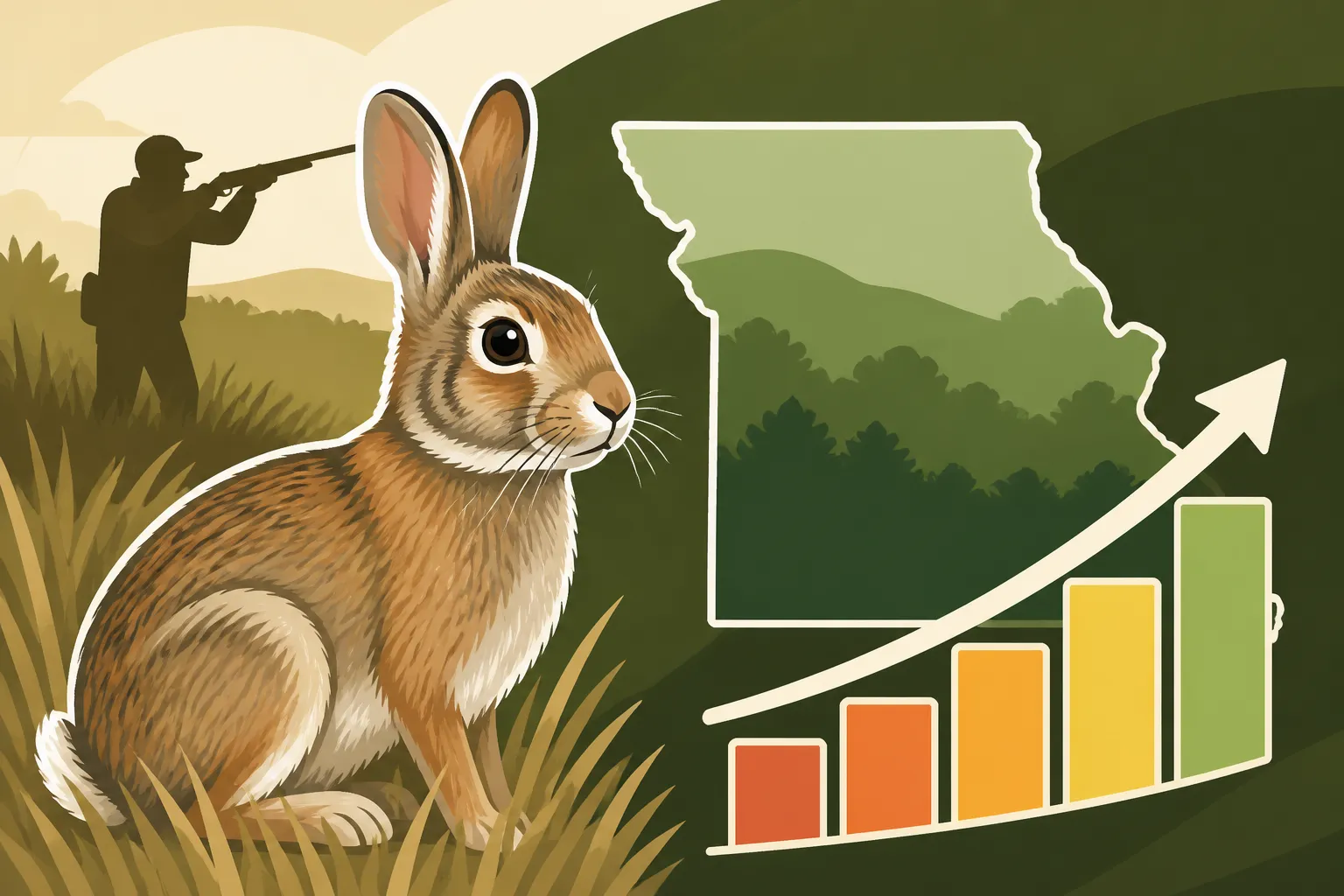
Missouri Rabbit Population Trend
One of the most disheartening things for a small game hunter in Missouri is heading out to a favorite spot, full of anticipation for flushing a few cottontails, only to find the cover silent and empty. It's easy to feel like the rabbit population has just vanished into thin air some years, leaving you wondering if it's even worth the effort to tie up the beagles. This guide is all about diving deep into the fascinating, often frustrating, world of Missouri's rabbit population trends, exploring why numbers fluctuate and how you can still find success when they're on a downswing.
Understanding the Natural Rhythm of Rabbit Populations
Rabbit populations are rarely static; they ebb and flow in a continuous, often dramatic, cycle. It’s not uncommon for hunters to experience banner years where cottontails seem to be everywhere, only to find a noticeable drop in numbers a few seasons later. This roller coaster of abundance and scarcity is a natural part of their ecology, driven by a complex interplay of environmental factors, predation, and habitat availability. Understanding this rhythm is the first step to becoming a more adaptable and less frustrated rabbit hunter in Missouri.
The Roller Coaster of Abundance and Scarcity
Think of a rabbit population as a series of waves. Some years, the wave crests high, with optimal weather for breeding, plenty of food, and manageable disease levels. You'll see cottontails bounding across fields, darting into brush piles, and generally making their presence known. These are the years that fill our freezers and create fond memories afield. But then, inevitably, the wave recedes. A harsh winter with deep, persistent snow might make foraging difficult, leading to higher mortality. A particularly wet spring could devastate early litters, as young rabbits are highly vulnerable to cold and damp conditions. Droughts can reduce forage quality and cover, making them more exposed to predators.
It’s this natural boom-and-bust cycle that can be so hard to wrap our heads around as hunters. We remember the good years vividly and often compare current conditions to those peaks. But the reality is, rabbits are a short-lived species with high reproductive rates, designed by nature to rebound quickly when conditions are favorable and to absorb heavy losses when they are not. This resilience is what keeps them on the landscape, even through tough times. They are, after all, a foundational prey species in many ecosystems, and their numbers naturally fluctuate to support the predators that rely on them.
The Impact of Habitat Changes
Beyond the immediate environmental factors, habitat is arguably the most critical long-term driver of rabbit populations. Cottontails thrive in what we often call "edge" habitat: the transition zones between open fields and dense cover. They need thick, protective cover to escape predators and shelter from the elements, but also access to open areas for feeding on grasses, clovers, and young shoots. This mosaic of short and tall vegetation, often found along fencerows, field edges, timber breaks, and old pastures, is their ideal home.
Unfortunately, many of Missouri's landscapes have changed over the decades. Modern agricultural practices, for instance, often lead to larger, cleaner fields with fewer fencerows, brushy draws, and odd corners that once provided critical cover. As farms become more efficient, those patches of "weedy" habitat are often removed. Suburban sprawl also fragments and eliminates prime rabbit habitat, replacing brushy edges with manicured lawns and concrete. Even in timbered areas, a lack of management that encourages dense, shrubby undergrowth can reduce suitable habitat. If you're consistently seeing fewer rabbits in a spot that used to be productive, taking a critical look at how the habitat has changed over the last few years is often the first clue. Has that old brush pile finally decayed away? Did the farmer clean out a fencerow last fall? These small changes can have big impacts on local rabbit numbers.
Key Factors Influencing Missouri's Rabbit Numbers
While the natural cycle and habitat are big players, several specific factors exert direct influence on how many cottontails you'll encounter during a Missouri hunting season. Understanding these can help you predict where rabbits might be more abundant or scarce, and even influence how you approach your hunt.
Weather's Role in Rabbit Reproduction and Survival
Missouri weather is notoriously fickle, and these unpredictable swings have a profound effect on our rabbit populations. Rabbits are prolific breeders, with females capable of producing multiple litters of young from early spring through late summer. However, the success of these litters is heavily dependent on the weather.
A mild winter, followed by an early, warm spring with consistent, but not excessive, rainfall, creates nearly perfect conditions for a population boom. Young rabbits have ample food, less stress from cold, and a better chance of surviving their vulnerable first few weeks. Conversely, a prolonged, deep freeze can be devastating. Rabbits, especially those with limited fat reserves or inadequate cover, can succumb to exposure or struggle to find enough food buried under snow and ice. Deep snow also makes them easier targets for predators like coyotes and hawks.
Spring and summer deluges can also be detrimental. While rabbits are quite adaptable, heavy, persistent rains can flood burrows where young kits are nestled, leading to high mortality. Cooler, wet springs can also contribute to the spread of diseases. On the other end of the spectrum, extended summer droughts can reduce the lush herbaceous growth that rabbits rely on for both food and cover, pushing them into less ideal, more exposed locations. The combination of a tough winter and a wet spring can often set the stage for a lower rabbit population come fall, and this is exactly when many hunters start to notice the decline.
Predation and Disease in the Rabbit World
Rabbits are a fundamental part of the food chain, which means they face constant pressure from a variety of predators. Everything from coyotes, foxes, bobcats, and even domestic dogs and cats, to various birds of prey like hawks and owls, considers a cottontail a potential meal. When rabbit numbers are high, predators often thrive, leading to an eventual increase in predator populations. As predators become more numerous, they can put more pressure on the rabbit population, contributing to its decline. It’s a classic predator-prey relationship dynamic that helps regulate both species' numbers over time.
Beyond predators, disease can also sweep through rabbit populations, sometimes with devastating effects. Two of the more common ailments include tularemia (often called "rabbit fever") and viral hemorrhagic disease (VHD). Tularemia, for example, is a bacterial disease that can be transmitted to humans and can cause significant die-offs in localized rabbit populations, particularly during periods of high stress or density. While the Missouri Department of Conservation (MDC) monitors wildlife health, outbreaks can occur naturally and contribute to noticeable dips in local rabbit numbers. A hunter might encounter a rabbit that seems lethargic or displays unusual behavior, which could be a sign of disease. It's always wise to exercise caution and proper hygiene when handling any harvested game.
Hunter Harvest and Management Strategies
While weather, habitat, predation, and disease are largely natural phenomena, hunter harvest is one factor we, as humans, directly influence. Fortunately, for a prolific species like the cottontail, hunting generally has a negligible long-term impact on overall population trends in Missouri. Rabbits breed so rapidly that recreational hunting rarely removes enough individuals to significantly depress the population statewide. Most hunting seasons are structured to allow for harvest after the peak breeding period, ensuring that the next generation has already been produced.
The MDC sets sensible Missouri Quail and Rabbit Seasons and bag limits that take into account the species' biology and current population estimates. These regulations ensure that hunting remains sustainable and that the population can continue to thrive. For example, while the season is generous, few hunters reach the daily bag limit regularly, and hunting pressure is often localized. In areas with abundant habitat, even heavy hunting pressure in one season is often quickly absorbed by the reproductive potential of the remaining population the following year. It's truly a testament to the resilience of these adaptable little creatures.
Spotting Trends and Finding Rabbits in Missouri
When you're out in the field, it's not always about seeing the absolute most rabbits, but about seeing enough to make a hunt successful and enjoyable. Even in years where the overall population might be down, there are always pockets where rabbits are thriving. The key is knowing how to read the landscape, adapting your strategies, and using tools to help you find those productive areas.
Reading the Landscape for Rabbit Sign
Successfully hunting rabbits, especially when numbers are generally lower, boils down to being a keen observer of their preferred habitat. Rabbits are creatures of routine, and they will consistently use areas that provide both food and escape cover. Look for a mosaic of cover types:
- Brush Piles: These are absolute magnets for rabbits. Old logging debris, downed tree limbs, or even intentional piles built by landowners provide immediate, dense escape cover. A good brush pile will almost always hold a rabbit. If you’re walking Rabbit Hunting Brush Piles, pay close attention to the freshness of droppings or tracks around the edges.
- Fencerows and Hedgerows: These linear features provide travel corridors and vital cover between open fields and denser woods. Look for thick, thorny shrubs like multiflora rose or wild plum, intertwined with briars and tall grasses. Rabbits love to dart into these dense thickets.
- Thick Grasses and Weedy Fields: Fields of tall fescue, switchgrass, or even ragweed and goldenrod provide excellent bedding and hiding cover, particularly in conjunction with heavier brush nearby.
- Timber Edges and Regenerating Clear-Cuts: The transition zone where woods meet fields, or areas where timber has recently been harvested and new growth is coming in, are perfect. The young saplings and briars create dense, low-lying cover.
- Creek and River Bottoms: These areas often feature dense, tangled vegetation, especially along banks, offering both cover and a consistent food supply.
When scouting, look for fresh rabbit droppings – small, round pellets of varying shades of brown or green, depending on their diet. In snow, tracks are a dead giveaway. You'll often see distinct trails leading from feeding areas to denser cover. Using a mapping application can be incredibly helpful for identifying these habitat features before you even step foot on the ground. Apps like GoHunt, for instance, can help you visualize property lines, locate likely cover on aerial photos, and mark potential hotspots, saving you valuable time when scouting public or private land. This allows you to focus your efforts on the most promising terrain, whether you're hunting with dogs or on foot.
Adapting Hunting Strategies for Variable Populations
When rabbit numbers are perceived to be down, a hunter might naturally feel discouraged. However, this is precisely when adapting your strategy becomes crucial. Instead of covering vast amounts of ground hoping for a random flush, focus your efforts.
- Slow Down and Be Thorough: Instead of rushing through an area, slow your pace significantly. Work cover meticulously, kicking every brush pile, pausing frequently to allow rabbits to reveal themselves. When working with dogs, give them time to untangle scent in thick cover.
- Focus on Prime Habitat: Don't waste time on marginal areas. Concentrate your efforts exclusively on the densest, most preferred cover you identified during scouting. Even if the overall population is lower, the best habitat will still hold rabbits.
- Hunt Later in the Season: While early season offers mild weather, later in the season (after a few hard frosts) vegetation dies back, concentrating rabbits into the thickest, remaining cover. This can make them easier to locate, though the hunting can be tougher in colder conditions.
- Utilize Dogs: There's no denying that beagles or other rabbit dogs are incredibly effective at flushing rabbits from thick cover, especially when numbers are sparse. Their ability to nose out a rabbit that a human might walk right past is invaluable. Running Beagles on Missouri Cottontails can turn a slow day into a productive one.
- Consider Still-Hunting or Stalking: For hunters without dogs, a more stealthy approach might be beneficial. Instead of busting through cover, slowly walk along the edges, pausing to scan for movement or rabbits hunkering down. This is particularly effective on cooler, cloudy days when rabbits might be out foraging longer.
- Re-Evaluate Your Spots: If your traditional spots aren't producing, it might be time to find new ones. The MDC's Missouri Conservation Atlas is an excellent resource for finding public land, and by combining it with aerial imagery (which many mapping apps like GoHunt offer), you can scout new areas virtually to identify promising habitat before you ever drive there.
The Future of Missouri's Rabbit Hunting
Despite the fluctuations, the future for Missouri's cottontails, and the opportunity to hunt them, remains bright. Their adaptability and high reproductive rate ensure they'll continue to be a staple game species. However, conscious efforts in habitat management and responsible hunting practices are key to ensuring their sustained abundance.
Conservation Efforts and Habitat Improvement
The Missouri Department of Conservation (MDC) recognizes the importance of small game species like rabbits and quail, and actively works to improve habitat across the state. Many public conservation areas are managed with an eye towards creating and maintaining early successional habitat – those brushy, weedy, diverse areas that rabbits adore. Prescribed burns, timber stand improvements that promote undergrowth, and the establishment of native warm-season grasses are all tools used to this end.
Private landowners also play a crucial role. Programs are available through the MDC and other organizations that can assist landowners in developing habitat for small game, whether it's planting food plots, establishing native cover, or simply leaving brushy corners and fencerows untouched. These efforts, collectively, create a network of suitable habitat that helps buffer rabbit populations against the inevitable environmental challenges they face. Hunters who actively manage their own land, even small tracts, can make a significant difference in local rabbit numbers. For those without private land access, understanding Finding Ground Others Walk Past on public areas can reveal surprising opportunities, as less pressured sections often hold more abundant game.
Being a Responsible Rabbit Hunter
Being a responsible hunter means more than just following the rules; it's about being an ethical steward of the resource. For rabbit hunters in Missouri, this involves several key aspects:
- Know the Regulations: Always be familiar with the current Missouri Quail and Rabbit Seasons dates, bag limits, and legal methods. These are designed to ensure sustainable harvest.
- Respect Landowners: If you're hunting on private land, always obtain explicit permission. Building good relationships with landowners is vital for continued access.
- Clean and Utilize Your Harvest: Rabbits are delicious table fare. Make sure to properly field dress and cool your rabbits to ensure the meat is good quality. There's no reason to waste any part of the animal.
- Practice Good Sportsmanship: Be respectful of other hunters and outdoor users. This includes being mindful of noise, leaving no trace, and being considerate of others' experiences.
- Support Conservation: The fees from your Missouri Resident Small Game Permit Cost and other permits directly fund the habitat work and research done by the MDC. By purchasing permits and stamps, you're directly contributing to the health of Missouri's wildlife populations, including our cottontails.
By embracing both the natural fluctuations of rabbit populations and our role in their conservation, we can ensure that future generations of Missouri hunters will continue to enjoy the thrill of a cottontail bursting from a brush pile, providing many more years of memories and delicious meals.
Disclaimer
This article is for general informational purposes only and does not constitute professional advice. Laws, prices and regulations vary by location and change over time. Consult a qualified professional for guidance on your specific situation.